Choosing among the best orthopedic implant manufacturers in 2026 takes more than comparing polished product catalogs. A hip stem may look precise on a specification sheet, yet surgeons and patients need evidence about how it performs after years of daily movement. Materials, design, manufacturing consistency, traceability, and clinical follow-up all matter. So does the quality of support available when a hospital needs training or product information.
Orthopedic surgeon and implant researcher Dr. Joshua J. Jacobs has emphasized a principle reflected in his published work: implant decisions should be grounded in clinical evidence and patient outcomes. That is a useful test for any manufacturer’s claims. Look for transparent data, clear indications, and credible post-market monitoring—not only impressive engineering language. Details matter.
This guide compares manufacturers through those practical questions, alongside product portfolios, quality controls, innovation, and global availability. It does not treat market share as proof of clinical superiority. Nor can any ranking determine which implant suits an individual patient; anatomy, diagnosis, surgeon experience, and local resources shape that decision. Some comparisons remain imperfect, because long-term evidence is not equally available for every device. That limitation deserves attention, not a footnote. The aim is a careful overview of companies shaping orthopedic care in 2026, with enough context to help readers ask better questions.
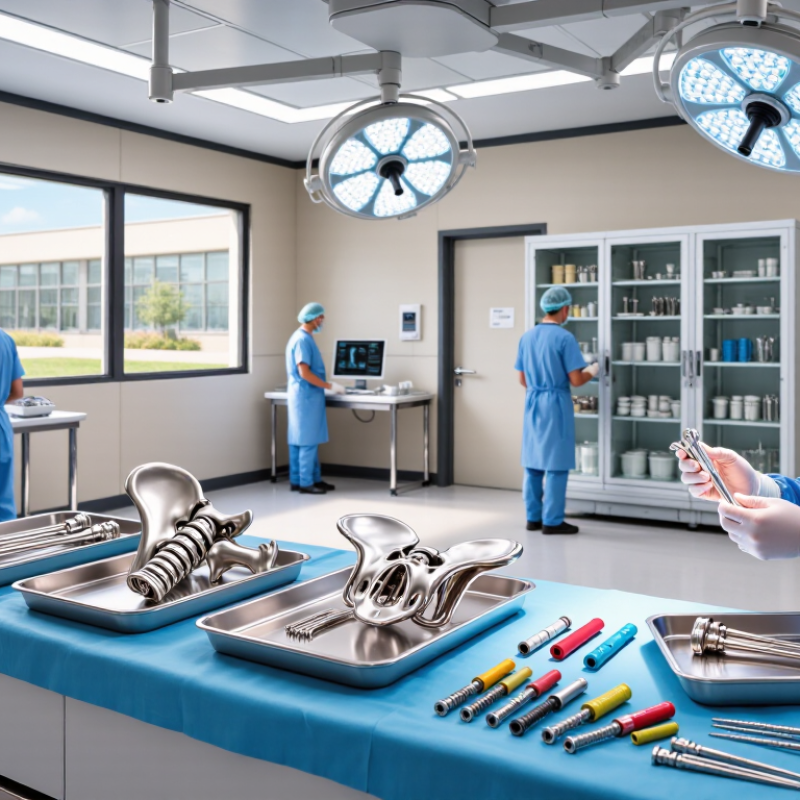
What Orthopedic Implant Manufacturers Do
Orthopedic implant manufacturers turn clinical needs into devices such as joint replacements, plates, screws, and spinal implants. Their work spans design, material selection, machining, surface finishing, packaging, and production testing. A hip stem, for example, must fit precise dimensions and withstand repeated loading. Small details matter. Grand View Research estimated the global orthopedic implants market at $48.1 billion in 2023 and projected 4.3% annual growth from 2024 to 2030. That figure describes market activity, not device quality.
Manufacturers also document materials, inspect batches, validate packaging and sterilization processes, and support product traceability. Some provide technical training and product information to clinical teams. Surgeons, however, assess whether an implant suits a patient; a manufacturer cannot replace that judgment. Testing is essential, but it cannot capture every real-world variation. That is worth remembering. A polished product sheet tells only part of the story.
Tips: Ask how a device is tested, what materials it uses, and how each unit is traced. Check whether the manufacturer clearly explains intended use and limitations. If answers feel vague, ask again.
Who Are the Best Orthopedic Implant Manufacturers in 2026? - What Orthopedic Implant Manufacturers Do
| Implant category | Typical products | Common materials | What manufacturers do | Useful evaluation criteria |
|---|---|---|---|---|
| Hip reconstruction | Femoral stems, acetabular cups, liners, and femoral heads | Titanium alloys, cobalt-chromium alloys, highly cross-linked polyethylene, and ceramic materials | Design and produce components that replace damaged parts of the hip joint; provide compatible components and instrumentation for implantation. | Material and component compatibility, implant options, manufacturing controls, clinical evidence, and applicable regulatory authorization. |
| Knee reconstruction | Femoral components, tibial trays, polyethylene inserts, and patellar components | Cobalt-chromium alloys, titanium alloys, and ultra-high-molecular-weight polyethylene | Make components that resurface or replace joint surfaces and supply instruments used to prepare bone and position the implant. | Available size range, design options, instrument usability, documented performance, and traceability of implant components. |
| Trauma fixation | Plates, screws, intramedullary nails, wires, and external fixation components | Titanium alloys and medical-grade stainless steel | Produce fixation systems used to stabilize fractures while the bone heals, along with compatible tools and associated components. | System compatibility, range of fixation options, material specifications, sterilization information, and quality controls. |
| Spine | Pedicle screw and rod systems, interbody devices, and cervical fixation components | Titanium alloys, cobalt-chromium alloys, and selected polymer materials such as PEEK | Manufacture implants and instruments used in spinal stabilization or reconstruction; device design and intended use vary by product. | Indications for use, implant and instrument compatibility, supporting clinical evidence, and product-specific regulatory status. |
| Shoulder reconstruction | Humeral stems, glenoid components, and shoulder arthroplasty systems | Titanium alloys, cobalt-chromium alloys, and polyethylene | Develop components for shoulder joint reconstruction and provide instruments for preparing and implanting the selected system. | Range of system configurations, component compatibility, surgical instrumentation, and evidence for the stated indications. |
| Manufacturing and quality systems | Applies across implant categories | Materials are selected according to the device design, intended use, and applicable specifications | Control design, material sourcing, production, inspection, packaging, sterilization arrangements, and device traceability. | Quality-management certification such as ISO 13485 may be relevant; regulatory clearance or approval is product- and market-specific. |
FAQS
They make devices such as hip stems, plates, screws, and spinal implants. Their work includes design, machining, finishing, packaging, and testing.
They verify materials, inspect dimensions, test production batches, and validate packaging and sterilization processes. No test captures every real-world variation.
Review clinical studies, follow-up periods, study design, and reported complications. Small studies offer clues, not complete answers.
Traceability connects each device to its production batch and records. Clear records help teams identify which units were used.
Some focus on fracture plates, screws, and nails. Others make hip or knee components, spinal systems, or small-joint implants.
No. It may support bone integration, but results depend on the design and patient. One feature cannot settle the choice.
Ask whether instruments are practical under limited visibility and time. Check training, technical support, and how product issues are reported.
No. Surgeons assess patient needs and procedure fit. Product sheets help, but they leave gaps. Teams should record unanswered questions.
Conclusion
This article examines what orthopedic implant manufacturers do, from designing and producing devices to supporting their safe use in clinical settings. It explains how the best orthopedic implant manufacturers may be evaluated in 2026, considering factors such as product quality, clinical evidence, material and design choices, manufacturing consistency, regulatory compliance, and the support available to healthcare professionals.
It also reviews major areas of orthopedic implants, including devices for joint replacement, trauma care, and spine procedures, while noting that manufacturers may specialize in different categories. Rather than naming a single universal leader, the article outlines how hospitals and surgeons can compare options according to patient needs, surgical requirements, reliability, service, and long-term outcomes. These considerations can help decision-makers assess manufacturers thoughtfully and select suitable implant solutions for their clinical setting.