Featured Surgical Implants & Equipment Portfolio
Explore our core trauma fixation systems, spinal hardware, surgical power tools, and specialized medical assemblies engineered to stringent US healthcare standards.
Executive Summary: High-Gain Trauma Fixation Systems for the U.S. Healthcare Ecosystem
Providing American medical device distributors, Group Purchasing Organizations (GPOs), Integrated Delivery Networks (IDNs), and OEM brand owners with bio-mechanically validated fracture fixation solutions.
SEO & Procurement Insights (Information Gain): The United States trauma implant market represents over $8.5 Billion in annual demand. Modern US healthcare facilities demand more than standard AO-type geometry—they require strict ASTM material compliance, pre-sterilization packaging options, micro-machined anatomical contouring, and transparent Device Master Files (DMF) to accelerate FDA 510(k) clearances and lower total cost of care.
As a specialized trauma fixation system manufacturer and exporter for the United States market, our engineering architecture is tailored to solve the triple strain facing US hospitals: clinical efficacy, regulatory security, and severe margin compression under Medicare bundled payment arrangements (such as BPCI Advanced and CJR). By integrating advanced 5-axis Swiss-type CNC precision machining, Type II micro-anodization surface treatment, and cleanroom packaging certified to ISO 11607, we deliver fracture fixation systems that meet or exceed benchmark standards established by domestic Tier-1 orthopedics OEMs.
Biomechanical Engineering & Metallurgical Superiority
Every bone plate, cannulated screw, intramedullary nail, and spinal pedicle component undergoes strict mechanical fatigue testing and alloy verification.
ASTM F136 Ti-6Al-4V ELI Alloy
We exclusively procure medical-grade Extra Low Interstitial (ELI) Titanium bar stock. Certified tensile strength exceeds 930 MPa with fatigue limit endurance validated via ASTM F382 static and dynamic bending protocols.
Combining Dynamic Compression & Locking
Our Combi-hole design allows operating surgeons to execute traditional dynamic interfragmentary compression or angular stable locking screw fixation within the exact same plate construct, expediting OR procedural workflow.
Anatomical Pre-Contouring
Plates for distal radius, proximal humerus, distal tibia, and clavicle are pre-bent using 3D bone morphometric databases from US patient demographics, minimizing intraoperative manual bending and preserving structural titanium grain line integrity.
| Material Standard | Alloy Composition | Yield Strength (0.2% Proof) | Tensile Strength (MPa) | Primary Surgical Application |
|---|---|---|---|---|
| ASTM F136 / ISO 5832-3 | Ti-6Al-4V ELI (Extra Low Interstitial) | ≥ 860 MPa | ≥ 930 MPa | Locking trauma plates, cannulated compression screws, pedicle screws |
| ASTM F67 Grade 2 / 4 | Unalloyed Commercially Pure Titanium (CP Ti) | ≥ 275 - 483 MPa | ≥ 345 - 550 MPa | Reconstruction plates, rib trauma plates, craniomaxillofacial mesh |
| ASTM F138 / ISO 5832-1 | 316L High-Nitrogen Stainless Steel | ≥ 690 MPa | ≥ 930 MPa | Intramedullary tibia/femur nails, tension band wires, external fixators |
| ASTM F2026 | PEEK Optima (Polyetheretherketone) | ≥ 110 MPa | ≥ 170 MPa | Interbody spinal fusion cages, radiolucent suture anchors |
Localized Application Scenarios across U.S. Clinical Environments
Engineered to meet the procedural throughput demands of Level I trauma centers down to outpatient Ambulatory Surgical Centers (ASCs).
Level I & Level II Urban Trauma Centers
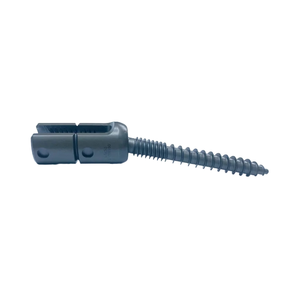
High-energy polytrauma cases demand rapid, modular, ultra-durable instrumentation. Our polyaxial reduction pedicle screws and proximal femoral intramedullary nailing systems enable trauma teams to execute rapid damage-control orthopedics with minimal instrument changes.
Ambulatory Surgical Centers (ASCs)
With outpatient orthopedic procedures expanding rapidly across the USA, ASCs prioritize single-use pre-sterilized implant kits (screws and distal radius locking plates). Our sterile blister packs reduce central sterile reprocessing bottlenecks and turnaround times.
Veterans Health Administration (VHA) & DoD Facilities
We manufacture specialty external fixation systems and heavy-duty titanium bone plates designed to handle severe blast impacts, non-unions, and complex osteotomies with long-term corrosion resistance and radiolucency options.
U.S. Trauma Market Development Trends & Macro Driver Analysis
Understanding the regulatory, technological, and economic shifts reshaping American orthopedic procurement.
1. Transition to Gamma-Sterilized Single-Pack Implants
Hospitals are actively reducing Surgical Site Infections (SSI) and eliminating the $75-$120 cost per tray associated with autoclave sterilization cycles. Pre-sterilized implants (SAL 10-6) with UDI-compliant barcode tracking are rapidly becoming mandatory in US hospital vendor contracts.
2. Growth of Outpatient Extremities & Small Bone Trauma
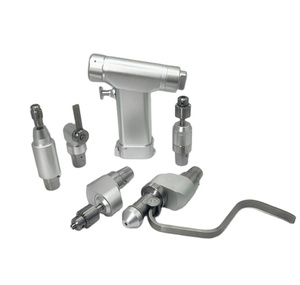
Foot, ankle, hand, and wrist trauma procedures are migrating away from inpatient ORs. Micro electric bone drills, cannulated compression screws, and low-profile mini-locking plates designed for micro-incision techniques lead current US growth curves.
3. FDA QMSR Alignment with ISO 13485:2016
The US Food and Drug Administration's update to the Quality Management System Regulation (QMSR) harmonizes 21 CFR Part 820 with ISO 13485. Exporters must maintain verified risk management files (ISO 14971) and continuous post-market surveillance (PMS) architectures.
4. Supply Chain Diversification & Dual-Sourcing Strategies
Recent domestic medical device supply shortages have forced U.S. health networks to seek reliable secondary global manufacturing partners capable of holding safety stock in US logistics hubs with guaranteed delivery windows.
Manufacturing Capabilities & OEM/ODM Expertise
Delivering full contract manufacturing, custom tray kitting, private label etching, and complete documentation support for US medical device brands.
E-E-A-T Enterprise Credibility: Operating over 30,000 m² of specialized manufacturing space equipped with Citizen 5-axis longitudinal CNC lathes, DMG MORI machining centers, ISO Class 7 cleanrooms, and Zeiss Optical CMM inspection systems. All materials are accompanied by mill test certificates and full lot-traceability records.
Precision Machining & Surface Treatments
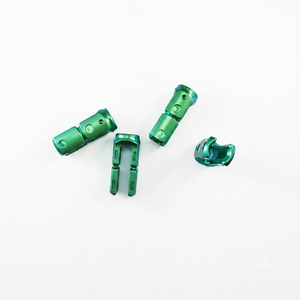
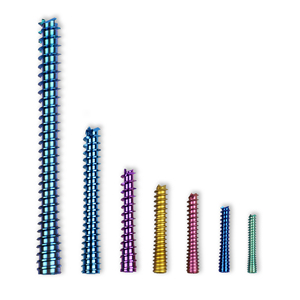
Sub-micron machining tolerances (±0.005mm) for locking screw threads and hexalobular (Torx) drive recesses. Specialized surface treatments include Type II anodization for titanium fatigue improvement and bright color coding for instant OR identification.
Full 510(k) Technical Dossier Support
We provide full OEM partners with complete Device Master Files (DMF), biocompatibility reports (ISO 10993), mechanical test protocol reports (ASTM F382, F543, F1717), and packaging validation documentation necessary for swift FDA 510(k) submittals.
Kitting & Custom Instrument Tray Design
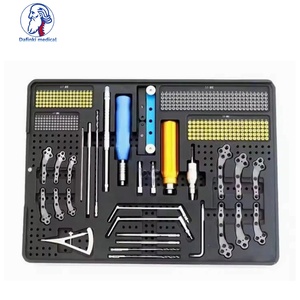
Complete procedure-specific instrument sets delivered in anodized aluminum or PPSU plastic sterilization trays with customized silicone grommets, custom laser-etched graphic layout maps, and ergonomic stainless steel handles.
Frequently Asked Questions for U.S. Procurement Officers & Distributors
Addressing key regulatory, logistical, quality, and commercial queries regarding U.S. trauma product import and contract manufacturing.
How do your trauma fixation systems comply with US FDA regulations?
Our manufacturing facility operates under an ISO 13485:2016 and Medical Device Single Audit Program (MDSAP) certified quality management system aligned with FDA 21 CFR Part 820 (QMSR). Standard implants utilize materials conforming strictly to ASTM specifications (ASTM F136 for Ti-6Al-4V ELI, ASTM F67 for pure titanium, ASTM F138 for 316L stainless steel). We provide ready-to-file technical dossiers, testing data, and Master File access to facilitate rapid FDA 510(k) clearance for OEM brand partners.
What sterilization options are available for U.S. hospital delivery?
We offer both non-sterile implants packaged for central sterile reprocessing (CSR) and pre-sterilized implants packaged inside double-peel Tyvec blisters. Pre-sterilized items are processed using validated Cobalt-60 Gamma Irradiation achieving a Sterility Assurance Level (SAL) of 10-6 in compliance with ISO 11137 and ISO 11607 standards, complete with a 5-year shelf-life validation report.
Are your locking screw threads and drive recesses compatible with major U.S. brand instrument trays?
Yes. Our implants and instruments utilize standard international AO-type quick-coupling connections, Star-drive/Hexalobular drive recesses (T8, T10, T15, T25), and standard pitch locking threads. This ensures seamless cross-compatibility with existing hospital inventory and standard surgical tray setups across North America.
How do you manage Unique Device Identification (UDI) for U.S. market shipments?
All trauma implants and surgical instruments feature high-precision fiber laser etching containing GS1-compliant 2D DataMatrix barcodes encoding the Device Identifier (DI) and Production Identifier (PI) - including lot number, manufacture date, and serial code. Packaging labels comply directly with FDA GUDID database requirements.
What are the lead times for custom OEM trauma plate manufacturing and US export shipping?
Prototype samples produced via drawing-based CNC machining typically take 10 to 14 business days. Full-scale production batch orders require 30 to 45 days depending on surface treatment and sterile packaging requirements. Air freight to major US logistics hubs (e.g., ORD, LAX, JFK, ATL) averages 3 to 5 business days, with DDP (Delivered Duty Paid) terms available.
Do you offer customized private label packaging and custom instrument tray kitting?
Yes. We offer turnkey private labeling services including OEM laser marking on implants, custom-printed Tyvec pouches and outer boxes with your brand logo, customized user manuals (IFU), and fully custom-designed anodized aluminum or plastic instrument trays formatted to your exact surgical technique specs.
Partner with a Trusted Trauma Fixation Manufacturer for the U.S. Market
Whether you are seeking high-margin private label OEM manufacturing, pre-sterilized trauma inventory, or regulatory documentation support for FDA submittals, our engineering team is ready to deliver.