Precision Implants & Medical Grade Instruments
Manufactured to strict international standards (ISO 13485 / CE / UKCA Ready) for total joint replacement, trauma reconstruction, and minimally invasive orthopaedic procedures.
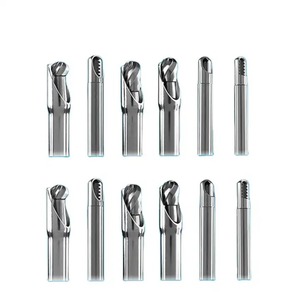
Hot Sale Top Quality Orthopedic Surgical Instruments Customization Arthroscopic Shaver Blade Price by Zuol
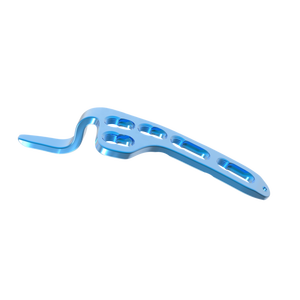
Hot Sell Clavicular Hook Locking Plate Titanium Orthopedic Bone Implants Interventional Materials Factory Direct
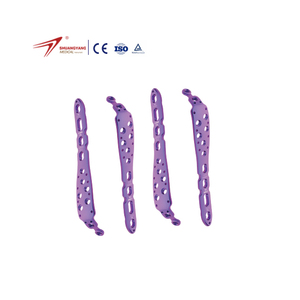
Shuangyang Medical Orthopedic Implant Oem&Odm Good Quality Multi Axial Ulna Olecranon Locking Plate Fracture Titanium Plate
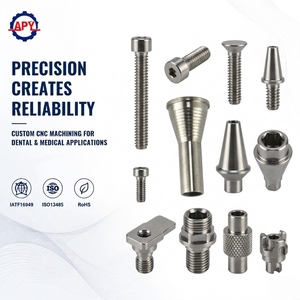
ISO13485 Certified Precision Custom CNC Machining Dental Abutment Implant Screw Titanium Medical Component
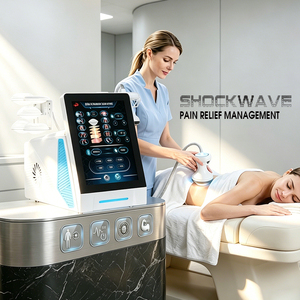
Medical Grade Focused ESWT Shockwave Machine 20Hz Frequency Chronic Pain Relief Device Manufacturer
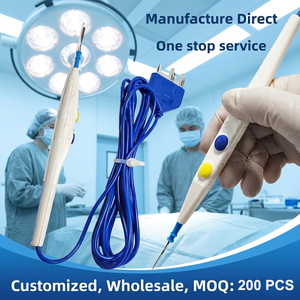
CE MDR Certified Disposable Electrosurgical Pencil Cautery Diathermy ESU Pencil for Electrosurgical Generator with OEM Custom
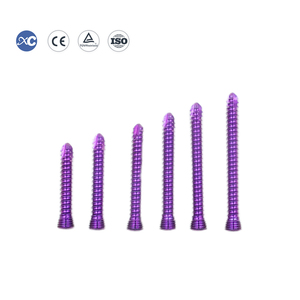
XC MEDICO Veterinary Orthopedic Implants 2.7mm AO Locking Screw Implant Orthopedic Implant
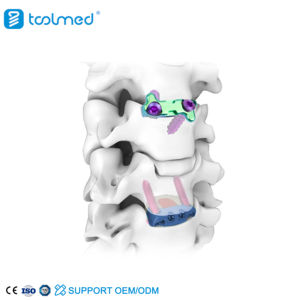
Medical Spine Fixation System Lumbar Cage Peek Cage Double Locking Screw Cervical Cone fusion Cagefor Surgery Spinal Implants
Advanced Shoulder Arthroplasty Ecosystem in Greater London & UK Markets
An authoritative analysis of biomechanical innovation, localized procurement shifts, clinical efficacy, and international supply chain integration for NHS trusts and private surgical centers.
London Healthcare Ecosystem & Demand Drivers
Greater London stands as one of Europe's premier medical epicenters, encompassing internationally recognized NHS Foundation Trusts (such as the Royal National Orthopaedic Hospital and Guy's and St Thomas') along with prestigious private medical districts centered around Harley Street. The demand for shoulder prostheses across London has experienced exponential growth, driven primarily by an aging demographic, elevated sports-related joint degeneration, and refined diagnostic modalities.
- Rising Incidence of Cuff Tear Arthropathy: Increased clinical reliance on Reverse Total Shoulder Arthroplasty (rTSA).
- Shift Toward Ambulatory Day-Case Surgery: High demand for streamlined, sterile pre-packaged surgical trays.
- Consignment & Fast-Track Logistics: Critical requirement for London-based inventory hubs ensuring 24-hour emergency trauma delivery.
UKCA & MHRA Regulatory Alignment
Navigating the post-Brexit regulatory landscape in the United Kingdom requires strict compliance with the Medicines and Healthcare products Regulatory Agency (MHRA). OEM manufacturers and global exporters supplying London healthcare providers must maintain rigorous technical documentation, post-market surveillance (PMS) data, and seamless transition pathways between CE marking and UKCA (UK Conformity Assessed) certification.
- BS EN ISO 13485:2016 Certification: Full quality management compliance across design, machining, and gamma sterilization.
- EUDAMED & MHRA Registration: Complete device traceability and UDI (Unique Device Identification) tagging.
- ASTM Material Compliance: Ti-6Al-4V ELI (ASTM F136/F1472) and UHMWPE (ASTM F648) biocompatibility verification.
Anatomic vs. Reverse Shoulder Arthroplasty Architecture
Detailed technical breakdown of modular joint replacement components, surface tribology, and mechanical load dissipation for long-term implant survival.
Anatomic Total Shoulder (aTSA)
Designed for patients with intact rotator cuff musculature suffering from osteoarthritis or avascular necrosis. Features convertible titanium stems with variable neck-shaft angles (132°–145°) and mirror-polished Cobalt-Chromium (CoCr) or Titanium nitride (TiN) coated humeral heads.
- Porous-coated stem collar for proximal bone ingrowth.
- Keel vs. Pegged UHMWPE glenoid components.
- Anatomical eccentric head offsets to match native patient anatomy.
Reverse Total Shoulder (rTSA)
Indicated for rotator cuff tear arthropathy and non-reconstructable proximal humerus fractures. Inverts the natural ball-and-socket anatomy by fixing a hemispherical glenosphere to the scapula and a concave socket cup to the humerus, shifting the center of rotation medially and inferiorly.
- Maximizes deltoid mechanical lever arm for elevation.
- Glenoid baseplate with variable locking & non-locking peripheral screws.
- Eccentric and lateralized glenosphere options to prevent scapular notching.
Modular Convertible Stem Platform
Our intraoperative convertible stem system enables seamless conversion from anatomic to reverse prosthesis without requiring revision of a stable, osteointegrated humeral stem. This significantly reduces surgical trauma, operating room time, and bone loss during revision arthroplasty.
- Universal titanium stem geometry suited for press-fit or cemented use.
- Plasma-sprayed hydroxyapatite (HA) coating promoting rapid osteointegration.
- Integrated alignment jigs for accurate retroversion control.
Metallurgical Specifications & Tribological Properties
| Implant Component | Raw Material Standard | Surface Treatment / Coating | Mechanical Performance |
|---|---|---|---|
| Humeral Stem Core | Ti-6Al-4V ELI (ASTM F1472 / ISO 5832-3) | Vacuum Plasma-Sprayed Titanium (TPS) + HA | Tensile Strength ≥ 930 MPa | Yield Strength ≥ 860 MPa |
| Humeral Head / Glenosphere | Cobalt-Chromium-Molybdenum (ASTM F75 / F1537) | Mirror Polished Ra ≤ 0.02 μm / Optional TiN Coating | High wear resistance, low coefficient of friction |
| Glenoid Bearing Insert | Highly Cross-Linked UHMWPE (ASTM F648) | Ethylene Oxide / Co-60 Inert Sterilization | Minimal poly debris generation, oxidation resistant |
| Metaphyseal Locking Screws | Commercially Pure Titanium TA3 (ASTM F67) | Color Anodized (Type II surface protection) | High fatigue resistance under multi-axial loads |
Localized Application Scenarios in London & UK Healthcare Institutions
Tailored implant configurations and instrument logistics designed to meet the rigorous demands of London NHS trusts, private hospitals, and specialized trauma units.
NHS Foundation Trusts & High-Volume Elective Hubs
London NHS trusts require predictable inventory delivery, complete traceability, and cost-effective system pricing without compromising clinical quality. Our standardized modular instrument sets minimize autoclave turnover time and streamline OR prep.
- Consignment inventory agreements tailored for NHS Supply Chain procurement.
- Fully documented surgical technique guides & cadaver workshop support.
- Streamlined revision platforms reducing long-term NHS surgical costs.
Harley Street Private Clinics & Premium Centers
Private orthopaedic practices in London cater to high-demand patients seeking rapid recovery, customized implant sizing, and minimal tissue disruption. We export custom patient-matched instruments and low-profile titanium hardware.
- Ultra-smooth TiN and CoCr bearing surfaces for extended implant longevity.
- Patient-Specific Instrumentation (PSI) 3D surgical planning compatibility.
- Direct courier fast-track dispatch to Central London surgical suites.
Acute Trauma & Complex Fracture Reconstruction
For acute 3-part and 4-part proximal humeral fractures managed at London major trauma centers, our dedicated fracture reverse stems feature suture eyelets for tuberosity reattachment and adjustable height collars.
- Dedicated suture fixation points for anatomical tuberosity healing.
- Rapid intraoperative conversion from fixation to arthroplasty.
- Compatible with clavicular hook plates and olecranon locking plates.
Key Development Trends in the UK Orthopaedic Sector
Exploring technological breakthroughs, regulatory shifts, and clinical preferences shaping the shoulder replacement landscape in London and across the United Kingdom.
1. Dominance of Reverse Shoulder Arthroplasty (rTSA)
Data from the UK National Joint Registry (NJR) confirms a decisive shift toward reverse shoulder arthroplasty over traditional anatomic replacements. Driven by superior outcomes in patients with rotator cuff insufficiency and complex osteoporotic fractures, rTSA now accounts for over 70% of primary shoulder replacements performed in Greater London hospitals. Manufacturers must provide modular rTSA platforms with extensive glenosphere offset choices (lateralized, inferiorized) to prevent scapular notching and maximize range of motion.
2. Integration of 3D Preoperative Planning & PSI Jigs
London orthopaedic surgeons are increasingly adopting 3D CT-based preoperative simulation software to assess glenoid bone stock, retroversion, and inclination. Exporters and manufacturers offering patient-specific surgical guides (PSI) and 3D printed titanium glenoid baseplates gain a significant competitive edge when partnering with UK surgical centers handling complex revision cases.
3. Sterile Pre-Packaged Single-Use Implant Kits
Hospital-acquired infection (HAI) prevention protocols across NHS hospitals have accelerated the transition toward pre-sterilized implants packaged in sterile double-blister blisters. Utilizing Co-60 gamma radiation to achieve a Sterility Assurance Level (SAL) of 10-6 eliminates hospital sterilization overhead, guarantees single-use integrity, and reduces tray processing costs for London healthcare facilities.
4. Sustainable & Resilient Medical Device Supply Chains
Post-pandemic and post-Brexit supply chain vulnerabilities have prompted London procurement teams to diversify vendor partnerships. UK healthcare buyers prioritize manufacturers offering robust OEM/ODM capabilities, guaranteed lead times, direct factory pricing, and comprehensive technical files to ensure unbroken supply chain continuity.
OEM/ODM Customization & Direct Factory Export Advantage
End-to-end manufacturing solutions from precision 5-axis CNC machining to laser marking, custom tray layout, and sterile package fulfillment.
Drawing & Prototyping
Rapid evaluation of CAD/CAM drawings, material selection, and 3D prototype machining within 7–10 days.
5-Axis CNC Precision
High-precision machining of titanium alloys, CoCrMo, and medical PEEK with tolerances within ±0.005mm.
Surface Engineering
Vacuum plasma sprayed (TPS) porous coating, hydroxyapatite (HA) deposition, and anodized color coding.
Sterile Packaging & Regulatory
ISO Class 7 cleanroom packaging, Co-60 gamma sterilization (SAL 10-6), and technical dossier support.
Frequently Asked Questions by London & UK Medical Importers
Addressing essential questions regarding UKCA compliance, NHS framework integration, shipping timelines, and custom manufacturing specs.
What certifications do your shoulder prostheses and orthopaedic products carry for the UK market?
Our quality control operations strictly adhere to ISO 13485 and ISO 9001 quality management standards. Applicable products hold CE Marking under European Medical Devices Regulation (MDR 2017/745) and are structured for seamless UKCA registration with the UK MHRA. Raw materials fully conform to ASTM F1472 (Ti-6Al-4V), ASTM F67 (pure titanium), ASTM F75 (CoCrMo), and ASTM F648 (UHMWPE) specifications.
How do you support London NHS trusts and private hospitals with inventory lead times?
We provide flexible delivery models including direct air-freight dispatch to Greater London (typical transit time 3 to 5 business days via express courier) as well as scheduled consignment stock arrangements. Our logistics team coordinates directly with UK medical distributors to ensure constant inventory availability for elective surgical lists.
Can implants be supplied pre-sterilized and ready for immediate OR use?
Yes. Implants—including shoulder stems, glenoid baseplates, trauma bone plates, and cannulated screws—can be supplied in sterile double-blister packaging subjected to Co-60 gamma irradiation. This achieves a validated Sterility Assurance Level (SAL) of 10-6 in accordance with ISO 11137 guidelines, providing a 5-year shelf life.
Do you offer OEM private labeling and custom surgical instrument tray design for UK brands?
We provide comprehensive OEM and ODM services for global orthopaedic brands and UK distributors. Services include drawing-based precision machining, custom laser marking of brand logos and lot numbers, anodized color coding, customized graphic instrument sterilization trays, and complete technical file preparation for local registration.
What biomechanical features prevent glenoid loosening and scapular notching in your rTSA system?
Our Reverse Total Shoulder System incorporates a porous-coated titanium glenoid baseplate with variable-angle locking screws for superior primary stability. Glenosphere options feature inferior offset choices (2mm and 4mm) and lateralized centers of rotation, which significantly reduce inferior scapular impingement (notching) and preserve adduction movement.
What technical support and training resources are available for UK surgical teams?
We provide comprehensive clinical support documentation, including step-by-step surgical technique manuals, implant sizing charts, cadaver workshop protocol guides, and digital 3D surgical planning templates. Our engineering team is also available to consult directly with clinical teams on complex custom revision cases.
Partner with a Leading Global Shoulder Prosthesis Exporter
Expand your orthopaedic portfolio in London and across the UK with certified titanium implants, custom OEM manufacturing, and direct factory pricing. Contact our engineering team today for technical documentation and wholesale quotations.