Featured Orthopedic Implants & Surgical Systems
Factory-direct orthopedic medical devices certified for trauma, joint reconstruction, maxillofacial, and veterinary surgical applications across New Zealand.
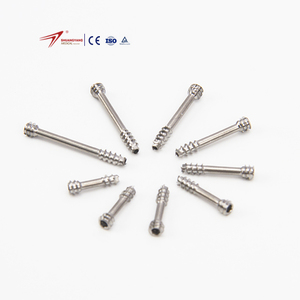
Titanium Herbert Headless Compression Screw
Cannulated design engineered for scaphoid fractures, osteochondral defects, and small bone intra-articular trauma fixation.
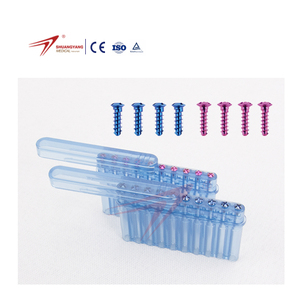
1.5/2.0mm Maxillofacial Titanium Locking Plate
Ultra-low profile self-tapping titanium micro-plate system for craniomaxillofacial reconstruction and delicate facial trauma.
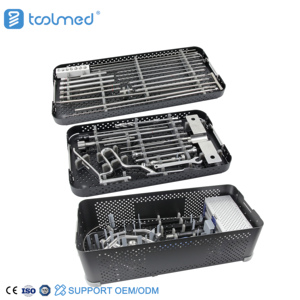
Titanium Femoral Intramedullary Nail System
Advanced interlocking titanium nail for complex shaft femoral fractures, engineered for dynamic micro-motion loading.
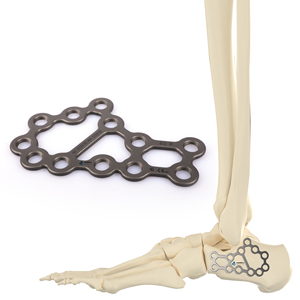
Titanium Calcaneal Foot Heel Locking Plate
Anatomic pre-contoured locking plate constructed for calcaneus fracture osteosynthesis with maximum angular stability.
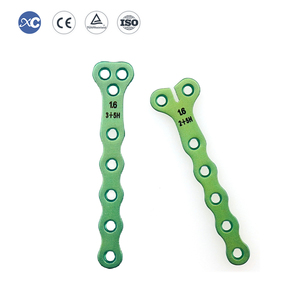
Veterinary Orthopedic 1.6mm T-Locking Plate
Precision 1.6mm micro T-plate specifically manufactured for small animal trauma, canine orthopedic repair, and feline osteosynthesis.
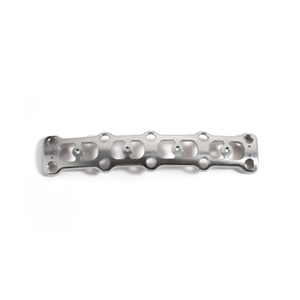
3D CNC Titanium Alloy Stud (TC4 Grade)
Micro-machined Grade 5 titanium studs designed for customized bone anchor retention and custom joint prosthetic assemblies.
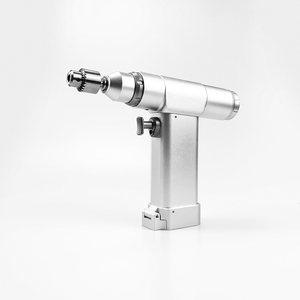
Multifunction Cannulated Bone Power Drill Tool Kit
Surgical-grade autoclavable power drill kit for orthopedic trauma, intramedullary reaming, and wire driving in OR environments.
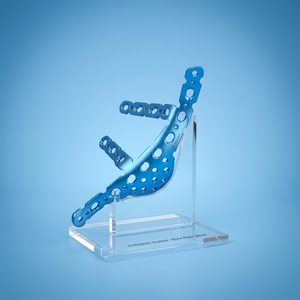
Pelvis Reconstruction Titanium Locking Plate
Flexible contouring reconstructive plate system designed for severe acetabular fractures and complex pelvic ring trauma.
Core Competencies for New Zealand Healthcare Distributors
Why leading surgical procurement groups and hospital suppliers in Auckland, Wellington, and Christchurch partner with our manufacturing facility.
Medical-Grade Raw Materials
Utilizing certified Ti-6Al-4V ELI (ASTM F136), pure unalloyed titanium (ASTM F67 Grade 2/3), CoCrMo alloys, and PEEK-OPTIMA polymers sourced with complete chemical and mechanical heat mill traceability.
Medsafe & Global Compliance
Fully compliant with New Zealand Medsafe WAND database notification requirements, supported by ISO 13485:2016 management system, CE Marking (MDR), and FDA 510(k) equivalency testing dossiers.
Gamma Co-60 Sterile Packaging
Pre-packaged sterile bone screws, plates, and intramedullary nails sterilized via Cobalt-60 gamma radiation, drastically reducing public hospital autoclave turnaround bottlenecks in NZ regionals.
Custom OEM/ODM Engineering
Full spectrum drawing-to-part production capabilities: 5-axis DMG Mori CNC machining, precision laser marking, color anodizing, custom instrument tray design, and private label branding for NZ partners.
Direct Export Logistics Buffer
Streamlined supply chain solutions with direct air and sea freight logistics serving Auckland, Tauranga, and Lyttelton ports, mitigating Trans-Tasman supply chain vulnerabilities with safety stock buffering.
Surgeon & Clinical Support
Providing New Zealand surgical teams with localized surgical technique guides, 3D digital bone model files, sawbones training sets, and academic workshop support for seamless product onboarding.
Executive Whitepaper: Strategic Orthopedic Implants Supply in New Zealand
The New Zealand orthopaedic surgical landscape represents a unique environment within the global medical device sector. Operating under the dual structure of public healthcare delivery—managed under Te Whatu Ora (Health New Zealand)—and a robust private surgical hospital network (including Southern Cross Healthcare and Evolution Healthcare), New Zealand demands the highest thresholds of bio-compatibility, material integrity, and regulatory transparency from overseas implant manufacturers and exporters.
In recent years, procurement managers across major regional health authorities—from Waitematā, Auckland, and Counties Manukau in the North Island to Canterbury and Southern in the South Island—have faced mounting challenges. These include surgical elective waiting lists, high rates of acute trauma resulting from extreme sports and agricultural activities, and escalating costs associated with legacy multinational medical brand margins. As a certified premier factory-direct orthopedic implant manufacturer and exporter, our entity bridges the critical gap between rigorous Swiss-grade precision engineering and cost-effective, dependable supply chain continuity for the New Zealand healthcare economy.
New Zealand Healthcare Market Dynamics & Regulatory Compliance
Importing orthopedic medical devices into New Zealand requires strict adherence to the regulatory protocols enforced by Medsafe (New Zealand Medicines and Medical Devices Safety Authority). All trauma plates, intramedullary nails, cannulated screws, joint replacement systems, and power surgical tools must be formally registered on the Web Assisted Notification of Devices (WAND) database before distribution or clinical application.
Our manufacturing protocols are fully integrated with international standards that streamline the Medsafe WAND notification process:
- ISO 13485:2016 Certification: Complete quality management system covering design, raw material procurement, machining, cleanroom washing, packaging, and bio-burden testing.
- CE Marking under EU MDR (2017/745): Technical documentation and clinical evaluation reports (CER) meeting high European standards, which Medsafe recognizes for expedited market entry.
- ASTM Metallurgical Specifications: Raw material heat traceability verifying compliance with ASTM F136 (Ti-6Al-4V ELI), ASTM F67 (Unalloyed Titanium Grades 2 & 3), and ASTM F138 (316L Stainless Steel).
- Sterility Assurance Level (SAL 10⁻⁶): Micro-biological validation according to ISO 11137 for Cobalt-60 Gamma radiation exposure, ensuring zero contamination risk upon opening in operating theaters.
Technical Deep Dive: Metallurgy, Biomechanics & Surface Engineering
Orthopedic implants implanted into the human musculoskeletal system must endure complex multi-axial mechanical stresses, cyclic fatigue, and corrosive physiological fluid exposure. For New Zealand orthopaedic surgeons treating complex fractures and osteoarthritic degradation, material reliability is non-negotiable.
1. Grade 5 Titanium Alloy (Ti-6Al-4V ELI / ASTM F136)
Our trauma locking plates, pedicle screws, and intramedullary nails utilize Extra Low Interstitial (ELI) Grade 5 Titanium alloy. The interstitial elements (oxygen, nitrogen, carbon, and iron) are controlled to micro-tolerances during vacuum arc remelting. This yields an exceptional ultimate tensile strength exceeding 860 MPa while maintaining superior fracture toughness, preventing catastrophic implant failure under high-impact loading scenarios such as rugby trauma or alpine sport injuries prevalent in New Zealand.
2. Micro-Arc Oxidation (MAO) & Anodization
To reduce friction during screw insertion and eliminate titanium cold-welding (galling) between locking screw heads and plate holes, our implants undergo specialized electrochemical anodic oxidation. Type II anodization generates a dense, biocompatible titanium dioxide (TiO₂) ceramic layer on the implant surface, which enhances fatigue resistance by up to 20% and provides standardized color-coding (e.g., gold for Ø3.5mm cortex, magenta for Ø4.0mm cancellous, blue for Ø5.0mm locking) to streamline intraoperative identification for OR nurses.
3. Reduced Stress-Shielding Biomechanics
Traditional stainless steel implants possess an elastic modulus (~200 GPa) significantly higher than cortical bone (~18 GPa), leading to stress shielding, local bone resorption, and delayed fracture healing. Our titanium alloy trauma solutions exhibit an elastic modulus closer to bone (~110 GPa). Furthermore, our anatomic anatomical contouring—seen in our Calcaneal Locking Plates and Pelvic Reconstruction Systems—matches human skeletal anatomy, minimizing the need for extensive intraoperative plate bending that degrades mechanical fatigue life.
Material Mechanical Specification & Biomechanical Comparison
| Material Standard | Chemical Composition | Tensile Strength (MPa) | Yield Strength (MPa) | Modulus of Elasticity | Primary Clinical Application |
|---|---|---|---|---|---|
| ASTM F136 (Ti-6Al-4V ELI) | Ti 90%, Al 6%, V 4% (Low O₂) | ≥ 860 MPa | ≥ 795 MPa | 110 GPa | Trauma Locking Plates, Femoral Nails, Spinal Pedicle Screws |
| ASTM F67 (Unalloyed Ti Grade 2/3) | Pure Titanium (>99%) | ≥ 483 MPa | ≥ 345 MPa | 105 GPa | Maxillofacial Plates, Cranial Mesh, Herbert Screws |
| ASTM F1537 (CoCrMo Alloy) | Co 64%, Cr 28%, Mo 6% | ≥ 897 MPa | ≥ 517 MPa | 210 GPa | Hip Resurfacing, Knee Femoral Components |
| PEEK-OPTIMA LT1 | Polyetheretherketone | ≥ 95 MPa | ≥ 90 MPa | 3.6 GPa | Spinal Interbody Fusion Cages, Suture Anchors |
Localized Application Scenarios in the New Zealand Healthcare Sector
Scenario A: Public Hospital Acute Trauma & Emergency Departments
Public trauma hospitals under Te Whatu Ora (such as Auckland City Hospital, Middlemore Hospital, and Christchurch Hospital) operate high-volume emergency departments handling severe high-energy polytrauma cases. In these environments, quick access to versatile trauma instrumentation is vital.
Our Titanium Femoral Intramedullary Nail System and Pelvis Reconstruction Locking Plates provide orthopedic trauma surgeons with dynamic locking options, radiolucent targeting handles, and universal instrumentation kits. Pre-sterilized packaging options allow acute trauma centers to immediately deploy sterile implants directly from hospital inventory without waiting for autoclave reprocessing cycles, significantly speeding up surgical intervention times for severe accidents.
Scenario B: Private Surgical Networks & Elective Reconstruction
In New Zealand's private surgical sector—where patients undergo elective reconstructive surgeries, foot & ankle procedures, and upper extremity repairs—precision, patient-reported outcome measures (PROMs), and minimal complication rates drive clinical choices.
Our Titanium Herbert Headless Compression Screws are extensively applied in private sports medicine clinics for scaphoid non-union fixations and osteochondral defect repairs. The variable-pitch thread design achieves predictable interfragmentary compression without leaving protruding screw heads that cause tendon impingement or soft-tissue irritation, enabling faster post-operative rehabilitation for active Kiwi patients.
Scenario C: Veterinary & Equine Orthopedic Hospitals
New Zealand's world-renowned equine breeding industry in the Waikato and Canterbury regions, combined with high domestic pet ownership, generates significant demand for specialized veterinary orthopedics. Veterinary surgeons require high-precision micro-implants that can withstand intense biomechanical stresses in animal physiology.
Our Medical Veterinary Orthopedic Trauma 1.6mm T-Locking Plates are designed specifically for feline, canine, and avian fracture management. Manufactured with the same high-tier ASTM F136 titanium alloy as human-grade devices, these micro-implants deliver superior biomechanical stability for distal radial and tibial fractures in small animals.
New Zealand Procurement Trends & Supply Chain Resilience
Geographical isolation presents a continuous strategic challenge for New Zealand medical device importers. Reliance on long, multi-tiered international supply chains can result in stock-outs of critical implant sizes during unexpected trauma surges. As an agile manufacturer, we support New Zealand procurement groups with customized supply agreements:
- Consignment Stock & Buffer Warehousing: We partner with local New Zealand distributors to maintain dedicated stock buffers of fast-moving trauma sizes (e.g., Ø3.5mm cortex screws, cannulated screws, and standard locking plates) in Auckland and Christchurch distribution hubs.
- Turnkey OEM/ODM Private Labeling: For established medical suppliers looking to expand their proprietary brand in Australasia, we provide end-to-end original equipment manufacturing. From custom laser etching of part numbers and logos to custom tray layout design and validated sterile pouch packaging, we manufacture strictly to your blueprint specifications.
- Environmental Sustainability & Green Procurement: Aligning with New Zealand's national commitment to sustainability, our factory utilizes eco-friendly closed-loop CNC coolant filtration, energy-efficient manufacturing processes, and recyclable sterile protective packaging materials.
Factory Capabilities & Precision Manufacturing Workflow
Our state-of-the-art production plant operates over 100 sets of advanced CNC machining centers, including 5-axis DMG Mori machining units, Citizen Swiss-type automatic lathes, and high-precision AgieCharmilles wire EDM machines. This technological infrastructure guarantees that every implant meets micrometer-level geometric accuracy.
Every single batch undergoes stringent quality control phases:
- Raw Material Spectrometry Verification: Confirming chemical purity and microstructural integrity prior to machining.
- Dimensional CMM Inspection: Utilizing Zeiss 3D Optical Co-ordinate Measuring Machines with optical scanning precision down to ±0.002mm.
- Automated Ultrasonic Cleanroom Washing: Multi-stage ultrasonic washing in Class 10,000 (ISO Class 7) cleanrooms using purified RO water to eliminate all particulate matter and bio-burden traces.
- Mechanical Fatigue Testing: Conducting dynamic cycle testing (up to 5 million cycles according to ASTM F1264 and ISO 14801 standards) to guarantee fatigue performance before mass export.
Frequently Asked Questions for New Zealand Importers
Clear, authoritative answers regarding regulatory approvals, logistics, custom manufacturing, and commercial terms for the NZ healthcare sector.
Expand Your Orthopedic Supply Portfolio in New Zealand
Partner directly with a certified global manufacturer. Request our comprehensive product catalog, surgical technique guides, and competitive export pricing for the New Zealand healthcare market.
Get Catalog