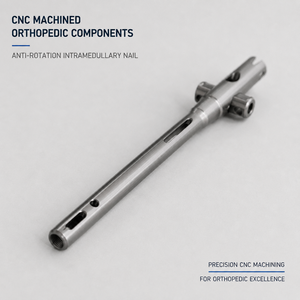
Featured Product Catalog
Precision Implants & Instrument Systems for Export
Engineered to international ISO 13485 standards, featuring medical-grade Titanium alloys (Ti-6Al-4V ELI) and PEEK materials optimized for trauma, spine, and joint reconstruction surgeries.
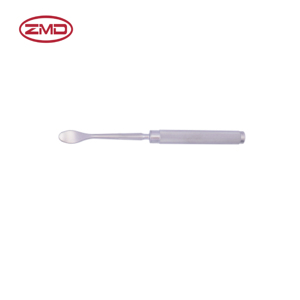
Veterinary Pubic Bone Separator: Aids Orthopaedic Implant, Separates Animal Pubic Tissues For Precise Vet Ortho Surgeries
Get Catalog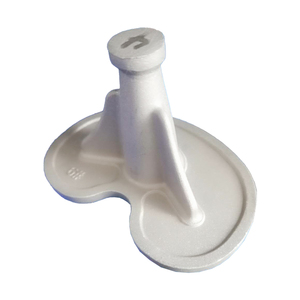
Fast Delivery HKXN Brand Customized Size Orthopedic Implants Knee Hinge Joint CoCrMo Forged Femoral Stem 26-32mm Diameter
Get Catalog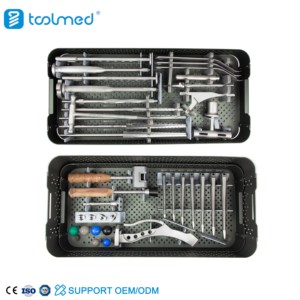
Wholesale High Quality Hip Joint Femoral Instrument Set Bone Reduction Total Knee Joint Replacement Instrument Set Hip and Knee
Get Catalog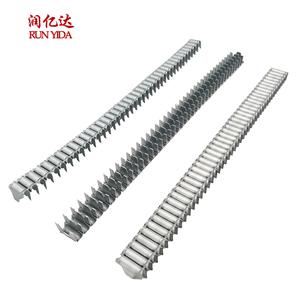
M85 CL-36 U-Type Iron Staples Insulated Staple Fastener Mattress Clip Bonell Nail for Fencing Smooth Shank Carton Packed
Get Catalog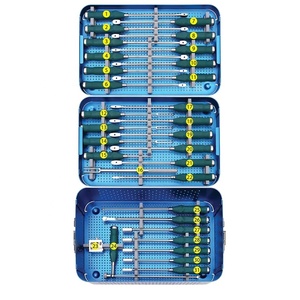
High Quality German Stainless Steel Manual Reusable Posterior Lumbar Interbody Fusion Cage Orthopedic Surgical Instruments CE
Get Catalog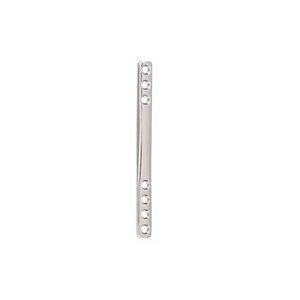
Competitive Price MEDICA Brand Orthopedic Implants Stainless Steel 2.0 Straight Hole Plate Type 4 Model AF00920 for Veterinary
Get Catalog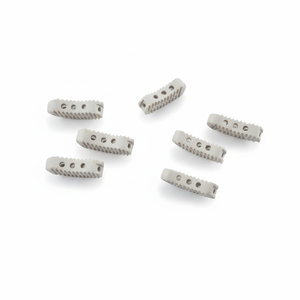
Cages- Transforaminal Lumbar Interbody Fusion (TLIF) ,PEEK (7*10*28 & 8*10*28)
Get CatalogISO 13485
Certified Quality Management
SAL 10-6
Gamma Sterilization Assurance
ÜTS Ready
TİTCK Registration Dossiers
5-Axis
Micron CNC Machining
Executive White Paper: Navigating the Turkish Orthopedic Device Landscape
The Republic of Turkey represents one of the most dynamic and strategically significant markets for medical devices in the Eurasian region. Positioned at the crossroads of Europe, the Middle East, and Central Asia, Turkey’s healthcare system has undergone unprecedented modernization over the past two decades. Driven by the expansion of Universal Health Insurance under the Social Security Institution (Sosyal Güvenlik Kurumu - SGK), the construction of massive integrated health campuses (Şehir Hastaneleri), and an accelerating medical tourism sector, the demand for premium-grade, bio-compatible orthopedic implants has reached historical highs.
For Turkish medical importers, hospital purchasing committees, and clinical distributors, securing reliable supply chains for trauma, spine, arthroplasty, and sports medicine implants requires a dual commitment: uncompromised metallurgical quality and absolute adherence to strict regulatory mandates established by the Turkish Medicines and Medical Devices Agency (Türkiye İlaç ve Tıbbi Cihaz Kurumu - TİTCK).
Key Insight for Importers: Turkey’s alignment with European Union Medical Device Regulation (EU MDR 2017/745) mandates that all class IIa, IIb, and III orthopedic devices imported into the country possess robust technical documentation, full material traceability, and valid CE certification for registration on the National Product Tracking System (Ürün Takip Sistemi - ÜTS).
1. Turkey Market Macro-Economic Drivers & Procurement Ecosystem
To successfully penetrate and scale within the Turkish orthopedic market, global manufacturers and local exporters must evaluate three distinct healthcare delivery vectors:
- Ministry of Health (MoH) City Hospitals (Şehir Hastaneleri): These mega-hospital projects, operating under Public-Private Partnerships (PPP), house thousands of surgical beds equipped with state-of-the-art operating theaters. Procurement is centralized and volume-driven, requiring suppliers to demonstrate consistent batch production, competitive tender pricing, and immediate inventory availability for emergency trauma cases.
- Private Hospital Networks & Health Tourism: Premier health groups such as Acıbadem Healthcare Group, Medical Park (MLP Care), Memorial Health Group, and Florence Nightingale Hospitals serve both domestic private insured patients and over 1.5 million international medical tourists annually. High-end procedures—including complex scoliosis correction, revision hip and knee arthroplasty, and minimally invasive transforaminal lumbar interbody fusions (TLIF)—demand premium materials like Ti-6Al-4V ELI (ASTM F1472) and PEEK Optima.
- University & Academic Research Hospitals: Renowned academic institutions in Istanbul, Ankara, and Izmir drive clinical research and pioneer novel surgical techniques. These centers require specialized OEM instrument sets, 5-axis CNC-machined custom implants, and rigorous mechanical validation test data (ASTM F2193 for spinal screws, ISO 14801 for dental/orthopedic posts).
TİTCK & ÜTS Registration Support
We provide fully compliant Technical Files, GMDN/EMDN code mappings, and Declaration of Conformity documents to expedite your product registration on Turkey’s ÜTS database without regulatory hold-ups.
Direct Logistics to Turkish Ports
Flexible Incoterms including FOB, CIF Istanbul/Izmir/Mersin, and DAP door-to-door delivery. Accelerated customs clearance under Turkish Standards Institution (TSE) import inspections.
Gamma Sterilized Packaging
Available in individual blister pack packaging sterilized via Cobalt-60 Gamma Irradiation achieving Sterility Assurance Level (SAL) 10-6, ready for direct operating room utilization.
2. Biomechanical Engineering & Bio-Material Standards
Surgical failures caused by implant degradation, fatigue fracture, or stress shielding carry severe clinical and financial repercussions. As a dedicated OEM/ODM manufacturer, Orthi Medical enforces strict metallurgical quality control. Every batch of raw material is backed by chemical analysis and mechanical testing certificates compliant with international standards:
| Implant Material Type | International Standard | Tensile Strength (MPa) | Primary Clinical Application in Turkey |
|---|---|---|---|
| Ti-6Al-4V ELI (Extra Low Interstitial) | ASTM F1472 / ISO 5832-3 | ≥ 930 MPa | Anti-Rotation Intramedullary Nails, Locking Bone Plates, Pedicle Screws |
| Unalloyed Titanium (Grades 2 & 3) | ASTM F67 / ISO 5832-2 | 400 – 500 MPa | Cervical Plates, Cranio-Maxillofacial Mesh, Soft Tissue Reconstruction Anchors |
| Cobalt-Chromium-Molybdenum (CoCrMo) | ASTM F75 / ISO 5832-4 | ≥ 660 MPa | Forged Femoral Stems, Hinged Knee Joints, Revision Arthroplasty Implants |
| PEEK OPTIMA® Radiolucent Polymer | ASTM F2026 | 90 – 100 MPa (Flexural) | TLIF/PLIF Cages, Cervical Interbody Fusion Devices, Suture Anchors |
3. Localized Clinical Application Scenarios in Turkish Healthcare
A. Emergency Trauma & High-Energy Fracture Fixation
Turkey’s dense highway networks and industrial hubs generate significant high-energy trauma volume. Surgical teams require robust, intuitive intramedullary nailing systems that minimize fluoroscopy exposure time. Our 5-axis CNC Ti-6Al-4V ELI Anti-Rotation Intramedullary Nails feature proximal and distal multi-planar locking options. Designed for femoral, tibial, and humeral shaft fractures, these nails prevent rotational instability during early weight-bearing rehabilitation in municipal emergency trauma centers.
B. Complex Spine Reconstruction & Deformity Correction
In major academic medical centers across Ankara and Istanbul, spine surgeons perform high volumes of degenerative disc disease surgeries and pediatric scoliosis corrections. Our spinal portfolio—anchored by Transforaminal Lumbar Interbody Fusion (TLIF) PEEK Cages and Posterior Thoracolumbar Pedicle Screw Systems—offers superior radiolucency for post-operative CT/MRI monitoring, dual-thread lead screws for fast pedicle insertion, and anatomically contoured tooth patterns to eliminate graft expulsion.
C. Revision Arthroplasty & Medical Tourism Centers
With Antalya and Istanbul serving as global hubs for joint replacement medical tourism, private hospital networks require long-lasting, customized joint implants. Our CoCrMo Forged Femoral Stems and Hinged Knee Joint Systems provide modular neck angles, polished articulating surfaces, and tapered geometries that ensure primary press-fit mechanical stability and optimized load transfer, minimizing bone resorption.
D. Specialized Veterinary Orthopedics
Beyond human healthcare, Turkey’s agricultural and companion animal veterinary sectors are expanding rapidly. Products like our Veterinary Pubic Bone Separator and Stainless Steel 2.0 Straight Hole Plates empower veterinary surgeons in regional clinics to execute precise pelvic bone reductions and small-animal fracture fixations with human-grade surgical accuracy.
4. Strategic Advantage: Comparative Sourcing Matrix
When selecting an overseas manufacturing partner for the Turkish market, purchasing directors must balance price efficiency against risk mitigation. The matrix below outlines how Orthi Medical delivers tangible information gain and operational margins compared to conventional trading intermediaries:
| Evaluation Parameter | Traditional Trading Companies | European / US Brand Importers | Orthi Medical Direct Manufacturing |
|---|---|---|---|
| Price & SGK Margin | Unpredictable markups; thin distributor margins | Prohibitive pricing; vulnerable to SGK cutbacks | Direct factory rates; max distributor margin |
| ÜTS Regulatory Dossiers | Often incomplete or outdated certificates | Standard dossier; slow local responsiveness | Turnkey CE, ISO 13485 & ÜTS documentation |
| Customization / OEM | Strictly off-the-shelf; no drawing modifications | No custom modification support | Full OEM/ODM from customer CAD drawings |
| Manufacturing Traceability | Third-party vendor mix; high variance | High quality but long lead times | 100% 5-Axis CNC in-house machining & QC |
| Sterilization Options | Non-sterile bulk packing only | Sterile packed at high cost premiums | Co-60 Gamma sterile packaging (SAL 10-6) |
Procurement Guidance
Frequently Asked Questions for Importing Implants into Turkey
Addressing key technical, regulatory, and logistics queries from Turkish medical device buyers.
How do you support product registration on Turkey's ÜTS (Ürün Takip Sistemi)?
We provide full technical documentation required by TİTCK for ÜTS registration. This includes ISO 13485:2016 quality system certificates, CE mark conformity certificates under EU MDR/MDD, raw material mill test certificates (ASTM F1472/F67), biocompatibility test reports (ISO 10993 series), cleanroom validation data, and localized Instructions for Use (IFU) templates.
What bio-materials are utilized in your trauma and spine implant product lines?
Our trauma implants are manufactured exclusively from high-strength Titanium Alloy Ti-6Al-4V ELI (ASTM F1472) and commercially pure Titanium (ASTM F67). For spinal fusion cages, we utilize medical-grade PEEK OPTIMA® (ASTM F2026), providing optimal radiolucency under intraoperative fluoroscopy and elasticity close to human cortical bone. Joint replacement components utilize forged Cobalt-Chromium-Molybdenum (CoCrMo per ASTM F75).
Can implants be shipped pre-sterilized for immediate hospital operating room use?
Yes. We offer pre-packaged, double-blister sterile packaging processed via Cobalt-60 Gamma Ray Irradiation in accordance with ISO 11137 standards, guaranteeing a Sterility Assurance Level (SAL) of 10-6. Each package features clear sterile indicators, batch tracking numbers, and barcode labeling ready for ÜTS matrix scanning.
What OEM / ODM private labeling customization capabilities do you offer?
We provide comprehensive OEM/ODM engineering services, including precision machining based on customer-provided CAD drawings or physical samples, custom laser marking of distributor brand logos and UDI barcodes, anodized color coding for quick surgical identification, custom stainless steel instrument tray design, and private-label packaging.
What are your standard delivery lead times and payment terms for Turkish buyers?
For standard catalog items, orders ship within 15–30 days from order confirmation. Custom OEM projects typically take 45–60 days depending on tooling complexity. We accept flexible international payment methods tailored for Turkish trade, including Irrevocable Commercial Letter of Credit (L/C at sight) and Telegraphic Transfer (T/T).
How do you ensure batch-to-batch quality consistency across large order volumes?
Our manufacturing facility operates under automated 5-axis German CNC milling and Japanese turning centers equipped with in-line laser measurement tools. 100% of critical dimensions undergo Coordinate Measuring Machine (CMM) inspection, optical profile checks, and non-destructive surface flaw testing prior to final cleanroom packaging.