Precision Orthopedic Implants & Surgical Fixation Systems
Explore our core medical device lines engineered with complete technical file documentation packages, raw material mill certificates, and pre-validated sterilization files ready for Dutch market entry.
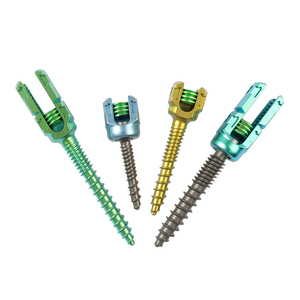
Wholesale Geasure Medical 5.5 Spine Titanium Alloy Pedicle Screws System Surgery High Strength Spinal Screw Implant Lifetime
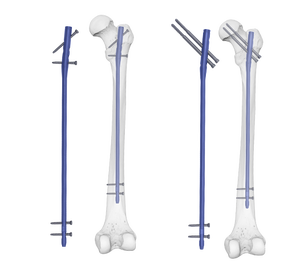
Expert Femoral Intramedullary Nail Orthopedic Implant Femur Fracture Fixation Surgical Medical Device
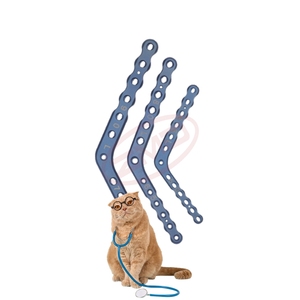
ZMD Medical Orthopedic Titanium Bone Screw Cancellous & Hex Head Cortex Locking Implant 30 Sold Ready to Ship
H Type Gabon Libreville Large Farm 30000 Birds qianmu One Stop Poultry Solution Hot Dip Galvanized Steel Hen Layer Chicken Cage
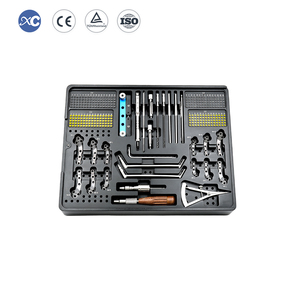
XC MEDICO Factory Price Veterinary Orthopedic Implant 2.7/3.5mm Multi-axial Locking TPLO Bone Plate Set for Vet Fracture Surgery
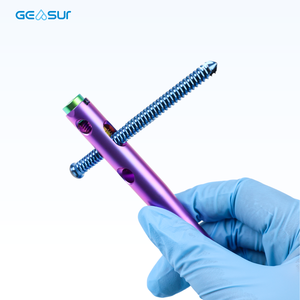
Class III Orthopedic Implants Surgical Nails and Screws Titanium Alloy Hindfoot Fusion and Ankle Nail
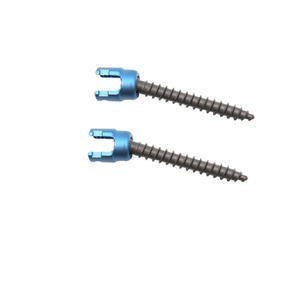
Geasure Orthopedic Material 6.0mm System Nail Screw Polyaxial Spinal Pedicle Screw Spine Screw
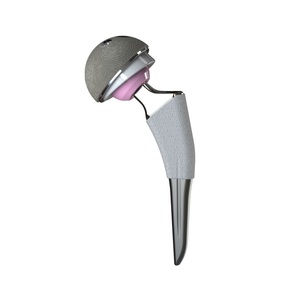
Manufacturer's Long Cementless Femoal Stem HA Coating Hip Prosthesis for Veterinary Hip Joint Surgery
The Evolving Dutch Orthopedic Market: Navigating EU MDR 2017/745 & Supply Integrity
The healthcare system in the Netherlands represents one of Europe's most stringent regulatory environments for medical technology procurement. Comprising prestigious University Medical Centers (NFU network including Amsterdam UMC, UMC Utrecht, and Erasmus MC), Cooperating Top Clinical Hospitals (STZ group), and specialized Independent Treatment Centers (ZBCs - Zelfstandige Behandelcentra), Dutch healthcare institutions demand complete transparency, robust traceability, and undeniable clinical proof from their orthopedic device partners.
Following the full implementation of the European Union Medical Device Regulation (EU MDR 2017/745), the Health and Youth Care Inspectorate (IGJ - Inspectie Gezondheidszorg en Jeugd) has intensified market surveillance over Class IIa, Class IIb, and Class III implantable devices. This regulatory shift has placed immense burden upon Dutch medical device distributors and hospital purchasing boards (Inkoop Medische Hulpmiddelen). Many legacy implant suppliers have struggled to transition their technical files from the old MDD framework to MDR Annex II and III standards, creating critical supply gaps across Dutch operating theaters.
Strategic Advantage for Dutch Buyers: Partnering directly with an ISO 13485 certified orthopedic manufacturing factory that supplies pre-structured, audit-ready Technical Documentation Packages dramatically reduces regulatory approval bottlenecks, accelerates EUDAMED registration, and guarantees uninterrupted device availability.
Our specialized manufacturing facility operates as an OEM/ODM growth engine for medical distributors across Amsterdam, Rotterdam, Utrecht, and Eindhoven. By offering standardized and custom-tailored orthopedic implant documentation packages, we enable Dutch importers and private-label brand owners to seamlessly satisfy Notified Body scrutiny while maintaining lean inventory turnover and competitive clinical margins.
Anatomy of an MDR-Compliant Orthopedic Technical Dossier
A complete breakdown of the technical, mechanical, and biological documentation modules supplied with every factory production lot.
MDR Annex II STED File
Summary of Technical Documentation structured per IMDRF/STED standards for seamless EU Notified Body submission.
- Device Description & Variants Matrix
- GMDN & EMDN Code Mapping
- Basic UDI-DI & UDI-PI Structure
- Dutch & English e-IFU Copies
Risk Management (ISO 14971)
Comprehensive risk-benefit analysis covering design verification, manufacturing tolerances, and intraoperative variables.
- Hazard Identification & dFMEA / pFMEA
- Debris Debris & Fretting Corrosion Risk
- Biomechanical Risk Mitigation
- Benefit-Risk Determination Summary
Biomechanical V&V Testing
Full mechanical verification dossiers tested in accredited ISO 17025 laboratories to withstand physiological loads.
- ASTM F1717 Spinal Screw Fatigue Testing
- ASTM F1264 Intramedullary Nail Bending
- ASTM F382 Metallic Bone Plate Static Flexure
- Torsion & Pull-Out Resistance Data
Biocompatibility (ISO 10993)
Rigorous biological evaluation reports proving complete tissue tolerance for permanent titanium and PEEK implants.
- ISO 10993-5 Cytotoxicity Testing
- ISO 10993-10 Sensitization & Irritation
- ISO 10993-11 Systemic Toxicity Dossier
- USP <85> Bacterial Endotoxin (LAL)
Sterilization & Shelf-Life
Validation dossiers compliant with ISO 11137-1/2 for Co-60 Gamma irradiation and ISO 11607 packaging integrity.
- Sterility Assurance Level SAL 10⁻⁶ Validation
- Tyvek Pouch Seal & Burst Testing
- Accelerated & Real-Time Aging (5 Years)
- Bioburden & Environmental Monitoring
CER & PMCF Strategy
Clinical Evaluation Reports updated per MEDDEV 2.7/1 Rev 4 and MDR Article 61 with continuous post-market plans.
- Clinical Literature Systematic Review
- State-of-the-Art (SOTA) Medical Analysis
- Equivalence Demonstration Files
- PMCF Plan & Dutch Registry Mapping
Material Metallurgy & Precision Manufacturing Integrity
Implants destined for human implantation in Dutch hospitals must exhibit absolute chemical purity, high mechanical fatigue resistance, and controlled surface topography. Our factory source materials are strictly sourced from certified global titanium suppliers, accompanying raw material mill certificates (EN 10204 3.1) for every production batch.
Metallurgical Material Specification Standard
We utilize implant-grade titanium alloys and high-performance polymers compliant with international medical standards:
| Material Designation | Standard Specification | Tensile Strength (MPa) | Yield Strength (MPa) | Primary Clinical Application |
|---|---|---|---|---|
| Ti-6Al-4V ELI (TC4 Grade 23) | ASTM F136 / ISO 5832-3 | ≥ 860 MPa | ≥ 795 MPa | Spinal Pedicle Screws, Intramedullary Nails, Locking Bone Plates |
| Unalloyed Titanium (Grade 2 / 3) | ASTM F67 / ISO 5832-2 | ≥ 345 - 450 MPa | ≥ 275 - 380 MPa | Reconstruction Plates, Cranio-Maxillofacial Screws |
| PEEK-OPTIMA® (Polyetheretherketone) | ASTM F2026 | ≥ 95 MPa | ≥ 90 MPa | Cervical & Lumbar Interbody Fusion Cages, Suture Anchors |
| CoCrMo Alloy (Cobalt-Chrome) | ASTM F75 / ISO 5832-4 | ≥ 665 MPa | ≥ 450 MPa | Femoral Heads, Total Joint Replacement Components |
Precision Machining & Surface Anodization
Our manufacturing complex utilizes 5-axis DMG MORI CNC milling machines, Citizen Swiss-type high-precision turning centers, and precision wire EDM equipment. Critical tolerances are routinely maintained within ±0.005 mm. To enhance corrosion resistance and facilitate color-coded intraoperative identification during surgical procedures, implants undergo controlled Type II electrochemical anodization in cleanroom environments.
Localized Application Scenarios Across the Dutch Healthcare Ecosystem
Understanding how orthopedic hardware flows through the Dutch procurement pipeline is crucial for medical distributors and private label suppliers. Our orthopedic implant documentation packages are structured to serve diverse operational scenarios within the Netherlands:
Scenario A: Academic Surgery & Complex Deformity Correction (NFU Centers)
At major medical research facilities such as UMC Utrecht or Erasmus MC Rotterdam, surgeons perform high-complexity spinal deformities, revision arthroplasty, and severe trauma reconstructions. These institutions require deep technical dossiers containing FEA (Finite Element Analysis) stress models, biocompatibility reports for multi-axial pedicle screws, and complete UDI traceability compatible with hospital electronic health record systems (Epic & ChipSoft HiX).
Scenario B: High-Volume Trauma Fixation in Top Clinical Hospitals (STZ Network)
In high-volume regional trauma centers (such as Catharina Ziekenhuis Eindhoven or OLVG Amsterdam), rapid product availability and error-free sterilization packaging are critical. Our factory provides pre-sterilized double-blister Tyvek packaging options for intramedullary femoral nails and distal radius locking plates. This eliminates hospital central sterile services department (CSSD) reprocessing bottlenecks, allowing Dutch surgical suites to reduce instrument turnover time.
Scenario C: Outpatient Sports Medicine & Day Surgery (ZBC Outpatient Clinics)
Independent Treatment Centers (ZBCs) focus on elective arthroscopic procedures, rotator cuff repairs, and ACL ligament reconstructions. These centers prioritize cost-efficient suture anchors (PEEK & Titanium) and arthroscopy shaver blades accompanied by lean, plug-and-play documentation packages that satisfy IGJ audit inspections without burdensome administrative overhead.
Scenario D: High-End Veterinary Orthopedic Surgeries
Veterinary academic centers (such as the Faculty of Veterinary Medicine at Utrecht University) and private referral animal hospitals across Gelderland and North Brabant require specialized micro-locking plates, TPLO (Tibial Plateau Leveling Osteotomy) plates, and canine total hip prostheses. Our factory provides dedicated veterinary documentation packages, ensuring high mechanical precision tailored for animal anatomical fixation.
Strategic Netherlands Market Trends & Regulatory Shifts
1. The Transition Pressure from MDD to EU MDR 2017/745
With Notified Bodies across Europe facing capacity bottlenecks, many Dutch healthcare providers are experiencing unexpected product disconnections as legacy manufacturers withdraw niche trauma or spinal lines. Factories capable of supplying turnkey, MDR-compliant technical dossiers provide Dutch distributors with a competitive edge, allowing them to rapidly gain market share where legacy brands stall.
2. Circular Economy & Sustainable Medical Packaging (Green Deal Zorg 3.0)
Dutch hospitals are active signatories to the Green Deal Duurzame Zorg 3.0, targeting carbon footprint reductions and waste minimization in operating rooms. Our factory supports this initiative by engineering eco-conscious secondary packaging materials, optimizing packaging volume, and utilizing recyclable protective sleeves without compromising ISO 11607 sterile barrier integrity.
3. Mandatory EUDAMED & Digital Traceability Integration
Under Dutch law, device traceability from factory floor to patient registration is enforced. All our implant packaging features GS1-compliant DataMatrix UDI codes containing global trade item numbers (GTIN), lot numbers, production dates, and expiry dates, allowing seamless scanning into Dutch National Implant Register (LIR - Landelijk Implantaten Register).
Dutch Procurement & Technical Documentation FAQ
Addressing key regulatory, logistical, and technical inquiries for Dutch medical device importers and procurement officers.
Empower Your Orthopedic Supply Chain in the Netherlands
Partner with an established manufacturing factory that delivers high-precision medical implants alongside audit-ready EU MDR Technical Documentation Packages. Request sample dossiers, engineering consultation, or a factory quote today.