High-Demand Orthopedic Implants & Systems for Brazil
Engineered to rigorous ASTM specifications with ISO 13485 quality control, providing Brazilian orthopedic importers with reliable, cost-effective, and hospital-ready surgical solutions.
Bone China Plate Luxury Gold Rim Hotel Bone China Dinnerware Wholesale Ceramic Tableware Other Hotel & Restaurant Supplies
Send an Inquiry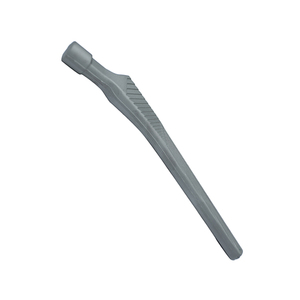
High Quality Forged Ti6Ai4V Hip Joint Prosthesis Orthopedic Implant ISO 13485 Certified Customized Size HKXN Brand
Send an Inquiry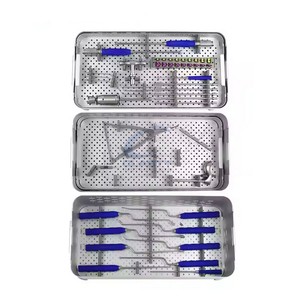
TLIF Cage Instrument Set Stainless Steel Manual Spinal Fusion Surgical Instruments PEEK Interbody Cage Implant System Orthopedic
Send an Inquiry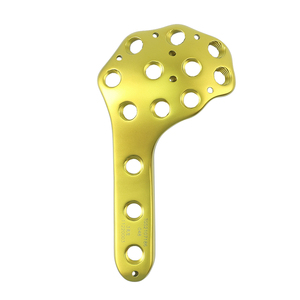
Hot Selling Geasure Anatomic Distal Femoral Locking Plate For Femur Fracture Fixation Surgery
Send an Inquiry
Elegant European Style Large Metal Bird Cage Solid Wood Station Pole Bottom Basin Food Cup Caster Beautiful Garden Tool Holder
Send an Inquiry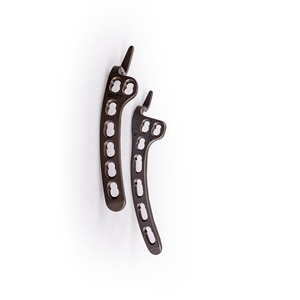
Titanium & Stainless Steel Clavicle Hook Locking Compression Plate for Acromioclavicular Joint Fixation
Send an Inquiry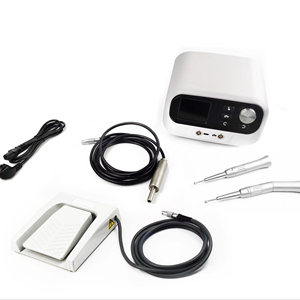
High-Speed Reusable Electric Craniotomy System for Surgical Neurosurgery Micro Polish & Reaming System Dog Animal Friendly
Send an Inquiry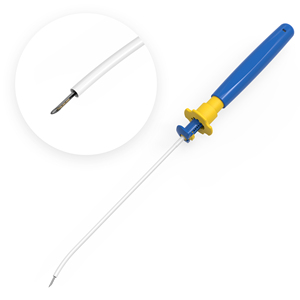
CANWELL Meniscal Repair System Arthroscopic Surgery Meniscus Sutura Device Tap Fast Fix All Inside Orthopedic CE
Send an InquiryLeading Manufacturing Partner for Brazilian Orthopedic Distributors
The Latin American healthcare market—led by Brazil—is undergoing a rapid technological evolution. For medical device importers, hospital supply network managers, and local brand owners in Brazil, selecting an international orthopedic manufacturing partner is not merely a purchasing decision; it is a critical regulatory, clinical, and commercial alliance. As an established ISO 13485 and CE-certified manufacturer of trauma, spinal, sports medicine, joint arthroplasty, and minimally invasive surgical systems, our facility stands at the forefront of precision orthopedic engineering.
Our manufacturing complex houses high-precision multi-axis CNC Swiss lathe systems, high-speed vertical machining centers, wire-EDM machinery, and automated surface treatment lines (anodizing, micro-blasting, and HA coating). By maintaining 100% in-house quality inspection—spanning incoming material spectrographic verification to final coordinate measuring machine (CMM) dimensional checks—we empower Brazilian distributors to compete aggressively in both private hospital groups (Rede D'Or, Hospital Albert Einstein) and public health system tenders.
Localized Orthopedic Application Scenarios across Brazil
Understanding the operational division between SUS (Sistema Único de Saúde) and the supplementary private health sector (ANS) is vital for maximizing market penetration.
1. High-Volume Metropolitan Trauma Networks (SUS & Emergency Hubs)
Major urban agglomerations such as São Paulo, Rio de Janeiro, and Belo Horizonte demand robust, highly versatile trauma fixation hardware. High traffic collision rates and industrial incidents drive immediate demand for anatomically pre-contoured distal femoral locking plates, proximal humeral plates, and cannulated compression screw systems (Ø2.5–6.5 mm). Implants destined for public trauma centers must combine high yield strength with cost efficiency, ensuring rapid surgical turnaround and minimal construct failure.
2. Private Arthroplasty & Joint Reconstruction Clinics
Brazil’s aging demographic profile has led to an exponential increase in primary Total Hip Arthroplasty (THA) and Total Knee Arthroplasty (TKA) procedures. Private orthopedic hospitals require premium cementless femoral stems with Plasma-sprayed Hydroxyapatite (HA) or porous titanium coatings for optimal osseointegration. Our Ti6Al4V hip prostheses and modular acetabular cup systems accommodate highly cross-linked polyethylene (HXLPE) and biolox ceramic options, meeting the high expectation of Brazilian orthopedic specialists.
3. Minimally Invasive Spine & Biportal Endoscopy (UBE) Centers
Spinal surgery in Brazil is moving decisively toward ultra-minimally invasive techniques to reduce hospitalization duration and infection rates. Unilateral Biportal Endoscopy (UBE) and transforaminal endoscopic spine procedures are gaining immense traction in regional medical hubs (e.g., Curitiba, Porto Alegre, Brasília). We supply specialized UBE instrument sets, 4K endoscopic camera systems, radiofrequency plasma ablation probes, PEEK zero-profile cervical cages, and cannulated pedicle screws for cement-augmented thoracolumbar fixation.
4. Sports Medicine & Arthroscopic Knee/Shoulder Reconstruction
Sports-related injuries (anterior cruciate ligament tears, rotator cuff tears, meniscal lesions) represent a high-margin segment in private Brazilian surgical centers. Our PEEK suture anchors pre-loaded with ultra-high-molecular-weight polyethylene (UHMWPE) sutures, fast-fix meniscal repair devices, PCL reconstruction drill guides, and precision arthroscopy shaver blades offer surgical teams predictable mechanical fixation and minimal tissue trauma.
Key Trends Shaping Brazil's Orthopedic Import Landscape
Analysis for medical device importers, regulatory agents, and procurement managers aiming for sustainable expansion in Latin America's largest medical market.
ANVISA Regulatory Harmonization (RDC 751/2022 & MDSAP)
ANVISA has modernized its medical device framework through Resolution RDC 751/2022, introducing updated risk categorization, strict UDI (Unique Device Identification) traceability, and rigorous technical dossier guidelines aligned with IMDRF standards. Furthermore, acceptance of the Medical Device Single Audit Program (MDSAP) allows certified overseas manufacturers to streamline Brazilian Good Manufacturing Practices (CBPF - Certificado de Boas Práticas de Fabricação) audits. Importers partnering with manufacturers who possess pre-structured ISO 13485 technical files experience significantly shortened ANVISA review cycles.
Transition Toward Ready-to-Use Sterile Packaged Implants
Brazilian hospitals are increasingly actively discouraging the traditional reprocessing and autoclaving of non-sterile implant trays due to rising steam sterilization energy costs, inventory loss, and hospital-acquired infection (HAI) liability. Implants pre-sealed in double-blister Tyvek packaging and sterilized via Gamma Irradiation (Co-60, SAL 10-6) are experiencing rapid adoption. This transition drastically reduces operating theater preparation times and simplifies inventory tracking for distributors.
Commercial Takeaways for Importers:
- Rising Private Health Expenditure: Beneficiaries in supplementary health plans (ANS) have crossed 50 million, creating continuous demand for high-end PEEK and titanium implants.
- Cost Pressures in SUS Tenders: Public sector purchasing emphasizes high structural durability at competitive unit prices, favoring manufacturers capable of high-scale automated production.
- Expansion of Private Label (OEM): Established Brazilian distributors are shifting from representing foreign brands to registering proprietary private labels to capture higher gross margins.
Biocompatibility, Material Rigor & Testing Metrics
Every bone plate, intramedullary nail, spinal screw, and joint prosthesis is crafted from medical-grade raw materials conforming strictly to international ASTM & ISO standards.
| Material Classification | International Standard | Mechanical Properties | Primary Clinical Application |
|---|---|---|---|
| Titanium Alloy (Ti-6Al-4V ELI) | ASTM F1472 / ISO 5832-3 | Tensile Strength ≥ 930 MPa Yield Strength ≥ 860 MPa |
Locking Bone Plates, Pedicle Screws, Hip Stems, Intramedullary Nails |
| Unalloyed Titanium (TA2 / TA3) | ASTM F67 / ISO 5832-2 | Tensile Strength 400–500 MPa High Ductility & Corrosion Resistance |
Cranial Plates, Rib Fixation Systems, Reconstruction Plates |
| PEEK (Polyetheretherketone) | ASTM F2026 | Flexural Modulus ~3.5 GPa (Close match to human cortical bone) |
Interbody Fusion Cages (TLIF/PLIF/ALIF), Cervical Cages, Suture Anchors |
| Ultra-High-Molecular-Weight PE | ASTM F648 / ISO 5834-2 | High Impact Strength Ultra-Low Wear Coefficient |
Acetabular Liners, Tibial Inserts, Suture Anchor Threads |
| Medical Grade Stainless Steel | ASTM F138 / ISO 5832-1 (316L) | High Fatigue Limit Superior Rigidity |
Spinal Reduction Forceps, Bone Rasps, Surgical Drill Bits, Trauma Instrumentation |
Automated Quality Assurance
Our manufacturing workflow integrates 3D Optical Coordinate Measurement, surface roughness profiling, and 100% thread gauge verification for every single locking screw produced.
Static & Dynamic Fatigue Testing
Implants undergo rigorous biomechanical fatigue testing (axial compression, four-point bending, torsional shear) in accordance with ASTM F382 (bone plates) and ASTM F1717 (spinal constructs).
Cleanroom Packaging Environment
Sterile products are cleaned in automated multi-stage ultrasonic lines and packaged in Class 100,000 (ISO Class 8) cleanrooms before gamma irradiation processing.
Why Leading Brazilian Exporters & Distributors Partner With Us
- Full-Portfolio Consolidation: Instead of managing fragmented suppliers across Asia and Europe, Brazilian distributors can source Trauma, Spine, Arthroplasty, Sports Medicine, UBE, and Stent lines from a single, standardized manufacturer.
- Custom OEM & Private Label Services: Full drawing-based CNC machining capabilities. We provide custom anodized color-coding, laser marking of local brand logos, custom instrument tray layouts, and customized box artwork.
- ANVISA Technical File Support: We supply raw material trace certificates, biocompatibility test reports (ISO 10993 series), gamma sterilization validation files (ISO 11137), and Portuguese IFU templates for seamless registration.
- Surgeon Education & Cadaver Workshops: To facilitate localized clinical adoption, we support our commercial partners with step-by-step surgical technique guides, 3D animated surgical videos, plastic bone demonstration models, and hands-on cadaver lab arrangements.
Streamline Your Import Process
Connect directly with our Latin American regional export directors to discuss bulk pricing, MOQ flexibility, and ANVISA dossier preparation.
Send an InquiryFrequently Asked Questions by Brazilian Buyers
Addressing critical technical, regulatory, and commercial concerns for orthopedic device importers in Brazil.
1. How do your products support ANVISA registration under RDC 751/2022?
2. Can you manufacture implants and instruments under private label (OEM) for our Brazilian brand?
3. What is the Sterility Assurance Level (SAL) of your pre-packaged implants?
4. What are the typical production lead times and shipping options to Brazil?
5. Do you provide surgical technique guides and clinical training materials in Portuguese?
6. What materials are utilized for your spinal interbody cages and suture anchors?
Expand Your Orthopedic Market Share in Brazil
Partner with an established ISO 13485 manufacturer to secure high-precision trauma, spine, joint, and sports medicine implants with full ANVISA registration technical files.
Send an Inquiry