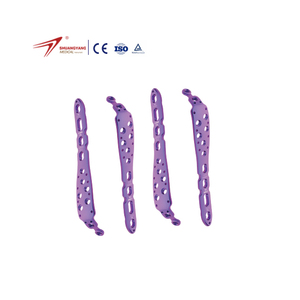
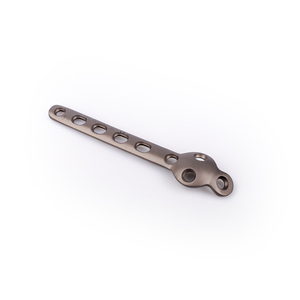
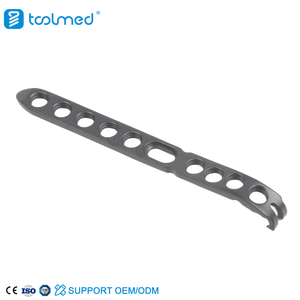
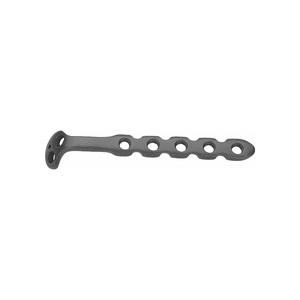
Featured Olecranon Locking Plate Systems
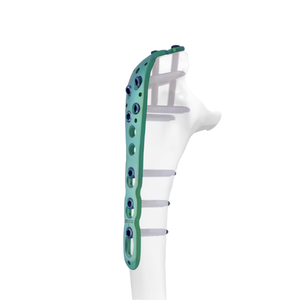
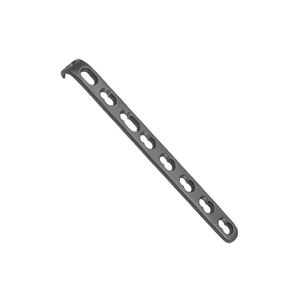
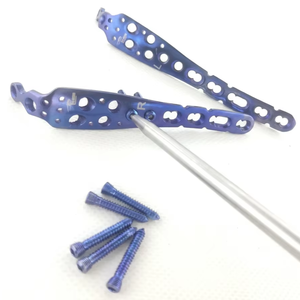
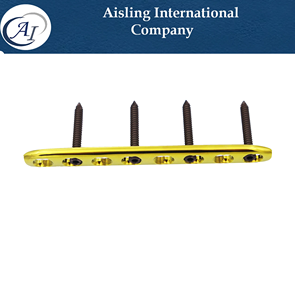
Precision-engineered proximal ulna fixation implants designed for anatomical congruency, optimal subchondral screw placement, and low-profile subcutaneous contouring.
Clinical Overview & Market Intelligence: Olecranon Fixation in Ireland
Navigating anatomical complexities, tension-band limitations, and HSE regulatory compliance for orthopaedic trauma procurement across the Republic of Ireland.
The Biomechanical Shift in Irish Orthopaedic Trauma
Proximal ulna fractures—specifically those involving the olecranon process—account for approximately 10% of all upper extremity fractures in adult trauma presentations across Ireland's major orthopaedic centers, including St. Vincent's University Hospital (Dublin), Cork University Hospital (CUH), and University Hospital Galway (UHG). Historically, tension-band wiring (TBW) served as the primary intervention for simple transverse olecranon fractures (Mayo Type IIA). However, modern biomechanical analysis and Irish clinical registries highlight significant drawbacks with traditional TBW, including high symptomatic hardware prominence rates (up to 42%), K-wire migration, skin breakdown over the subcutaneous apex, and secondary loss of reduction in comminuted or osteoporotic bone.
Anatomically pre-contoured Titanium Olecranon Locking Compression Plates (LCP) represent a transformative paradigm. By converting shear forces exerted by the triceps brachii tendon into axial compression across the fracture gap, locking plate constructs deliver rigid internal fixation. This enables immediate postoperative elbow mobilization, mitigating joint stiffness and post-traumatic osteoarthritis—a priority for active populations engaged in Gaelic Athletic Association (GAA) sports, rugby, and manual agricultural industries in rural Ireland.
Irish Regulatory Alignment & HSE Procurement Norms
Procuring surgical devices for hospitals within the Health Service Executive (HSE) framework or private hospital alliances (such as Blackrock Health, Hermitage Medical Clinic, and Beacon Hospital) demands strict adherence to European regulations and localized supply chain stability:
- EU MDR 2017/745 Technical Compliance: All Class IIb olecranon locking plates must maintain verified Notified Body certification, complete clinical evaluation reports (CER), and UDI (Unique Device Identification) barcoding for seamless traceability.
- HPRA Registration Standards: Devices must align with the guidelines set forth by the Health Products Regulatory Authority (HPRA) in Ireland, ensuring material safety and post-market surveillance (PMS) compliance.
- HSE Tender Specifications: Hospital procurement teams prioritize standardized 3.5mm screw platforms, low-profile plate geometry to prevent skin irritation, and complete modular tray configurations that reduce operating room set-up times.
For complex Mayo Type IIB and Type IIIA olecranon fractures with proximal fragmentation or triceps tendon avulsion, standard flat plates fail to capture small proximal apophyseal fragments. Our Olecranon Hook Reconstruction Locking Plates incorporate dual anatomical proximal tines (hooks) that engage the superior boundary of the olecranon process through the triceps tendon insertion, neutralizing proximal fragment displacement without compromising tendon integrity.
Engineering Architecture & Metallurgical Precision
Detailed structural breakdown of material selection, locking interface physics, and anatomical contour optimization.
Ti-6Al-4V ELI Alloy Metallurgy
Constructed from implant-grade Titanium Alloy (ASTM F136 / ISO 5832-3), our plates offer an optimal elastic modulus (~110 GPa) significantly closer to human cortical bone (~18 GPa) than 316L Stainless Steel (~200 GPa). This dramatic reduction in modulus mitigates stress shielding, promoting secondary bone healing and reducing osteopenia beneath the implant construct.
Combi-Hole Locking Dynamics
Featuring proprietary dynamic compression unit (DCU) combi-holes, surgeons can combine traditional cortical compression with angular stable locking fixation in a single construct. Threaded locking hole geometry creates a rigid fixed-angle construct, essential for maintaining length and alignment in osteoporotic bone prevalent in aging patient demographics.
Subcutaneous Profile & Anodization
Given the minimal soft tissue coverage over the posterior olecranon, our plates are engineered with tapered distal shafts and smooth rounded plate margins (< 2.2mm profile). Type II Hard Anodization treatment creates an inert ceramic-like surface coating, dramatically lowering nickel/chromium ion release and preventing tissue adhesion.
Clinical & Biomechanical Systems Comparison
Quantitative comparison of surgical fixation techniques for Mayo Type II Olecranon Fractures.
| Performance Metric | Tension Band Wiring (TBW) | Non-Locking Stainless Steel Plates | 3.5mm Titanium Anatomical Olecranon Locking Plate |
|---|---|---|---|
| Biomechanical Load to Failure | ~450 N (High risk of wire backing out) | ~720 N (Dependence on friction fit) | > 1,450 N (Fixed-angle construct stability) |
| Symptomatic Hardware Removal Rate | 35% – 52% (Frequent skin irritation) | 18% – 25% (Bulkier profile) | < 4.8% (Ultra-low profile tapered design) |
| Primary Fixation in Osteoporotic Bone | Poor (High rate of screw/wire pullout) | Moderate (Risk of toggle & stripping) | Superior (Threaded locking interface prevents toggle) |
| Postoperative Mobilization Protocol | Delayed (2–3 weeks immobilization) | Moderate (1–2 weeks guarded motion) | Immediate (Day 1 active-assisted ROM allowed) |
| Subchondral Coronoid Screw Targeting | Not Applicable | Unguided / Manual Angle Selection | Dedicated Convergent Screw Trajectories |
| Regulatory & Traceability Integration | Basic Non-Sterile Trays | Standard ISO Batching | Full EU MDR Technical File & Gamma SAL 10-6 Sterile Option |
Localized Application Scenarios Across Irish Clinical Settings
Tailored surgical solutions addressing regional trauma demographics, sports medicine injuries, and emergency orthopaedic workflows.
1. High-Impact GAA & Rugby Sports Trauma
Irish contact sports such as Hurling, Gaelic Football, and Rugby Union subject upper extremities to high-velocity impacts, direct stick blows, and awkward ground falls. These mechanisms frequently cause comminuted proximal ulna fractures with intra-articular extensions into the trochlear notch. Our multi-axial locking plate options allow surgeons to angle screws up to 15° in any direction, capturing small articular fragments and restoring joint congruency for fast athletic recovery.
2. Fragility Fractures in Ireland's Aging Population
With an expanding geriatric demographic across urban areas like Dublin and rural counties like Mayo and Kerry, low-energy fall injuries leading to osteoporotic olecranon fractures are increasing. In compromised bone stock, standard screws often fail to achieve adequate torque. The angular stability of titanium locking screws prevents loss of fixation, enabling early weight-bearing on mobility aids without risking collapse.
3. Revision Arthroplasty & Non-Union Interventions
In revision elbow trauma cases following failed tension-band wires or non-union after conservative management, bone loss around the proximal ulna apex presents a severe challenge. The extended shaft configurations (up to 12 holes) and dual-hook reconstruction variants provide extended leverage and bicortical distal shaft purchase, bridging bone defect zones effortlessly.
Standardized Operative Workflow (Proximal Ulna Fixation)
Direct posterior longitudinal incision slightly curving lateral to the olecranon apex. Clear identification and protection of the ulnar nerve in the medial cubital tunnel.
Anatomical reduction of trochlear notch using reduction forceps or K-wires. Position the proximal hooks into the superior olecranon insertion site of the triceps tendon.
Insert long proximal subchondral locking screws aimed towards the coronoid process. Secure distal shaft combi-holes with cortical or locking screws.
Confirm joint surface congruency and absence of intra-articular screw penetration under C-arm image intensification. Layered tissue closure over plate.
Manufacturer Superiority: OEM / ODM & Supply Chain Resilience
Partnering with healthcare distributors, private-label brands, and hospital procurement groups in Ireland and Europe.
Advanced High-Precision Manufacturing
Our state-of-the-art production facilities feature multi-axis CNC Swiss automatic lathes, 5-axis machining centers (Citizen & Haas), and automated surface finishing systems. We guarantee dimensional tolerances within ±0.01mm for locking thread pitches, ensuring zero cross-threading or head stripping during high-torque surgical insertion.
- 100% CMM optical automated inspection for critical plate geometry and screw hole alignments.
- Fatigue testing exceeds 1,000,000 cyclic loading loops under maximum tension forces (ISO 14801 compliance).
- Custom laser marking for UDI barcodes, lot tracking, and private distributor brand logos.
Seamless European & Ireland Logistics
We understand that supply continuity is paramount for Irish medtech distributors participating in public HSE framework tenders. We offer flexible inventory stocking, rapid sample dispatch, and complete regulatory documentation folders.
- Sterile Packaging: Double-blister Tyvek packaging sterilized via Cobalt-60 Gamma Irradiation (SAL 10-6) with a 5-year shelf-life stability rating.
- Non-Sterile Tray Kits: Customized graphic anodized aluminum sterilization containers formatted specifically for Irish OR autoclave configurations.
- Regulatory Dossiers: Full CE technical documentation, ISO 13485 certificate copies, biocompatibility test reports (ISO 10993), and clinical evaluation data ready for submission.
Frequently Asked Questions by Irish Healthcare Procurement Officers
Addressing regulatory compliance, material verification, minimum order quantities, and surgical training support.
Are your Olecranon Locking Plate systems certified for clinical use under EU MDR 2017/745 in Ireland?
Yes. All our orthopedic implant systems maintain valid Notified Body certification under the European Union Medical Device Regulation (EU MDR 2017/745) as Class IIb surgical implants. They comply fully with HPRA guidelines in Ireland and carry ISO 13485:2016 quality management system accreditation, making them immediately eligible for HSE public tenders and private hospital usage.
What raw titanium grades are utilized in your olecranon plates and screws?
Our olecranon locking plates are manufactured from Titanium Alloy Ti-6Al-4V ELI (Extra Low Interstitial, ASTM F136 / ISO 5832-3) or Grade 4 Pure Titanium (ASTM F67). This ensures maximum fatigue strength (tensile strength ≥ 930 MPa for TC4), optimal biocompatibility, MRI compatibility with reduced artifact scatter, and a modulus of elasticity that minimizes stress shielding.
Can we order custom OEM/ODM configurations with private labeling for the Irish market?
Absolutely. We provide extensive OEM/ODM manufacturing partnerships. We can customize plate contours, modify hole counts (from 3-hole up to 14-hole options), alter screw angle trajectories, laser-engrave custom brand logos or UDI barcodes, and supply branded sterile blister packaging or custom-anodized surgical instrument trays tailored to your distribution requirements.
What options are available for sterile versus non-sterile delivery?
We offer both packaging formats: (1) Individually double-blister sterile packed implants, processed via Cobalt-60 Gamma Sterilization achieving a Sterility Assurance Level (SAL) of 10-6 with 5-year validated shelf life; and (2) Non-sterile batch delivery organized for placement directly into hospital autoclave trays.
How do you support surgeon education and surgical technique adoption in Ireland?
We supply comprehensive clinical resources including step-by-step Surgical Technique Guides (STG), 3D animation videos of plate positioning and screw trajectories, sawbones demonstration sets, and clinical case studies. Additionally, we collaborate with distributor partners to facilitate hands-on workshops and cadaveric lab training for orthopaedic trauma registrars and consultants.
Partner with a World-Class Olecranon Locking Plate Manufacturer
Elevate your orthopedic trauma portfolio in Ireland with EU MDR compliant, anatomically contoured titanium implants. Contact our engineering and OEM sales team today for sample requests, technical dossiers, or distributor pricing terms.
Send an Inquiry