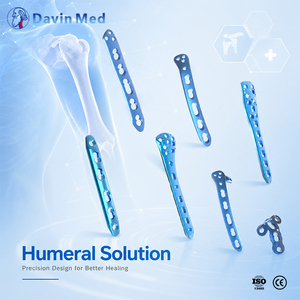
Orthopedic Humeral Plate and Screw System
Anatomically contoured titanium locking plate designed for proximal and shaft humeral fracture fixation, featuring low-profile screw heads to minimize soft tissue irritation.
Inquire NowHigh-precision orthopedic trauma, spine, sports medicine, and maxillofacial implant systems manufactured under strict international regulatory compliance for global distribution.
Anatomically contoured titanium locking plate designed for proximal and shaft humeral fracture fixation, featuring low-profile screw heads to minimize soft tissue irritation.
Inquire Now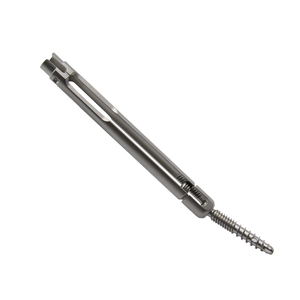
Minimally invasive polyaxial pedicle screw system offering ±25° angular articulation, dual-lead thread for swift insertion, and superior fatigue strength in thoracolumbar surgeries.
Inquire Now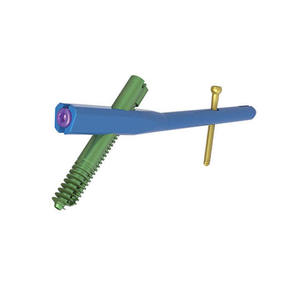
Class III CE/ISO MDD compliant Proximal Femoral Nail Antirotation (PFNA) system engineered for stable fixation of trochanteric fractures with helical blade compaction.
Inquire Now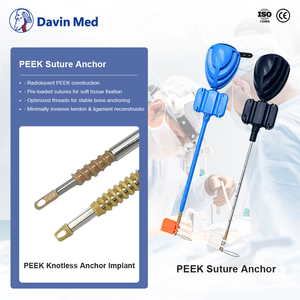
High-strength bio-inert PEEK-OPTIMA suture anchors pre-loaded with ultra-high molecular weight polyethylene (UHMWPE) sutures for rotator cuff and ACL/PCL ligament reconstruction.
Inquire Now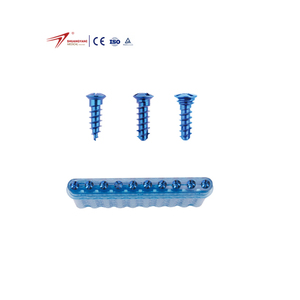
Ultra-low profile 1.5mm / 2.0mm micro titanium locking screw and plate system specifically engineered for neurosurgical, craniomaxillofacial (CMF), and reconstructive procedures.
Inquire Now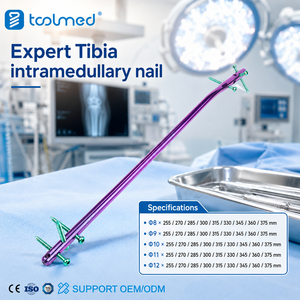
Advanced anatomical tibia nail providing multiplanar distal and proximal locking options, optimizing biomechanical stability for complex tibial shaft fractures.
Inquire Now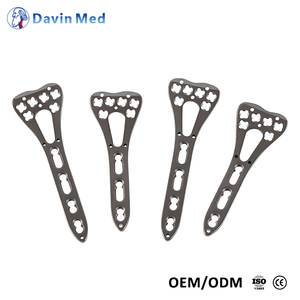
Two-column variable-angle titanium plate system offering anatomical fit and angular stable locking options for complex intra-articular and extra-articular wrist fractures.
Inquire Now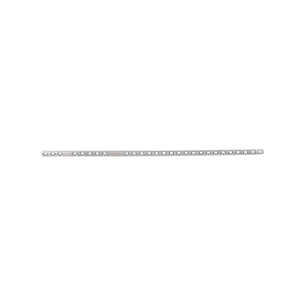
CE-certified 316L surgical stainless steel micro straight plate designed for micro-trauma, veterinary orthopedic reconstruction, and pediatric surgical applications.
Inquire NowThe global market for orthopedic implants is undergoing a fundamental structural transition. Healthcare institutions, regional medical device distributors, and OEM brand holders face severe pressure to reconcile escalating surgical demand with strict clinical cost containment. In regions like Southeast Asia—and specifically Thailand—the demand for high-grade titanium trauma plates, spinal pedicle screw systems, intramedullary nails, and sports medicine suture anchors has surged over the past decade.
Traditionally, hospital procurement departments relied upon tier-one Western multinational brands. However, exorbitant markups, inflexible customization protocols, and protracted supply chain delays have accelerated a strategic migration toward factory-direct manufacturing partnerships. Engaging directly with certified OEM/ODM factories provides medical buyers with transparent unit economics, immediate engineering access for custom implants, and complete control over quality management systems (QMS).
To establish long-term clinical safety and compliance under Google's Search Quality Rater Guidelines (E-E-A-T), factory-direct manufacturing must adhere strictly to international metallurgical standards. Medical-grade titanium alloy Ti-6Al-4V ELI (ASTM F1472 / ISO 5832-3) and pure titanium (ASTM F67) remain the gold standard for trauma and spinal implants due to their exceptional strength-to-weight ratio, corrosion resistance, and favorable modulus of elasticity compared to cortical bone.
For spinal fusion and soft tissue repair, Polyetheretherketone (PEEK-OPTIMA) has emerged as the premier radiolucent polymer. PEEK's mechanical properties closely mimic natural human bone, minimizing the risk of stress shielding while facilitating post-operative radiographical assessment via MRI and CT imaging.
Rigorous raw material selection ensures structural integrity, biomechanical stability, and bio-compatibility across all OEM/ODM surgical implants.
| Material Classification | International Standard | Tensile Strength (MPa) | Yield Strength (MPa) | Primary Clinical Applications |
|---|---|---|---|---|
| Ti-6Al-4V ELI Titanium Alloy | ASTM F1472 / ISO 5832-3 | ≥ 930 MPa | ≥ 860 MPa | Locking plates, intramedullary nails, pedicle screws, arthroplasty stems |
| Pure Titanium (TA2 / TA3) | ASTM F67 / ISO 5832-2 | 400 – 550 MPa | 275 – 480 MPa | Cranial meshes, micro maxillofacial plates, osteotomy staples |
| PEEK Polymer | ASTM F2026 | 90 – 100 MPa | 110 – 130 MPa | Spinal interbody fusion cages, sports medicine suture anchors |
| 316L Implant Stainless Steel | ASTM F138 / ISO 5832-1 | ≥ 860 MPa | ≥ 690 MPa | Temporary fracture fixation, veterinary plates, Kirschner wires |
Understanding how factory-direct OEM/ODM implant solutions integrate into Thailand's unique dual-tier healthcare system and expanding medical tourism network.
Public provincial hospitals under the Ministry of Public Health (MOPH) in Thailand operate within strict fixed-budget constraints. Factory-direct trauma systems—such as PFNA interlocking nails and expert tibia nails—provide certified Class III standards at competitive pricing, enabling high volume trauma care without compromising clinical safety.
Leading private hospital groups in Bangkok, Phuket, and Chiang Mai cater to overseas medical tourists. OEM/ODM private-label capabilities allow these medical networks to brand custom minimally invasive (MIS) spinal systems and sports medicine anchors, delivering premium patient experiences with customized surgical tray configurations.
Thailand's high rate of traffic-related injuries demands immediate availability of versatile, pre-contoured anatomical trauma plates. Direct factory supply lines ensure reliable inventory replenishment of volar radius plates and humeral systems across regional emergency surgical centers.
With Thailand's position as a international hub for combat sports, specialized arthroscopic centers require durable, high-pullout PEEK suture anchors and shaver blades for joint, soft tissue, and ligament reconstruction in active athletes.
Thailand is rapidly transitioning into an aged society. Proximal femoral nails (PFNA) and osteoporotic spinal augmentation pedicle screws address the growing prevalence of hip fractures and vertebral compression fractures among elderly citizens.
Expanding companion-animal healthcare infrastructure across Bangkok utilizes high-fatigue 1.5mm stainless steel straight plates for micro-fracture repair and reconstructive veterinary procedures.
Under the Thai Government's "Thailand Medical Hub" initiative, the nation aims to solidify its status as Southeast Asia's primary center for advanced clinical care and medical technology. This macro policy drives key industry trends for medical device importers, distributors, and contract manufacturers:
The Thai Food and Drug Administration (Thai FDA) under the Ministry of Public Health has aligned its classification framework with the ASEAN Medical Device Directive (AMDD). Implants are classified as Class D (High Risk / Class III equivalent), requiring detailed Common Submission Dossier Template (CSDT) submissions. Factory-direct partners equipped with comprehensive technical documentation, ISO 13485 audit certificates, and full biological evaluation reports streamline this registration hurdle.
To reduce hospital operating room (OR) reprocessing bottlenecks, prevent cross-contamination, and eliminate sterilization overheads, Thai surgical facilities are favoring Gamma Co-60 pre-sterilized implant packaging (SAL 10⁻⁶). Factory-direct suppliers capable of delivering individually sealed, double-blister sterile packs with barcode traceability hold a significant market edge.
Local distributors in Thailand are increasingly establishing proprietary brands to retain market equity. Contract manufacturing solutions—including custom color anodization, laser-engraved catalog numbers, and customized surgical instrument trays—enable regional companies to build independent market presence without incurring capital investments in heavy machinery.
Our state-of-the-art manufacturing infrastructure guarantees absolute mechanical precision, lot-to-lot consistency, and full regulatory audit support.
Utilizing imported high-precision Japanese Citizen and Star 5-axis CNC Swiss-type lathes to machine complex geometries, micro-locking threads, and cannulated shafts with micron-level tolerances.
Primary cleaning, ultrasonic washing, and blister packaging are conducted strictly within ISO Class 7 (Class 100,000) cleanroom environments to maintain low bioburden prior to gamma irradiation.
We provide full technical dossier documentation including raw material mill certificates, fatigue testing reports (ASTM F382/F543), biological evaluation (ISO 10993), and CE compliance files.
Partnering directly with our manufacturing facility follows a standardized five-phase quality gateway to ensure seamless transition from initial CAD design to market distribution:
| Phase | Stage Name | Engineering & Operational Deliverables | Quality Verification Milestone |
|---|---|---|---|
| Phase 01 | Technical CAD Review | Review 2D/3D drawings, define titanium/PEEK material grades, evaluate tolerances. | Design Feasibility Sign-off |
| Phase 02 | Rapid Prototyping | 5-axis CNC sample fabrication, custom tool path generation, surface anodization. | Dimensional Inspection Report (CMM) |
| Phase 03 | Biomechanical Testing | Static/dynamic fatigue testing under ASTM F382 (plates) and ASTM F543 (screws). | Mechanical Pass Certificate |
| Phase 04 | Pilot Mass Production | Batch manufacturing, laser marking, cleanroom washing, Co-60 gamma sterilization. | Sterility Assurance (SAL 10⁻⁶) Validation |
| Phase 05 | Regulatory Dossier Export | Compile CSDT files, Certificate of Free Sale (CFS), ISO 13485 QMS documentation. | Thai FDA & Regional Registration Approval |
Addressing key operational, regulatory, and technical inquiries regarding direct factory sourcing of orthopedic implants.
Our factory provides complete Common Submission Dossier Template (CSDT) documentation, ISO 13485:2016 quality management certificates, Certificate of Free Sale (CFS), and material traceability data required by the Thai FDA Medical Device Control Division for Class D (Class III implantable) regulatory approval.
We utilize certified implant-grade Titanium Alloy Ti-6Al-4V ELI (ASTM F1472) and commercially pure Titanium (ASTM F67). For veterinary and specific trauma plates, surgical 316L Stainless Steel (ASTM F138) is available upon request. Raw materials undergo chemical analysis and mechanical testing prior to CNC machining.
We offer both options. Bone plates, trauma screws, intramedullary nails, and PEEK suture anchors can be supplied in bulk non-sterile form or pre-packaged in dual blister sterile packaging irradiated with Cobalt-60 gamma rays to achieve a Sterility Assurance Level (SAL) of 10⁻⁶.
Yes. As a direct OEM/ODM manufacturer, we specialize in contract manufacturing from customer 2D/3D CAD models (STEP, IGES formats). We perform Finite Element Analysis (FEA), tooling design, prototype machining, and private-label packaging tailored to your brand specifications.
Standard catalog implant systems maintain rolling safety stock with dispatch within 7–14 days. Custom OEM/ODM orders typically require 30–45 days depending on tooling complexity, surface treatment (anodization), cleanroom packaging, and sterilization validation.
Streamline your medical device supply chain in Thailand and Southeast Asia. Connect directly with our engineering team for technical CAD evaluation, sample requests, and competitive direct-factory quotations.
Inquire Now