Featured Non-Locking Bone Plate Systems & Instrument Sets
Engineered for precise osteosynthesis, anatomical contouring, and compliance with rigorous Japanese PMDA safety expectations. Designed for distribution across Tokyo, Osaka, Nagoya, and regional medical hubs.

Bone China Irregular Flower Shape Dinner Plate with Gold Rim
Inquire Now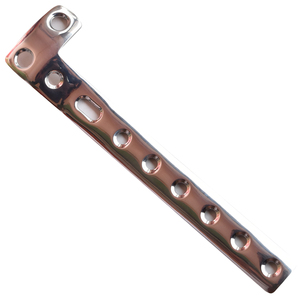
DETAIN IMPEX Orthopedic Surgical Non-Locking Plate Large Fragment Manual Instrument Set
Inquire Now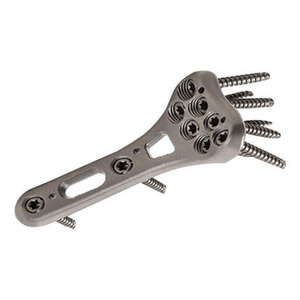
ORTHO ZE High-quality Non-Locking Plate Stainless Steel Bone Fixation Set
Inquire Now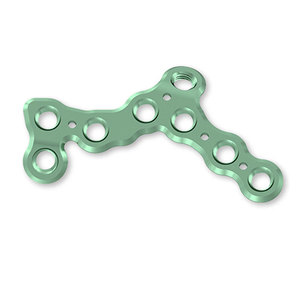
Orthopedic Surgical Trauma Non-Locking Plate Instrument Set Lower Limb Fixation
Inquire Now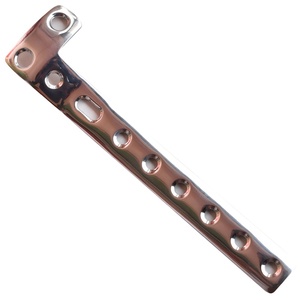
Lower Limb Bone Surgical Trauma Non-Locking Plate Instrument Set CE Certified
Inquire Now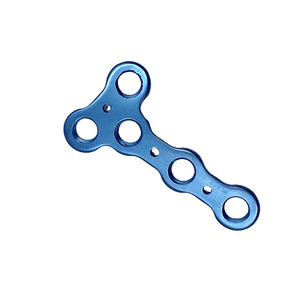
Orthopedic Surgical Trauma Non-Locking Plate Large Fragment Basis Instrument Set
Inquire Now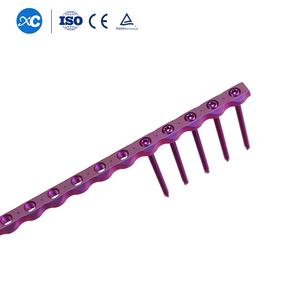
Advanced Plate Systems 1.6/2.4/3.2/4.0 mm ALPS II Veterinary & Micro Fracture Plates
Inquire Now
1.6mm Titanium Orthopedic Micro Bone Fixation Plate for Reusable Manual System
Inquire Now1. Technical Architecture & Biomechanical Mechanics of Non-Locking Bone Plates
Non-locking bone plates—specifically dynamic compression plates (DCP) and limited contact dynamic compression plates (LC-DCP)—remain a fundamental cornerstone in orthopedic trauma surgery across Japan. While fixed-angle locking compression plates (LCP) have expanded in clinical use, non-locking plates offer unmatched intraoperative flexibility, tactile feedback, and optimal dynamic axial compression when managing diaphyseal and simple metaphyseal fractures in patients with robust bone quality.
The biomechanical efficacy of non-locking systems relies on friction generated between the underside of the plate and the periosteal bone surface. By inserting cortical screws in an eccentric position within the oval screw holes, the inclined ramp mechanism forces the bone fragment horizontally toward the fracture line, generating absolute stability and primary bone healing (direct cortical reconstruction without visible callus formation).
Furthermore, non-locking plates serve as essential neutralization plates (protecting lag screw fixation), tension band plates (converting tensile forces into compressive forces on the convex side of curved bones like the femur), and buttress/antiglide plates (preventing shear displacement in articular fractures). Manufacturing factories supplying Japan must strictly maintain low-profile cross-sections with rounded edges to prevent soft-tissue irritation, particularly in slender Asian patient demographics.
Preserved Vascularization
Undercut undercut relief surfaces minimize periosteal contact, preserving micro-vascular perfusion around the fracture zone.
Dynamic Compression Ramp
Precision-machined oval holes enable up to 1.0mm axial compression per screw, establishing absolute interfragmentary rigidity.
JIS & PMDA Standardized
Fabricated using ASTM F67 (Pure Titanium Grade 2/3) or ASTM F1472 (Ti-6Al-4V) fully compliant with Japanese Industrial Standards.
2. Localized Application Scenarios Across Japanese Hospitals & Trauma Centers
Japan presents a distinct clinical landscape characterized by a super-aged society (*Chō-kōreishakai*), where over 29% of the population is aged 65 or older. Consequently, orthopedic trauma surgical protocols across Japanese prefecture university hospitals, Red Cross (*Nippon Red Cross*) facilities, and private orthopedic clinics are highly tailored. Original Equipment Manufacturers (OEM) and factories must adapt product lines to these localized clinical scenarios:
A. Diaphyseal Forearm and Humeral Reconstruction in Active & Geriatric Patients
In mid-shaft radius and ulna fractures, absolute rigidity is imperative to preserve forearm rotation (pronation/supination). Japanese trauma surgeons widely utilize 3.5mm small fragment non-locking compression plates. The tactile feel of screw torque against dense cortex allows surgeons to gauge bone mineral density directly during tightening, avoiding thread stripping—a frequent concern with automated power-driven locking systems.
B. Corrective Osteotomy in Osteoarthritic Knees (Tibia & Fibula Alignment)
Medial compartment knee osteoarthritis is highly prevalent in Japan due to traditional lifestyle habits involving floor sitting (*Seiza*). High tibial osteotomy (HTO) and fibular osteotomy procedures frequently use non-locking tension band and buttress plates to stabilize bone wedges. Plates must be ductile enough to allow custom intraoperative contouring using bending irons without inducing micro-fractures in the metallic grain structure.
C. Pediatric Trauma & Adolescent Sports Injury Fixation
High-energy sports injuries among Japanese youth demand transient internal fixation that does not disrupt open epiphyseal growth plates. Micro non-locking plates (1.5mm, 2.0mm, and 2.7mm systems) provide stable fixation for metacarpal, metatarsal, and clavicular fractures, permitting early functional rehabilitation followed by smooth hardware removal without residual cold-welding risks associated with locking screw threads.
D. Cost-Effective Trauma Care Under Japan's NHI Reimbursement System
Japan’s National Health Insurance (*Shinryo-roshu*) enforces strict official tariff ceilings on medical devices. Non-locking bone plates offer a highly economical, premium-tier alternative to cost-prohibitive locking systems for simple fracture patterns. Hospital procurement committees actively seek reliable foreign manufacturing partners capable of supplying ISO 13485-certified, CE-marked non-locking systems that maximize clinical outcomes while preserving surgical margin profitability.
3. Technical Comparison Matrix: Non-Locking vs. Locking Plates in Japanese Context
To assist Japanese medical device importers, distributors, and hospital purchasing directors in evaluating trauma inventory, the technical specifications matrix below highlights material properties, mechanical behaviors, and procurement factors:
| Parameter / Feature | Standard Non-Locking Plate (DCP / LC-DCP) | Locking Compression Plate (LCP) | Orthi Medical Manufacturing Standard |
|---|---|---|---|
| Fixation Mechanism | Friction between plate & cortex via screw tension | Threaded screw head locks into threaded plate hole | Precision CNC threads & smooth oval countersinks |
| Healing Pathway | Primary healing (Direct osteonal reconstruction) | Secondary healing (Flexible bridge callus formation) | Optimized for zero-gap rigid interfragmentary compression |
| Periosteal Blood Supply | Reduced contact via LC-DCP undercut grooves | No direct periosteal compression required | Low-contact undercut profiles (ISO 5832-2 / 3) |
| Intraoperative Contouring | Highly adaptable; dynamic contouring to anatomical curves | Requires precise anatomical pre-shaping | High-ductility Titanium Grade 4 / Ti-6Al-4V ELI |
| Cold Welding Risk | Zero risk during hardware removal | Moderate to high risk between titanium threads | Surface anodization prevents metal galling & seizure |
| NHI Reimbursement Efficiency | Exceptional cost-to-benefit ratio for standard trauma | Higher tariff burden on Japanese hospital budgets | Competitive OEM pricing for high-margin distribution |
4. Localized Development & Strategic Procurement Trends in Japan (2025–2030)
The Japanese medical device market represents the second-largest orthopedics market globally. Analyzing trends reveals critical shifts influencing how Japanese medical distributors source from overseas manufacturers and factories:
1. Transition Toward Pre-Sterilized, Single-Packaged Implants
Japanese operating rooms are facing severe nursing shortages and rising costs associated with Central Sterile Supply Department (CSSD) reprocessing. The market is shifting rapidly from non-sterile bulk delivery toward gamma-sterilized (Co-60) individual blister packaging with a 5-year shelf life. Manufacturers providing double-barrier sterile packaging meeting ISO 11607-1/2 are gaining significant competitive advantages.
2. Demand for Micro-Contoured Low-Profile Anatomic Plates
Standard Western implants often require extensive intraoperative bending when applied to Asian skeletal anatomy, which increases operating room time and risks fatigue failure. Japanese surgeons favor pre-contoured plates engineered specifically from database scans of East Asian skeletal morphometrics, featuring chamfered edges that eliminate soft-tissue irritation in distal fibula, radius, and clavicle sites.
3. Rigorous PMDA Traceability & UDI Compliance
The Pharmaceuticals and Medical Devices Agency (PMDA) in Japan has tightened regulations regarding Unique Device Identification (UDI) laser marking under GS1 standards. Manufacturers must guarantee 100% laser-etched matrix traceability on every single non-locking plate and bone screw, accompanied by certified raw material heat numbers and mechanical tensile test reports.
4. Shift Toward High-Strength Pure Titanium (Grades 3 & 4)
While 316L stainless steel remains valued for economy, Japanese clinical practice overwhelmingly prefers Pure Titanium (ASTM F67 Grade 4) and Titanium Alloy (Ti-6Al-4V ELI / ASTM F1472). Titanium offers superior biocompatibility, artifact-free MRI/CT imaging, lower elastic modulus closer to human cortical bone, and reduced risk of nickel hypersensitivity reactions among elderly patients.
5. Enterprise Advantages & OEM Manufacturing Capabilities
As a premier medical device manufacturer specializing in orthopedic implants and surgical instrumentation, Orthi Medical Co., Ltd. provides global distributors and Japanese OEM partners with uncompromised engineering precision, regulatory support, and supply chain reliability.
State-of-the-Art Infrastructure
Our facility houses 5-axis DMG MORI CNC milling machines, Citizen Swiss-type lathe centers, and automated surface anodization lines operating inside ISO Class 7 cleanrooms.
PMDA Registration File Support
We deliver complete STED documentation, biocompatibility test reports (ISO 10993 series), dynamic fatigue strength validation (ASTM F382), and raw material certificates for seamless PMDA approval.
Agile OEM / ODM Customization
From private label color anodization to customized instrument trays and sterile blister packaging, we tailor manufacturing strictly to Japanese customer specifications.
6. Japanese Procurement & Importer Frequently Asked Questions (FAQ)
Addressing core technical, regulatory, and commercial inquiries frequently raised by Japanese medical device buyers, regulatory managers, and hospital distribution partners: