Arthroscopic Meniscal Repair Product Line
Advanced All-Inside, Inside-Out, and Hybrid Meniscus Suture Systems Certified for International & Japanese Medical Import Standards
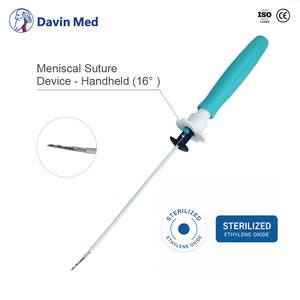
CE ISO Certified Sports Medicine Meniscal Suture Repair System Orthopedic Arthroscopic Instrument Knee Implants
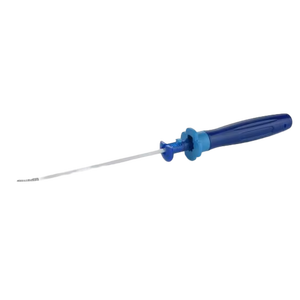
Meniscal Repair System With Fast Fix Needle Interventional Implants & Materials For Meniscus Designed For Men
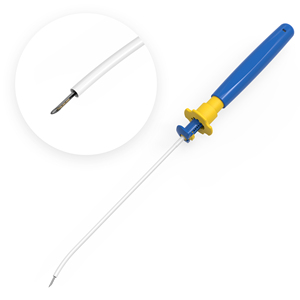
CANWELL Meniscal Repair System Arthroscopic Surgery Meniscus Sutura Device Tap Fast Fix All Inside Orthopedic CE
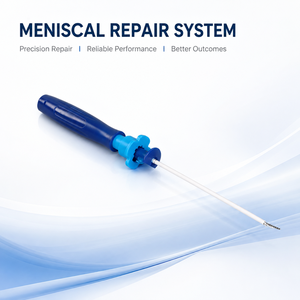
Meniscus Repair Needle Meniscal Repair System Surgical Suture All Inside Needle Repair Meniscus Total Inner Meniscal Stapler
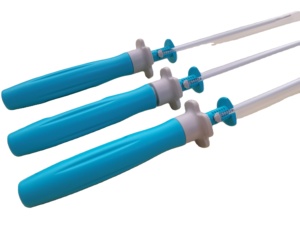
TOOLMED Sport Medicine Straight Form Curved up Kick Down Meniscal Repair Hook Device Class III Orthopedic Surgical Instruments
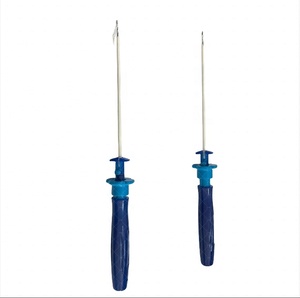
Men's Meniscal Repair System With Fast Fix Needle Interventional Implants Materials Surgical Plate For Hospital Use
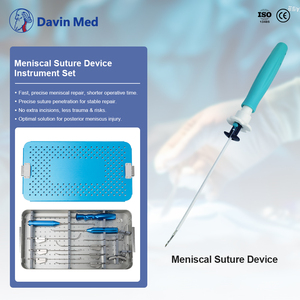
Davin Med Meniscal Repair System Instrument Set Arthroscopic Meniscus Suture Passer Knee Surgery Sports Medicine GE ISO
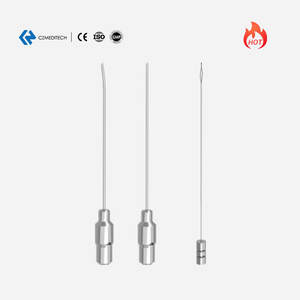
Arthroscopic Precision Repair System CZMEDITECH Meniscal Suture Instruments with Dual Straight/Curved Passers
Nagoya & Chubu Regional Market Dynamics in Sports Medicine
Understanding Clinical Intent, Demographic Shift, and Regulatory Standards in Aichi Prefecture Orthopedic Care
1. The Clinical Paradigm Shift: From Meniscectomy to Joint Preservation in Central Japan
Nagoya, as the industrial and healthcare hub of Japan's Chubu region (Aichi Prefecture), represents one of the most sophisticated orthopedic markets in Asia-Pacific. Major academic medical institutions—such as Nagoya University Hospital, Fujita Health University Hospital, and Aichi Medical University—have pioneered a decisive clinical transition over the past decade. Where partial meniscectomy was once standard for torn fibrocartilage, modern Japanese sports traumatology now heavily emphasizes meniscal preservation and primary repair.
This shift is driven by long-term epidemiological data demonstrating that early meniscal resection accelerates secondary osteoarthritis (OA), creating a substantial burden on Japan's national health insurance system. In Nagoya's highly active population—ranging from youthful athletes in high-school baseball and martial arts to active seniors engaging in traditional floor sitting (Seiza)—preserving maximal meniscal volume and maintaining joint biomechanics is non-negotiable. Consequently, orthopedic procurement heads in Aichi Prefecture actively search for high-pullout strength, low-profile meniscal repair devices capable of facilitating anatomic repair without cartilage abrasion.
PMDA & MHLW Compliance Alignment
Navigating Japan's Pharmaceuticals and Medical Devices Agency (PMDA) regulatory framework requires rigorous technical documentation. Our manufacturing plant provides fully auditable Technical Master Files (TMF) compliant with JMDN code classification for Class III medical devices.
- ISO 13485 & ISO 9001 certified quality system
- Biocompatibility data per ISO 10993 series
- Raw material origin certificates (ASTM F1472, ASTM F67)
Nagoya Supply Chain Resilience
Located near major Asian shipping corridors with direct air routes to Chubu Centrair International Airport (NGO) and Nagoya Port logistics hubs, our factory ensures rapid freight turnarounds and stable safety stock levels for local Japanese distributors.
- Flexible Order Quantities (MOQ) for regional trial units
- Sterile pre-packaged options ready for OR insertion
- Customized OEM inner blister carton branding
High-Flexion Biomechanical Integrity
Japanese clinical lifestyle requires extreme knee flexion (exceeding 135°). Our meniscal repair needles utilize modified tip geometries that penetrate dense collagen matrices smoothly while maintaining non-slippage knot tension under dynamic biomechanical stress.
- UHMWPE suture core offering zero memory stretch
- Pre-curved insertion shafts (12°, 24°, and Kick-Down)
- Knotless toggle design to protect tibial cartilage
Localized Clinical Application Scenarios
Engineered for Precise Arthroscopic Reconstruction Across Diverse Meniscal Pathologies in Nagoya Hospitals
Scenario A: Complex Bucket-Handle Tears in Young Athletes
In athletic centers around Nagoya and Toyota City, bucket-handle tears of the medial meniscus are frequently encountered in soccer, basketball, and judo practitioners. These unstable longitudinal tears require secure anatomical reduction across the red-red and red-white vascular zones.
Device Advantage: Our All-Inside Meniscal Suture Repair System incorporates dual pre-loaded PEEK implants joined by a #2 UHMWPE suture. The low-profile needle tip allows surgeons to access tight posterior compartments through standard anterolateral/anteromedial portals. The self-locking slip knot allows controlled tensioning without manual intra-articular knot tying, reducing OR procedural time by up to 35%.
Scenario B: Posterior Horn Root Repair & High-Flexion Stability
Meniscal root tears severely compromise circumferential hoop stress distribution, leading to joint space narrowing and rapid cartilage breakdown. In Japan, restoring posterior horn root stability is critical to accommodate hyper-flexion during daily cultural activities.
Device Advantage: Combining our 12°/24° Curved Inserters with high-strength PEEK Suture Anchors provides a rigid transtibial pull-out repair construct. The precise laser-etched depth markings on the inserter sheath give orthopedic surgeons in Aichi real-time visual feedback under arthroscopic visualization, preventing neurovascular compromise near the popliteal fossa.
| Meniscal Pathology Zone | Recommended Suture Technique | Ideal Device Configuration | Biomechanical Objective |
|---|---|---|---|
| Posterior Horn (Red-Red Zone) | All-Inside Suture Fixation | Dual PEEK Toggle Implants with #2 UHMWPE | Rigid fixation with zero neurovascular risk posteriorly |
| Middle Body (Red-White Zone) | Inside-Out Cannula System | Curved Dual Straight/Curved Needle Passers | High density vertical mattress sutures for edge apposition |
| Anterior Horn (White-White Zone) | Outside-In Needle Passer | Kick-Down & Curved Hook Instruments | Targeted compression with low risk of anterior pouch irritation |
| Radial & Root Avulsion | Transtibial Pull-out Anchor | PEEK Anchor (4.5mm) + High-Tension Tape | Restoration of native hoop stress circumferential resistance |
Enterprise Advantages & OEM Manufacturing Capabilities
Direct-from-Factory Solutions Tailored for Global Brands & Localized Japanese Medical Distributors
Medical Grade Biomaterials
We source certified bio-compatible materials exclusively. Implants utilize PEEK (Polyetheretherketone) per ASTM F2026 and Titanium Alloy Ti-6Al-4V per ASTM F1472, ensuring excellent radiolucency on MRI/CT scans without metallic artifacts.
Cleanroom & Gamma Sterilization
All implants are processed inside Class 100,000 (ISO Class 8) cleanrooms. We provide Co-60 Gamma Irradiation producing a validated Sterility Assurance Level (SAL) of 10⁻⁶, packaged in double-sterile Tyvek packaging.
Full OEM / ODM Contract Manufacturing
From CAD drawing adaptation to high-precision 5-axis CNC Swiss lathe machining, laser marking, and customized anodization, our engineering team assists Japanese partners with full private label manufacturing.
Material Standards & Mechanical Performance Benchmarks
Our manufacturing facility enforces rigorous quality gates. Below are the mechanical standard verifications for our implant line supplied to international medical buyers:
| Biomaterial Component | International Specification | Tensile Strength / Yield | Biocompatibility & Imaging Profile |
|---|---|---|---|
| Ti-6Al-4V (TC4 Titanium) | ASTM F1472 / ISO 5832-3 | Tensile Strength ≥ 930 MPa | Corrosion resistant, passive oxide layer, biocompatible |
| Pure Titanium (TA2 / TA3) | ASTM F67 / ISO 5832-2 | Yield Strength ≥ 400–500 MPa | Optimal ductility for formable needle shafts and staples |
| PEEK Polymer (Optima Grade) | ASTM F2026 | Flexural Modulus ~3.5 GPa | Match to cortical bone modulus; X-ray radiolucent |
| UHMWPE Suture Braids | ASTM F2848 | Linear Knot Pull > 220 N | Zero degradation, ultra-high tensile strain resistance |
Nagoya Procurement & Regulatory FAQ
Direct Answers to Questions Asked by Japanese Medical Device Importers, Distributors, and Hospital Purchasing Boards
Partner with a Leading Meniscal Repair Device Manufacturer
Enhance Your Sports Medicine Portfolio in the Nagoya Market with Certified Precision Implants, Competitive B2B Factory Pricing, and Full OEM Registration Support.