Surgical & Implant Systems Engineered for Italian Healthcare Standards
Direct factory supply of precision trauma, spinal, dental, sports medicine, and endoscopic systems with full technical files (Annex II & III MDR 2017/745) ready for Ministero della Salute BD/RDM registration.
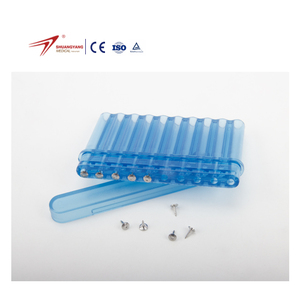
Shuangyang Orthopedic Implant Titanium Alloy Screw Gbr Membrane Bone Tack System Dental Hospital Use CEISO Certified 1 Year
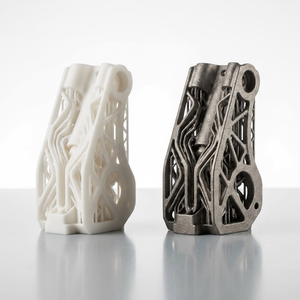
ISO 13485 Biocompatible Titanium SLM 3D Printed Bone Implants for Orthopedic Surgery
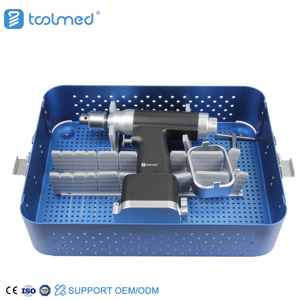
TOOLMED Orthopedic Power Drill Medical For Trauma Joint Operation Surgery Instrument Tool Safe Bone Drill
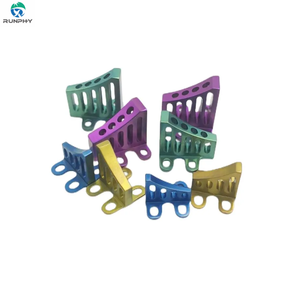
RUNPHY Titanium Gold Veterinary Orthopedic Implant TPLO TTA Rapid Dog Cat Small Animal Tibial Tuberosity Advancement Machined
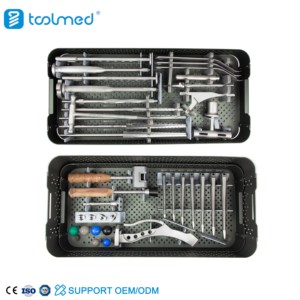
Wholesale High Quality Hip Joint Femoral Instrument Set Bone Reduction Total Knee Joint Replacement Instrument Set Hip and Knee
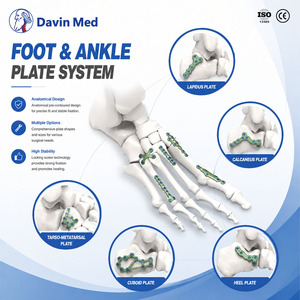
CE ISO13485 Orthopedic Trauma Implants 3.5mm Calcaneal Circumferential Locking Plate For Fracture Fixation
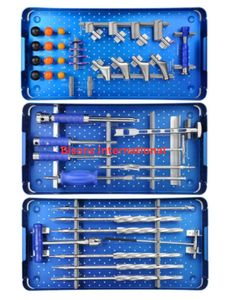
BISONS Wholesale Manual Stainless Steel Modular Stem Hip Arthroplasty Instrument Set for Total Hip Replacement Surgery
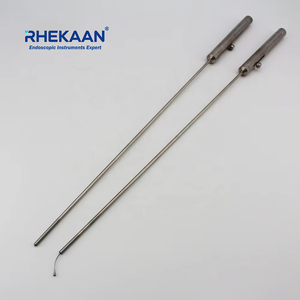
Premium Transforaminal Endoscopic Surgical System Construction Discectomy Endoscopy Extension Type Nerve Probe
Navigating Orthopedic Medical Device Registration for the Italian Healthcare Market
Exporting orthopedic surgical devices to the Italian Republic requires a meticulous alignment between international manufacturing capabilities and local regulatory enforcement. Following the full transition from the legacy Medical Device Directive (MDD 93/42/EEC) to the stringent European Medical Device Regulation (EU MDR 2017/745), medical device manufacturers and Italian importers must fulfill mandatory technical and database requirements before placing any Class I, IIa, IIb, or Class III implant onto the Italian market.
The regulatory oversight in Italy is executed directly by the Ministero della Salute (Italian Ministry of Health) via the Directorate General for Medical Devices and Pharmaceutical Service. For overseas factories seeking OEM/ODM partnerships or direct distributor supply chains in Milan, Rome, Turin, or Naples, achieving registration involves a dual-layered compliance protocol: obtaining CE Marking under MDR from a designated European Notified Body, followed by mandatory registration within the national database, the Banca Dati dei Dispositivi Medici (BD/RDM).
1. Ministero della Salute BD/RDM & CND Classification System
A distinctive feature of the Italian medical device market is the compulsory notification system using the Classificazione Nazionale dei Dispositivi Medici (CND). Every implantable system—ranging from titanium pedicle screws and joint replacement stems to bio-absorbable GBR bone tacks—must be categorized precisely under the CND taxonomy to receive a valid registration number (Numero di Repertorio).
| Orthopedic Device Category | MDR Risk Classification | CND Taxonomic Category | Technical Testing Standards Required |
|---|---|---|---|
| Trauma Plates & Locking Screws | Class IIb (Rule 8) | P0901 - Internal Fixation Devices | ASTM F543, ASTM F382, ISO 5832-3 |
| Spinal Pedicle Screw Systems | Class IIb / Class III (Rule 8/19) | P0907 - Spinal Fixation Systems | ASTM F1717, ASTM F2193, ISO 12189 |
| Total Hip & Knee Arthroplasty Stems | Class III (Rule 8 Reclassified) | P0902 - Joint Prostheses | ISO 7206-4, ISO 14243, ASTM F2064 |
| PEEK & Titanium Suture Anchors | Class IIb (Rule 8) | P0909 - Ligament & Tendon Reconstruction | ASTM F2026, ISO 10993 Biocompatibility |
| SLM 3D-Printed Custom Bone Implants | Class III / Custom-Made Device | P0999 - Specialized Implants | ASTM F3001 (Ti64 Grade 23), ISO 13485 Annex 2 |
2. Essential Regulatory Documentation for Italian Distributors
To support Italian medical device importers and tender participants, our manufacturing facility prepares fully structured Technical Documentation according to Annex II and Annex III of EU MDR 2017/745. This infrastructure drastically shortens registration latency, enabling Italian partners to file for immediate national registration via an authorized EU Representative (EC REP). Core components include:
- Clinical Evaluation Report (CER): Compiled in strict accordance with MEDDEV 2.7/1 Rev 4 and MDR Article 61, backed by post-market clinical follow-up (PMCF) studies and clinical equivalence mapping.
- Summary of Safety and Clinical Performance (SSCP): Publicly accessible document drafted for Class III and implantable devices, supporting transparency for Italian surgeons and hospital procurement boards.
- Basic UDI-DI Assignment: Global Unique Device Identification compliance linked with EUDAMED database nodes and verified for Italian hospital logistics tracking.
- Post-Market Surveillance System (PMS & PSUR): Periodic Safety Update Reports updated annually to meet European vigilance standards (MDR Articles 83-92).
Understanding the Italian Healthcare System & Regional Public Procurement
The Italian public healthcare infrastructure, known as the Servizio Sanitario Nazionale (SSN), operates on a decentralized regional structure divided into 20 regional administrative units and hundreds of Aziende Sanitarie Locali (ASL) and Aziende Ospedaliere (AO). For global orthopedic exporters, entering this market requires an acute understanding of how public tenders (Gare d'Appalto) are structured and evaluated.
Centralized Regional Purchasing Bodies
Public hospital tenders are managed by regional central purchasing agencies such as ARIA S.p.A. (Lombardy), So.Re.Sa. S.p.A. (Campania), SCR Piemonte (Piedmont), and ESTAR (Tuscany), alongside national aggregator Consip. Bidding specifications demand verified CND/BD/RDM registration and rigid compliance with ISO 13485 manufacturing audits.
Private Hospital Networks & Clinical Groups
Beyond public tenders, Italy features world-class private healthcare conglomerates such as Gruppo San Donato, Humanitas Healthcare Group, and GVM Care & Research. Private procurement boards prioritize cost-efficiency, rapid inventory turnarounds, modular instrument tray designs, and custom OEM private-label branding.
Localized Market Trends in Italian Orthopedic Surgery
Demand for advanced orthopedic trauma and reconstructive technologies in Italy is accelerating due to demographic shifts. Italy maintains one of the highest median ages in the European Union, driving an unprecedented demand for primary and revision total joint arthroplasty (TJA), osteoporotic fracture treatment systems, and minimally invasive spinal interventions.
Key clinical preferences observed among Italian orthopedic surgeons include:
- Unilateral Biportal Endoscopy (UBE) & Transforaminal Systems: Rapid transition from traditional open laminectomy to ultra-minimally invasive spinal decompression, requiring specialized 4K camera integration, high-frequency RF probes, and ergonomic nerve retractors.
- Cementless HA-Coated Femoral Stems: High adoption of press-fit, hydroxyapatite-coated titanium stems and 3D porous acetabular cups for rapid biological fixation.
- Anatomical Locking Plates for Fragility Fractures: Specialized pre-contoured low-profile plates designed for osteoporotic calcaneal, distal radial, and proximal humerus fractures with variable-angle locking capabilities.
Factory Infrastructure, Metallurgical Precision & Cleanroom Quality Control
As a dedicated OEM/ODM orthopedic factory exporting across Europe, our production facility combines automated Japanese and Swiss multi-axis CNC machining centers with standardized cleanroom packaging suites. Every implant and surgical instrument set manufactured for Italian distribution adheres to strict metallurgical traceability and internationally recognized standards.
Certified Titanium & PEEK Alloys
We process raw Ti-6Al-4V ELI (ASTM F136 / ISO 5832-3), Commercially Pure Titanium Grade 2/3 (ASTM F67), and PEEK-OPTIMA® (ASTM F2026). Tensile strength tests exceed 930 MPa for TC4 titanium components.
Selective Laser Melting (SLM)
Industrial 3D metal printing capabilities for trabecular porous structures, replicating human cancellous bone modulus to eliminate stress shielding in joint and spinal cages.
Class 10,000 Gamma Packaging
Implants can be supplied pre-sterilized via Cobalt-60 Gamma Irradiation (ISO 11137-1/2) with a guaranteed Sterility Assurance Level (SAL) of 10⁻⁶ in double-barrier Tyvek blister packs.
Subcontract Manufacturing & OEM Capabilities for Italian Brands
We provide full-spectrum contract manufacturing services tailored for European orthopedic brand owners who wish to optimize production costs while maintaining uncompromised quality standards:
- Custom Machining from CAD/CAM Drawings: High-speed 5-axis milling and Citizen Swiss-type lathe turning for complex bone plates, intramedullary nails, and cannulated screws.
- Surface Treatment & Anodizing: Color-coded Type II and Type III hard anodization, micro-blasting, plasma spray hydroxyapatite (HA) coating, and titanium nitride (TiN) gold coating.
- Laser Etching & Private Labeling: Custom Italian packaging design, Italian-language Instructions for Use (IFU per MDR Annex I Chapter III), UDI DataMatrix laser marking, and customized sterilization trays.
Frequently Asked Questions for Italian Importers & Healthcare Distributors
Key regulatory, logistical, and commercial inquiries addressed by our compliance and international sales engineers.
What certifications are provided to register implants with the Italian Ministero della Salute?
We provide a comprehensive Technical Dossier aligned with EU MDR 2017/745 (Annex II & III), including ISO 13485:2016 certification, Notified Body CE certificates, ASTM material test reports, bio-compatibility testing (ISO 10993 series), lifetime fatigue testing reports, and clinical evaluation documentation. These enable your Authorized Representative (EC REP) to register the devices directly in the Ministero della Salute BD/RDM database.
How do you assist Italian distributors competing in public hospital tenders (Gare d'Appalto)?
We assist bidding partners by providing customized tender packs: CND coding alignment, Basic UDI-DI assignments, localized product catalogs, sample trays for surgeon evaluation, competitive pricing structures to navigate national healthcare spending caps, and guaranteed long-term delivery timelines required by regional agencies like ARIA, So.Re.Sa., and Consip.
Can implants be exported pre-sterilized ready for Italian Operating Rooms (OR)?
Yes. Implants including trauma plates, locking screws, intramedullary nails, and spinal cages can be delivered in validated double-layer Tyvek® blister packaging pre-sterilized by Co-60 gamma radiation (SAL 10⁻⁶ per ISO 11137). This eliminates hospital autoclave reprocessing costs for Italian healthcare facilities.
What is the typical lead time for OEM drawing-based custom manufacturing?
For custom OEM implants or customized surgical instrument sets, prototype fabrication typically takes 15 to 25 business days, including CMM inspection reports. Mass production lead times range between 30 and 45 days, depending on surface treatment requirements (e.g., HA coating, anodizing) and sterile packaging specifications.
How is device traceability maintained under the EUDAMED & Italian Payback Mechanism?
All devices feature laser-etched UDI-DI and UDI-PI barcodes (lot number, expiration date, serial number) conforming to GS1 standards. This ensures complete supply chain traceability from raw material titanium ingots down to patient implantation, helping Italian importers navigate national inventory audits and device payback legislation compliance.
Do you offer customized surgical instrument sets for specific implant systems?
Yes. We engineer complete ergonomic surgical instrument trays matching each trauma, spine, or arthroplasty system. Instrument trays are built from aircraft-grade aluminum or radel polymer, designed for repeated autoclave cycle durability, complete with color-coded silicon inserts and laser-marked step-by-step surgical sequence cues.
Expand Your Orthopedic Line in the Italian Market
Partner with an ISO 13485 certified factory capable of meeting strict EU MDR 2017/745 compliance. Request technical dossiers, OEM quotes, or registration samples today.
Send an Inquiry