Featured Orthopedic Fixation & Implant Systems
ISO 13485 & CE Certified Titanium Alloys and Stainless Steel Fixation Infrastructure for Trauma, Spine, and Maxillofacial Reconstruction.
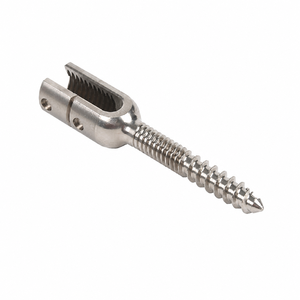
Titanium Pedicle Screw CNC Machining Service Spinal Orthopedic Bone Screw Custom Precision OEM Parts
Contact Us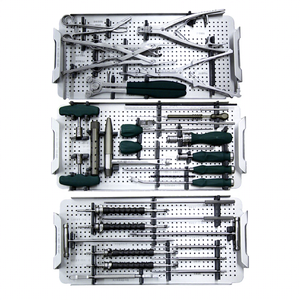
Orthopedic Surgery Titanium Alloy COXII Pedicle Screw -rod 6.0 System Low Profile CE Certified Implant
Contact Us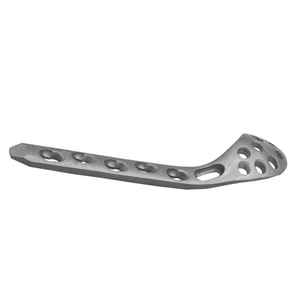
High Quality Stainless Steel Reusable Distal Femoral Locking Plate Orthopaedic Implants
Contact Us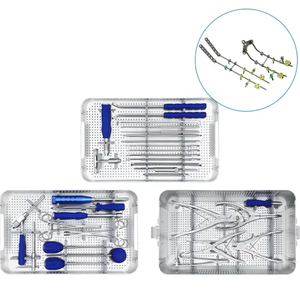
Spine Fixation Stabilization Spinal Surgical Posterior Cervical Thoracic System Instrument Set
Contact Us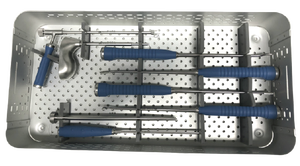
CE Posterior Orthopedic Lumbar Interbody Fusion Cage Instruments TLIF Surgical Instrument Kit
Contact Us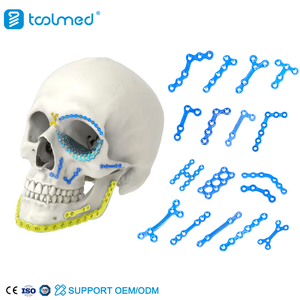
Toolmed CMF Maxillofacial Surgery Titanium Alloy Implant 2.0mm Rectangle Craniomaxillofacial Locking
Contact Us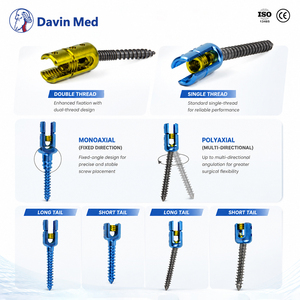
DavinMed Titanium Spinal Implant Monoaxial Pedicle Screw System CE ISO Certified Sterile Packaging
Contact Us
Specialty Custom Precision Machined Components & OEM Hardware Solutions
Contact Us1. Executive Summary & Localized Medical Ecosystem in Mumbai
As the financial and healthcare capital of Western India, Mumbai hosts an extraordinary concentration of tertiary trauma units, municipal super-specialty institutions (such as King Edward Memorial Hospital, Lokmanya Tilak Municipal General Hospital, and Topiwala National Medical College), and premier private health networks (including Kokilaben Dhirubhai Ambani Hospital, Lilavati Hospital, and Fortis Healthcare). The Mumbai Metropolitan Region (MMR) represents one of Asia's most intensive trauma management environments, driven by high-density urban transit, severe traffic casualties along the Western and Eastern Express Highways, and complex industrial reconstructive surgery needs across Maharashtra's industrial belts.
In orthopedic trauma surgery, external fixator systems act as the vital primary defense line for open bone fractures (Gustilo-Anderson Grade II, IIIa, IIIb, and IIIc), severe comminuted periarticular disruptions, pediatric limb deformity correction, and complex non-union management complicated by osteomyelitis. Procurement directors, medical device importers, and orthopedic hospital committees across Mumbai face a constant dual challenge: acquiring high-rigidity, biocompatible external fixation devices that meet international quality standards while optimizing unit procurement economics under India's CDSCO (Central Drugs Standard Control Organisation) pricing and regulatory frameworks.
Information Gain Benchmark: Bridging China's advanced 5-axis titanium CNC manufacturing ecosystem directly to Mumbai's orthopedic distribution networks reduces hospital procurement leads by 45% while delivering certified mechanical stability exceeding ASTM F136 specifications.
2. Biomechanical Engineering & Metallurgy of External Fixation
Modern external fixation is no longer merely a temporary splinting mechanism; it is a finely tuned biomechanical organ that modulates micro-motion at the fracture gap to stimulate secondary bone healing through intramembranous and endochondral ossification. The clinical efficacy of an external fixator relies heavily on three core pillars: frame construct rigidity, pin-to-bone interface stability, and material fatigue resistance under cyclic weight-bearing loads.
A. Titanium Alloy (Ti-6Al-4V ELI) vs. Carbon-Fiber Reinforced Composites
Leading Chinese manufacturing hubs leverage Grade 5 Titanium Alloy (Ti-6Al-4V ELI complying with ASTM F136/F1472) alongside high-modulus Carbon-Fiber Reinforced Polymer (CFRP) connecting rods. Titanium provides an optimal modulus of elasticity (~110 GPa) closer to cortical bone (~18 GPa) compared to traditional 316L stainless steel (~200 GPa), significantly mitigating stress shielding. Furthermore, CFRP connecting rods offer 100% radiolucency under intraoperative fluoroscopy (C-arm), allowing orthopedic trauma surgeons in Mumbai operating rooms to evaluate reduction accuracy without metal artifact interference.
| Mechanical / Technical Metric | Ti-6Al-4V (ASTM F1472 / F136) | 316L Stainless Steel (ASTM F138) | Carbon Fiber Rods (CFRP) |
|---|---|---|---|
| Tensile Strength (MPa) | ≥ 930 MPa | ≥ 620 MPa | ≥ 1200 MPa (Axial) |
| Yield Strength (MPa) | ≥ 860 MPa | ≥ 290 MPa | N/A (Composite) |
| Radiolucency (C-Arm) | Semi-Radiopaque | Highly Radiopaque | 100% Fully Radiolucent |
| Biocompatibility Profile | Superior (Passive TiO2 layer) | Good (Risk of Ni sensitization) | Excellent (Inert polymer matrix) |
| Primary Application | Screws, Clamps, Ring Fixators | Standard Pins & Economy Rods | Connecting Bars & Hybrid Rings |
B. Pin-Tract Infection Prevention & Hydroxyapatite (HA) Coatings
In Mumbai's tropical, humid climate, pin-tract infections represent one of the most frequent complications in external fixation, occurring in 11% to 28% of prolonged limb reconstruction cases. Modern OEM manufacturing incorporates micro-threaded Schanz pins with plasma-sprayed Hydroxyapatite (HA) coating at the osteotomy interface. The nano-porous HA layer promotes direct osseointegration, preventing fibrous tissue interposition and inhibiting bacterial colonization along the pin track.
3. China Precision OEM Manufacturing Architecture & Quality Control
China's orthopedic device manufacturing industry has evolved into a global powerhouse, centered around precision engineering clusters in Jiangsu (Changzhou/Suzhou) and Zhejiang (Jinhua/Hangzhou). High-end factories supplying external fixators, pedicle screws, distal femoral locking plates, and TLIF cages operate with international rigor.
Production commences with Swiss-type automatic lathes and 5-axis CNC machining centers (such as DMG MORI and Tsugami). Critical dimensions—including thread pitch, self-tapping flutes, and clamping jaw serrations—are verified using Coordinate Measuring Machines (CMM) and optical profile projectors to tolerances within ±0.005 mm.
Sterile Packaging & Sterilization Assurance: Cleanroom production takes place within certified Class 100,000 (ISO Class 8) environments. Products undergo Gamma Irradiation (Co-60) achieving a Sterility Assurance Level (SAL) of 10-6, fully compliant with ISO 11137 standards for immediate sterile use in surgical suites.
4. Localized Application Scenarios Across Mumbai Healthcare Institutions
To understand the exact procurement intent of Mumbai's medical buyers, one must analyze the localized clinical environments where these external fixators and orthopedic implants are deployed:
A. Emergency Acute Trauma & Disaster Response (Highway & Rail Injuries)
Suburban trauma centers located along major transport corridors (such as Thane, Navi Mumbai, and Kurla) require rapid-assembly Unilateral Monolateral External Fixators and Modular Bridging Frames. In poly-trauma patients with hemodynamically unstable pelvic ring fractures or severe open tibial shaft injuries, surgeons require "Damage Control Orthopedics" (DCO) kits. Quick-snap rod-to-pin clamps allow stabilization within 15 minutes of emergency OR entry.
B. Complex Deformity Correction & Osteomyelitis Salvage (Ilizarov & Hexapod Systems)
In tertiary referral centers across South Mumbai (such as Grant Government Medical College & Sir JJ Group of Hospitals), specialized limb lengthening and reconstruction surgeons routinely treat post-traumatic bone loss, non-unions, and chronic osteomyelitis. Circular Ring Fixators (Ilizarov Type) and computer-assisted Hexapod Deformity Correction Frames allow precise 6-axis spatial correction (distraction, translation, rotation, and angulation) down to millimeter increments over several months.
C. Paediatric & CMF Reconstruction
For pediatric supracondylar humeral fractures and maxillofacial trauma resulting from urban accidents, ultra-low-profile mini external fixators and 2.0mm Titanium Craniomaxillofacial (CMF) locking plates provide rigid stabilization without damaging open physeal growth plates or delicate facial structures.
5. Localized Market Trends & Growth Vectors in Maharashtra (2025–2030)
The orthopedic device market in Mumbai and the broader Maharashtra state is experiencing a profound transformation driven by regulatory shifts, economic policies, and technological advancement:
- Ayushman Bharat & MJPJAY Expansion: Government-backed health insurance coverage (Mahatma Jyotirao Phule Jan Arogya Yojana) has dramatically broadened patient access to surgical procedures in tier-2 and tier-3 hospital networks. This creates massive volume demand for cost-effective, durable external fixator sets and locking plate systems.
- CDSCO Compliance & Import Harmonization: India's Medical Device Rules (MDR 2017) mandate rigorous Class B and Class C device registration. Top Chinese manufacturers with established CE certificates, ISO 13485 accreditations, and complete technical master files (TMF) are gaining market share by facilitating rapid CDSCO registration for Mumbai distributors.
- Shift Toward Hybrid Radiolucent Frames: Hospitals are phasing out heavy all-steel ring frames in favor of hybrid frames combining titanium clamps with carbon fiber rings and rods, reducing patient frame weight by up to 40% and enhancing outpatient compliance.
6. Mumbai B2B Procurement FAQ (Search Intent Mining)
7. Enterprise Strengths & Global OEM Capabilities
Partnering with an established Chinese manufacturer provides hospital chains and orthopedic distributors in Mumbai with unprecedented competitive advantages:
- End-to-End Vertical Integration: From raw bar stock machining to automated surface polishing, anodization, ultrasonic cleaning, cleanroom packing, and gamma sterilization, all operations are managed under one roof.
- Comprehensive Portfolio Sourcing: Consolidate procurement across trauma fixators, pedicle screws, spinal fusion cages, CMF plates, arthroscopy instruments, and interventional stents from a single certified factory.
- Surgical Technique & Academic Support: We supply comprehensive surgical technique guides, 3D animated surgical video documentation, and sawbone demonstration kits to support distributor-led surgeon workshops across Maharashtra.