Featured Distal Femoral & Intramedullary Nailing Systems
Precision-engineered CE Certified intramedullary trauma implants designed for supracondylar, condylar, and intertrochanteric fracture fixation. Manufactured in ISO 13485 cleanroom facilities for immediate global distribution.
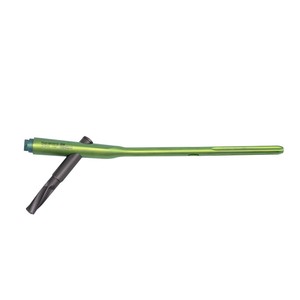
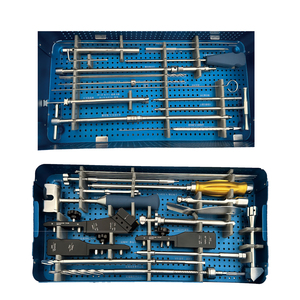
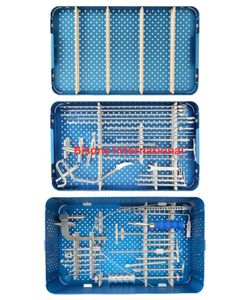
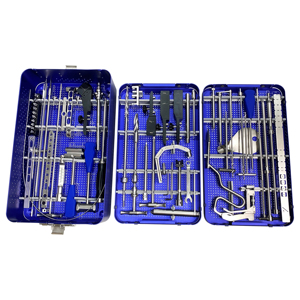
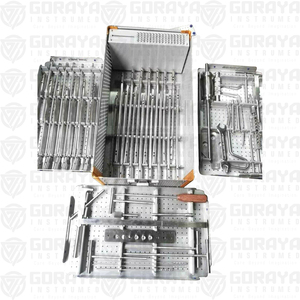
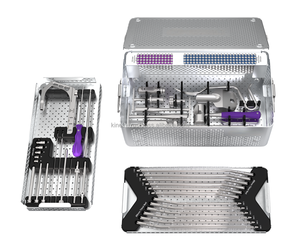
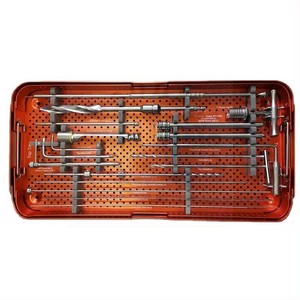
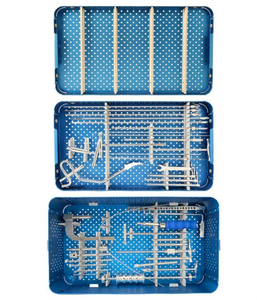
1. Executive Whitepaper: Biomechanical Evolution & Clinical Efficacy of Distal Femoral Nailing
Distal femoral fractures, encompassing AO/OTA 33-A (extra-articular supracondylar), 33-B (partial articular), and 33-C (complete articular disruption), represent complex orthopedic trauma challenges that require precise mechanical stabilization to restore physiological alignment and allow early joint mobilization. Historically, open reduction and internal fixation (ORIF) using lateral locking plates served as the standard of care. However, modern clinical evidence and biomechanical evaluation demonstrate that retrograde distal femoral intramedullary nailing (RIMN) offers definitive biological and structural advantages, particularly in high-energy polytrauma cases and geriatric osteoporotic fractures across Argentine healthcare institutions.
From a structural biomechanics perspective, an intramedullary nail acts as a load-sharing device positioned along the central neutral axis of the femur. This load distribution dramatically reduces the bending moment arm compared to lateral offset plating systems. As a result, distal femoral retrograde nails minimize stress concentration at the fracture site, counteracting varus collapse and shear forces under dynamic axial loading. Furthermore, retrograde insertion via a mini-open trans-patellar tendon or infrapatellar approach preserves the surrounding periosteal blood supply and muscular envelope, drastically decreasing nonunion rates, post-operative infection, and surgical site hematomas.
| Biomechanical Parameter | Ti-6Al-4V ELI Distal Nail | 316L Stainless Steel Nail | Lateral Locking Plate |
|---|---|---|---|
| Load Distribution Pattern | Central Load Sharing (Internal) | Central Load Sharing (Internal) | Eccentric Load Bearing (Off-axis) |
| Bending Moment Arm | Minimal (Aligned with Medullary Canal) | Minimal (Aligned with Medullary Canal) | High (Lateral Offset distance ~30-40mm) |
| Modulus of Elasticity (GPa) | 110 GPa (Reduced Stress Shielding) | 200 GPa (Higher Rigidity) | 110 - 200 GPa |
| Periosteal Disruption | Minimal (Closed/Percutaneous Technique) | Minimal (Closed/Percutaneous Technique) | Extensive (Subperiosteal Stripping) |
| Fatigue Resistance (Cycles at 1.5 kN) | > 5,000,000 Cycles | > 2,500,000 Cycles | > 1,000,000 Cycles |
2. Argentina Healthcare Market Analysis & ANMAT Regulatory Landscape
The Argentine Republic presents a sophisticated and highly regulated medical device market governed by ANMAT (Administración Nacional de Medicamentos, Alimentos y Tecnología Médica). As a Member Country of Mercosur, Argentina enforces stringent quality standards for Class III high-risk implantable devices, including intramedullary nails, bone screws, and spinal fixation systems. Foreign orthopedic manufacturers seeking market entry or supplying local distributors in Buenos Aires, Córdoba, Rosario, and Mendoza must align with specific regulatory directives to streamline customs clearance and hospital tender eligibility.
ANMAT Disposición 3266/13 Compliance
Our full product portfolio is supported by complete technical dossiers (Dossier Técnico) formatted to satisfy ANMAT Disposición 3266/13 and Disposición 2318/02 requirements. We provide comprehensive biocompatibility testing (ISO 10993 series), mechanical verification reports, free sale certificates (FSC) legalized by Apostille, and ISO 13485 certification from EU Notified Bodies.
Public vs. Private Procurement Dynamics
The Argentine health sector operates across three tiers: the Public System (Ministry of Health / Municipal Hospitals), the Social Security System (PAMI, IOMA), and Private Healthcare Organizations (OSDE, Swiss Medical, Galeno). Our direct factory-to-supplier pricing model enables local distributors to remain competitive in cost-sensitive public tenders while delivering premium Ti-6Al-4V implants required by top private clinics.
Optimized Import Logistics & Currency Management
Navigating SIRA/SEDI import approvals and Banco Central (BCRA) foreign exchange regulations requires stable supplier partnerships. We assist Argentine importers with flexible trade terms, multi-currency invoicing options, consolidated freight through Puerto de Buenos Aires or Ezeiza Airport (EZE), and custom product coding to prevent customs classification delays.
3. Localized Clinical Application Scenarios in Argentine Healthcare
Orthopedic surgical practices across Argentina demand versatile trauma systems capable of adapting to diverse patient demographics and clinical environments—from high-volume public emergency trauma centers along major transit corridors (e.g., Ruta Nacional 9 and Avenida General Paz) to specialized geriatric reconstructive surgery suites.
Scenario A: High-Energy Polytrauma & Road Traffic Accidents
In major Level-1 trauma centers such as Hospital General de Agudos Dr. Juan A. Fernández or Hospital Argerich in Buenos Aires, rapid damage control orthopedics (DCO) is critical. Retrograde femoral nailing allows fast, closed intra-medullary alignment under fluoroscopic control without reopening major soft-tissue compartments.
- Minimal Operative Time: Streamlined instrumentation sets facilitate insertion times under 45 minutes.
- Multi-Planar Distal Locking: Four distinct distal locking options ensure optimal rotational stabilization in comminuted supracondylar fractures (AO/OTA 33-C2/C3).
- Reduced Blood Loss: Closed insertion minimizes intraoperative hemorrhage, vital for unstable polytrauma patients.
Scenario B: Geriatric Osteoporotic & Periprosthetic Fractures
Argentina has one of South America's most rapidly aging populations, resulting in a rising incidence of osteoporotic distal femoral fractures and periprosthetic fractures adjacent to Total Knee Arthroplasty (TKA) components treated under PAMI healthcare coverage.
- Intercondylar Box Clearance: Distal nail geometry and specialized low-profile screws fit seamlessly between femoral components of standard total knee implants.
- Spiral Condylar Lock & End Caps: Prevents hardware backing-out and enhances fixation quality in soft, osteopenic bone.
- Immediate Partial Weight-Bearing: High structural rigidity allows rapid post-operative mobilization, preventing respiratory and cardiovascular complications in elderly patients.
4. Advanced Engineering Specifications & Manufacturing Integrity
Our manufacturing facility integrates Swiss-type 5-axis CNC machining centers, automated deep-hole gun drilling technology, and proprietary surface anodization processes. Every distal femoral nail undergoes strict quality verification to guarantee dimensional precision, optimal fatigue life, and seamless pairing with our carbon-fiber radiolucent targeting jigs.
Anatomical Radius of Curvature (ROC)
Engineered with a 1.5m to 2.0m anatomical anteroposterior curvature bow to match the natural geometry of the human femoral canal. This eliminates anterior cortical impingement during nail insertion, reducing the risk of iatrogenic shaft fractures.
Radiolucent Carbon Fiber Jigs
Supplied with ultra-lightweight, high-rigidity carbon fiber targeting frames that remain completely transparent under intraoperative C-arm fluoroscopy. This facilitates precise distal locking screw placement with minimal radiation exposure for surgical staff.
Cleanroom Packaging & Sterility
Implants are cleaned via multi-stage ultrasonic deionized water baths and packaged in ISO Class 7 (Class 10,000) cleanrooms. Supplied either in non-sterile reusable tray configurations or individually sealed double Tyvek blister packs sterilized by Co-60 Gamma Radiation (SAL 10⁻⁶).
5. Frequently Asked Questions (FAQ) for Argentine Procurement & Importers
Detailed technical and regulatory answers prepared specifically for medical device distributors, hospital purchasing managers, and orthopedic import agents operating within the Argentine Republic.
How do your CE certified distal femoral nails support ANMAT registration in Argentina?
What nail dimensions, diameters, and lengths are available in your distal femoral system?
Can you manufacture custom OEM/ODM branded implant boxes and instrument trays for local Argentine brands?
What is the typical production lead time and shipping pathway to Buenos Aires?
Why choose Ti-6Al-4V ELI titanium alloy over 316L stainless steel for distal femoral implants?
Are surgical instrument kits provided on a loaner basis or sold as complete sets?
6. Enterprise Strengths & Global Manufacturing Capabilities
As a premier global medical device manufacturer, our modern production center unites advanced European machine tools, rigorous quality management protocols, and dedicated customer engineering support to supply orthopedic distributors across South America.
Precision CNC Machining
State-of-the-art Citizen and DMG Mori 5-axis CNC turning-milling centers achieving tolerances within ±0.005mm for flawless screw-to-nail thread engagement.
100% Quality Inspection
Every production batch undergoes automated CMM dimensional checks, optical profile scanning, raw material spectrographic analysis, and surface roughness verification.
Traceability & Barcoding
Full laser-etched UDI (Unique Device Identification) and lot traceability from raw titanium billet to final sterile pouch packaging.
Dedicated Export Support
Multilingual international sales division experienced in South American customs clearance, regulatory filings, and long-term distributor contracts.