Core Arthroscopic & Orthopedic Hardware Systems
Full-spectrum OEM & private-label surgical devices engineered for optimal mechanical stability, intraoperative versatility, and rapid patient rehabilitation.
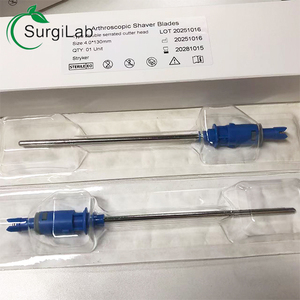
Disposable Arthroscope Shaver Joint Blade (3.5mm / 4.0mm / 5.0mm)
Ultra-sharp precision cutting blades compatible with Stryker systems for rapid soft-tissue resection and notchplasty.
Inquire Now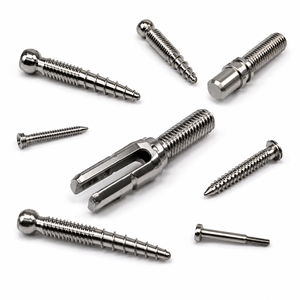
ISO 13485 Precision Titanium & Stainless Steel Orthopedic Screws
Medical-grade titanium (Ti-6Al-4V) surgical bone screws engineered via multi-axis CNC machining for superior structural integrity.
Inquire Now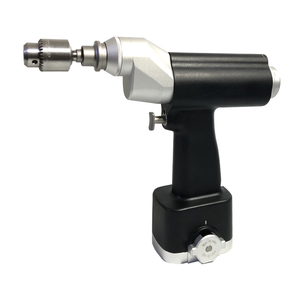
Double Function Cannulated Orthopedic Surgical Power Drill
High-torque, ergonomically balanced cannulated power tools designed for accurate tunnel drilling in joint reconstruction surgery.
Inquire Now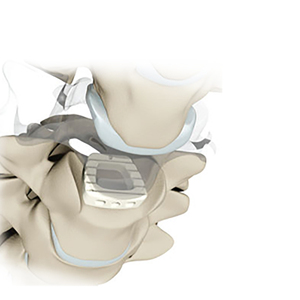
Biocompatible PEEK Interbody Implants & Structural Cages
ASTM F2026 PEEK polymer implants providing radiolucent properties and elastic modulus matching natural human cortical bone.
Inquire Now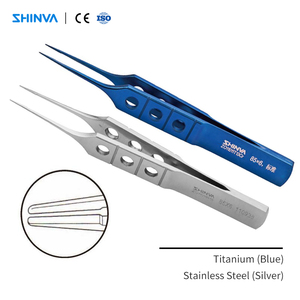
Micro-Precision Titanium Tissue & Fixation Surgical Forceps
Corrosion-resistant titanium delicate tissue handling forceps crafted for high tactile feedback and non-reflective surgical ease.
Inquire Now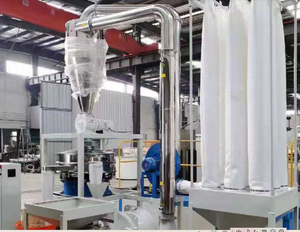
High-Precision Automated Processing & Finishing Systems
Advanced industrial manufacturing apparatus guaranteeing consistent tolerances and surface finishing for medical components.
Inquire Now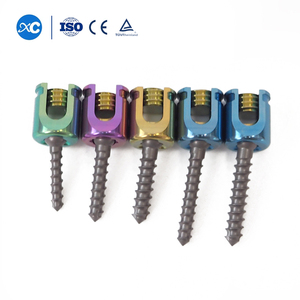
Orthopedic Titanium Polyaxial Fixation Screw Systems
High-yield tensile strength titanium alloy pedicle screws with multi-angle articulation for stable internal fixation.
Inquire Now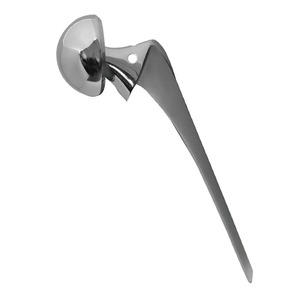
Bipolar & Total Joint Prosthesis Replacement Systems
Precision-machined joint arthroplasty components engineered for optimal tribological longevity and natural joint biomechanics.
Inquire NowTechnical Engineering Architecture of Modern ACL Reconstruction Systems
Anterior Cruciate Ligament (ACL) reconstruction represents one of the most critical sports medicine procedures performed globally and across major surgical centers in the Greater Toronto Area (GTA). Successful clinical outcomes rely heavily on the biomechanical stability, stiffness, and long-term biological integration of femoral and tibial fixation systems. As an established ISO 13485-certified orthopedic device manufacturer supplying global medical markets and Toronto-based health distribution networks, our ACL reconstruction hardware portfolio is built upon rigorous mechanical testing, physiological stress simulation, and strict material traceability.
Modern ACL graft reconstruction demands rigid primary fixation to resist graft elongation, micro-motion, and slippage during early aggressive physical rehabilitation. Our system encompasses three core mechanical fixation categories engineered to work in synergy with bone-patellar tendon-bone (BPTB), quadrupled hamstring (semitendinosus/gracilis), and quadriceps tendon autografts or allografts:
Cortical Suspension Buttons
Featuring adjustable-loop and fixed-loop titanium alloy (Ti-6Al-4V) buttons designed for cortical seating on the anterolateral femoral cortex. Engineered with continuous-loop braided UHMWPE sutures providing ultimate tensile strength exceeding 1,450 N and minimal displacement under cyclical gait loading.
Interference Screws (PEEK & Titanium)
Thread-optimized full-thread and blunt-thread cannulated screws designed for both tibial and femoral tunnel placement. PEEK options match human bone modulus to prevent stress shielding, while non-cutting threads protect soft-tissue graft fibers during insertion.
PEEK & Ti Suture Anchors
Pre-loaded suture anchor systems constructed from polyetheretherketone (PEEK-OPTIMA) or medical titanium, combined with high-strength non-absorbable UHMWPE sutures for reliable secondary graft augmentation, ALL (Anterolateral Ligament) reconstruction, and meniscal root repair.
Information Gain Benchmark: Our adjustable loop cortical buttons utilize an dual-locking zip-mechanism that virtually eliminates graft slippage (<0.5mm under 1,000 cycles at 50N-250N load testing), outperforming traditional friction-only clamping mechanism devices in biomechanical load-to-failure testing.
Material Science & Biocompatibility Metrics
Material selection dictates long-term orthopedic success and imaging compatibility. Our manufacturing protocols adhere to international standard specifications to guarantee uncompromised performance inside the articular knee joint environment:
- Titanium Alloy (Ti-6Al-4V ELI / ASTM F1472 & F136): Utilized in cortical suspension plates and metal interference screws. Offers excellent biocompatibility, high yield strength (>860 MPa), and minimal artifacts during post-operative Magnetic Resonance Imaging (MRI) or X-Ray diagnostics.
- Polyetheretherketone (PEEK / ASTM F2026): An inert, radiolucent thermoplastic polymer exhibiting an elastic modulus (3.5–4.2 GPa) closely aligned with native human cancellous and subchondral bone, ensuring stress distribution without localized bone resorption.
- Ultra-High Molecular Weight Polyethylene (UHMWPE): Formulated into multi-strand braided surgical sutures and continuous suspension loops, providing high abrasion resistance, flexible handling, and zero hydrolytic degradation over time.
Local Application Scenarios in Toronto & GTA Healthcare Networks
The Greater Toronto Area represents Canada's largest density of academic health science centers, specialized orthopedic hospitals, and private ambulatory surgical facilities. From world-class institutions within the University Health Network (UHN), Sunnybrook Holland Bone and Joint Centre, Mount Sinai Hospital, and St. Michael's Hospital to regional health networks in Mississauga, Brampton, Vaughan, and Scarborough, the demand for high-performance, cost-effective ACL reconstruction systems is rapidly expanding.
Academic Teaching Hospitals
High-volume surgical teaching facilities demand standardized, highly reproducible instrument sets (drills, aiming guides, reamers) that facilitate consistent tunnel placement for resident surgeons while minimizing intraoperative fluoroscopy time.
Outpatient Ambulatory Surgery Centers (ASCs)
With Ontario's health system shift toward day-surgery models for sports medicine procedures, Toronto ASCs prioritize pre-sterilized, single-use implant packs and disposable shaver blades to maximize operating room throughput and bypass Central Sterile Supply Department (CSSD) delays.
Sports Medicine & Active Rehabilitation Clinics
Toronto's large athletic population—ranging from professional athletes to active winter sports enthusiasts—requires reconstruction systems that enable immediate post-operative rigid fixation, supporting accelerated range-of-motion (ROM) physical therapy protocols.
Clinical Integration Across Specialized Surgical Procedures
Our ACL reconstruction portfolio is customized to meet diverse operative approaches preferred by Canadian orthopedic surgeons:
- Anatomic Single-Bundle ACL Reconstruction: Utilizing transportal or outside-in femoral drilling technique guides to recreate the native anteromedial (AM) bundle footprint accurately.
- Double-Bundle ACL Reconstruction: Providing precise micro-reamers and low-profile fixation buttons to restore both AM and posterolateral (PL) bundles for rotational knee stability.
- Pediatric & Physeal-Sparing Reconstruction: All-epiphyseal suspension implants engineered to prevent growth plate disturbance in skeletally immature adolescent patients.
- Revision ACL Procedures: Wide-diameter PEEK interference screws (up to 11mm/12mm) and graft augmentation anchors suited for tunnel enlargement and complex revision cases.
Biomechanical Benchmarking & Performance Specification
Engineered to meet and exceed global biomechanical standards, the table below illustrates performance criteria comparing our core fixation devices against standard clinical requirements under cyclic loading and pull-out stress testing.
| Fixation Device Type | Material Composition | Ultimate Yield Load (N) | Cyclic Displacement (1,000 cycles) | Primary Clinical Application |
|---|---|---|---|---|
| Adjustable Cortical Button | Ti-6Al-4V / Braided UHMWPE | > 1,480 N | < 0.42 mm | Femoral graft suspension (Hamstring / Quad) |
| Fixed Loop Cortical Button | Titanium Grade 5 / UHMWPE Loop | > 1,650 N | < 0.25 mm | Anatomic femoral tunnel fixation |
| Cannulated Interference Screw | PEEK Polymer (ASTM F2026) | > 820 N | < 0.65 mm | Tibial / Femoral tunnel soft-tissue fixation |
| Metallic Interference Screw | Titanium Alloy (ASTM F1472) | > 950 N | < 0.50 mm | Bone-Patellar Tendon-Bone (BPTB) fixation |
| PEEK Suture Anchor (4.5/5.5mm) | PEEK-OPTIMA / UHMWPE Suture | > 540 N | < 0.35 mm | ALL augmentation & Meniscal root fixation |
Toronto Market Trends & Local Procurement Dynamics
Navigating the orthopedic medical device market in Ontario demands a thorough understanding of localized healthcare economics, regulatory pathways governed by Health Canada, and institutional purchasing mechanisms. As surgical volume across GTA hospitals rebounds and expands, medical procurement managers and orthopedic distributors are adapting to several key industry shifts:
1. Health Canada Regulatory & Quality System Compliance
All medical devices commercialized in Toronto must strictly adhere to Health Canada's Medical Device Regulations (CMDR). Our manufacturing facilities maintain full ISO 13485:2016 Medical Devices Quality Management System certification. For Canadian B2B partners and regional distributors, we supply complete technical documentation packages, biocompatibility testing (ISO 10993 series), process validation reports, and sterilization verification records to streamline Class II and Class III Medical Device License (MDL) and Medical Device Establishment License (MDEL) filing processes.
2. Centralized Procurement & Group Purchasing Organizations (GPOs)
Hospital purchasing in Ontario is largely driven by large regional shared service organizations and Group Purchasing Organizations (GPOs) such as Plexxus, HealthPRO, and Medbuy. These organizations focus heavily on value-based healthcare—demanding clinical equivalence or superiority to Tier-1 brand implants while requiring significant cost savings to reduce public healthcare expenditure. Direct OEM sourcing partnerships with established overseas manufacturers allow Toronto distributors to achieve margin improvements of 30% to 50%, enabling competitive contract bidding without compromising implant reliability.
3. Transition to Single-Use Pre-Sterilized Arthroscopy Consumables
Operating room costs in Greater Toronto Area hospitals exceed $30 to $50 per minute. Traditional reusable instrument tray sterilization incurs heavy labor, chemical processing, and scheduling overhead. Consequently, Toronto surgical centers are rapidly transitioning toward single-use sterile packaged implants, disposable shaver blades, and single-use cannulated drills sterilized via Cobalt-60 Gamma Irradiation (SAL 10-6). This shift guarantees 100% sterile confidence, eliminates cross-contamination risks, and accelerates surgical turnover times.
4. Demand for Comprehensive OEM / ODM Private Labeling
Canadian medical device brands looking to expand their proprietary product footprint rely on our contract manufacturing services. We provide complete end-to-end OEM customization—including precision Swiss-type CNC machining, custom laser etching for lot/serial traceability, color anodizing for quick surgical sizing identification, custom tray design, and tailored sterile barrier packaging.
Manufacturing Strengths & Global OEM Capabilities
Leveraging decades of dedicated biomedical engineering experience, our modern manufacturing facilities serve as the direct production backbone for leading orthopedic brands, regional hospital suppliers, and international surgical distributors.
5-Axis CNC Precision Machining
Utilizing high-precision German and Swiss multi-axis CNC milling centers, automatic lathes, and wire EDM machinery capable of achieving tolerances down to ±0.005 mm on complex PEEK and titanium geometries.
Class 100,000 Cleanroom Packaging
Implant cleaning, primary pouch sealing, and final packaging are conducted within certified Class 100,000 (ISO Class 8) cleanroom environments to maintain minimal bioburden levels prior to sterilization.
100% Quality Inspection & Batch Traceability
Every single implant production batch undergoes optical CMM dimensional verification, mechanical torque testing, surface roughness analysis, and full raw material mill cert cross-referencing.
Supply Chain Logistics for Toronto Distributors: We provide direct air-freight logistics corridors into Toronto Pearson International Airport (YYZ), delivering streamlined customs clearance, DAP/DDP shipping terms, and predictable lead times under 3–4 weeks for customized production orders.
Frequently Asked Questions for Toronto Buyers & Distributors
Technical and procurement inquiries frequently raised by orthopedic procurement directors, hospital supply managers, and medical distributors across Ontario: