Featured PLIF & Spinal Interbody Fusion Systems
Explore premier spinal fusion implants and surgical instrumentation sets engineered under ISO 13485 quality frameworks. Designed for maximum primary stability, optimal load-sharing, and superior fusion outcomes.
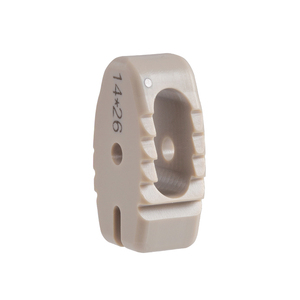
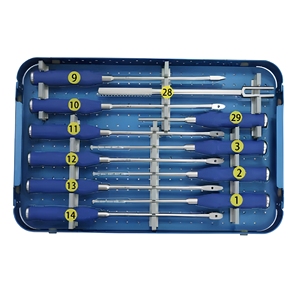
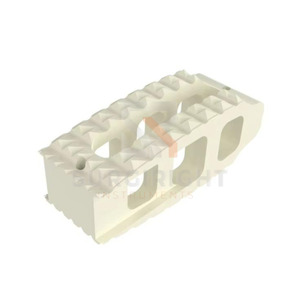
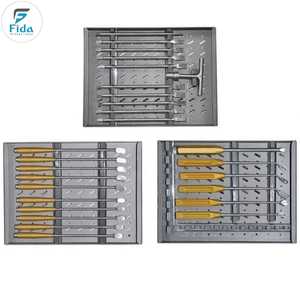
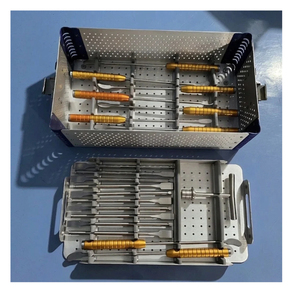
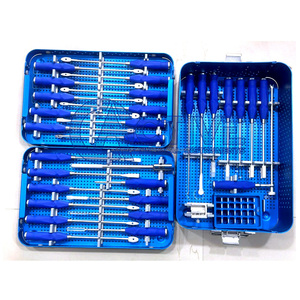
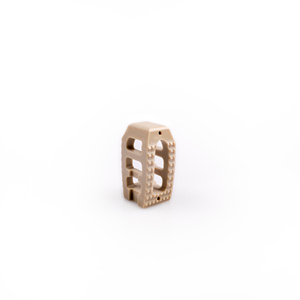
1. Technical Landscape & Biomechanical Fundamentals of PLIF Cages
Posterior Lumbar Interbody Fusion (PLIF) remains a cornerstone surgical technique in spinal reconstruction, indicated for degenerative disc disease (DDD), spondylolisthesis, spinal stenosis, and segmental instability. The primary mechanical function of a PLIF cage is to restore intervertebral disc height, re-establish neural foraminal volume, correct sagittal lordosis, and provide immediate structural rigidity while biological osseointegration occurs.
From a biomechanical standpoint, the ideal interbody spacer must satisfy two conflicting engineering constraints: high static compressive strength to resist physiological axial loads without structural failure, and low flexural modulus closely matched to human cortical and cancellous bone to eliminate stress shielding. According to Wolff's Law, bone remodels along lines of mechanical stress. If an interbody implant is excessively rigid (e.g., solid stainless steel or un-textured solid titanium alloys), it absorbs nearly all mechanical vectors, depriving the graft bed of micro-strain and resulting in bone resorption, graft non-union, and cage subsidence into the vertebral endplates.
2. Material Science & Technological Evolution of PLIF Cages
The clinical selection of PLIF interbody materials has undergone three distinct evolutionary eras over the past four decades:
First-Gen Alloys (Ti-6Al-4V / SS)
Early implants utilized solid Titanium alloy (ASTM F1472 / TC4) and Stainless Steel. While presenting exceptional biocompatibility and fatigue endurance ($>10^6$ cycles under ASTM F2077 testing), their high elastic modulus (~110 GPa) caused elevated rates of endplate violation, subsidence, and radiopaque scattering on X-ray and CT imaging, obscuring post-operative fusion assessment.
Second-Gen PEEK Polymer
Polyetheretherketone (PEEK-OPTIMA per ASTM F2026) revolutionized interbody fusion. Featuring an elastic modulus of ~3.6 GPa (closely matching cortical bone at 12–18 GPa), PEEK minimizes stress shielding and offers radiolucency with tantalum markers for clear imaging. However, native PEEK is bio-inert, exhibiting hydrophobic behavior that can lead to fibrous encapsulation rather than direct osseointegration.
Third-Gen Porous & Composite Cages
Modern innovations focus on 3D-printed porous Trabecular Titanium structures, Plasma-Sprayed Titanium coated PEEK (TiPEEK), and hydroxyapatite (HA) embedded PEEK. These hybrid materials combine PEEK’s mechanical compliance with nano-textured porous surfaces (pore size 300–600 $\mu$m) to stimulate osteoblast proliferation and rapid cell attachment.
Table 1: Biomechanical & Clinical Comparison of Interbody Fusion Materials
| Material Category | Elastic Modulus (GPa) | Radiolucency | Osseointegration Potential | Subsidence Risk | Primary Clinical Application |
|---|---|---|---|---|---|
| Human Cortical Bone | 12 – 18 GPa | Radiopaque | Natural (Autograft) | Baseline Reference | Biological Benchmark |
| Medical Grade PEEK (ASTM F2026) | 3.6 GPa | Radiolucent (Tantalum Markers) | Moderate (Bio-inert) | Very Low | Standard PLIF / TLIF Procedures |
| Titanium Alloy (Ti-6Al-4V) | 110 GPa | Radiopaque (Artifacts) | High (Biocompatible) | Moderate - High | Heavy Load / Deformity Correction |
| Plasma Titanium-Coated PEEK | 3.6 – 4.2 GPa | Semi-Radiolucent | High (Macro-porous Coating) | Low | High-Risk Osteoporotic Patients |
| 3D Printed Porous Titanium | 2.0 – 5.0 GPa (Tuned) | Semi-Radiopaque | Superior (Cellular Ingrowth) | Low - Moderate | Advanced Revision & Complex Fusion |
3. Future Procurement & Sourcing Trends for Global Buyers (2025–2030)
Hospital procurement committees, medical device OEM brands, and regional orthopedic distributors face an evolving regulatory and financial landscape. When auditing PLIF cage manufacturers, strategic sourcing directors are prioritizing four fundamental supply chain trends:
A. Shift Toward Pre-Sterile Packaging
Traditional non-sterile implant trays require expensive hospital reprocessing, steam autoclave sterilization, and tracking logistics. Leading manufacturers now offer individually sealed, gamma-irradiated (Co-60, SAL $10^{-6}$) sterile packaging utilizing dual Tyvek peel pouches. Pre-sterile packaging guarantees zero cross-contamination, extends product shelf life up to 5 years, and reduces overall hospital surgical prep overhead by 30%.
B. Minimally Invasive & UBE Compatibility
Surgical practice is transitioning rapidly toward Minimally Invasive Spine Surgery (MISS) and Unilateral Biportal Endoscopy (UBE). Modern PLIF/TLIF cages are engineered with bulleted nose geometries, self-directing insertion threads, and low-profile insertion guns to allow seamless delivery through narrow tubular retractors without disrupting paraspinal musculature.
C. Consolidated OEM / ODM Turnkey Contracting
Global brand owners are consolidating vendor networks to reduce regulatory friction under EU MDR and US FDA regulations. Trusted manufacturers must supply complete white-label ecosystems: precision CNC-machined cages, matching custom stainless steel surgical instrument trays, color-anodized trials, laser-etched UDI serial numbers, and complete Technical Master Files (STED format).
4. Quality Audit Framework: Evaluating Premier PLIF Cage Manufacturers
To ensure clinical safety and regulatory approval across international jurisdictions, procurement teams must enforce stringent vendor vetting protocols. As an ISO 13485 certified enterprise, Orthi Medical Co., Ltd. demonstrates full compliance across all critical manufacturing criteria:
| Evaluation Axis | Standard Requirement | Orthi Medical Capabilities & Specifications |
|---|---|---|
| Raw Material Traceability | ASTM F2026 (PEEK) / ASTM F1472 (Ti6Al4V) | 100% imported medical-grade raw materials accompanied by original mill test certificates (MTC) and chemical composition analysis per batch. |
| Machining Precision | Multi-axis CNC Swiss Machining (Tolerance < ±0.005mm) | High-precision DMG MORI and Citizen 5-axis CNC machining centers delivering strict micro-geometric accuracy for tooth serration and thread profile. |
| Cleanroom Standards | ISO Class 7 / Class 10,000 Cleanroom | Automated ultrasonic multi-stage cleaning, visual inspection under high magnification, and sterile packaging within certified cleanroom environments. |
| Mechanical Validation | ASTM F2077 & ASTM F2267 Testing | Comprehensive static axial compression, dynamic fatigue testing ($10^6$ cycles), and static shear testing ensuring zero risk of cage delamination or structural fracture. |
| Regulatory Documentation | CE Marking, ISO 13485, ISO 9001, FDA Ready | Full clinical evaluation reports (CER), risk management files (ISO 14971), and biocompatibility testing (ISO 10993) to accelerate regional registration. |
5. Strategic Enterprise Advantages of Orthi Medical
Orthi Medical Co., Ltd. stands as a premier global manufacturing partner specializing in orthopedic trauma, spinal fixation, sports medicine instruments, joint replacement systems, and minimally invasive UBE endoscopic tools. By vertically integrating raw material machining, surface treatment, laser etching, sterile packaging, and surgical training support under one roof, Orthi Medical delivers unmatched value to medical device distributors and hospital chains:
End-to-End OEM / ODM Expertise
Customized cage design based on 2D/3D CAD drawings, tailored lordotic angles (0° to 15°), variable footprints, ergonomic instrument handle customization, and private label branding.
Consolidated Single-Source Portfolio
Streamline your supply chain by sourcing PLIF cages, pedicle screw systems, cervical plates, UBE instruments, intramedullary nails, and arthroscopy anchors from a single validated factory.
Academic & Clinical Support
We empower sales teams and surgeons worldwide with step-by-step surgical technique manuals, cadaveric workshop support, product training modules, and dedicated regulatory submission support.
Frequently Asked Questions (FAQ)
What raw materials are utilized in your PLIF interbody fusion cages?
What quality management certifications govern your manufacturing line?
Can PLIF cages and matching instrument sets be supplied in sterile condition?
Do you offer OEM private label customization and custom sizing?
What mechanical fatigue testing standards do your PLIF cages undergo?
How do you support regional distributors with clinical and registration hurdles?
Partner with a Leading ISO 13485 PLIF Cage Manufacturer
Whether you require OEM/ODM private label contract manufacturing, pre-sterile implant supply, or consolidated spine instrument sets, our engineering specialists respond within 24 hours.
Get a Quote