Precision-Engineered Orthopedic Implants & Surgical Instrument Sets
Explore our flagship certified implants and specialized surgical systems. Manufactured under stringent ISO 13485 quality controls from implant-grade Titanium (ASTM F1472/F67), Stainless Steel (ASTM F138), CoCrMo, and PEEK.
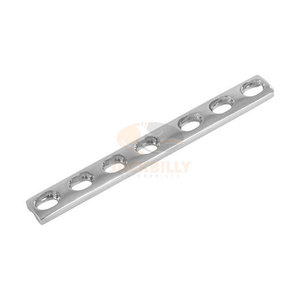
Premium Veterinary Bone Implants & Surgical Instruments
CE certified 316L stainless steel plates, cortical screws, and specialized instrument sets crafted for veterinary orthopedic reconstruction.
Request Specifications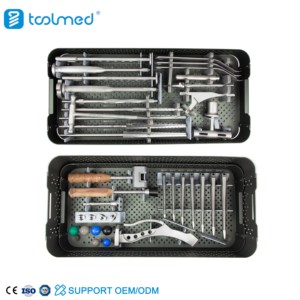
Hip & Total Knee Arthroplasty Replacement Instrument Set
High-precision reamers, bone reduction forceps, and trial components engineered for total hip and knee joint replacement procedures.
Request Specifications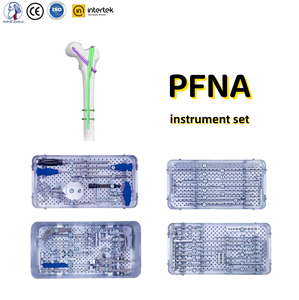
Titanium PFNA Femur Interlocking Intramedullary Nail System
Anatomic 5° M-L angle proximal femoral nail with helical blade stability for efficient trochanteric fracture reduction and early mobilization.
Request Specifications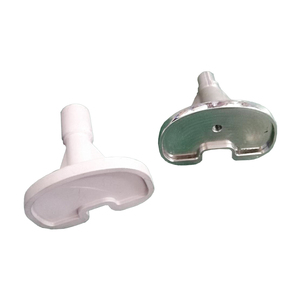
HKXN CoCrMo Forged Hinge Knee Femoral Component
Vacuum-forged Cobalt-Chromium-Molybdenum alloy hinge joint femoral construct featuring polished wear surfaces and tailored sizing.
Request Specifications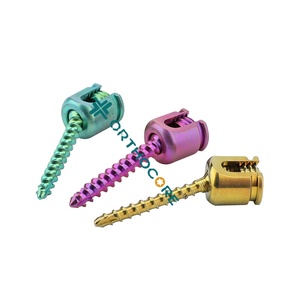
Heavy-Duty Veterinary Spinal Pedicle Screw System
High-torque pedicle screws designed for equine and canine spinal stabilization, providing superior pull-out resistance in animal surgery.
Request Specifications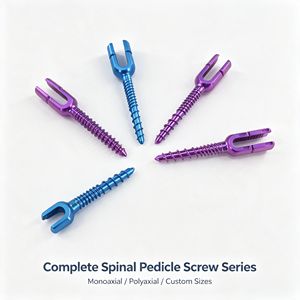
Thoracolumbar Pedicle Screw & Rod Fixation System
Dual-thread cannulated and fenestrated pedicle screw systems in Ti-6Al-4V ELI (ASTM F1472) for open and MIS spine surgery.
Request Specifications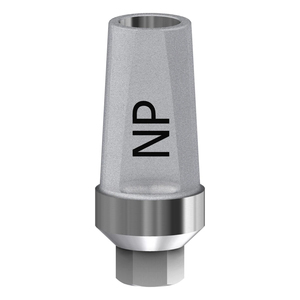
Precision Titanium Dental Implant Abutments (0°, 15°, 25°)
Micro-machined grade 5 titanium abutments with sub-micron tolerances for single-tooth and bridge prosthetic restorations.
Request Specifications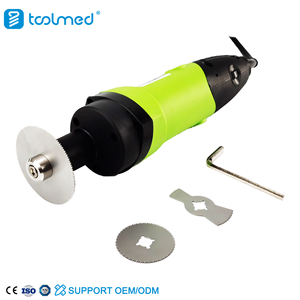
Surgical Orthopedic Power Tools: Bone Drill & Oscillating Saw
Autoclavable electric power tool systems engineered for high torque, low noise, and minimal thermal necrosis during osteotomies.
Request SpecificationsWhy Leading Global Distributors Sourcing Orthopedic Implants Choose Us
From raw titanium billet processing to gamma-sterilized final packaging, our end-to-end medical device manufacturing infrastructure guarantees absolute mechanical performance, structural integrity, and regulatory registration compliance.
Certified Implant-Grade Metallurgy
Every batch of raw titanium (ASTM F67 TA2/TA3, ASTM F1472 TC4/Ti-6Al-4V ELI), PEEK (ASTM F2026), and CoCrMo undergoes spectral chemical verification, microstructural metallography, and mechanical tensile strength testing (≥930 MPa for TC4).
SAL 10⁻⁶ Gamma Sterile Packaging
Bone screws, plates, and intramedullary nails are sealed in ISO Class 7 cleanrooms and processed via Cobalt-60 (γ-ray) irradiation. Implants arrive sterile-ready for immediate hospital OR use, dramatically lowering surgical site infection risks.
Turnkey OEM / ODM & Private Label
Equipped with 5-axis CNC Swiss micromachining, automated laser marking, multi-color hard anodizing, custom instrument tray fabrication, and complete technical documentation (STED/MDR dossiers) for rapid market registration.
Strategic Technical White Paper: Sourcing High-Integrity Orthopedic Implants in the Global Medical Device Ecosystem
The global market for orthopedic implants and trauma fixation devices is undergoing a profound paradigm shift driven by demographic aging, expanding surgical access in emerging markets, and rigorous regulatory evolution under frameworks such as the European Union Medical Device Regulation (EU MDR 2017/745) and US FDA 510(k) clearances. For procurement directors, regional distributors, and hospital supply chain managers, evaluating manufacturer reliability requires analyzing engineering tolerances, metallurgical purity, cleanroom sterilization protocols, and post-market clinical traceability.
This technical report delivers comprehensive intelligence on selecting certified implant manufacturers, identifying key technological shifts across trauma, spine, arthroplasty, and sports medicine categories, and mitigating supply chain risks in international contract manufacturing.
1. Metallurgical Performance Metrics & Material Selection Standards
In orthopedic reconstruction, biomechanical failure—such as pedicle screw shearing, locking plate bending, or acetabular cup osteolysis—often stems from microstructural defects or improper alloy selection. Reputable orthopedic manufacturers strictly adhere to international material standards to guarantee biomechanical strength and fatigue resistance.
| Material Specification | Standard Reference | Tensile Strength (MPa) | Yield Strength (MPa) | Biomechanical & Clinical Application |
|---|---|---|---|---|
| Pure Titanium (Grade 2 / TA2) | ASTM F67 / ISO 5832-2 | ≥ 400 MPa | ≥ 275 MPa | Low-load craniomaxillofacial plates, dental implant bodies, soft-tissue anchor sleeves. |
| Pure Titanium (Grade 3 / TA3) | ASTM F67 / ISO 5832-2 | ≥ 500 MPa | ≥ 380 MPa | Medium-load trauma bone plates, chest wall rib fixation, cannulated screw washers. |
| Titanium Alloy (Ti-6Al-4V ELI / TC4) | ASTM F1472 / ASTM F136 | ≥ 930 MPa | ≥ 860 MPa | High-load trauma nails, spinal pedicle screws, spinal rods, hip stems, tibial trays. |
| Cobalt-Chromium (CoCrMo) | ASTM F75 / ASTM F1537 | ≥ 897 MPa | ≥ 517 MPa | Femoral knee components, total hip bearing heads, articulated structural hinge joints. |
| Medical Grade PEEK (Polyetheretherketone) | ASTM F2026 | ≥ 95 MPa | ≥ 90 MPa | Radiolucent interbody lumbar cages (PLIF/TLIF/ACDF), sports medicine suture anchors. |
When procuring implantable titanium devices, Ti-6Al-4V ELI (Extra Low Interstitial) is preferred over standard industrial titanium due to reduced oxygen, nitrogen, and iron content, which dramatically yields higher fracture toughness and superior fatigue life under cyclic weight-bearing loads.
2. Precision Manufacturing, Surface Engineering & Sterilization Protocols
A premier orthopedic manufacturer’s facility must bridge raw material machining with validated surface treatment technologies:
- 5-Axis CNC Swiss Machining: Precision threading of cannulated compression screws and multi-axial pedicle screw tulip heads requires sub-micron tolerances (±0.005 mm). Multi-axis machining minimizes setup stress and preserves dimensional uniformities across manufacturing lots.
- Surface Modification & Anodization: Type II anodization produces a dense, protective titanium oxide layer that increases wear resistance, while Type III color anodization allows instant intraoperative sizing identification for surgical teams. Advanced arthroplasty components incorporate plasma-sprayed Hydroxyapatite (HA coating) or porous titanium surfaces to accelerate osseointegration and biological press-fit fixation.
- Cleanroom Processing & Gamma Sterilization: Implants manufactured for direct sterile hospital delivery are cleaned via automated multi-stage ultrasonic baths using reverse osmosis (RO) deionized water. Primary packaging occurs within validated ISO Class 7 cleanrooms using medical-grade Tyvek pouching, followed by Cobalt-60 gamma-ray irradiation achieving a Sterility Assurance Level (SAL 10⁻⁶) per ISO 11137 standards.

Future Procurement & Supply Chain Trends in Orthopedics (2025–2030)
Healthcare procurement strategies are shifting away from fragmented, multi-vendor transactional models toward integrated, strategic OEM/ODM partnerships. Key structural trends impacting global buyers include:
1. Transition to Ready-to-Use Pre-Sterilized Implant Kits
Traditionally, hospitals received bulk non-sterile implants requiring in-house central sterile supply department (CSSD) washing, sorting, and autoclaving prior to surgery. Modern hospital networks are aggressively moving toward pre-sterilized single-pack implants. Pre-sterilized packaging reduces operating room prep time, eliminates decontamination costs, prevents surgical delays due to tray set incompleteness, and delivers 100% material lot traceability straight to the patient record.
2. Vendor Consolidation Across Multi-Specialty Portfolios
Distributors face heavy compliance costs managing disparate suppliers for trauma plates, spinal hardware, arthroscopy anchors, and surgical power tools. Leading procurement managers prioritize manufacturers offering broad multi-specialty coverage (Trauma, Spine, Arthroplasty, Sports Medicine, UBE, and Power Tools) under a unified ISO 13485 quality management system, streamlining auditing procedures and reducing shipping overhead.
3. Demand for Turnkey Regulatory & Technical Registration Support
Stricter national health authorities require extensive technical dossiers—including ISO 10993 biocompatibility testing, ASTM F1717 mechanical static/fatigue test reports, accelerated shelf-life studies, and clinical evaluation reports (CER). Manufacturers offering direct regulatory assistance shorten product registration timelines from years to months.
Technological & Clinical Development Trends in Orthopedic Implants
Surgical techniques are rapidly progressing toward minimally invasive surgery (MIS), accelerated patient recovery, and patient-specific implant designs. Manufacturers investing in next-generation research are establishing decisive market advantages:
Additive Manufacturing & Trabecular Titanium
Direct Metal Laser Sintering (DMLS) 3D printing enables the production of bio-inspired porous trabecular titanium structures. Mimicking human cancellous bone elasticity (matching Young’s modulus), these implants dramatically reduce stress shielding and encourage rapid inward bone ingrowth in spinal fusion cages and joint revision cups.
Minimally Invasive & UBE Ecosystem Integration
Unilateral Biportal Endoscopy (UBE) and percutaneous spine surgery are replacing open posterior exposures. Implants designed specifically for UBE—such as ultra-low profile expandable PEEK cages and cannulated pedicle screws—allow surgeons to perform lumbar decompressions and fusions through sub-centimeter incisions.

3. Carbon-Fiber PEEK and Bioabsorbable Polymers in Sports Medicine
In sports medicine arthroscopy, the evolution from metallic anchors to radiolucent PEEK and bioabsorbable PLDLA suture anchors minimizes post-operative artifact in MRI follow-ups while preserving native bone stock during ACL/PCL ligament reconstructions and rotator cuff repairs.
Surgeon Training & Clinical Education Alignment
Product performance in the operating theater depends directly on surgical precision. Full-service manufacturers support global distributors by providing surgical technique guides (STGs), sawbone training models, cadaveric workshop access, and customized instrument trays engineered to streamline surgical flow and shorten anesthesia duration.

Frequently Asked Questions (FAQ) for B2B Importers & Buyers
Detailed answers to crucial commercial, technical, and regulatory questions encountered when sourcing orthopedic implants internationally.
What quality management certifications and regulatory approvals back your orthopedic implants?
Can implants be customized via OEM/ODM services or provided with private labeling?
What is the delivery state of your implants (Sterile vs. Non-Sterile)?
Which product lines are available for global distributor exclusivity?
How do you ensure lot-to-lot consistency and mechanical safety?
What technical assistance and training support do you offer to medical distributors?
Partner with a Globally Trusted Orthopedic Implant Manufacturer
Elevate your product portfolio with certified trauma, spine, arthroplasty, and sports medicine systems. Contact our engineering and commercial export team today for technical catalogs, sample evaluations, and OEM project quotations.
Contact Us