Precision Orthopedic Implants & Surgical Instruments
Explore our flagship, medical-grade titanium and PEEK implant systems designed for human trauma, spine surgery, joint replacement, and advanced veterinary orthopedics.
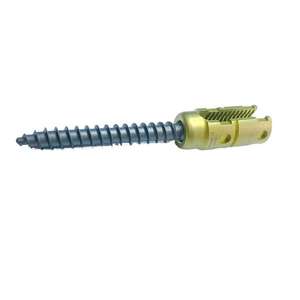
Geasure Titanium Alloy Spine 6.0 Reduction Polyaxial Pedicle Screw
Engineered for complex spinal deformity corrections and spondylolisthesis reduction. Features dual-thread titanium alloy construction and 60° polyaxial articulation.
Inquire Now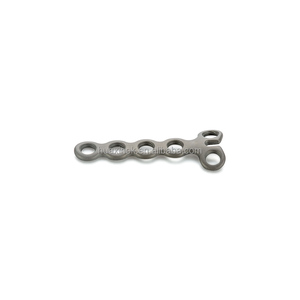
TPLO Veterinary Orthopedic Implants Bone Plate
Anatomically pre-contoured titanium Tibial Plateau Leveling Osteotomy plate. Provides robust stability for canine cranial cruciate ligament rupture reconstruction.
Inquire Now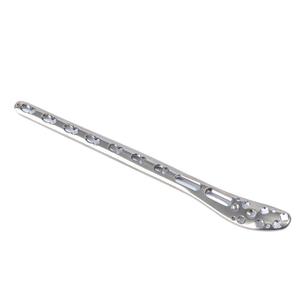
CNC Custom Titanium Implants Veterinary Hip System
5-axis CNC machined titanium alloy acetabular cups and femoral stems with micro-porous surface coatings to encourage optimal biological osseointegration.
Inquire Now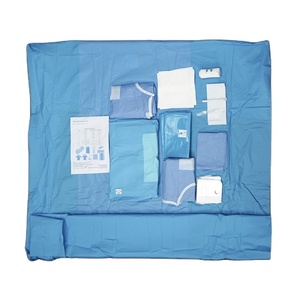
Disposable Orthopedic Sterile Surgery Packs
Gamma-sterilized single-use procedure packs containing pre-sorted surgical drapes, fixation fasteners, and sterile accessories to streamline operating room prep.
Inquire Now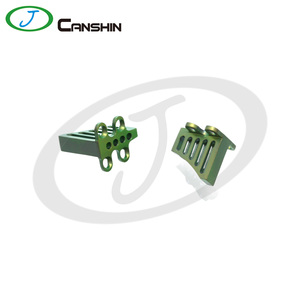
TTA Cage Titanium Gold Veterinary Orthopedic Implant
Tibial Tuberosity Advancement cage with anodized titanium-gold surface finish. Designed for superior mechanical shear strength and rapid bone bridge growth.
Inquire Now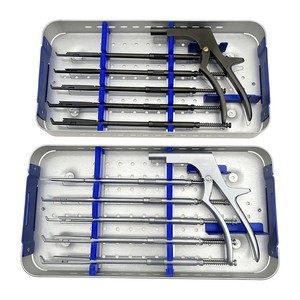
Rotating Kerrison Rongeur Set Spinal Neuro Instruments
360-degree rotating shaft bone rongeurs manufactured from surgical stainless steel. Offers neurosurgeons precise tactile control during laminectomy procedures.
Inquire Now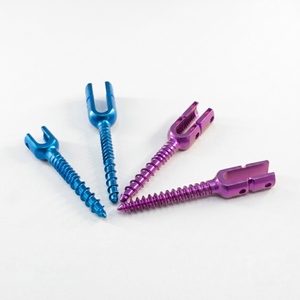
Anodized Titanium Monoaxial Pedicle Screw 6.0mm
High-rigidity monoaxial pedicle screws with anodized surface color-coding. Provides rigid posterior thoracolumbar construct stability for traumatized spinal segments.
Inquire Now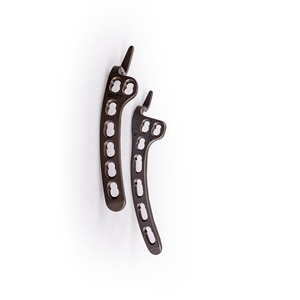
Clavicle Hook Locking Compression Plate
Anatomical hook locking compression plate system for acromioclavicular joint dislocation and distal clavicle fractures. Minimizes soft-tissue impingement.
Inquire NowLeading Quality Management & Material Metallurgy
Orthi Medical Co., Ltd. serves as an internationally recognized ISO 13485 medical device OEM manufacturer. We bridge cutting-edge mechanical engineering with rigorous clinical standards to empower medical equipment distributors worldwide.
ISO 13485 & CE Compliance
Our manufacturing facilities operate strictly under certified Quality Management Systems compliant with ISO 13485, ISO 9001, and CE directives. Every product batch undergoes full dimensional, mechanical, and bio-burden verification before release.
Medical-Grade Material Integrity
We strictly utilize certified implant-grade raw materials sourced with complete chemical heat-lot traceability. Raw bars comply with ASTM F67 (pure titanium Grades 2/3), ASTM F1472 (Ti-6Al-4V), PEEK-OPTIMA, CoCrMo, and UHMWPE.
OEM / ODM Custom Manufacturing
From drawing-based 5-axis CNC high-precision machining to custom anodization, laser engraving, and custom instrument tray fabrication, our end-to-end OEM turnkey solutions drastically shorten market launch cycles for brand owners.
Implant Alloy Mechanical Property Benchmarks
| Material Standard | Composition Grade | Tensile Strength (MPa) | Yield Strength (MPa) | Primary Clinical Applications |
|---|---|---|---|---|
| ASTM F67 Grade 2 | Unalloyed Titanium (TA2) | ≥ 345 MPa | ≥ 275 MPa | Maxillofacial plates, low-load trauma pins, soft-tissue washers |
| ASTM F67 Grade 3 | Unalloyed Titanium (TA3) | ≥ 450 MPa | ≥ 380 MPa | Reconstructive trauma plates, craniofacial screws, staple clips |
| ASTM F1472 / TC4 | Ti-6Al-4V Titanium Alloy | ≥ 930 MPa | ≥ 860 MPa | Spinal pedicle screws, intramedullary nails, hip stems, TPLO plates |
| ASTM F2026 | PEEK Polyetheretherketone | ≥ 95 MPa | ≥ 90 MPa | Interbody spinal fusion cages, suture anchors, radiolucent spacers |
E-E-A-T Quality Assurance Statement
Every implant manufactured at our production hub undergoes 100% optical coordinate measuring machine (CMM) inspection for critical dimensions. Raw material batch certification, tensile destruction test documentation, and gamma sterilization verification certificates are permanently archived for complete regulatory audit readiness.
Future Technological Trends in Orthopedic Engineering
The global orthopedic implant sector is undergoing a profound technological transformation. Our R&D division focuses on pioneering four pivotal technological vectors that shape modern clinical outcomes.
1. Additive Manufacturing & Trabecular Titanium
3D-printed porous titanium implants mimicking natural cancellous bone architecture are replacing traditional solid constructs. By optimizing pore diameter (300–600 μm) and porosity (60–80%), trabecular metal structures drastically minimize elastic modulus mismatch, effectively eliminating stress shielding and accelerating bone ingrowth in spinal fusion cages and acetabular cups.
2. Minimally Invasive (MIS) & UBE Endoscopic Systems
The rapid clinical adoption of Unilateral Biportal Endoscopy (UBE) and percutaneous spinal fixation demands lower-profile implants. Modern pedicle screws now incorporate cannulated shafts and fenestrated ports for targeted bone cement (PMMA) augmentation, allowing stable fixation even in severe osteoporotic bone structures.
3. Bioactive & Antibacterial Surface Modifications
Advanced surface chemistry—including Micro-Arc Oxidation (MAO), Hydroxyapatite (HA) plasma spraying, and silver-nanoparticle impregnation—dramatically enhances early cell adhesion while suppressing biofilm formation. These surface engineering innovations significantly lower peri-implant infection rates in complex open trauma surgery.
4. Rapid Growth in Veterinary Surgical Solutions
Companion animal healthcare is experiencing exponential expansion globally. Advanced surgical procedures such as Tibial Plateau Leveling Osteotomy (TPLO), Tibial Tuberosity Advancement (TTA), and micro-hip replacements demand human-grade titanium implants, pushing veterinary orthopedic suppliers to adopt ISO-standard manufacturing protocols.
Global Procurement Trends for Hospital & B2B Distributors
Hospital procurement committees and medical equipment distributors are shifting away from fragmented supply chains toward integrated, direct-from-manufacturer partnerships. Key macro trends include:
A. Consolidation to Consolidated OEM Suppliers
Managing multiple niche vendors increases administrative overhead, regulatory audit complexity, and shipping costs. Distributors increasingly prefer single-source OEM manufacturers capable of supplying complete surgical cross-category lines: Trauma, Spine, Sports Medicine, Arthroplasty, and Surgical Instruments under unified ISO documentation.
B. Shift to Gamma-Sterilized Single-Pack Implants
In-hospital autoclave sterilization of re-usable implant trays incurs high operational labor costs, energy consumption, and cross-contamination risks. Pre-packaged, individual Co-60 gamma sterilized implants with SAL 10⁻⁶ drastically streamline hospital operating room turn-around times and guarantee sterile safety.
Cost Comparison: Traditional Bulk Trays vs. Pre-Sterilized Packaged Implants
| Evaluation Parameter | Traditional Reusable Implant Trays | Gamma Pre-Sterilized Single Implants |
|---|---|---|
| Operating Room Prep Time | High (requires manual washing, sorting & autoclaving) | Zero (Immediate shelf-to-table readiness) |
| Infection Risk Control | Susceptible to reprocessing human error | SAL 10⁻⁶ Certified Gamma Sterilization |
| Inventory & Tracking Accuracy | Higher loss/damage rate during tray washing | 100% 2D DataMatrix barcode serial traceability |
| Capital Working Cost | Tied up in large multi-size physical tray sets | Flexible, demand-driven stock replenishment |
Frequently Asked Questions (FAQ) for B2B Buyers
Essential technical, regulatory, and logistics answers for hospital purchasing agents, medical device brand managers, and regional orthopedic distributors.
1. What quality system certifications and regulatory dossiers back your orthopedic products?
Our manufacturing system is certified under ISO 13485 and ISO 9001 quality management standards. Applicable product ranges carry CE marking. We provide comprehensive technical files, STED documents, biocompatibility testing reports (ISO 10993), mechanical fatigue test summaries (ASTM F1717 / ASTM F543), and clinical evaluation reports (CER) to assist distributors with local national healthcare registration.
2. What OEM/ODM customization options are supported for distributor private labeling?
We support complete OEM/ODM development starting from client technical CAD drawings or sample reverse engineering. Custom options include custom dimensional sizing, fiber laser logo etching, surface color anodizing (gold, blue, green, magenta for easy surgical size identification), customized stainless steel sterilization tray layout, and private label blister packaging.
3. How do you guarantee the sterility assurance level (SAL) of pre-packaged implants?
Our pre-sterilized implant lines are processed inside ISO Class 7 cleanrooms and sealed in Tyvek double-blister medical packaging. Sterilization is executed via Cobalt-60 (Co-60) gamma radiation adhering to ISO 11137 standards, achieving a verified Sterility Assurance Level (SAL) of 10⁻⁶ with a 5-year validated shelf life.
4. What support services do you offer regional distributors to assist market launch?
We partner closely with regional distributors by offering comprehensive surgical technique manuals, high-resolution CAD renderings, product catalogs, cadaver training workshop sponsorship, academic conference support, and sample kits for surgeon evaluations.
5. What are the typical production lead times for standard vs. OEM orders?
Standard catalog inventory items are dispatched within 7–14 business days. Custom OEM production orders typically require 30–45 days depending on CAD sign-off, CNC machining complexity, surface coating treatments, and batch sterilization validation schedules.