Featured Orthopedic Implants & Surgical Systems
Engineered to international regulatory specifications using implant-grade titanium, PEEK, and stainless steel. Explore our main surgical product lines below.
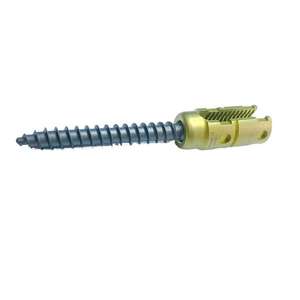
Geasure Titanium Alloy Spine 6.0 Reduction Polyaxial Pedicle Screw Set
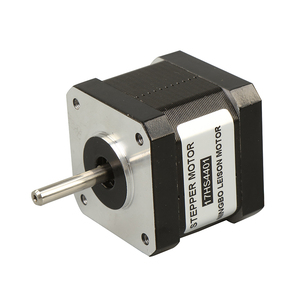
2 Phase 1.8 Degree Hybrid Bipolar Nema 17 Medical Equipment Stepper Motor

Surgical Consumables & Auxiliary Equipment Supplies
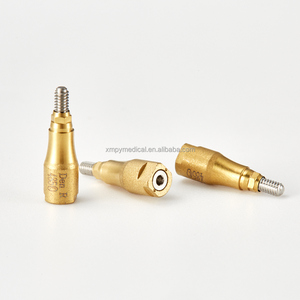
High Accuracy Implant Scan Body Compatible with Digital Workflow Systems
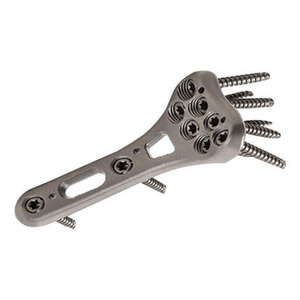
ORTHO ZE Non-Locking Plate Large Fragment Bone Fixation Set
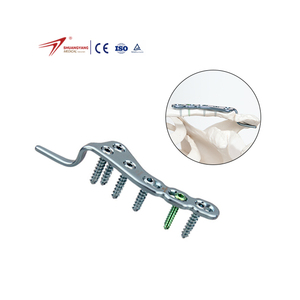
Titanium Distal LCP Clavicle Hook Locking Plate Trauma System
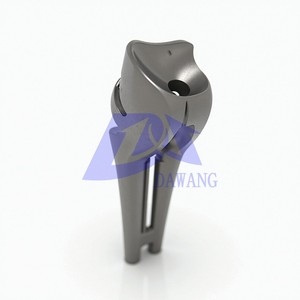
Custom CNC Machined High Biocompatibility Precision Knee Implants
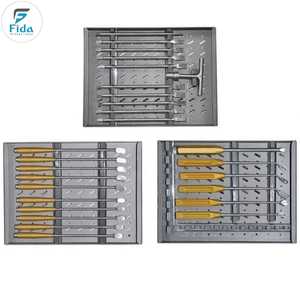
PLIF TLIF Cage Spine Fusion Instrument Set Reusable Stainless Steel
Executive Sourcing Whitepaper: Selecting Trusted Orthopedic Implant Manufacturers
The modern global healthcare landscape demands an unprecedented standard of metallurgical precision, regulatory compliance, and supply chain resilience from medical device vendors. Orthopedic implants—spanning trauma fracture plates, spinal pedicle screw systems, total joint replacement prostheses, and sports medicine fixation anchors—represent class IIb and class III medical devices. Procuring these devices requires rigorous evaluation of vendor engineering credentials, cleanroom standards, and micro-machining capabilities.
Hospital procurement managers, medical device distributors, and private-label OEM brand owners must look beyond initial unit costs. Evaluating a vendor’s ISO 13485:2016 Quality Management System, raw material batch traceability (such as ASTM F1472 for Ti-6Al-4V titanium alloy), automated coordinate measuring machine (CMM) quality control, and clinical performance data is essential for long-term supply stability and patient safety.
Key Evaluation Pillars for Top Orthopedic Implant Suppliers
- Raw Material Integrity: Certification of titanium bars (pure titanium TA2/TA3 per ASTM F67 and Ti-6Al-4V TC4 per ASTM F1472), PEEK (Polyetheretherketone) polymers, and implant-grade stainless steels with complete chemical composition and mechanical tensile stress test documentation.
- Precision CNC Machining Infrastructure: Multi-axis Swiss-type automatic lathes and 5-axis CNC machining centers capable of achieving sub-micron tolerances (±0.005mm) for intricate thread profiles and polyaxial screw heads.
- Controlled Cleanroom Packaging: On-site ISO Class 7 cleanrooms equipped with automated visual inspection, ultrasonic washing, and Co-60 gamma ray sterilization achieving a Sterility Assurance Level (SAL) of 10⁻⁶.
- Global Regulatory File Technical Support: Complete technical files supporting CE marking under EU MDR (2017/745), US FDA 510(k) clearances, and regional registration dossiers for rapid market launch.
Trauma Fixation
Locking compression plates (LCP), intramedullary nails, distal clavicle hook plates, and cannulated compression screws designed for rigid anatomical reduction.
Spinal Reconstruction
Polyaxial pedicle screw systems, PEEK cervical & thoracic interbody fusion cages, anterior cervical plates, and balloon kyphoplasty kits.
Joint Arthroplasty
Primary and revision hip stems with plasma-sprayed hydroxyapatite (HA) coating, titanium acetabular cups, and total knee prostheses.
Sports Medicine & UBE
PEEK suture anchors, arthroscopy shaver blades, drill guides, and Unilateral Biportal Endoscopy (UBE) minimally invasive instrument sets.
Biomaterial Science & Metallurgical Specifications in Implant Manufacturing
The biomechanical success of orthopedic implants relies heavily on material selection, microstructural density, and fatigue resistance. Implants undergo millions of loading cycles over a patient’s lifetime. Leading manufacturers utilize high-grade medical alloys and engineering polymers tested to international standards.
| Material Classification | International Standard | Tensile Strength (MPa) | Primary Surgical Applications | Biomechanical Advantage |
|---|---|---|---|---|
| Pure Titanium (TA2 / TA3) | ASTM F67 / ISO 5832-2 | ≥ 400 – 500 MPa | Reconstruction plates, rib clips, dental implants | Exceptional biocompatibility & corrosion resistance |
| Titanium Alloy (Ti-6Al-4V / TC4) | ASTM F1472 / ISO 5832-3 | ≥ 930 MPa | Pedicle screws, trauma locking plates, hip stems | High strength-to-weight ratio & superior fatigue limit |
| Titanium Alloy ELI (Ti-6Al-4V ELI) | ASTM F136 / ISO 5832-3 | ≥ 860 MPa | Critical load-bearing joint & spinal components | Extra low interstitials for enhanced damage tolerance |
| PEEK Optima Polymer | ASTM F2026 | ≥ 90 – 100 MPa | Interbody fusion cages, suture anchors | Modulus matching cortical bone; radiolucent for X-ray/MRI |
| Implant Stainless Steel (316LVM) | ASTM F138 / ISO 5832-1 | ≥ 860 MPa | Temporary trauma plates, K-wires, instruments | Cost-effective temporary fixation with high ductility |
Surface Modification Technologies for Osseointegration
Modern orthopedic factory suppliers employ advanced surface chemistry technologies to enhance osteoblast adhesion and bone ingrowth:
- Anodization (Type II & Type III): Type II electrochemical anodization increases surface fatigue resistance and reduces titanium fretting wear. Type III anodization produces distinct color-coding for rapid size identification in the operating room.
- Plasma-Sprayed Hydroxyapatite (HA) Coating: Applied to cementless femoral stems and acetabular cups, producing a bioactive 50–150µm coating that promotes rapid biological fixation and bone micro-interlocking.
- Sandblasted Large-grid Acid-etched (SLA) Surfaces: Generates micro-roughness across titanium bone plate surfaces, accelerating secondary stability and reducing time-to-fusion.
Future Industry Trends & Strategic Sourcing Shift (2026–2030)
The global orthopedic market is undergoing a structural shift driven by aging populations, expansion of minimally invasive surgery (MIS), and tightening healthcare budgets. B2B buyers must align with suppliers capable of supporting next-generation implant paradigms.
1. Sterile Packaging Direct-to-OR
Hospitals are transitioning away from non-sterile instrument trays requiring complex central sterile supply department (CSSD) processing. Pre-sterilized, single-pack titanium screws and plates packaged in gamma-irradiated blisters reduce hospital infection risks and processing overhead.
2. Additive Manufacturing & 3D Porous Titanium
Selective Laser Melting (SLM) and Electron Beam Melting (EBM) enable factories to manufacture trabecular titanium cages with controlled porosity (60-80% void volume), closely mimicking cancellous bone structure for rapid bone cell ingrowth.
3. Digital Workflows & Patient-Specific Implants
Integration of titanium scan bodies and CAD/CAM surgical planning software allows custom CNC machining of complex articular fractures and total joint revision components, shortening intraoperative surgical times.
Factory Competencies & OEM Manufacturing Excellence
Orthi Medical Co., Ltd. operates as a specialized manufacturer of orthopedic implants, surgical instrument sets, and minimally invasive systems. Operating within an integrated manufacturing footprint, the company executes complete vertical integration from raw material forging to final sterile packaging.
Vertically Integrated Manufacturing Lifecycle
Step 01
Metallurgical Sourcing
100% material inspection with X-ray fluorescence spectrum analyzers and ultrasonic flaw detection.
Step 02
5-Axis Machining
Precision milling of locking screw threads, anatomical plates, and complex polyaxial joints.
Step 03
Surface & Cleaning
Multi-stage ultrasonic passivating, anodizing color-coding, and plasma-spray surface coating.
Step 04
Sterile Packaging
Class 7 cleanroom pouch sealing, double-blister packing, and Co-60 gamma sterilization.
Through rigorous engineering controls, Orthi Medical supports global orthopedic distributors with drawing-based OEM/ODM machining, private label laser marking, customized instrument tray configuration, and full regulatory dossier preparation for rapid market entry.
Frequently Asked Procurement & Technical Questions
Addressing key buyer considerations regarding international certifications, OEM customization, sterilization standards, and supply chain logistics.
What quality management certifications do your orthopedic factories hold?
What are your OEM and Private Label capabilities for surgical instruments and implants?
How are sterile packaged orthopedic implants processed and verified?
What is the minimum order quantity (MOQ) and lead time for contract manufacturing?
Do you provide technical training and surgeon support collateral for local market launch?
How do PEEK interbody cages compare to titanium cages in spinal fusion procedures?
Partner with a World-Class Orthopedic Manufacturer
Upgrade your orthopedic portfolio with certified titanium implants, custom OEM solutions, and sterile surgical sets. Request a complete product catalog and factory dossier today.
Get Catalog