Top 8 Trusted Olecranon Locking Plate Systems & Fixation Trays
Engineered for high stability in proximal ulna osteotomies, comminuted extra-articular fractures, and complex intra-articular reconstructions.
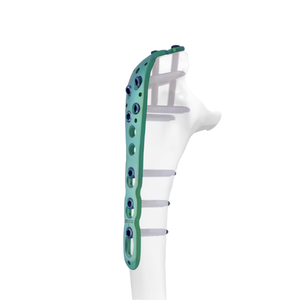
Discounted Price Orthopedic Implants Titanium LCP Olecranon Locking Plate
Pre-contoured anatomical dynamic compression locking plate with combi-holes, designed for rigid internal fixation of proximal ulnar shaft fractures.
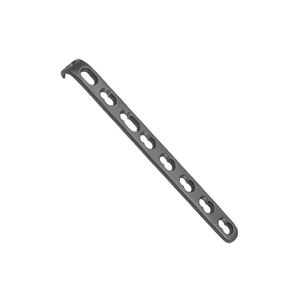
Orthopedic Implant Medial Ulna Olecranon Locking Plate Model 1227
Class III medical device designed for medial proximal ulnar column reconstruction. Supports multi-planar screw trajectories to avoid articular penetration.
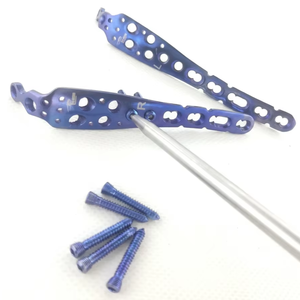
Premium Quality 3.5mm Olecranon Locking Plates (3H to 7Holes L/R)
CE-certified 3.5mm titanium plate system with left/right orientation, supplied alongside a comprehensive 121-piece surgical instrument tray.
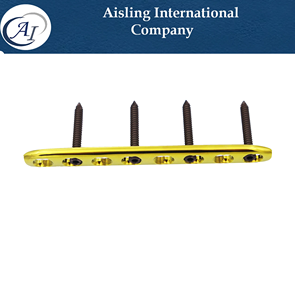
Orthopedic Locking Plates for Olecranon Hook Reconstruction
Features dual proximal hooks that engage the triceps insertion, restoring anatomical tension leverage in comminuted olecranon avulsion fractures.
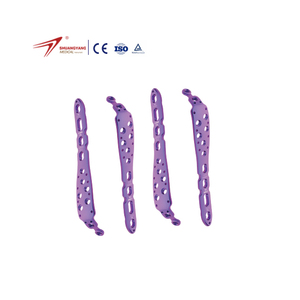
Multi-Axial Ulna Olecranon Locking Plate Titanium Fracture Plate
Advanced polyaxial locking mechanisms allow surgeons to adjust screw angles up to 15 degrees off-axis, ensuring optimal fragment capture.
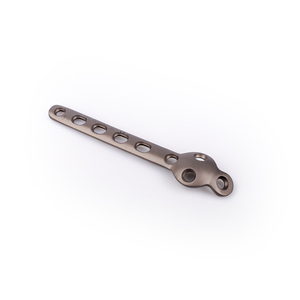
CANWELL Proximal Ulna Olecranon Multi-Axial Locking System
High-strength Ti-6Al-4V titanium alloy plate designed for complex coronoid fractures and Monteggia fracture-dislocations.
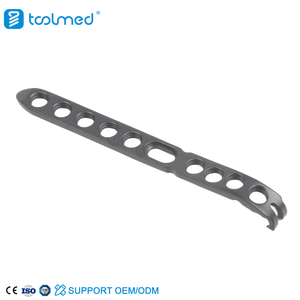
Olecranon Locking Plate II (3 to 8 Holes Titanium TA3)
Optimized profile thickness minimizes soft tissue irritation over the dorsal ulna while accepting standard 3.5mm cortical and locking screws.
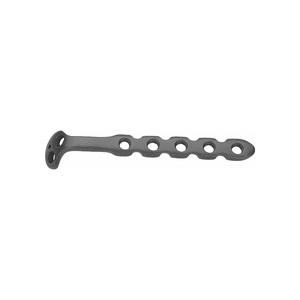
Olecranon Hook Reconstruction Locking Plates System
Engineered for posterior olecranon fixation, incorporating specialized proximal screw clusters for superior pull-out resistance in osteoporotic bone.
Biomechanical Engineering of Olecranon Locking Compression Plates
Understanding proximal ulnar stress distribution, tension band dynamics, and fracture stability requirements.
Tension Band Conversion Mechanics
The posterior surface of the olecranon experiences high tensile forces during elbow flexion due to the powerful pull of the triceps brachii tendon. Anatomical locking compression plates (LCP) mounted dorsally convert these disruptive tensile loads into compressive forces across the fracture line. This mechanical stability promotes direct primary intramembranous bone healing while preventing post-operative gap formation and hardware pull-out.
Mayo Classification Fracture Fixation Matching
Surgical success relies on matching plate architecture to the Mayo Classification:
- Mayo Type I (Non-displaced): Managed with low-profile 3.5mm titanium LCP for early passive mobilization.
- Mayo Type II (Displaced, Stable Joint): Treated with hook olecranon locking plates to secure proximal fragment leverage.
- Mayo Type III (Displaced, Instable / Comminuted): Requires long proximal ulna multi-axial locking plates with coronoid extension screws to restore humero-ulnar articulation.
Metallurgical Comparison for Olecranon Trauma Implants
Selecting the optimal implant material based on yield strength, modulus of elasticity, and artifact minimization in post-operative MRI/CT imaging.
| Material Spec | Standard Specification | Tensile Strength (MPa) | Yield Strength (MPa) | Modulus of Elasticity (GPa) | MRI Compatibility & Artifacts |
|---|---|---|---|---|---|
| Pure Titanium TA3 | ASTM F67 Grade 4 | ≥ 550 MPa | ≥ 480 MPa | 105 GPa | Excellent (Minimal Scatter) |
| Titanium Alloy Ti-6Al-4V | ASTM F1472 / TC4 | ≥ 930 MPa | ≥ 860 MPa | 110 GPa | Superior High Strength |
| Medical Stainless Steel | ASTM F138 316L | ≥ 690 MPa | ≥ 460 MPa | 200 GPa | Moderate (Potential Image Distortion) |
Key Industry Development Trends (2025–2030)
How surgical innovations, additive manufacturing, and biomechanical engineering are shaping next-generation proximal ulnar fixation devices.
1. Polyaxial Angle-Locking Technology
Traditional monoaxial locking systems constrain screws to fixed 90-degree insertion. Next-gen olecranon plates feature variable-angle (polyaxial) locking threads (+/- 15 degrees), empowering surgeons to navigate complex fracture lines, target small coronoid fragments, and avoid intra-articular screw penetration.
2. Ultra-Low Profile Anatomical Chamfering
Prominent hardware on the dorsal olecranon often causes subcutaneous bursa irritation, necessitating secondary plate removal. Modern plate design emphasizes tapered proximal tips, rounded screw heads, and slim profile margins (≤ 2.5mm thickness) to preserve overlying soft tissue integrity.
3. Integrated Triceps Tendon Hook Reconstructions
Avulsion fractures involving the triceps attachment present severe pull-off forces. Specialized hook olecranon locking plates integrate proximal tines that dig into the olecranon tip, neutralizing muscular traction without requiring extensive tendon detachment.
Future Procurement & Sourcing Trends for Global Buyers
Strategic shift toward sterile packaging, MDR regulatory compliance, and OEM consolidated vendor selection.
Shift to Gamma Sterilized Pre-Packaged Implants
Hospitals and surgical centers are rapidly transitioning from non-sterile bulk shipments to individually wrapped, gamma-sterilized ready-to-use implant kits. Pre-sterilized single-use blister packs eliminate autoclave cycle costs in hospitals, reduce cross-contamination risk, guarantee SAL 10-6 sterility assurance, and simplify real-time inventory tracking with UDI barcode integration.
MDR Regulatory Standardization & Technical Documentation
With global medical regulatory bodies enforcing tighter controls under EU MDR (2017/745) and FDA 510(k), orthopedic distributors require suppliers capable of providing exhaustive technical files, biocompatibility test data (ISO 10993), dynamic fatigue testing reports (ASTM F382), and full material batch certification.
Why Partner with Us: World-Class Manufacturing & OEM Excellence
Combining state-of-the-art 5-axis CNC precision machining, ISO 13485 quality control, and full custom ODM capabilities.
5-Axis CNC Precision Machining
Our manufacturing facility utilizes high-precision Swiss DMG MORI 5-axis CNC machining centers. This guarantees ultra-precise thread milling, smooth edge chamfering, and absolute consistency across high-volume production batches of titanium olecranon plates.
Cleanroom Packaging & Co-60 Sterilization
Implants are processed inside a certified Class 100,000 cleanroom. We offer custom double-blister sterile packaging subjected to Cobalt-60 gamma-ray irradiation, achieving an audited Sterility Assurance Level (SAL) of 10-6.
Full OEM/ODM & Private Label Support
We empower medical brands with end-to-end customization: blueprint-based component machining, laser marking, custom anodized color-coding (gold, blue, green), custom ergonomic instrument trays, and complete export registration kits.
Frequently Asked Questions for B2B Importers & Procurement Teams
Key technical, regulatory, and logistics answers to facilitate your supplier evaluation.