Featured Medical Devices & Surgical Instruments Catalog
Explore our audited selection of high-precision orthopedic trauma implants, spinal fixation systems, sports medicine surgical needles, and custom-machined instruments manufactured under ISO 13485 quality protocols.
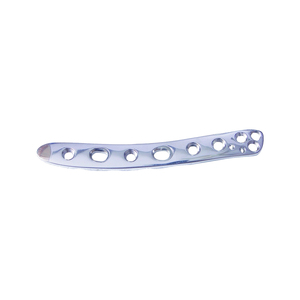
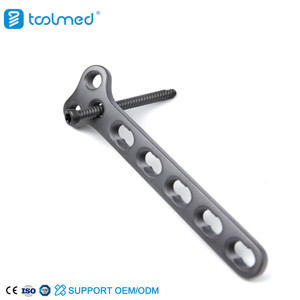
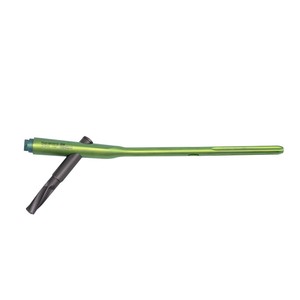
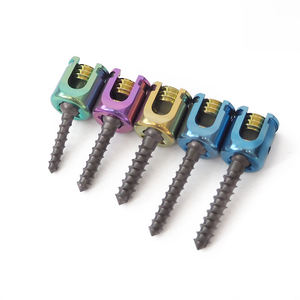
Comprehensive B2B Guide: Sourcing Meniscal Suture Needles & Repair Delivery Systems
The global market for arthroscopic knee preservation has undergone a structural shift from partial meniscectomy toward total meniscal repair. Biomechanical research consistently confirms that preserving fibrocartilaginous tissue prevents accelerated articular wear, delays secondary osteoarthritis, and maintains knee joint kinematics. Consequently, orthopedic procurement officers, OEM brand managers, and medical device distributors face growing demand for specialized surgical instruments, specifically high-yield meniscal suture needles, inside-out repair cannulas, and all-inside suture delivery systems.
Selecting a verified meniscal suture needle factory or supplier requires an evaluation beyond basic unit pricing. Procurement directors must assess metallurgical consistency, needle point geometry, shaft ductility vs. bend resistance, swage joint pull-out strength, and sterile packaging compliance (ISO 11607). A failure in needle sharpness or structural stability during an arthroscopic suture procedure risks tissue tear-through, capsule damage, or needle tip fragmentation inside the joint capsule.
Metallurgical Engineering, Tip Geometries & Mechanical Performance
Modern meniscal repair needles are subjected to mechanical shear and axial bending forces when navigating tight posterior knee joint spaces. Leading medical device factories utilize advanced stainless steel alloys and nickel-titanium shape memory materials tailored to specific arthroscopic repair approaches.
| Material Standard | Biomechanical Properties | Primary Surgical Application | Needle Tip Geometry |
|---|---|---|---|
| AISI 302 / 304 Stainless Steel | High tensile strength (≥ 1,800 MPa), exceptional bend resistance. | Inside-Out Rigid Shaft Cannula Systems | Reverse Cutting Edge / Trocar Point |
| Custom 455 / 316L Stainless Steel | Optimal elongation elasticity, resistance to stress corrosion cracking. | Outside-In Flexible Meniscal Repair Hooks | Precision Taper Point / Tapercut Tip |
| Nitinol (NiTi Memory Alloy) | Superelastic deflection up to 8% without permanent deformation. | All-Inside Curved Repair Sheaths & Conduits | Conical Atraumatic Pass-Through Tip |
| Ti-6Al-4V ELI (ASTM F136) | Lightweight, biocompatible, non-magnetic for specialized implants. | Non-Absorbable Anchor Fasteners & Cannulas | Micro-Beveled Diamond Point |
Needle Bend Moment & Rigid Resistance
Surgical efficiency requires needles to penetrate dense fibrocartilage without permanent deformation. Premium factories apply vacuum heat-treatment processes to yield ultimate yield strengths above 2,100 N/mm².
Needle-to-Suture Swage Joint Strength
The mechanical crimp between the suture needle shank and ultra-high-molecular-weight polyethylene (UHMWPE) suture must surpass ASTM F1840 tension standards (minimum retention force > 15.5 N).
Surface Siliconization & Friction Control
Needle shafts are finished with ultra-thin medical-grade silicone coatings, reducing tissue penetration force by up to 35% and preventing drag during repeated passes.
Enterprise Manufacturing Standards & OEM/ODM Capabilities
Top-tier medical device manufacturers operate dedicated sports medicine production lines. Producing surgical needles and meniscal repair devices requires high-precision CNC Swiss lathe machining, micro-grinding technology, automated swaging, and stringent quality control.
Verified Factory Production Baseline
Our manufacturing partner facilities utilize 5-axis Tsugami CNC Swiss turning centers, laser-welding workstations, and electro-discharge machining (EDM) to ensure strict adherence to micro-tolerances within ±0.005mm. Final assembly and blister packaging take place in ISO Class 7 cleanrooms under strict cleanroom airborne particle limits.
1. Swiss-Style CNC Lathe Machining & Micro-Grinding
Needle tips are shaped using multi-stage grinding wheels that sharpen the point without creating microscopic burrs. Automated vision systems audit 100% of needle points for tip concentricity and surface smooth finish.
2. Electrochemical Passivation & Corrosion Protection
All stainless steel surgical components undergo citric or nitric acid passivation per ASTM A967 standards, removing free iron particles and building an oxide layer resistant to saline corrosion in arthroscopic environments.
3. Automated Suture Attachment & Swaging
High-speed rotary swaging machines lock non-absorbable UHMWPE sutures into laser-drilled needle holes. Mechanical pull testing is conducted continuously across production batches to verify zero-slippage joints.
4. ISO 11607 Sterile Barrier Packaging
Products are sealed in medical-grade Tyvek/PE blister pouches. Cobalt-60 Gamma Irradiation or Ethylene Oxide (EtO) sterilization processes yield a Sterility Assurance Level (SAL) of 10⁻⁶ with 5-year shelf-life stability.
Future Sourcing & Procurement Trends for Meniscal Repair Systems (2025–2030)
Procurement directors and hospital supply chain managers must align their purchasing strategies with emerging technological and regulatory shifts. Key trends shaping the future of meniscal repair manufacturing include:
All-Inside Soft Anchor Integration
Surgical preference is leaning toward knotless, all-soft implant anchors. Needles and delivery needles are engineered with reduced shaft outer diameters (below 1.5mm) to minimize capsular tissue trauma during insertion.
Bioresorbable Polymer Mechanics
Developments in PLGA and β-TCP biocomposite materials require needle delivery systems to maintain precise placement depth. Needle stops and calibrated depth sleeves are becoming standard inclusions in OEM delivery kits.
Supply Chain Consolidation & MDR Compliance
Global buyers are consolidating vendor bases toward factories holding comprehensive CE MDR (EU 2017/745) technical files and US FDA 510(k) clearances, reducing regulatory approval timelines in destination markets.
Supplier Audit & Quality Verification Checklist
When evaluating potential OEM/ODM partners or direct contract manufacturers for meniscal suture needles, use this four-pillar audit matrix:
Pillar 1: Raw Material Traceability
Ensure the factory provides complete heat lot certificates for all stainless steel wire (ASTM F899) and titanium bar stocks (ASTM F136). Spectrographic material analysis must confirm zero heavy metal contamination.
Pillar 2: Mechanical Testing Reports
Request batch test protocols detailing needle penetration force (N), yield strength against bending (N-mm), joint pull-off tension (N), and fatigue resistance after repeated pass-throughs in artificial meniscus blocks.
Pillar 3: Cleanroom & Biocompatibility
Verify ISO 14644 Class 7 environment monitoring, bioburden testing records, cytotoxic evaluation per ISO 10993-5, and systemic toxicity testing per ISO 10993-11.
Pillar 4: Regulatory Support & Tech Files
A top-tier supplier supplies full Device Master Records (DMR), Risk Assessment Files (ISO 14971), IFUs, and surgical technique guides for local registration support.
Frequently Asked Questions (FAQ) for Procurement Managers
Partnering with a Premier Orthopedic Device Manufacturer
As a leading manufacturer of orthopedic implants, surgical instruments, and sports medicine repair devices, we provide global medical distributors, hospital chains, and OEM brand owners with a predictable supply chain, competitive factory direct pricing, and uncompromising clinical quality. From single trauma locking plates to complex arthroscopic meniscal repair needle sets, our production capacity ensures rapid turnaround and complete traceability.
Request a Custom OEM Quote or Product Catalog
Connect directly with our engineering and procurement team to request sample kits, technical whitepapers, or custom OEM manufacturing estimates.