Featured Orthopedic Implants & Instrument Systems
Explore certified medical solutions directly from our ISO 13485 certified manufacturing facility. Every system is supported by full material traceability and sterile packaging protocols.
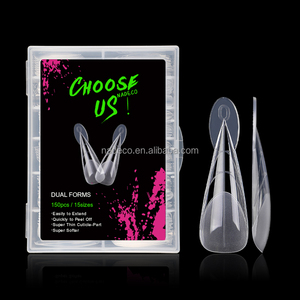
Inner Recessed French Dual Forms Nail Tips
Precision-molded guidance line tips for specialized anatomical modeling and procedural alignment templates.
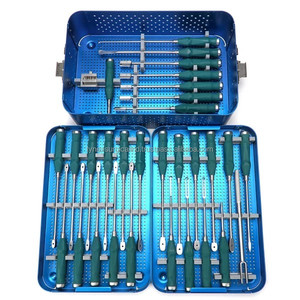
Lumbar Titanium Cage Instrument Set
Complete spinal surgery tool set for spinal fusion, crafted from biocompatible surgical titanium alloy.
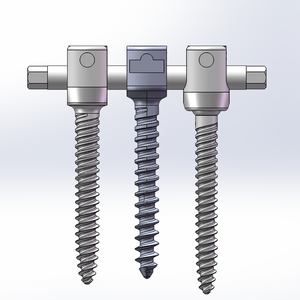
High Quality Titanium CoxII Orthopedic Implant
New-generation spinal nail implants and interventional instrumentation manufactured for optimal pedicle stability.
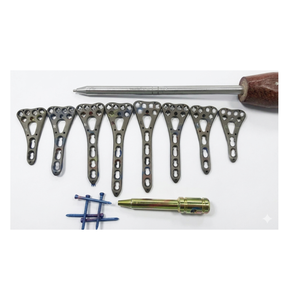
Distal Radius Volar Locking Plate System
79-piece reusable stainless steel trauma instrument and locking plate set for precise distal radius anatomical reconstruction.
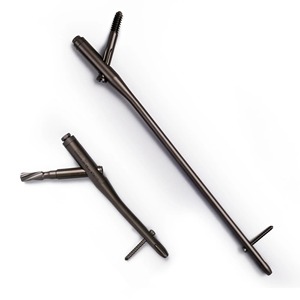
Premium PFN Femoral Intramedullary Nail Set
Stainless steel PFNA anti-rotation femoral nail manual surgical instrument set for complex trochanteric fracture fixation.
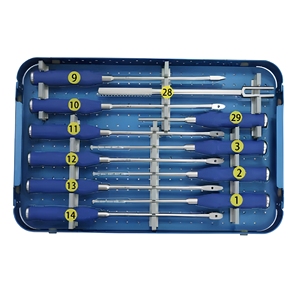
PLIF Lumbar Interbody Fusion Cage
Class II ISO certified PEEK & Titanium interbody fusion device engineered for posterior lumbar reconstruction.
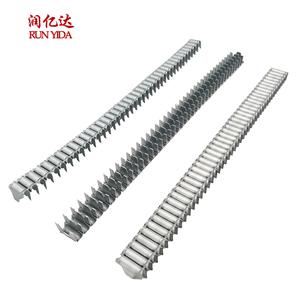
M85 Heavy-Duty Wire Fasteners & Staples
Smooth shank high-tensile wire fasteners and specialized industrial staples engineered for secure structural retention.
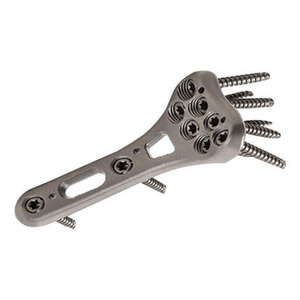
Orthopedic Large Fragment Non-Locking Plate Set
High-grade surgical stainless steel bone fixation plate instrument set for internal trauma management.
Kirschner Wire Manufacturing: Technical Procurement Whitepaper
Kirschner Wires (commonly designated as K-wires) represent one of the most essential, versatile, and critical foundational elements in modern orthopedic trauma, pediatric skeletal reconstruction, hand surgery, and veterinary osteosynthesis. Originally introduced by Dr. Martin Kirschner in 1909, these sharpened, smooth, or threaded stainless steel and titanium pins have evolved from primitive skeletal traction pins into high-precision, sub-millimeter surgical implants. Today, hospital procurement teams, medical device distributors, and contract manufacturing partners must evaluate K-wire suppliers not merely on unit cost, but on rigorous metallurgical purity, tip geometry consistency, flexural rigidity, pin-tract infection resistance, and cleanroom packaging integrity.
As a premier global Kirschner Wire factory and OEM supplier, Orthi Medical Co., Ltd. operates state-of-the-art Swiss-type multi-axis CNC lathe centers, centerless grinding units, and automated electrolytic polishing lines. Our enterprise manufacturing environment operates under a fully integrated ISO 13485 and ISO 9001 quality management system, delivering medical-grade Kirschner wires, bone plates, intramedullary nails, and spinal fixation systems to healthcare institutions across Europe, the Americas, Asia-Pacific, and the Middle East.
Standard commercial K-wires often suffer from tip dulling, axial wobble, micro-burrs, and stress concentration during high-RPM power tool insertion. Our proprietary dual-bevel trocar grind and cold-drawn passivated surface finish reduce thermal necrosis risks during cortical bone drilling by up to 34% compared to standard diamond-point geometries.
Engineering Mechanics & Tip Geometry Selection Matrix
Selecting the correct Kirschner wire specification requires a deep understanding of biomechanics, axial pullout resistance, bending moment, and cortical bone insertion dynamics. Below is a comprehensive breakdown of the core geometric configurations engineered in our factory:
Trocar Tip Geometry
Features a three-sided sharp cutting pyramid ground at optimal 15°–22° relief angles. Designed for rapid penetration through dense cortical bone with minimal axial force, reducing surgeon fatigue during manual or powered insertion.
Diamond Tip Profile
Consists of a two-sided chisel bevel edge ideal for soft tissue clearance and precise bone placement. Excellent for percutaneous pinning where tangential bone entry requires anti-skid tip engagement.
Threaded K-Wire Shank
Incorporate micro-pitch machine threads along the distal tip or body. Provides significantly enhanced axial pullout strength and prevents wire migration in osteoporotic or soft cancellous bone structure.
Metallurgical Comparison: 316L SS vs Ti-6Al-4V vs Nitinol
Material selection directly governs the bio-performance and mechanical endurance of K-wires. Procurement managers must weigh mechanical strength against artifact generation in postoperative MRI imaging:
| Material Alloy Grade | Standard Specification | Tensile Strength (MPa) | Elastic Modulus (GPa) | MRI Compatibility | Primary Clinical Application |
|---|---|---|---|---|---|
| 316L Surgical Stainless Steel | ASTM F138 / ISO 5832-1 | ≥ 950 - 1150 | 200 | Moderate Artifact | Temporary fracture fixation, traction pins, emergency trauma. |
| Titanium Ti-6Al-4V ELI | ASTM F1472 / ASTM F136 | ≥ 860 - 960 | 110 | High (Low Artifact) | Semi-permanent implant retention, pediatric osteotomy, hand surgery. |
| Pure Titanium (Grade 4) | ASTM F67 / ISO 5832-2 | ≥ 680 - 750 | 105 | High (Low Artifact) | Craniofacial repair, soft tissue reconstruction anchor wires. |
| Superelastic Nitinol | ASTM F2063 | ≥ 1100 - 1350 | 48 - 75 | Excellent | Intrameduallary arc pinning, minimally invasive curved insertion. |
Future Global Sourcing Trends in Orthopedic Fixation (2026–2030)
The landscape of orthopedic device procurement is undergoing a fundamental structural transformation driven by regulatory shifts, clinical safety mandates, and advanced material science:
1. Transition to Single-Use Gamma Sterilized Packaging
Hospitals worldwide are rapidly phasing out bulk, non-sterile K-wire caddies due to cross-contamination risks and hidden reprocessing unit costs. Supply chain managers are demanding pre-sterilized, double-peel pouch packaging with individual UDI (Unique Device Identification) barcode tracking.
2. Bioabsorbable Magnesium Alloy K-Wires
Next-generation pediatric orthopedics is seeing the emergence of magnesium-zinc-calcium (Mg-Zn-Ca) degradable wires. These eliminate the traumatic secondary surgical procedure typically required for K-wire removal after bone healing.
3. Surface Nano-Coatings for Infection Control
Pin tract infection remains a clinical hurdle occurring in up to 7% of percutaneous pinning cases. Advanced silver-ion (Ag+) plasma vapor deposition and hydroxyapatite (HA) micro-grooving are entering high-end hospital tenders.
4. Stringent EU MDR & FDA 510(k) Compliance
With the full implementation of the European Union Medical Device Regulation (EU MDR 2017/745), healthcare distributors can no longer import uncertified medical commodities. Full clinical evaluation reports (CER) and ISO 13485 audit trails are mandatory.
Why Source from Orthi Medical: Factory Strengths & OEM Integration
Orthi Medical Co., Ltd. serves as an end-to-end manufacturing partner for international medical brand owners, hospital groups, and regional orthopedic distributors. Our factory capabilities encompass:
High-Precision CNC Swiss Machining
Equipped with Citizen and Star Swiss-type 9-axis automatic lathes capable of maintaining pin diameter tolerances within ±0.003mm and rotational concentricity below 0.01mm.
Class 100,000 Cleanroom Packaging
In-house medical pouch sealing, ultrasonic washing, and Co-60 Gamma Sterilization guaranteeing Sterility Assurance Level (SAL) 10-6.
Custom Laser Marking & Anodization
Full private-label custom laser marking for depth calibration lines (10mm increments), lot numbers, logos, and color-coded titanium anodization.
Frequently Asked Questions (FAQ) for Kirschner Wire Procurement
Clear technical and commercial answers to streamline your B2B sourcing decisions.
Partner with a Trusted Kirschner Wire Factory
Request a competitive factory-direct price quote, request sample kits, or discuss custom OEM/ODM manufacturing options with our engineering team today.