Featured Surgical Implants & Precision Toolsets
Explore our export-grade orthopedic implants, manufactured under stringent ISO 13485 oversight for trauma, spinal, and reconstructive surgical applications.
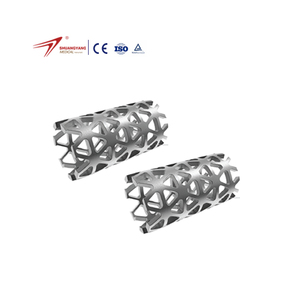
Shuangyang Manufacturer Customized High Quality Spinal Titanium Mesh Cage for Spine Surgery Titanium Mesh Cage Cervical Spine
Get a Quote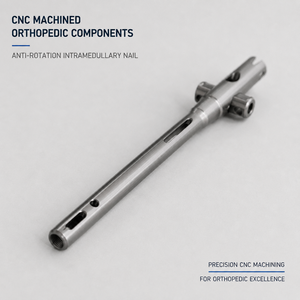
5-axis CNC Ti-6Al-4V ELI Limb-long Bone Fractures with Intramedullary Fixation - Anti-rotation Intramedullary Nails
Get a Quote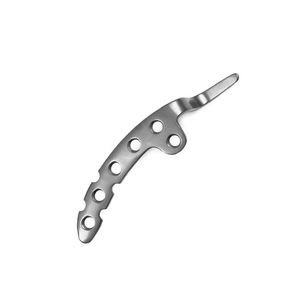
CE ISO Certified Hengchee Brand Class III Orthopedic Implant Small Fragment Upper Limbs Clavicle Claw Hook Locking Plate Model
Get a Quote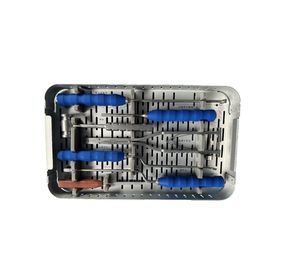
Stainless Steel Cervical Spine Implants Cervical Interbody Fusion Cage Mesh Cage Instrument Set Manual Power Source Surgiright
Get a Quote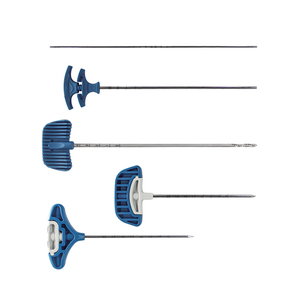
High Quality Thoracic Kyphoplasty Kit System Set Vertebroplasty and Kyphoplasty Tool Set Orthopedic Spine Surgery
Get a Quote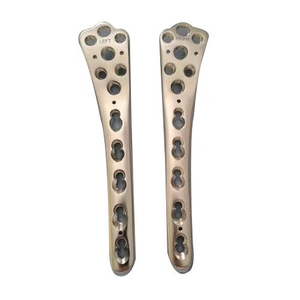
Premium Distal Femur Locking Plate 3.5mm & 4.5mm Lateral Stainless Steel Orthopedic Surgical Reusable Fracture Tools CE ISO
Get a Quote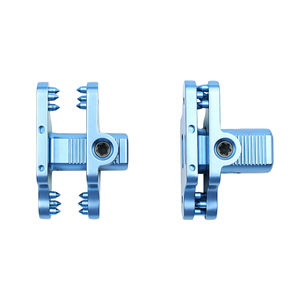
Premium Titanium Spinous Process Fusion Plate Orthopedic Implant for Interspinous Spinal Fixation
Get a Quote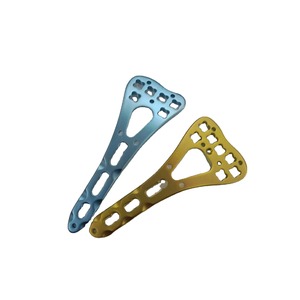
Titanium Alloy VA Distal Radius Locking Plate Implant Orthopedic LCP Variable Angle Lock Plates
Get a QuoteBiomechanical Engineering and Metallurgical Analysis of Modern Femoral Stems
An in-depth study into primary press-fit stability, secondary osseointegration, stress shielding mitigation, and taper tribology in total hip arthroplasty (THA).
The femoral stem represents the central load-bearing anchor in Total Hip Arthroplasty (THA). As medical device distributors, hospital procurement boards, and orthopedic OEM partners evaluate supply chain partners, selecting a top trusted femoral stem exporter requires rigorous evaluation of metallurgical composition, surface engineering, and biomechanical geometry. The primary clinical objective of any femoral stem is to establish immediate post-operative mechanical stability (primary fixation) while facilitating long-term biological bone ingrowth or ongrowth (secondary fixation) without inducing pathological stress shielding.
Stem Geometry & Loading Dynamics
Modern cementless femoral stems utilize double-tapered wedge, rectangular cross-sectional, or anatomical tapered designs. The proximal metaphyseal fill ensures rotational stability against torsional forces during gait cycles, while the tapered distal portion prevents thigh pain by avoiding rigid cortical impingement.
Plasma-Sprayed Hydroxyapatite (HA)
Vacuum plasma-sprayed Hydroxyapatite coatings (Ca₁₀(PO₄)₆(OH)₂) with high crystallinity (>65%) and controlled porosity accelerate osteoblast attachment. By matching natural bone mineral composition, HA-coated stems achieve rapid bony apposition and reduced micromotion.
12/14 Morse Taper Tribology
Precision-machined trunnion tapers (12/14 standard taper geometry) require sub-micron surface tolerance to eliminate taper corrosion and fretting wear. High-precision 5-axis CNC turning prevents wear debris-induced osteolysis at the modular stem-head interface.
Metallurgical Comparison: Ti-6Al-4V ELI vs. Cobalt-Chromium (CoCrMo) Alloys
Material selection directly dictates implant stiffness and biocompatibility. Titanium alloy Ti-6Al-4V ELI (Extra Low Interstitial, conforming to ASTM F136) offers a elastic modulus (~110 GPa) significantly closer to human cortical bone (~18-22 GPa) than Cobalt-Chromium-Molybdenum alloys (~210 GPa). This elastic modulus reduction significantly decreases proximal femoral stress shielding according to Wolff's Law, maintaining bone density in the calcar region.
Clinical histology demonstrates that interface micromotion exceeding 150 microns causes fibrous tissue encapsulation rather than osteointegration. High-precision exported femoral stems engineered with proximal porous titanium grit-blasting (Ra 4.0–7.0 µm) limit initial micromotion to under 40 microns, guaranteeing predictable osseous integration.
Future Procurement Trends for Global Femoral Stem Exporters
Key market forces, regulatory evolution, and supply chain shifts shaping global joint replacement purchasing over the next decade.
The global hip replacement market is undergoing a structural paradigm shift driven by demographic aging, expanding healthcare infrastructure in emerging economies, and tightening regulatory regimes such as the European Union’s Medical Device Regulation (EU MDR 2017/745) and US FDA 510(k) clearances. For international distributors, purchasing directorates, and hospital chains, evaluating a femoral stem exporter involves analyzing long-term supply resilience, regulatory documentation depth, and technical adaptability.
1. Direct Anterior Approach (DAA) Optimized Geometries
Surgical preference is rapidly shifting toward tissue-sparing minimally invasive procedures, particularly the Direct Anterior Approach. Procurement teams are prioritizing short-stem femoral components with reduced lateral shoulder profiles that allow easy insertion through small incisional windows without sacrificing metaphyseal fixation.
2. Pre-Sterilized, Ready-to-Use Single-Pack Implants
Hospitals are actively migrating away from bulk, unsterilized implant trays toward single-pack, pre-sterilized gamma-irradiated implants (Co-60, SAL 10⁻⁶). Pre-sterilized packaging reduces hospital reprocessing costs, minimizes operational room turnover time, and eliminates contamination risks during surgical handling.
3. Supply Chain Consolidation & Full Traceability
Global buyers are reducing vendor fragmentation by partnering with integrated exporters who control raw titanium bar stock sourcing, 5-axis CNC machining, surface anodizing, cleanroom washing, and packaging under a single ISO 13485 quality management system with full raw material heat-lot traceability.
Next-Generation Development Trends in Femoral Stem Manufacturing
Advanced additive manufacturing, surface bio-functionalization, and digital integration in joint reconstruction implants.
The manufacturing of orthopedic joint replacements is transitioning from conventional subtractive forging and CNC milling to advanced hybrid manufacturing technologies. Leading exporters are investing heavily in R&D to deliver femoral stems that exhibit superior cellular adhesion and customized biomechanical matching.
| Development Vector | Core Technology & Mechanism | Clinical & Operational Benefit |
|---|---|---|
| 3D Printed Trabecular Titanium | Electron Beam Melting (EBM) / Direct Metal Laser Sintering (DMLS) creating porous titanium lattice structures (pore size 300–500 µm, porosity 60–70%). | Mimics human cancellous bone structure, promotes rapid vascularization, and significantly lowers structural stiffness to reduce stress shielding. |
| Bioactive Nano-Coatings | Strontium-doped Hydroxyapatite, antibacterial Silver nanoparticle physical vapor deposition (PVD), and electrochemical anodization. | Combats periprosthetic joint infection (PJI), stimulates osteoblast differentiation, and enhances bone bonding in osteoporotic patients. |
| Robotic & Digital Templating Integration | AI-powered preoperative CT 3D templating alignment with robotic cutting blocks and nav-guided stem rasping. | Ensures sub-millimeter leg length correction, accurate stem offset restoration, and precise femoral canal alignment during surgery. |
| Modular Neck & Offset Options | Precision-machined interchangeable femoral necks (standard, extended, varus/valgus, anti/retroversion). | Allows custom intraoperative adjustment of soft tissue tension, joint stability, and center of rotation without disturbing stem fixation. |
Femoral Stem Classification & Metallurgical Standards Matrix
A comprehensive engineering benchmark comparison for hospital procurement boards and OEM private-label clients.
| Stem Type / Geometry | Primary Material Standard | Fixation Mode | Surface Treatment | Ideal Patient Demographics |
|---|---|---|---|---|
| Cementless Tapered Wedge | Ti-6Al-4V ELI (ASTM F136 / ISO 5832-3) | Press-Fit Metaphyseal Engagement | Proximal Plasma Spray HA (150 µm) + Vacuum Grit Blast | Primary THA, Active patients, Good bone stock (Dorr Type A/B) |
| Cemented Polished Collarless | High-Nitrogen Stainless Steel / CoCrMo (ASTM F75) | PMMA Bone Cement Interlocking | Mirror-Polished (Ra < 0.05 µm) Double Taper | Elderly patients, Osteoporotic bone (Dorr Type C), Fracture neck of femur |
| Anatomical Curved Stem | Ti-6Al-4V ELI (ASTM F136) | Proximal Metaphyseal & Diaphyseal Fill | Micro-textured porous titanium lattice coating | Anatomical canal mismatches, preserving proximal anterior bowing |
| Modular Revision Stem | Ti-6Al-4V ELI / CoCrMo Alloy | Distal Fluted Spline Fixation | Titanium Nitride (TiN) PVD coating on modular joints | Revision THA, Periprosthetic fractures, Severe bone loss (Paprosky Type II/III) |
Raw Material Mechanical Testing Compliance
Every batch of raw titanium bar stock undergo rigorous mechanical verification prior to machining. Tensile strength for medical-grade Ti-6Al-4V ELI must meet or exceed 930 MPa, with yield strength above 860 MPa and elongation at break greater than 10%. Cyclic fatigue testing on finished stems is executed according to ISO 7206-4 (endurance properties of stem head/neck region) and ISO 7206-6 (fatigue performance of stemmed femoral components), enduring 5,000,000 continuous loading cycles under 2.3 kN peak dynamic force without structural micro-cracking or plastic deformation.
Why Partner With Us: Complete Orthopedic Manufacturing Ecosystem
Controlling every manufacturing step from raw titanium billet to sterile packaging guarantees quality, compliance, and competitive lead times.
5-Axis CNC Precision Machining
Utilizing state-of-the-art Japanese and German 5-axis CNC milling machines (DMG MORI, Citizen), achieving sub-micron dimensional tolerances on complex 3D curved surfaces, Morse taper trunnions, and locking plate contours.
Class 100,000 Cleanroom Packaging
Automated multi-stage ultrasonic cleaning using RO pure water, validated bioburden control, and primary blister packaging inside certified ISO Class 7 (Class 100,000) cleanrooms adhering to ISO 11607 sterile barrier standards.
Complete Turnkey OEM/ODM Solutions
From customer drawing analysis and prototype rapid manufacturing to custom instrument tray design, laser marking, anodized color coding, and regulatory file support (STED format for CE/FDA submission).
Frequently Asked Questions for Femoral Stem Procurement
Addressing critical technical, regulatory, and commercial inquiries raised by international medical device buyers.
QWhat certifications and material test reports are provided with exported femoral stems?
Every shipment includes complete metallurgical raw material certificates (Chemical composition and Mechanical Tensile Test reports per ASTM F136/F67), Certificate of Analysis (CoA), ISO 13485 QMS audit documentation, ISO 7206 fatigue test compliance certificates, and Co-60 Sterilization Validation certificates (if sterile-packaged).
QCan you support OEM private label manufacturing based on custom engineering drawings?
Yes. We provide complete OEM/ODM solutions. Our engineering department reviews customer 2D/3D CAD models (STEP/IGES format), conducts DFM (Design for Manufacturability) analysis, produces CMM-inspected prototype samples, and manufactures custom matching surgical instrument sets including broaches, trial heads, and inserters.
QWhat packaging options are available for international orthopedic distributors?
Implants can be supplied in non-sterile bulk packaging for local hospital sterilization or pre-sterilized in double PETG Tyvek thermoformed blisters. Sterile packaging undergoes Gamma Co-60 irradiation with a Sterility Assurance Level of SAL 10⁻⁶ and a validated 5-year shelf life under ISO 11607 standards.
QHow do you ensure proper femoral taper fit and prevent taper trunnion fretting?
Our 12/14 tapers are machined on high-precision CNC lathes with in-line laser measurement systems ensuring sub-micron angular tolerances and surface finish roughness (Ra < 0.2 µm). Each batch is 100% inspected via optical comparator and contact CMM gauge to ensure perfect Morse taper cold-welding upon intraoperative head impaction.
QWhat is the typical minimum order quantity (MOQ) and lead time for export orders?
For standard catalog items, typical lead times are 2 to 4 weeks. For custom OEM/ODM private-label manufacturing, production lead time ranges from 6 to 8 weeks following initial sample approval. MOQs are flexible depending on product complexity and long-term contract structure.