Class III Medical Device Orthopedic Systems
Explore our certified orthopedic implants and precision surgical instrument sets, manufactured under strict international quality controls.
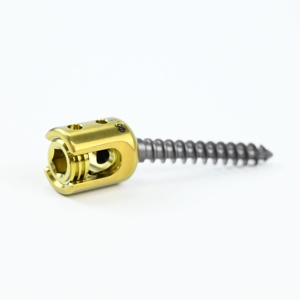
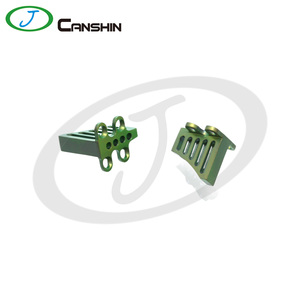
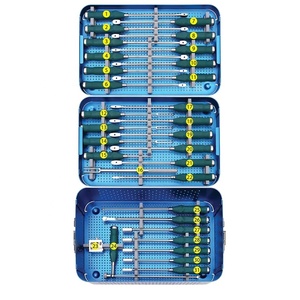
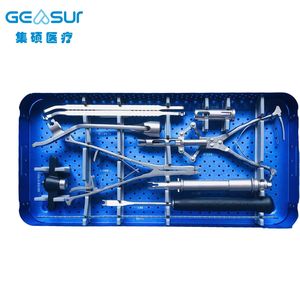

Class III Orthopedic Device Manufacturing: Technical Excellence & Regulatory Rigor
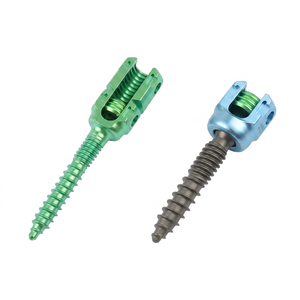
In the global medical device sector, Class III orthopedic implants represent the apex of risk management, mechanical reliability, and bio-material engineering. Unlike lower-risk medical supplies, Class III devices—including spinal pedicle screws, total joint replacement systems, thoracolumbar fixation assemblies, and interbody fusion cages—are permanently implanted into the human body to support structural loads, reconstruct axial alignment, or replace degenerated bone tissue. Consequently, identifying top trusted Class III medical device orthopedic manufacturers requires an exhaustive evaluation of ISO 13485:2016 quality management systems, material traceability, micro-machining tolerances, and global regulatory dossier readiness (such as EU MDR 2017/745 and FDA 510(k)/PMA requirements).
Biomaterial Integrity & Metallurgy Standards
The performance of an orthopedic implant depends fundamentally on the atomic structure and chemical purity of its raw materials. Leading orthopedic contract manufacturers utilize strictly certified medical-grade alloys and high-performance polymers that comply with international ASTM and ISO standards:
Extra Low Interstitial (ELI) grade titanium provides exceptional strength-to-weight ratios, high fatigue resistance (tensile strength ≥ 930 MPa), and superior osteointegration properties for pedicle screws and trauma plates.
Offers outstanding biocompatibility and corrosion resistance, widely utilized for cranial plates, dental systems, and porous surface coatings where ductile contouring is paramount.
Radiolucent thermoplastic with an elastic modulus closely matching human cortical bone (3.6 GPa), eliminating stress-shielding effects in lumbar and cervical interbody fusion cages.
Utilized for high-wear manual surgical instruments, reamers, and articular bearing surfaces requiring extreme hardness, corrosion resistance, and tactile feedback.
Precision Swiss 5-Axis Machining & Cleanroom Validation
Producing Class III medical devices demands micro-scale dimensional precision. Advanced contract manufacturing facilities deploy multi-axis Swiss-type CNC lathes, wire EDM, and automated surface treatment systems capable of maintaining tolerances within ±0.005 mm. Critical surgical features—such as dual-core pedicle screw threads, self-tapping flutes, and friction-fit locking mechanisms—undergo 100% optical coordinate measurement machine (CMM) inspection.
Following precision machining, implants undergo multi-stage ultrasonic cleaning and electrochemical surface anodization (Color Type II/III anodizing) for instant intraoperative size recognition. Sterile-packaged product lines are washed and sealed in ISO Class 7 cleanroom environments, followed by Co-60 Gamma irradiation to achieve a guaranteed Sterility Assurance Level (SAL) of 10-6 per ISO 11137 standards.
Strategic Procurement Trends for Class III Medical Devices
As healthcare systems worldwide navigate economic pressures, regulatory tightening, and supply chain disruptions, procurement directors and medical device brand owners are fundamentally changing how they select contract manufacturing partners. Understanding these emerging macro-trends is crucial for maintaining market share and securing resilient supply chains.
1. Global Regulatory Dossier Harmonization
With the transition from EU MDD to the stringent European Medical Devices Regulation (EU MDR 2017/745), procurement teams are actively divesting from suppliers that lack fully documented Technical Dossiers. Top-tier manufacturers now deliver pre-validated STED (Summary Technical Documentation) files, clinical evaluation reports (CER), and ISO 10993 biocompatibility testing data alongside raw product shipments.
2. Shift Toward Gamma-Sterilized Single-Unit Packaging
Hospitals are moving away from traditional bulk non-sterile implant trays that require expensive, labor-intensive in-house autoclaving before surgery. Pre-packaged, individual sterile implants (featuring double-peel blister pouches and primary barcode tracking) reduce hospital operating theater prep times, minimize cross-contamination risk, and guarantee 100% material lot traceability.
3. Risk Mitigation via Tier-1 Dual Sourcing
Recent geopolitical volatility and logistics bottlenecks have forced original equipment manufacturers (OEMs) to shift from single-region sourcing to dual-hub manufacturing models. Establishing qualified OEM manufacturing partnerships in accredited Asian hubs like China provides global brands with cost-efficiency while retaining high-precision production quality under ISO 13485 oversight.
Technological Development Trends in Orthopedic Engineering
The orthopedic implant industry is undergoing a technological renaissance driven by additive manufacturing, minimally invasive surgical (MIS) techniques, and smart biomechanical design. Contract manufacturers must continuously innovate to deliver next-generation solutions to surgical teams.
Additive Manufacturing & Porous Trabecular Titanium
3D printing via Selective Laser Melting (SLM) and Electron Beam Melting (EBM) has transformed spine cage and joint cup production. By direct 3D printing of medical Ti-6Al-4V powder into porous trabecular architectures (50–70% porosity with mean pore sizes of 400–600 microns), additive manufacturing mimics human cancellous bone. This structure encourages rapid vascularization and cellular osteointegration without requiring secondary plasma-sprayed Hydroxyapatite (HA) coatings.
Minimally Invasive Surgery (MIS) & Biportal Endoscopy (UBE)
Surgical trends strongly favor reduced soft-tissue disruption, leading to rapid adoption of Unilateral Biportal Endoscopy (UBE) and percutaneous spine fixation systems. Modern pedicle screws now feature cannulated shafts for guidewire insertion and long-arm reduction collars that allow percutaneous rod pass-through. Surgical instrument sets are increasingly manufactured from lightweight titanium alloys and ergonomic silicones to diminish surgeon fatigue during lengthy MIS protocols.
Compatibility with Robotic Surgery & Computer-Assisted Navigation
As optical and electromagnetic surgical navigation systems (such as StealthStation and robotic assistance platforms) become standard in hospital ORs, implant manufacturers must maintain ultra-strict geometrical tolerances. Instrument sets now feature calibrated optical tracking array interfaces, high-contrast laser markings, and radiopaque marker beads to facilitate seamless real-time intraoperative imaging during computer-assisted spine and joint procedures.
Frequently Asked Technical & Sourcing Questions
Direct technical answers addressing the critical requirements of hospital procurement teams and OEM buyers.
Enterprise Strengths: Why Leading Global Medical Brands Partner With Us
Operating as a premier Class III medical device manufacturer, our enterprise combines state-of-the-art infrastructure with decades of clinical engineering expertise. Our comprehensive core competencies ensure seamless product launches for global medical distributors and OEM brand owners:
From raw titanium bar stock cutting and 5-axis CNC machining to automated surface treatment and sterile cleanroom packaging, all manufacturing steps remain strictly in-house for complete quality control.
We empower our commercial partners by providing detailed surgical technique guides, cadveric workshop support, and custom sawbone demonstration models to accelerate surgeon training and adoption.
Equipped with dozens of high-precision Japanese and Swiss CNC centers, our facilities handle high-volume trauma component production runs with reliable, predictable lead times.
Every single implant is laser-marked with unique matrix codes, product catalog numbers, and material heat lot numbers to enable 100% downstream recall protection and hospital inventory auditing.
Partner with a Certified Class III Medical Device Manufacturer
Whether you require standard spine, trauma, and joint implant systems or custom OEM contract manufacturing from customer drawings, our engineering team delivers precision, compliance, and competitive value.
Inquire Now