Precision-Engineered Orthopedic Screw Systems & Fixation Solutions
Manufactured under strict ISO 13485 compliance utilizing ASTM F136 Ti-6Al-4V ELI titanium alloy and surgical-grade polymers for exceptional pullout resistance and clinical reliability.
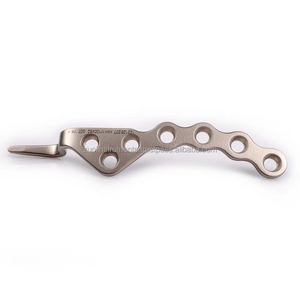
Medical Grade Orthopedic Clavicle Hook Plate - Surgical Internal Fixation System for Distal Clavicle Fractures
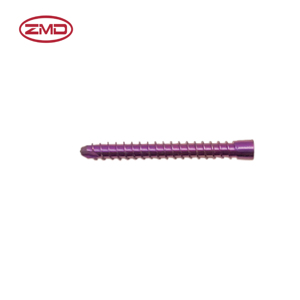
Veterinary HC4.0Mm Titanium Alloy Locking Screw (T15 Cruciform) - Reliable Orthopedic Implant
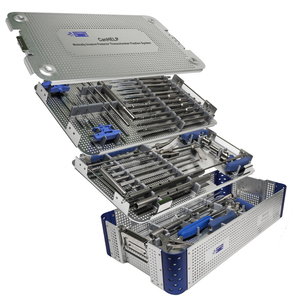
Professional Kyphoplasty Percutaneous Pedicle Screws Surgical Instruments Complete MIS Spine Tool Kit
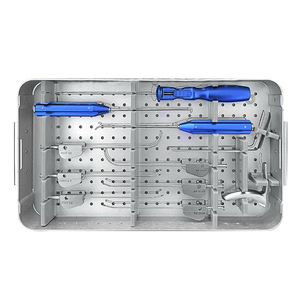
Fixation Instrument Set Orthopedic Surgical Instruments Arthroscopy Instruments
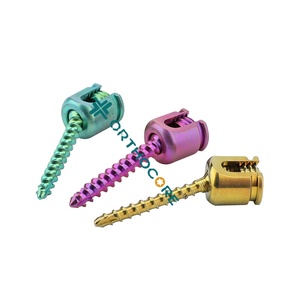
Orthopedic Implants for Large Animals Veterinary Spinal Screw
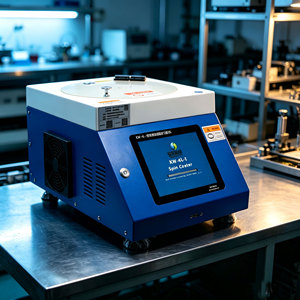
High Precision Spin Coater ±0.1% Speed Stability PTFE Chamber Automatic Glue Dispensing Lab Processor
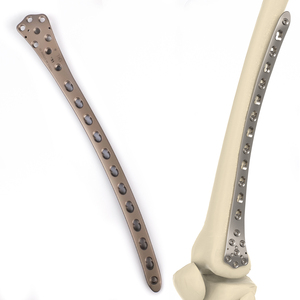
CANWELL Distal Lateral Femoral Titanium Locking Plate Compression Orthopedic Femur Implants
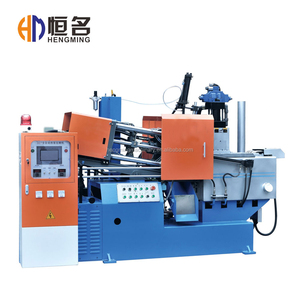
Metal Spin Casting Process Machine for Orthopedic Instrument Foundry & Precision Manufacturing
Engineering Metallurgy & Biomechanical Integrity of Bone Screw Manufacturing
Selecting a premier bone screw manufacturer factory requires evaluating metallurgical purity, thread geometry parameters, surface texturing techniques, and strict compliance with international medical device standards. As a global exporter of trauma, spinal, and sports medicine implant systems, our manufacturing facilities adhere to rigorous material specifications and micron-accurate machining protocols.
Medical-Grade Titanium Alloy Metallurgy
We source raw titanium exclusively adhering to ASTM F136 (Ti-6Al-4V ELI) and ASTM F67 (Commercially Pure Titanium Grade 2 & 3) specifications. Extra Low Interstitial (ELI) titanium provides optimized tensile strength (≥ 860 MPa) and high fatigue limit, preventing hardware failure during intra-operative insertion and long-term osteosynthesis.
Swiss 9-Axis CNC Micro-Machining
Our production floor features high-precision Citizen and Star Swiss-type sliding headstock lathes capable of multi-axis simultaneous contouring. Thread lead angles, pitch ratios, self-tapping reverse flutes, and T15/T25 Star/Hexalobular drive recesses are machined in a single setup with dimensional tolerances controlled within ±0.005 mm.
Anodic Oxidation & Electrochemical Surface Treatment
Implantable bone screws undergo Type II anodization and electro-polishing processes. Type II anodic oxidation thickens the protective titanium dioxide ($TiO_2$) surface layer, significantly reducing friction during screw insertion into cortical bone while suppressing metal ion migration and enhancing osseointegration.
Class 100,000 Cleanroom & Gamma Sterilization
Implants are cleaned using multi-stage ultrasonic aqueous washing and sealed inside medical-grade Tyvek packaging in an ISO Class 7 (Class 100,000) cleanroom environment. We provide pre-sterilized implant packages validated under Cobalt-60 Gamma Irradiation to achieve a verified Sterility Assurance Level (SAL) of 10-6.
Material Performance Comparison for Orthopedic Fixation Screws
Understanding material physics is essential for hospital procurement managers and medical device distributors when evaluating structural stability across trauma, pedicle screw fixation, and extremity reconstructions.
| Material Grade | Standard Spec | Tensile Strength (MPa) | Yield Strength (MPa) | Elastic Modulus (GPa) | Primary Clinical Application |
|---|---|---|---|---|---|
| Ti-6Al-4V ELI | ASTM F136 / ISO 5832-3 | ≥ 860 | ≥ 795 | 110 - 114 | Pedicle Screws / Locking Screws |
| Pure Titanium (TA3 / Gr 4) | ASTM F67 / ISO 5832-2 | ≥ 550 | ≥ 480 | 105 - 110 | Craniomaxillofacial & Trauma Plates |
| PEEK-OPTIMA® | ASTM F2026 | 95 - 100 | 110 - 120 | 3.6 | Radiolucent Suture Anchors & Cages |
| Stainless Steel 316LVM | ASTM F138 / ISO 5832-1 | ≥ 860 | ≥ 690 | 190 - 200 | Temporary Fracture Fixation Pin Set |
Global Procurement Trends in Orthopedic Bone Screws (2025–2030)
The orthopedic implant manufacturing and export landscape is experiencing structural shifts driven by regulatory tightening (such as EU MDR compliance), cost optimization in hospital supply chains, and rising demand for minimally invasive surgical (MIS) instruments.
1. Shift Toward Pre-Sterilized Ready-to-Use Packages
Hospitals are transitioning away from bulk, non-sterile implant trays that require labor-intensive hospital autoclaving. Single-use gamma-sterilized blister packs reduce surgical site infection (SSI) risks, streamline operating room prep times, and establish clear product-to-patient lot traceability via 1D/2D UDI (Unique Device Identification) barcoding.
2. Direct OEM/ODM Contract Manufacturing Consolidation
Global orthopedics brands are increasingly partnering with vertically integrated contract manufacturers equipped with complete in-house capabilities—from raw titanium forging and precision CNC machining to mechanical fatigue testing (ASTM F543 / ISO 14801) and private label laser etching.
3. Growth in Cannulated & Fenestrated MIS Screws
Minimally invasive spine and trauma surgeries demand specialized cannulated pedicle screws and fenestrated osteoporotic screws that allow radiopaque bone cement (PMMA) injection. Procurement directors prioritize factories with deep micro-drilling and deep-hole drilling expertise.
Technological Innovations Driving Bone Screw Development
Advanced manufacturing technologies are redefining the performance limits of fixation screws and spinal hardware, focusing on bio-mimetic screw geometries, osseointegrative coatings, and smart tool ergonomics.
Multi-Lead Dual-Thread Geometries
Modern cortical and cancellous screws utilize dual-lead threads that cut installation times in half while providing high insertion torque efficiency. Proximal cortical threads maximize engagement in thin bone shells, whereas deep distal threads grip soft cancellous structures securely.
Porous 3D Titanium Printing & Surface Texturing
Additive manufacturing (Selective Laser Melting - SLM) enables the creation of biomimetic porous screw surfaces with controlled micro-cavities (300–500 µm), encouraging rapid trabecular bone ingrowth and eliminating the need for secondary surface spray coatings.
Advanced Recess Drive Designs (T-Drive & Hexalobular)
Cruciform and standard hex drives are rapidly being replaced by precision Star/Hexalobular (Torx) drive recesses (e.g., T15, T25). Hexalobular drive geometry offers near-zero cam-out, transferring high installation torque without stripping screw heads during dense cortical bone placement.
Frequently Asked Questions for Medical Implants Procurement
Clear, expert answers addressing international regulatory filing, material certification, OEM customization, and quality control procedures.
What quality certifications do your bone screw factories hold for global distribution?
Our manufacturing facility operates strictly under ISO 13485:2016 and ISO 9001:2015 Quality Management Systems. Applicable product lines carry European CE Mark certification and comply with international medical device directives. Material lots are accompanied by full material test reports (MTR) meeting ASTM F136 (Ti-6Al-4V ELI) and ASTM F67 specifications, ensuring compliance for regulatory filings across North America, Europe, Latin America, and Asia-Pacific.
Do you offer OEM/ODM private labeling and custom surgical instrument design?
Yes. We provide complete OEM/ODM solutions ranging from CAD drawing interpretation and design for manufacturability (DFM) analysis to rapid prototyping, custom color anodization, laser-etched UDI logos, and tailored surgical tray configurations. Our engineering team supports private-label distributors throughout the entire product launch lifecycle.
Can bone screws and orthopedic plates be supplied in pre-sterilized packaging?
Absolutely. We offer both non-sterile bulk packaging and pre-sterilized individual unit packaging. Sterile products are double-sealed in cleanroom-certified Tyvek blister containers and processed via Co-60 Gamma Irradiation to achieve a Sterility Assurance Level (SAL) of 10-6 in accordance with ISO 11137 standards.
What mechanical testing standards are used to verify bone screw performance?
Every bone screw lot undergoes rigorous biomechanical testing according to ASTM F543 protocols. This includes axial pullout strength testing in synthetic bone substrates, insertion and removal torque measurements, torsional yield strength testing, and drive recess torque-to-failure analysis. Spinal pedicle screws are additionally tested under ASTM F1717 dynamic fatigue protocols.
What are the standard lead times and Minimum Order Quantities (MOQ) for export orders?
For standard catalog inventory (such as locking screws, cannulated compression screws, and trauma plates), typical dispatch lead time is 2 to 3 weeks. Custom OEM projects generally require 4 to 6 weeks for precision tooling and initial mass production release. MOQs depend on product complexity, but flexible pilot order quantities are available for distributor evaluation.
How do you ensure lot traceability and batch consistency across production runs?
Every raw material titanium bar receives a unique material heat number linked to mill certificates upon entry. Throughout 9-axis CNC turning, anodizing, cleaning, and packaging, batch lot numbers are laser-etched directly onto implants or printed on barcode tags. Full device history records (DHR) are preserved for complete 100% backward traceability.
Partner with a World-Class Bone Screw Manufacturer & Exporter
Whether you are seeking OEM private labeling, custom implant engineering, or ISO 13485 certified surgical supply lines, our technical engineering team provides fast turnarounds, competitive factory-direct pricing, and complete regulatory documentation support.