Featured Variable Angle Locking Plate Portfolio
Standardized anatomical implants engineered from medical-grade Titanium Alloy (Ti-6Al-4V) and Pure Titanium according to ISO 13485 quality frameworks.
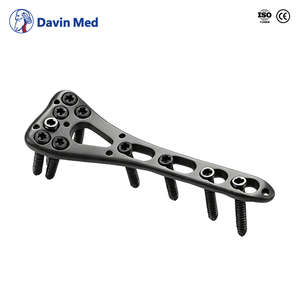
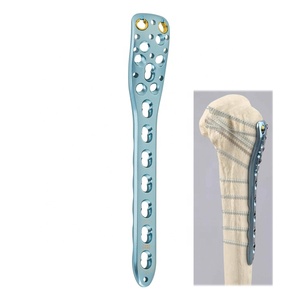
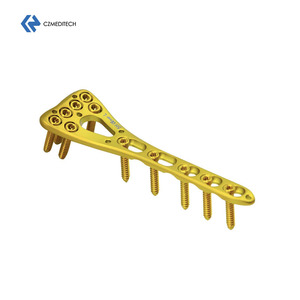
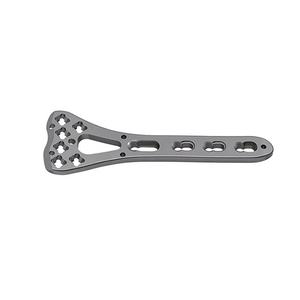
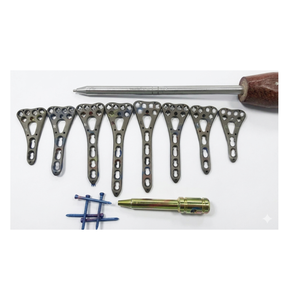
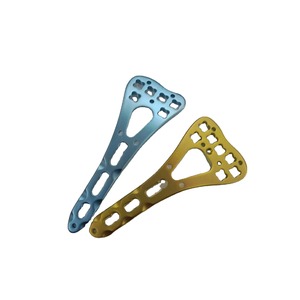
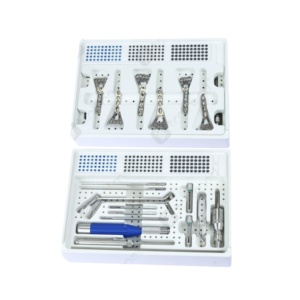
The Evolution of Variable Angle (VA) Locking Technology
Understanding how polyaxial locking mechanisms improve construct stability, accommodate intraoperative fracture reduction variations, and overcome traditional monoaxial locking plate limitations.
Polyaxial Trajectory vs. Fixed-Axis Lock
First-generation locking compression plates (LCP) relied on fixed-angle threaded screw-to-plate interfaces. While fixed-angle constructs provide robust angular stability in uniform metaphyseal bone, they enforce a predetermined screw trajectory that can lead to joint penetration or suboptimal fragment capture in complex intra-articular fractures.
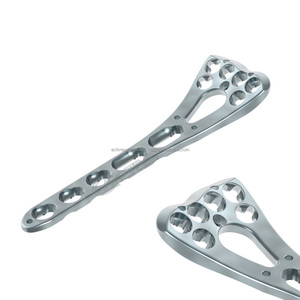
Variable Angle (VA) locking technology allows surgeons to steer screws off-axis (typically within a 30° conical envelope, or ±15° from the central plate axis). This polyaxial maneuverability enables target-specific fixation of small articular fragments, optimal screw placement away from sensitive tendon sheaths, and custom tailoring to distinct anatomical variations without compromising rigid construct stability.
Metallurgical Integrity: Ti-6Al-4V vs. Pure Titanium
Implants must withstand high cyclic loads during early post-operative rehabilitation. Leading Chinese manufacturers strictly adhere to international material specifications:
- Titanium Alloy (Ti-6Al-4V / TC4 - ASTM F1472): Yield strength ≥ 860 MPa, tensile strength ≥ 930 MPa. Delivers high fatigue resistance and stiffness suitable for high-stress anatomical sites like proximal humerus and distal tibia.
- Commercially Pure Titanium (TA2 / TA3 - ASTM F67): Exceptional biocompatibility and lower elastic modulus closer to cortical bone, reducing stress-shielding phenomena in delicate volar wrist plates.
Future Global Sourcing Trends in Orthopedic Trauma Devices
How international hospital networks, medical device importers, and OEM brand owners are reorganizing their trauma implant supply chains toward Chinese manufacturing hubs.
1. Consolidation of OEM & ODM Value Chains
Global distributors are shifting away from multi-vendor sourcing models toward integrated OEM manufacturing partners. Top Chinese exporters provide end-to-end capabilities: raw bar stock forging, 5-axis Swiss CNC precision machining, surface anodization, cleanroom assembly, laser etching, and custom sterile barrier packaging under a unified ISO 13485 quality system.
2. Direct-to-OR Gamma Sterile Packaging
Traditional non-sterile implant trays require expensive hospital-side cleaning, sorting, and autoclave cycles prior to surgery. Sourcing pre-sterilized, single-implant blister packs (Gamma irradiated by Co-60 to SAL 10⁻⁶) reduces hospital sterilization overhead by up to 35%, eliminates cross-contamination risks, and ensures full traceability with UDI (Unique Device Identification) barcoding.
3. Regulatory Harmonization & MDR Compliance
With the transition from EU MDD to EU MDR (2017/745) and strict FDA 510(k) post-market surveillance demands, tier-1 Chinese manufacturers have upgraded their technical documentation (STED), clinical evaluation reports (CER), and biocompatibility testing (ISO 10993 series), vastly reducing regulatory friction for overseas registration holders.
Next-Generation Technological & Engineering Developments
Key design and material breakthroughs shaping the future of variable angle bone plate manufacturing over the next decade.