Precision Engineering Showcase
Featured Medical Device & Surgical Implant Solutions
Direct factory supply of certified medical implants, surgical instruments, and customizable orthopedic systems. Request instant price quotes for global distribution.
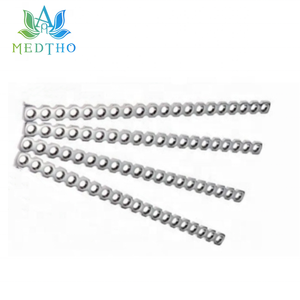
Stainless Steel Titanium Veterinary Surgical Orthopedic Implants 1.5/2.0/2.4/2.7/3.5mm Straight Reconstruction Plate CE ISO
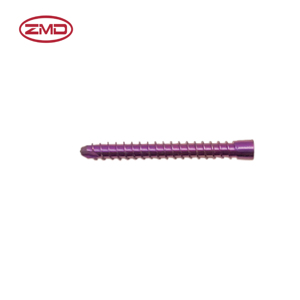
Veterinary HC4.0Mm Titanium Alloy Locking Screw (T15 Cruciform) - Reliable Orthopedic Implant
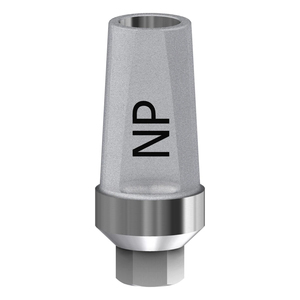
Titanium Dental Implant Abutments 0 Degree 15 Degree 25 Degree for Cemented Single and Bridge Prostheses
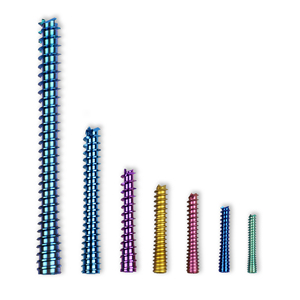
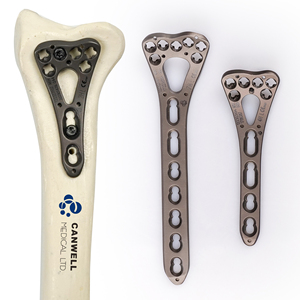
CANWELL Titanium Headless Cannulated Compression Screws Orthopedic Trauma Implant System CE Certified
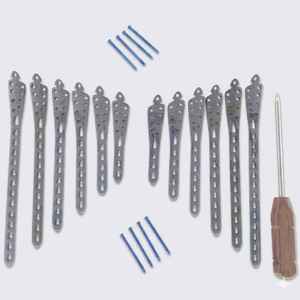
Premium Quality Stainless Steel Locking Medial Distal Tibia 3.5mm Plates R/L Locking Cortex Screw 193 Pcs Orthopedic Implants
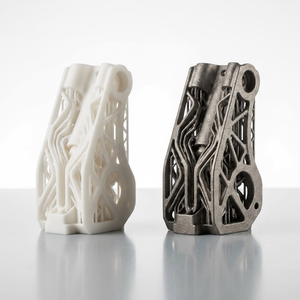
ISO 13485 Biocompatible Titanium SLM 3D Printed Bone Implants for Orthopedic Surgery
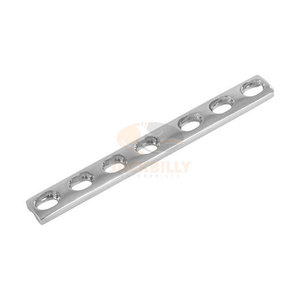
Premium Orthopedic Bone Implants for Veterinary Surgery Stainless Steel Surgical Instruments CE Certified
ISO 13485
Certified Quality Management System
5-Axis CNC
High-Precision Swiss Milling Centers
SAL 10-6
Co-60 Gamma Sterilization Assurance
80+ Countries
Global Distribution & OEM Reach
Enterprise Advantage
Why Top Global Brands Sourcing from China Partner with Us
Complete Metallurgy Control
We source strictly audited raw materials following ASTM F67 (pure titanium TA2/TA3), ASTM F1472 / ASTM F136 (Ti-6Al-4V ELI), PEEK-OPTIMA, and 316LVM stainless steel. Every batch includes chemical composition and mechanical strain test reports.
Full OEM/ODM Private Labeling
From custom blueprint CAD/CAM engineering to automated high-speed laser marking, color anodization, custom tray design, and cleanroom sterile blister packaging, we deliver shelf-ready medical solutions.
Rigorous Regulatory Technical Dossiers
Accelerate your regional healthcare market access. We supply comprehensive technical files, biocompatibility test results (ISO 10993), sterilization validation, and clinical evaluation reports supporting CE and FDA registration.
Industry Whitepaper
Global Procurement & Manufacturing Trends in China's Orthopedic Implant Sector
An executive analysis on Request a Quote strategies, additive manufacturing, metallurgical advancement, and quality assurance protocols for high-precision surgical devices.
The global market for orthopedic trauma, spinal reconstruction, and joint replacement implants is undergoing a structural transition. Healthcare institutions, surgical centers, and international medical device distributors are increasingly optimizing their supply chains by looking for direct manufacturing relationships in China. However, searching for "Top China request a quote orthopedic implants Factories & Factory" requires an in-depth understanding of quality management systems, metallurgical properties, surface treatment technologies, and international regulatory compliance.
1. The Evolution of Medical-Grade Titanium Alloys and PEEK Polymers
The performance of any surgical implant depends fundamentally on bio-compatibility, mechanical yield strength, and fatigue resistance. Leading Chinese orthopedic factories have shifted from standard commercially pure titanium to advanced biocompatible alloys and high-performance polymers:
- ASTM F136 Ti-6Al-4V ELI (Extra Low Interstitial): The gold standard for trauma plates, intramedullary nails, and pedicle screws. The controlled reduction of oxygen and iron content enhances fracture toughness and mechanical fatigue resistance, essential for dynamic weight-bearing implants.
- PEEK-OPTIMA (Polyetheretherketone): Highly favored in spinal interbody fusion cages and sports medicine suture anchors due to its elastic modulus (~3.6 GPa) closely matching human cortical bone, reducing stress shielding while allowing radiolucent artifact-free CT/MRI imaging.
- 316LVM Surgical Stainless Steel (ASTM F138): Vacuum melt refined stainless steel providing cost-effective rigidity for temporary internal fixation systems and veterinary trauma applications.
Technical Insight for Procurement Directors: When issuing a Request for Quote (RFQ) to a Chinese orthopedic factory, always demand mill test certificates showing chemical verification according to ASTM standards, as well as grain size analysis and mechanical tensile testing (yielding ≥ 860 MPa tensile strength for Ti-6Al-4V ELI).
2. Additive Manufacturing (SLM 3D Printing) & Porous Structure Engineering
One of the key growth trends in China's orthopedic sector is Selective Laser Melting (SLM) metal 3D printing. Traditional orthopedic implants rely on plasma-sprayed hydroxyapatite (HA) or titanium wire mesh coatings to encourage biological fixation. Modern SLM additive manufacturing allows factories to print continuous 3D trabecular structures directly into titanium implants.
These 3D-printed porous bone implants feature controlled pore sizes (averaging 300 to 600 microns) and open porosity levels exceeding 60-70%. This design closely mimics natural cancellous bone, driving rapid vascularization and deep osseointegration, which substantially lowers the risk of long-term implant loosening in complex joint revision and spinal fusion procedures.
Technical Benchmarking
Material Property & Performance Specification Matrix
Comparative mechanical properties of core raw materials utilized in orthopedic implant fabrication.
| Material Classification | Applicable Standard | Tensile Strength (MPa) | Yield Strength (MPa) | Elastic Modulus (GPa) | Primary Clinical Application |
|---|---|---|---|---|---|
| Ti-6Al-4V ELI (Grade 23) | ASTM F136 / ISO 5832-3 | ≥ 860 | ≥ 795 | 110 - 114 | Trauma Locking Plates, Volar Plates, Pedicle Screws |
| Pure Titanium (TA2 / Grade 2) | ASTM F67 / ISO 5832-2 | ≥ 345 | ≥ 275 | 105 | Reconstruction Plates, Craniofacial Implants |
| Pure Titanium (TA3 / Grade 3) | ASTM F67 / ISO 5832-2 | ≥ 450 | ≥ 380 | 105 | Low-load Fixation Screws & Staple Systems |
| Stainless Steel 316LVM | ASTM F138 / ISO 5832-1 | ≥ 860 | ≥ 690 | 190 - 200 | Veterinary Trauma Plates, Intramedullary Tibia Nails |
| PEEK Polymer | ASTM F2026 | 90 - 100 | 110 - 130 | 3.6 - 4.0 | Cervical/Lumbar Fusion Cages, Suture Anchors |
Procurement Strategy
How to Request a Quote and Evaluate China Orthopedic Factories
A step-by-step risk mitigation framework for healthcare purchasing agents, OEM brand managers, and medical distributors.
Step 1: Defining Precise Technical Specifications in your RFQ
When sending a Request for Quote (RFQ) to a Chinese manufacturer, vague requests yield inaccurate pricing. To receive a precise, binding commercial quotation, provide:
- 2D Engineering Drawings & 3D STEP Files: Detailing tight dimensional tolerances (e.g., thread pitch accuracy within ±0.005mm for cannulated compression screws).
- Surface Finishing Requirements: Specify Type II Anodization (color-coding for quick operating room identification), Micro-arc Oxidation (MAO), or mirror polishing for friction reduction.
- Sterility & Packaging Protocols: State whether items are required non-sterile in bulk instrument trays, or pre-sterilized via Cobalt-60 Gamma Irradiation (SAL 10-6) inside double-peel Tyvec blisters.
Step 2: On-Site Factory & Quality System Audit Requirements
A reputable China orthopedic implant factory should operate transparently under an integrated ISO 13485 Medical Quality Management System. Crucial factory audit checks include:
- Machining Infrastructure: Presence of multi-axis Swiss-type automatic CNC lathes (e.g., Citizen, Star) and 5-axis milling centers (e.g., DMG MORI) capable of complex anatomic contouring.
- Metrology Inspection Capability: In-house 3D Coordinate Measuring Machines (CMM), optical profile projectors, and surface roughness testers to verify batch-to-batch repeatability.
- Cleanroom Environment: Class 100,000 (ISO Class 8) cleanrooms for cleaning, primary assembly, and heat-sealing of implant sterile packaging.
OEM/ODM Partnering Benefit: Contracting with an integrated factory reduces total cost of ownership (TCO) by up to 35-45% compared to European or North American contract manufacturers, without sacrificing mechanical reliability or dimensional compliance.
Step 3: Verification, Validation, and Mechanical Testing
Before launching private-label implants, factories must perform dynamic fatigue and static strength validation according to ISO and ASTM benchmarks:
- ASTM F543 (Metallic Medical Bone Screws): Evaluates torsional yield strength, maximum torque, insertion/removal torque, and axial pull-out strength in synthetic bone substrates.
- ISO 7206 (Implants for Surgery - Partial and Total Hip Joints): Assesses endurance properties and fatigue performance of femoral stems under cyclic loading.
- ASTM F2077 (Test Methods for Intervertebral Body Fusion Devices): Measures static and dynamic compression, shear, and torsion of spinal cages.
B2B Knowledge Base
Frequently Asked Questions (FAQ) for Importers & Procurement Teams
Direct answers to the most common questions regarding RFQs, MOQ, custom branding, and regulatory compliance.
What is the standard procedure to request a quote for custom orthopedic implants?
To request a quote, submit your detailed technical specifications, 2D/3D CAD drawings (IGES/STEP format), material preferences (e.g., Ti-6Al-4V ELI or 316LVM), estimated order volumes, and packaging requirements via our inquiry channel. Our engineering and commercial teams evaluate manufacturability and provide a comprehensive commercial breakdown within 24 to 48 hours.
What quality management certifications do your manufacturing facilities hold?
Our partner facilities operate under ISO 13485 and ISO 9001 certified quality management systems. Product lines carry CE mark compliance documentation under EU MDR protocols, adhering to international ASTM (F67, F136, F1472, F2026) standards for implant biocompatibility and mechanical testing.
Can bone plates, trauma screws, and intramedullary nails be supplied pre-sterilized?
Yes. Implants can be supplied pre-sterilized via Cobalt-60 Gamma Irradiation achieving a Sterility Assurance Level (SAL) of 10-6. Sterilized items are packaged in cleanroom ISO Class 8 environments using medical-grade Tyvek double-blister pouches, delivering shelf-ready operating room solutions with 5-year shelf-life validations.
Do you support OEM and private label customization for surgical instrument trays?
We specialize in full OEM/ODM private-label manufacturing. Services include high-precision laser marking of part numbers and lot codes, custom color anodization for size identification, ergonomic silicone handle customization, custom CNC-milled instrument holding trays, and custom branded packaging design.
What are the typical minimum order quantities (MOQ) and lead times for international delivery?
For standard catalogue items (e.g., standard trauma locking plates, cannulated screws), MOQs start as low as 10 to 50 units per specification, with dispatch within 15 days. For custom OEM/ODM projects requiring tooling, sample validation prototypes are delivered within 3 to 4 weeks, followed by mass production cycles of 30 to 45 days depending on batch volume.
How is batch traceability managed from raw material to finished medical device?
Every production lot is assigned a unique batch tracking number linked to the raw material heat number and mill inspection certificate. Traceability records cover CNC machine operator logs, dimensional CMM inspection reports, surface anodization records, final cleanroom washing logs, and sterilization dosage certificates.
Ready to Partner with China's Premier Orthopedic Implant Manufacturing Network?
Initiate your OEM/ODM quotation or request our complete product catalogue and technical compliance dossiers today.
Inquire Now