Executive Summary: The Evolution of Reduction Pedicle Screw Manufacturing in China
Spinal instrumentation has undergone a transformative paradigm shift over the past two decades. Among posterior lumbar and thoracolumbar fixation constructs, reduction pedicle screws have emerged as indispensable implants for managing high-grade spondylolisthesis, traumatic vertebral fractures, severe spinal deformities, and degenerative disc diseases requiring controlled sagittal plane translation. China’s medical device ecosystem has transitioned from basic OEM contract machining to becoming a global power centre for state-of-the-art spinal implant manufacturing, offering world-class metallurgical purity, micro-precision 5-axis CNC machining, and rigorous bio-mechanical testing in full alignment with international regulatory frameworks (ISO 13485, CE Marking, ASTM F1717, and US FDA 510(k) guidelines).
For hospital procurement departments, global medical device brand owners, and specialized orthopedic distributors, evaluating Top China Reduction Pedicle Screw Manufacturers requires a multi-dimensional assessment that extends far beyond baseline pricing. It demands an in-depth understanding of screw thread morphology, extended break-away tab shear mechanics, pull-out force resistance in osteoporotic bone, surface anodization protocols, cleanroom packaging integrity, and robust intellectual property protections. This technical whitepaper provides an authoritative analysis of reduction pedicle screw engineering, supply chain dynamics in China, future clinical trends, and essential vendor evaluation criteria.
Biomechanical Engineering & Metallurgical Standards of Reduction Pedicle Screws
The primary clinical objective of a reduction pedicle screw is to transmit high pull-out forces and corrective translation moments to the spine while preserving structural integrity. Leading Chinese manufacturers utilize advanced bio-compatible titanium alloys and precise geometric configurations to ensure long-term mechanical stability under complex multi-axial fatigue loading.
Material Composition
Fabricated exclusively from medical-grade Titanium Alloy Ti-6Al-4V ELI (ASTM F136 / ISO 5832-3) or pure titanium TA2/TA3 (ASTM F67), delivering high tensile strength (≥ 860–930 MPa) and superior fatigue endurance under dynamic spinal flexure.
Reduction Tab Mechanics
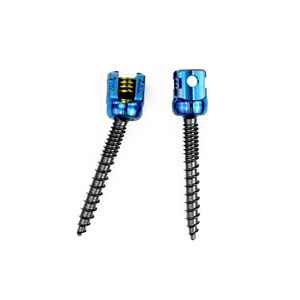
Engineered with extended extended-neck tabs (typically 15 mm to 30 mm reduction stroke) feature laser-etched break-off scores. Tabs withstand reduction loads up to 1,200 N prior to clean, burr-free intraoperative detachment.
Dual-Core & Pitch Geometry
Incorporates a dual-thread design: a coarse buttress thread at the distal end for rapid cortical engagement, transitioning to a high-density cylindrical proximal thread to maximize cancellous bone purchase and pull-out resistance.
Fatigue Testing & Biomechanical Validation (ASTM F1717 Standard)
Before commercial deployment, reduction pedicle screw systems undergo exhaustive mechanical verification according to ASTM F1717 (Standard Test Methods for Spinal Implant Constructs in a Vertebrectomy Model). Leading Chinese manufacturing facilities maintain in-house mechanical testing laboratories equipped with dynamic multi-axis fatigue machines. Key benchmark parameters include:
- Static Axial Compression Bending: Assessing the yield load and ultimate compressive bending resistance of the rod-screw saddle interface.
- Static Torsion Testing: Measuring set-screw drive mechanism shear torque and hexalobular socket strip-out resistance under high locking torques (typically 10–12 N·m).
- Dynamic Fatigue Strength: Subjecting the screw-rod construct to cyclic sinusoidal loading at 5 Hz over 5,000,000 cycles without fatigue failure, ensuring survival during post-fusion bone remodeling.
| Implant Parameter | Standard Polyaxial Screw | Reduction Polyaxial Screw | Fenestrated Cement Screw |
|---|---|---|---|
| Primary Indication | Degenerative Lumbar Fixation | Spondylolisthesis & Deformity Correction | Osteoporotic Vertebral Fixation |
| Reduction Capability | None (Requires External Forceps) | Integrated Extended Tabs (15–30 mm) | Optional Integrated / Standard |
| Screw Cannulation | Optional (Solid / Cannulated) | Cannulated for MIS / Guidewire Placement | Multi-hole Fenestrated Shaft |
| Angular Freedom | ± 25° to ± 30° Conical Swivel | ± 25° to ± 35° Multi-directional Angle | ± 25° Polyaxial Head Movement |
| Typical Diameter Range | 4.5 mm – 8.5 mm | 5.5 mm – 7.5 mm | 5.5 mm – 8.5 mm |
Why China Manufacturers Excel in Global Spinal Implant Production
The global spinal surgery market has historically been dominated by Western multinational corporations. However, Chinese orthopedic implant manufacturers have achieved competitive parity through aggressive capital investment in advanced manufacturing technologies and strict adherence to international quality management systems.
1. High-Precision Machining Infrastructure
Top-tier Chinese suppliers utilize 5-axis Swiss-type CNC automatic lathes (such as Citizen and Star) alongside high-speed DMG MORI milling centers. This enables sub-micron machining tolerances (±0.005 mm) on intricate thread profiles, saddle grooves, and internal hexalobular drives.
2. Integrated Surface Engineering
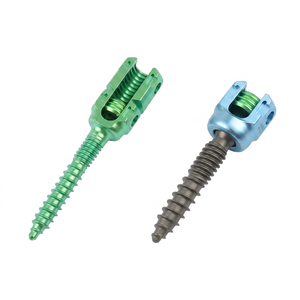
In-house surface treatment capabilities include Type II Anodization (Color Coding per implant size), Type III Hard Anodization, Micro-bead blasting for improved osseointegration surfaces, and automated ultrasonic washing systems that remove organic contamination and machining residues.
3. Complete Cleanroom & Sterilization Control
Finished implants are packaged within ISO Class 7 (Class 10,000) cleanrooms using medical-grade Tyvek pouching. Terminally sterilized via Cobalt-60 Gamma Irradiation, achieving an internationally accepted Sterility Assurance Level (SAL) of 10-6.
Streamline Your Spinal Hardware Sourcing Today
Partner with an ISO 13485 certified manufacturer offering full OEM/ODM capabilities, technical dossiers for fast regulatory registration, and flexible production batch sizes.
Get a QuoteFuture Procurement Trends in Spinal Reduction Screw Systems (2025–2030)
As healthcare systems worldwide push for cost containment alongside improved clinical outcomes, procurement directors must anticipate technological shifts over the next decade. Sourcing strategy can no longer rely solely on historical vendor lists; it must align with modern surgical trends.
Trend 1: Minimally Invasive Percutaneous Reduction Constructs
Open surgical procedures are increasingly replaced by Minimally Invasive Surgery (MIS) techniques. Modern reduction pedicle screws now feature cannulated shafts compatible with K-wire guidance and slim-profile percutaneous tower extensions, allowing transmuscular reduction without wide muscular dissection.
Trend 2: Cement-Augmented Fenestrated Reduction Screws
With an aging global demographic, osteoporotic bone failure presents a significant challenge to screw fixation. Advanced reduction screws feature hollow core shafts with lateral distal fenestrations, enabling high-viscosity polymethylmethacrylate (PMMA) bone cement injection (PVP/PKP kits) to dramatically increase pull-out force in compromised bone.
Trend 3: Robotic Navigation & Optical Registration Compatibility
Surgical robotics (such as Mazor, Globus, and native Chinese robotic systems) require pedicle screw heads and drivers with ultra-tight axial run-out tolerances. China’s leading factories now incorporate automated 3D optical scanning to guarantee 100% compatibility with surgical navigation arrays.
Trend 4: Pre-Sterilized Ready-to-Use Single Packs
Hospitals are actively migrating away from re-sterilizing implant trays due to rising Central Sterile Services Department (CSSD) labor costs and cross-contamination risks. Factory-sealed gamma-irradiated individual packaging is becoming the baseline requirement for tender specifications globally.
Selecting a Top-Tier OEM Manufacturing Partner in China: Evaluation Checklist
To mitigate compliance risks, supply disruption, and quality defects, technical purchasing managers should utilize a systematic auditing framework when qualifying a Chinese supplier for reduction pedicle screws and spinal hardware sets:
- Quality System Verification: Ensure current ISO 13485:2016 certification issued by an accredited notified body (such as TÜV SÜD, TÜV Rheinland, or BSI).
- Raw Material Traceability: Verify that raw titanium bars are supplied with original mill certificates detailing chemical composition and mechanical properties per ASTM F136 specifications.
- Tab Break-Off Consistency: Inspect technical validation data showing that reduction tabs break away cleanly at the designated shear zone without leaving sharp projections or requiring excessive bending force that could stress the pedicle.
- Instrument System Integration: Confirm the supplier provides a matching 5.5mm / 6.0mm spinal instrument tray (including counter-torque drivers, rod benders, reduction handles, and set-screw starters) engineered for smooth OR workflow.
- Regulatory Dossier Support: Check if the manufacturer provides STED (Summary Technical Documentation) dossiers, biocompatibility test reports per ISO 10993, and clinical evaluation reports (CER) required for local health authority registration.
Company Advantage: Comprehensive Orthopedic Manufacturing Capabilities
As a leading China-based orthopedic device enterprise, Orthi Medical Co., Ltd. (Canwell Medical) operates an integrated design, prototyping, and large-scale manufacturing infrastructure specialized in trauma plates, spinal implants, sports medicine anchors, and surgical instruments. Our facility combines automated Swiss CNC machining with strict international QA protocols to support global distributors and OEM brand partners.
Complete Portfolio Sourcing
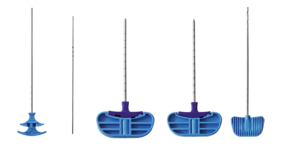
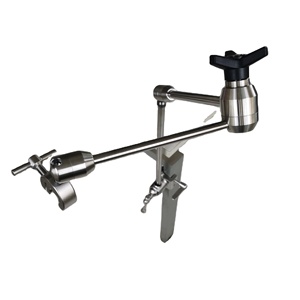
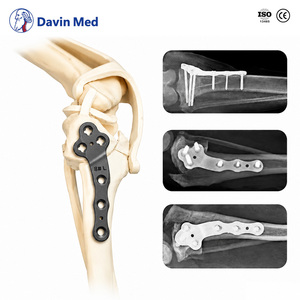
From pedicle screw fixation systems (ValuFix5.5 / Caronia), PVP bone cement injection kits, and cervical plates to veterinary TPLO implants and endoscopic discectomy retractor arms—all consolidated under one roof.
Turnkey OEM & Private Label
We provide drawing-based custom machining, custom color anodization, laser logo marking, graphic instrument tray layout, and custom blister pack design to build your private label brand identity.
Surgeon Training & Clinical Support
We empower our distributor partners with step-by-step surgical technique guides, cadavaric workshop sponsorship, 3D animated surgical videos, and direct engineer-to-engineer technical consultation.
Frequently Asked Questions (FAQ) for Procurement Managers
Partner with China’s Leading Spine Hardware Manufacturer
Accelerate your market expansion with certified quality, biomechanical excellence, and competitive factory-direct pricing for reduction pedicle screws and trauma systems.
Get a Quote