Executive Summary: Sourcing Polyaxial Pedicle Screw Systems from China
In modern spinal reconstructive surgery, the polyaxial pedicle screw stands as the cornerstone of posterior thoracolumbar fixation. Designed to decouple the screw trajectory from the longitudinal rod alignment, polyaxial screw systems provide spine surgeons with multi-planar angular deviation (typically ±25° to ±30°), significantly easing rod seating, reducing surgical time, and minimizing stress transfer to the native pedicle anatomy.
For global orthopedic implant distributors, procurement officers, and private label medical brands, identifying a tier-one China polyaxial pedicle screw factory is no longer merely a cost-reduction strategy. It is a strategic imperative to secure robust regulatory documentation, ISO 13485 quality system traceability, medical-grade metallurgy compliant with ASTM F1472 / ASTM F136 (Ti-6Al-4V ELI), and reliable OEM/ODM turnkey production. This technical whitepaper explores the clinical biomechanics, material engineering, manufacturing quality controls, global procurement trends, and essential vendor evaluation metrics required for high-stakes medical device sourcing.
Featured Orthopedic Implants & Surgical Instrumentation
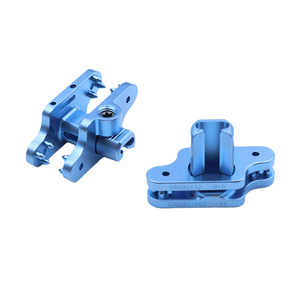
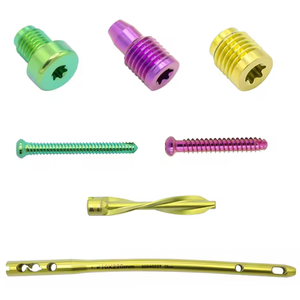
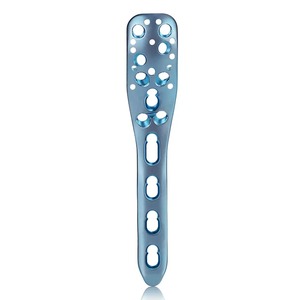
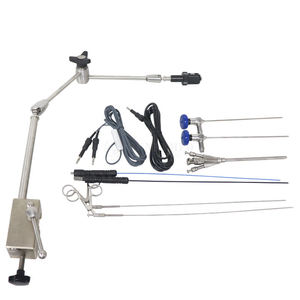
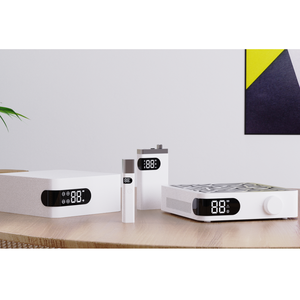
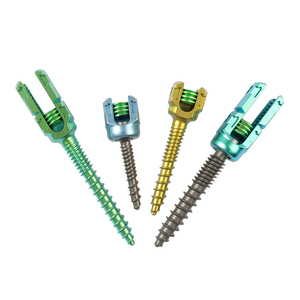
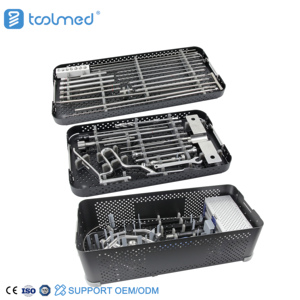
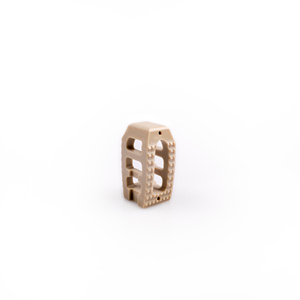
Below is a curated showcase of our core medical device portfolio. Manufactured under stringent cleanroom environments utilizing 5-axis CNC precision Swiss machining, our implants and matching surgical instrument sets serve trauma, spine, sports medicine, and endoscopic surgery disciplines worldwide.
Polyaxial Screw Biomechanics & Engineering Specifications
The design architecture of a modern polyaxial pedicle screw relies on sophisticated mechanical friction-coupling between the spherical screw shank head, the inner pressure seat (saddle), the tulip collar, and the locking set screw (grub screw). Understanding these core biomechanical dynamics allows procurement teams to verify product efficacy prior to clinical trials.
1. Articulation Dynamics & Tulip Friction Head Technology
In standard posterior spinal constructs, anatomical variations across lumbar and thoracic vertebrae make strict parallel rod insertion impossible without pre-bending. A polyaxial head provides a conical range of motion—typically ±25° to ±30°—allowing the surgeon to anchor screws into dense pedicular bone along optimal anatomical angles while still passing a straight or contoured 5.5mm or 6.0mm spinal titanium rod through the tulip slots effortlessly. Leading Chinese manufacturers incorporate friction-fit retention inner sleeves that prevent "head flop," enabling the tulip head to maintain its manually set position during rod insertion without slumping.
2. Thread Morphology: Dual-Lead, Double-Thread & Cannulated Variants
Advanced pedicle screw threads feature dual-lead geometries that double the insertion speed (pitch progression per rotation) while reducing friction-induced bone heat generation. The proximal portion often integrates micro-threads to enhance cortical bone purchase, whereas the distal tip utilizes aggressive self-tapping cutting flutes for smooth bicortical or unicortical engagement.
For osteoporotic patients, fenestrated & cannulated polyaxial pedicle screws facilitate PMMA (polymethylmethacrylate) bone cement injection directly through the hollow core into surrounding trabecular bone, increasing pullout strength by up to 180% in compromised bone beds.
| Pedicle Screw Type | Angular Trajectory | Primary Clinical Indication | Biomechanical Advantage | Common Diameters (mm) |
|---|---|---|---|---|
| Polyaxial Screw | ±25° to ±30° (Multi-planar) | Degenerative Disc Disease, Spondylolisthesis | Eases rod contouring & reduces pedicle strain | Ø4.5, Ø5.5, Ø6.5, Ø7.5 |
| Monoaxial Screw | 0° (Rigid fixed head) | Deformity correction (Scoliosis, Kyphosis) | Maximum direct translational force transfer | Ø5.5, Ø6.5, Ø7.5 |
| Sagittal Adjust Screw | ±30° (Single sagittal plane) | Fractional curves, lumbar lordosis retention | Prevents lateral head slumping during reduction | Ø5.5, Ø6.5 |
| Cannulated MIS Screw | ±25° (Multi-planar over K-wire) | Percutaneous MISS, osteoporotic fixation | Minimally invasive access with cement porting | Ø5.5, Ø6.5, Ø7.5 |
Metallurgy, Surface Treatment & Testing Protocols
Surgical implants demand flawless material purity. Tier-1 China factories utilize medical-grade titanium alloy Ti-6Al-4V ELI (Extra Low Interstitial), governed by strict international standards:
ASTM F1472 / F136 Compliance
Raw bar stock undergoes 100% ultrasonic flaw detection. Tensile strength exceeds 930 MPa with yield strength > 860 MPa, ensuring structural integrity under cyclic physiological loadings.
Color Anodization & Passivation
Electrochemical titanium anodization applies distinct color coding per screw diameter (e.g., Pink=4.5mm, Green=5.5mm, Blue=6.5mm, Gold=7.5mm), aiding surgical identification and preventing OR cross-contamination.
ASTM F1717 Fatigue Testing
Implant assemblies undergo rigorous benchtop mechanical testing: static compression, static torsion, and dynamic fatigue testing up to 5,000,000 cycles without structural failure.
Global Procurement & Technology Trends (2025-2030)
As healthcare networks worldwide demand higher value, medical device purchasing managers must align with evolving manufacturing shifts. The global market for spinal pedicle screws is experiencing four prominent technological evolution vectors:
1. Rapid Shift Toward Sterile Blister Packaging (Co-60 Gamma Irradiation)
Hospitals are increasingly rejecting non-sterile bulk implants due to autoclaving costs, reprocessing labor, and cross-contamination risks. Leading China exporters now supply implants pre-packaged in dual Tyvek-blister packs sterilized via Cobalt-60 gamma ray exposure, guaranteeing a Sterility Assurance Level (SAL) of 10-6 with a 5-year validated shelf life under ISO 11607 compliance.
2. Surgical Navigation & Robotic Trajectory Compatibility
With the rise of intraoperative O-arm imaging and robotic assistance platforms (e.g., Mazor, Globus ExcelsiusGPS), polyaxial screw heads must feature high-precision optical tracking compatibility and standardized drive geometries (Torx / Star Drive T25) to withstand robotic high-torque insertion without strip-out.
3. Integrated Turnkey OEM/ODM Private Label Services
Distributors no longer want piecemeal sourcing. Premier Chinese medical manufacturers provide end-to-end white-label solutions, including custom instrument tray design, ergonomic silhouette handle fabrication, CE/FDA technical dossier support (STED documentation), and direct custom laser etching.
Why Partner with China’s Leading Orthopedic Manufacturers
Leveraging advanced CNC machining parks equipped with 5-axis Swiss-type Citizen and DMG Mori lathes, top Chinese orthopedic plants bridge the gap between high-precision Swiss engineering and scalable cost efficiencies.
Comprehensive Regulatory Files
Full compliance with ISO 13485, ISO 9001, and EU CE marking standards. We provide complete raw material certs, biocompatibility testing (ISO 10993), and clinical evaluation reports (CER).
Complete System Sourcing
One-stop procurement spanning trauma locking plates, intramedullary nails, spinal pedicle systems, PEEK interbody cages, sports medicine anchors, and UBE endoscopic surgical devices.
Strict In-House QC & CMM
Every batch undergoes 100% critical dimension inspection using Zeiss Coordinate Measuring Machines (CMM) and optical shadowgraphs to maintain sub-10 micron tolerances.
Frequently Asked Questions (FAQ) for B2B Procurement
Addressing key technical, regulatory, and commercial inquiries for overseas medical device importers and distributor networks.
Request Product Catalogs & Factory Sourcing Quote
Partner with an established China ISO 13485 & CE certified orthopedic manufacturer. Access competitive tier-1 factory pricing, custom OEM solutions, and comprehensive regulatory file support today.
Get Catalog