Featured Orthopedic Instruments & Systems
Explore our ISO 13485 certified orthopedic trauma, spinal, and arthroplasty instrument solutions engineered for flawless intraoperative accuracy.
Executive Technical Summary: China's Evolution in Orthopedic Surgical Instrument Manufacturing
The global market for orthopedic surgical instrument sets is undergoing a structural transformation. Modern orthopedic procedures—ranging from complex intra-articular trauma reconstruction and minimally invasive spine surgery (MISS) to primary and revision total joint arthroplasty—demand absolute mechanical reliability, micro-level dimensional tolerances, and biocompatible material performance. As health systems worldwide seek to balance stringent clinical efficacy with fiscal responsibility, China has transitioned from a high-volume component manufacturer to an advanced biomedical engineering hub for premium orthopedic instrumentation.
Leading Chinese manufacturers, such as Orthi Medical (Canwell Medical), have integrated state-of-the-art 5-axis DMG MORI CNC milling machines, high-precision Swiss-type automatic lathes, laser engraving platforms, and validated cleanroom environments (Class 100,000 / ISO Class 8). Operating under strict ISO 13485:2016 and ISO 9001 quality management systems, premier suppliers conform rigorously to international standards including ASTM F138 (316L Stainless Steel for Surgical Implants), ASTM F136 / F1472 (Ti-6Al-4V ELI Titanium Alloys), and ASTM F2026 (PEEK polymers). This engineering maturity enables global distributors, hospital procurement boards, and OEM brand owners to access registration-ready surgical systems backed by comprehensive technical documentation packages (STED) and CE MDR compliance data.
Technical Architecture of Specialty Orthopedic Surgical Instrument Sets
A surgical instrument set is far more than a collection of metal tools; it is a meticulously calibrated biomechanical extension of the operating surgeon. Precision machining tolerances, tactile ergonomics, color-coded identification, and sterilization container compatibility directly influence operating room (OR) efficiency, surgical outcome predictability, and postoperative recovery metrics. Below is an engineering overview of key specialty instrument systems manufactured in China.
1. Trauma & Fracture Fixation Instrument Sets
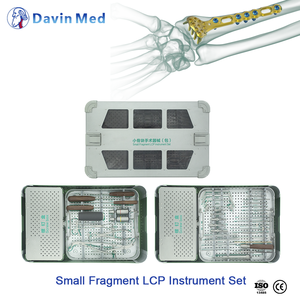
Trauma surgical sets must accommodate wide anatomical variations and unexpected intraoperative fracture patterns. Small and Large Fragment instrument boxes feature high-torque hex and Star-drive (Torx) screwdrivers, variable-angle drill guides, self-centering bone holding forceps, depth gauges with anti-glare laser scales, and custom tap drills. Key technical characteristics include:
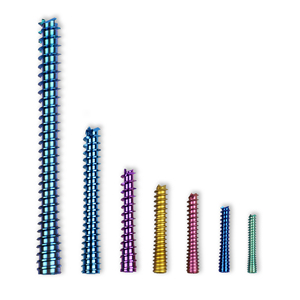
- Cannulated Screw Instrumentation: Featuring ultra-smooth internal lumen bore grinding (tolerances within ±0.01 mm) for flawless passage over 1.1 mm to 2.8 mm guide wires.
- Passivation & Hardening: Custom-heat-treated 17-4PH and 420 stainless steel components subjected to citric or nitric acid passivation per ASTM A967 to eliminate surface iron ions and ensure maximum rust resistance during repeated steam sterilization cycles.
- Modular Screw Containers: Color-anodized aluminum trays with laser-etched diameter and length metrics, accommodating locking and non-locking screws from Ø2.7 mm to Ø6.5 mm.
2. Spinal Fixation & Minimally Invasive (MISS) Instruments
Spinal instrumentation demands extreme structural integrity to navigate complex pedicle architecture without risking neurovascular compromise. Systems engineered for posterior thoracolumbar pedicle screw placement and interbody fusion feature:
- Polyaxial Pedicle Screw Drivers: Incorporating friction-fit sleeve quick-release mechanisms that lock securely onto pedicle screw heads during insertion, preventing slippage or thread cross-alignment.
- UBE & Endoscopic Instruments: Unilateral Biportal Endoscopy (UBE) sets including specialized high-speed diamond burr guards, fine-tip Kerrison Rongeurs (1.0 mm to 4.0 mm footplates with PVD titanium nitride coating), and radiofrequency plasma probes for precise ligamentum flavum resection.
- Zero-Profile Cervical & Lumbar Cage Inserters: Radiolucent PEEK inserter shafts integrated with stainless steel core rods to maintain structural rigidity while enabling real-time intraoperative X-ray visualization.
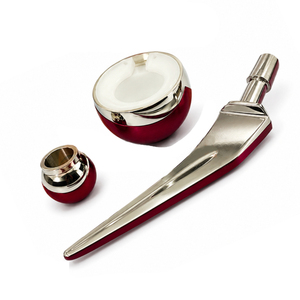
3. Arthroplasty & Joint Replacement Instrument Kits
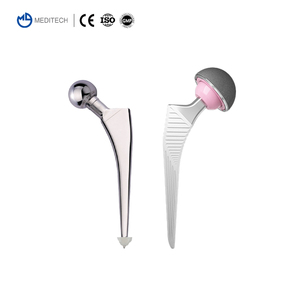
Total Hip Arthroplasty (THA) and Total Knee Arthroplasty (TKA) instrument kits require seamless mechanical mating between trialing components and implant reamers. Core engineering specs include:
- Femoral & Acetabular Reamers: Quick-connect spherical reamers engineered with razor-sharp 440C stainless steel cutting teeth to achieve precise hemispherical bone beds for press-fit acetabular cup implants.
- Modular Broach Handles: Dual-locking thumb levers rated to sustain heavy mallet impaction force exceeding 8,000 N without mechanism deformation.
- Precision Knee Alignment Guides: Micro-adjustable extramedullary and intramedullary alignment jigs providing 0° to 9° valgus angle settings and 0 to 10 mm resection depth increments.
4. Sports Medicine & Arthroscopy Consumables
Focusing on shoulder rotator cuff repairs, ACL/PCL reconstruction, and joint preservation, sports medicine instrument kits emphasize micro-instrumentation and minimal tissue trauma:
- Arthroscopy Shaver Blades & Burrs: Outer cannulas molded with inner rotary cutters crafted from surgical-grade 304/316 stainless steel, featuring electro-polished micro-edges for clean tissue resection with reduced shredding.
- PEEK & Titanium Suture Anchor Drivers: Ergonomic, hollow-core drivers holding pre-loaded UHMWPE (Ultra-High-Molecular-Weight Polyethylene) high-strength sutures without binding or friction tearing.
- PCL Reconstruction Drill Guides: Multi-axis adjustable spatial drill aimers guaranteeing exact anatomical tunnel placement within sub-millimeter deviation limits.
Comparative Metallurgy & Material Performance Data Matrix
Material selection determines the longevity, biocompatibility, autoclave resistance, and mechanical performance of orthopedic instrument sets. The table below outlines the core raw materials utilized by top-tier Chinese manufacturers.
| Material Designation | Material Standard | Tensile Strength (MPa) | Hardness (Rockwell/Vickers) | Primary Clinical Application | Autoclave Life Expectancy |
|---|---|---|---|---|---|
| 316L Stainless Steel | ASTM F138 / ISO 5832-1 | ≥ 860 MPa (Cold Worked) | 25 - 35 HRC | Instrument Trays, Drill Sleeves, Screw Boxes | 1,000+ Cycles |
| 17-4PH Stainless Steel | ASTM A564 (Grade 630) | ≥ 1,100 MPa (H900 Condition) | 40 - 48 HRC | Osteotomes, Reamer Shafts, Broach Handles | 800+ Cycles |
| 420 / 440C Stainless | ASTM F899 | ≥ 1,600 MPa (Heat Treated) | 52 - 58 HRC | Surgical Scissors, Bone Rongeurs, Shaver Blades | 500+ Cycles |
| Ti-6Al-4V ELI (Grade 5) | ASTM F136 / ISO 5832-3 | ≥ 860 MPa | 30 - 36 HRC | Cannulated Screws, Light Forceps, MIS Instruments | 2,000+ Cycles (Non-Corrosive) |
| Radel® PPSU Polymer | Polyphenylsulfone (Medical) | ≥ 70 MPa (Flexural) | R120 (Rockwell R) | Trial Heads, Modular Instrument Handles, Lid Trays | 1,500+ Cycles |
Why Partner with Leading Chinese Manufacturers: Enterprise Capabilities
Selecting an OEM/ODM manufacturing partner in China provides global buyers with distinct competitive advantages in manufacturing scale, regulatory documentation support, and quality assurance rigorousness. Key corporate infrastructure strengths include:
100% Quality Traceability
Every raw material batch undergoes spectral analysis and mechanical testing, supplied with original Mill Test Certificates (MTC). Laser-etched GS1-compliant Unique Device Identification (UDI) codes ensure full traceability from raw bar stock to finished surgical tray.
Cleanroom & Sterilization
Equipped with state-of-the-art Class 100,000 (ISO Class 8) cleanroom assembly lines. Sterile packaged implants and surgical consumables undergo validated Co-60 Gamma Irradiation achieving a Sterility Assurance Level (SAL) of 10⁻⁶ per ISO 11137.
Complete OEM / ODM Flexibility
Full Design for Manufacturability (DFM) engineering review, custom silicone insert branding, personalized color anodization, rapid prototyping within 7 to 14 days, and assistance with CE MDR / FDA 510(k) technical file construction.
Future Trends in Orthopedic Surgical Instrumentation
As surgical methodologies evolve toward greater precision and reduced patient trauma, the design and procurement of orthopedic instrument sets are shaping around four transformational trends:
1. Integration of Smart & Torque-Sensing Instruments
Over-tightening bone screws into osteoporotic bone can lead to stripped threads and fixation failure. Future instrument sets incorporate pre-set mechanical slip-torque limiters and digital real-time torque feedback screwdrivers, ensuring uniform clamping force across locking compression plates (LCP).
2. Patient-Specific Instrumentation (PSI) & 3D Printing
Additive manufacturing using biocompatible polymers and titanium powders allows the rapid fabrication of patient-specific cutting guides for complex joint revisions. Derived from pre-operative CT/MRI scans, PSI sets drastically reduce surgical time and eliminate unnecessary alignment steps.
3. Transition to Single-Use / Disposable Instrument Kits
To reduce hospital reprocessing overhead, cross-contamination risks, and sterilization queue delays, distributors are increasingly ordering sterile, single-use instrument kits (e.g., disposable k-wire drivers, single-use shaver blades, and pre-packaged cannulated screw sets).
4. Ergonomic Lightweighting with PEEK & Carbon Fiber
Heavy stainless steel instrument trays cause physical fatigue for OR staff during prolonged surgeries. Advanced instrument designs utilize carbon-fiber-reinforced PEEK handles and PPSU modular trays, reducing set weight by up to 40% while preserving autoclave durability.
Strategic B2B Procurement Guidelines for Global Buyers
For medical device distributors, tender boards, and OEM brand managers, evaluating an orthopedic instrument manufacturer requires assessing total lifecycle cost rather than initial piece price. Successful procurement strategies focus on:
- Total Cost of Ownership (TCO): Factoring in instrument durability, replacement parts availability, warranty policies, and resistance to repeated chemical disinfection.
- Regulatory Technical File Availability: Ensuring your supplier provides complete Material Safety Data Sheets (MSDS), Biocompatibility Reports (ISO 10993), Sterilization Validation Reports, and Usability Engineering Files (IEC 62366).
- Supply Chain Buffer Stock: Partnering with manufacturers capable of maintaining strategic buffer stocks of high-turnover items (e.g., drill bits, tap drills, guide wires, screw drivers) to absorb demand surges and prevent hospital stock-outs.
Frequently Asked Procurement Questions (FAQ)
Below are detailed answers to the most critical technical and logistics inquiries raised by international B2B buyers and hospital purchasing managers.
Partner with China's Premier Orthopedic Instrument Manufacturer
Elevate your medical device portfolio with ISO 13485 certified, precision-engineered surgical instrument sets. Contact our biomedical engineering team today for custom quotes, technical drawings, and factory audit inquiries.