Featured Orthopedic Systems & Instruments
Direct Factory Implants and Surgical Tool Kits Certified for International Procurement
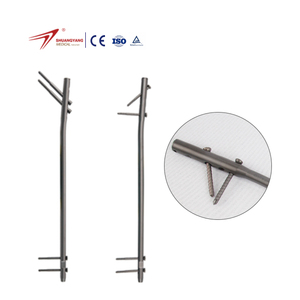
Shuangyang Femoral Reverse Interlocking Intramedullary Nail Used In Human Skeleton
Get a Quote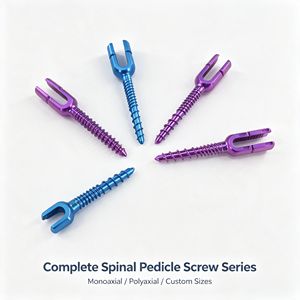
Custom OEM ODM Medical Grade Titanium Alloy Spine Fixation Pedicle Screws And Rods System
Get a Quote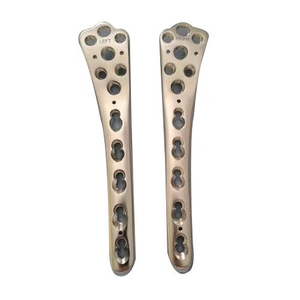
Premium Distal Femur Locking Plate 3.5mm & 4.5mm Lateral Stainless Steel Reusable Tools
Get a Quote
Medical Surgical Equipment Container & Surgical Tool Holder Facility System
Get a Quote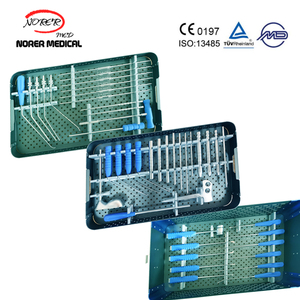
Orthopedic Spinal UBE Tool Kit Single-Side Double-Door Endoscopic Instrument Set
Get a Quote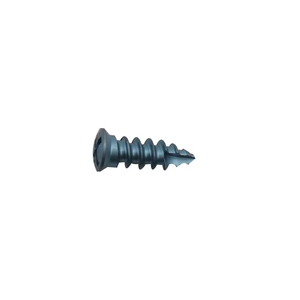
Orthopedic Titanium Self-Tapping Screw Orthopedic Bone Plate Implant Material
Get a Quote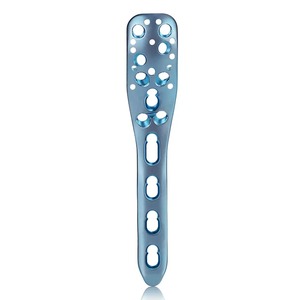
Maxillofacial Bone Block Screw Orthopedic Implant & Mini Locking Plate Set
Get a Quote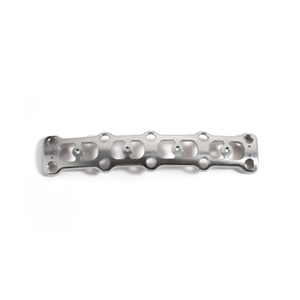
Orthopedic 3D CNC Titanium Alloy Stud for Bone Machining Micro Implantation TC4
Get a QuoteGlobal Orthopedic Implants Manufacturing: Executive B2B Procurement Benchmark
The global orthopedic device market is currently undergoing a structural transformation driven by aging demographics, expanding access to advanced surgical care, and a rapid shift toward minimally invasive surgery (MIS). As hospital networks and healthcare distributors navigate mounting margin pressures, contract OEM (Original Equipment Manufacturer) and ODM (Original Design Manufacturer) partnerships in China have evolved from simple cost-efficiency measures into high-level strategic supply chain assets.
Modern orthopedic manufacturing requires uncompromising compliance with international standards, deep technical proficiency in metallurgy, and verified biological evaluation of medical devices. Leading Chinese OEM facilities now integrate state-of-the-art 5-axis CNC machining centers, validated cleanroom packaging infrastructure, and rigorous compliance under ISO 13485 and European Union Medical Device Regulation (EU MDR 2017/745).
Key Engineering Materials in Orthopedic Hardware Fabrication
Material integrity determines implant fatigue life, corrosion resistance, and osseointegration capability. Contract procurement teams must ensure that OEM suppliers use certified medical-grade raw materials backed by mill test certificates (MTC):
- Ti-6Al-4V ELI (ASTM F136 / ASTM F1472): The gold standard for load-bearing trauma plates, pedicle screws, and intramedullary nails. Offers superior tensile strength (≥ 930 MPa) combined with low elastic modulus to minimize stress shielding.
- Commercially Pure Titanium (ASTM F67 TA2/TA3): Highly biocompatible titanium utilized for soft-tissue fixation components, cranio-maxillofacial plates, and low-load internal fixation devices where ductility is required for intraoperative contouring.
- Polyether Ether Ketone (PEEK Optima / ASTM F2026): Radiolucent thermoplastic engineered for spinal interbody fusion cages and sports medicine suture anchors, eliminating artifacts on postoperative X-ray and MRI scans while closely matching the elastic modulus of cancellous bone.
- Cobalt-Chromium-Molybdenum (CoCrMo / ASTM F75): Utilized predominantly in total hip joint stems, bearing surfaces, and high-wear knee femoral components due to its unmatched tribological performance and wear resistance.
OEM/ODM Manufacturing Infrastructure & Capabilities
End-to-End Contract Precision Engineering for Global Medical Brands
5-Axis CNC Precision Machining
Equipped with imported Swiss and German 5-axis milling centers capable of micro-machining complex geometry spinal screws, dynamic locking bone plates, and contoured joint prostheses within strict tolerances of ±0.005mm.
Type II Anodization & Laser Marking
Automated electrolytic color-coding surface treatment according to ISO 6060. Enhances titanium surface fatigue resistance while providing clear intraoperative dimensional identification for surgical surgical trays.
ISO Class 7 Cleanroom Packaging
State-of-the-art certified cleanrooms dedicated to primary packaging. Implants are sealed in medical-grade Tyvec blisters ready for Co-60 gamma sterilization to guarantee a Sterility Assurance Level (SAL) of 10⁻⁶.
Orthopedic Implant Material Specifications & Standards
Verified Metallurgical Properties Supporting International Regulatory Dossiers
| Material Category | International Standard | Tensile Strength (MPa) | Yield Strength (MPa) | Primary Clinical Application |
|---|---|---|---|---|
| Ti-6Al-4V (Grade 5 / TC4) | ASTM F1472 / ISO 5832-3 | ≥ 930 | ≥ 860 | Trauma Plates, Pedicle Screws, Nails |
| Ti-6Al-4V ELI (Grade 23) | ASTM F136 / ISO 5832-11 | ≥ 860 | ≥ 790 | Joint Replacements, Spine Cages |
| Pure Titanium TA2 / TA3 | ASTM F67 / ISO 5832-2 | 400 – 550 | 275 – 380 | Cranio-Maxillofacial & Small Bone Fixation |
| Stainless Steel 316LVM | ASTM F138 / ISO 5832-1 | ≥ 860 | ≥ 690 | Temporary Trauma Implants, Surgical Tools |
| PEEK Optima LT1 | ASTM F2026 | ≥ 95 | ≥ 90 | Cervical / Lumbar Interbody Fusion Cages |
E-E-A-T Commitment: Full Supply Chain Traceability & Testing Compliance
Every batch of raw titanium bars, PEEK polymer, and stainless steel undergoes rigorous receiving inspection before entering production. Mechanical testing (ASTM F382 for bone plates, ASTM F1717 for spinal constructs) and chemical compositional analysis (ICP-OES) are fully documented in the Lot History Record (LHR). This level of technical oversight provides global medical device distributors with immediate access to technical files (STED format) essential for CE marking, US FDA 510(k), and national health authority registration.
Get a QuoteFuture Purchasing Trends in Global Orthopedic Implant Sourcing
As healthcare purchasing organizations (GPOs) and international medical distributors re-evaluate global supply chain resilience, several key trends are shaping the future of orthopedic implant manufacturing and contract procurement:
1. Rapid Adoption of Sterile Pre-Packaged Implants
Historically, orthopedic implants were shipped non-sterile in bulk to hospital central sterile supply departments (CSSD) for intraoperative washing and autoclaving. Modern hospital procurement teams are rapidly shifting toward 100% factory-sealed, gamma-sterilized implants. Sterile pre-packaged systems eliminate hospital sterilization costs, reduce surgical site infection (SSI) liability, and deliver 100% inventory barcode traceability straight to the operating room field.
2. Expansion of Unilateral Biportal Endoscopy (UBE) Hardware
Minimally invasive spine surgery is transitioning rapidly from open procedures toward endoscopic decompression. Unilateral Biportal Endoscopy (UBE / SPINUSS) allows spine surgeons to achieve decompression using standard arthroscopic systems. OEM factories capable of producing specialized UBE toolkits, micro-retractors, expansion sleeves, and specialized radiofrequency plasma electrodes are gaining significant market share globally.
3. Additive Manufacturing & 3D Porous Titanium Structures
The boundary between traditional subtractive CNC machining and 3D metal printing (Selective Laser Melting / Direct Metal Laser Sintering) continues to blur. Future procurement contracts increasingly mandate porous titanium coatings or fully additive-manufactured trabecular bone interfaces on cervical cages and acetabular cups to accelerate osteoblast migration and early bio-fixation.
4. Consolidated Single-Source Sourcing Platforms
To reduce vendor management overhead and lower regulatory audit complexity, international buyers are abandoning fragmented vendor pools in favor of qualified single-source platforms. Partners capable of providing trauma, spine, sports medicine, joint replacement, and endoscopic instruments under one unified ISO 13485 quality system offer strategic advantages in shipping consolidation and regulatory dossier alignment.
Why Partner with Our China Orthopedic Manufacturing Hub
Combining Manufacturing Precision with Full Technical and Regulatory Support
ISO 13485 & CE Compliance
Our complete production facility operates under strict medical device quality standards. We provide full technical documentation dossiers (STED), biocompatibility reports (ISO 10993), and risk management files (ISO 14971).
Surgeon Training & Clinical Support
We support global distribution partners with step-by-step surgical technique guides (STG), animated intraoperative workflow videos, plastic bone demonstration models, and hands-on cadaver workshop support.
Turnkey Private Label & Custom Trays
Custom OEM laser marking, private label artwork packaging, anodized instrument tray configuration, and tailored container systems built to match your brand's exact commercial identity.
Frequently Asked Questions: B2B Procurement & OEM Manufacturing
Essential Answers for Medical Device Import Managers and Regulatory Teams
What quality certifications do your orthopedic products hold?
Our manufacturing system operates in accordance with ISO 13485 and ISO 9001 quality management standards. Product families hold CE compliance certification, and raw materials conform strictly to ASTM F136 / ASTM F1472 (Ti-6Al-4V), ASTM F67 (Commercially Pure Titanium), and ASTM F2026 (PEEK). Full material test certificates (MTC) accompany every shipment batch.
What is the standard procedure for OEM/ODM custom orthopedic implant manufacturing?
Our OEM engineering team reviews customer-supplied 2D drawings and 3D STEP files to evaluate manufacturing feasibility, material selection, and tolerance stack-ups. Following NDA execution, we produce functional prototypes, perform dimension inspection on CMM equipment, complete fatigue test protocols, and provide sample lots prior to full commercial scale-up.
Can bone plates and pedicle screws be delivered in sterile-packaged condition?
Yes. Implants including locking bone plates, trauma screws, cannulated screws, and intramedullary nails can be supplied in pre-validated, sterile double-blister packaging. Sterilization is performed via Cobalt-60 gamma irradiation under ISO 11137 protocols to achieve a validated Sterility Assurance Level (SAL) of 10⁻⁶.
What support is available for national medical device registration (FDA / MOH)?
We provide global distributors with comprehensive technical file support, including Device Master Files (DMF), biocompatibility assessment summaries (ISO 10993), mechanical test reports (ASTM F1717 / ASTM F382), packaging validation data, and clinical evaluation literature to facilitate rapid market clearance with local Ministries of Health.
What is the typical lead time for production and export shipments?
Standard catalog items maintain buffer stock for rapid dispatch within 2 weeks. For customized OEM contracts or private-label production runs, production lead times generally range between 30 to 45 days, depending on batch quantities, anodizing requirements, and sterile packaging lead times.