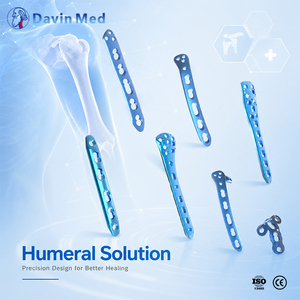
Trauma Fixation
High-precision trauma, spinal, maxillofacial, and sports medicine fixation systems engineered in accordance with ISO 13485 standards. Available for immediate private label ordering and bulk OEM supply.
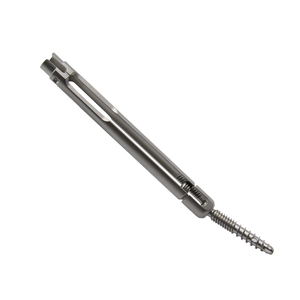
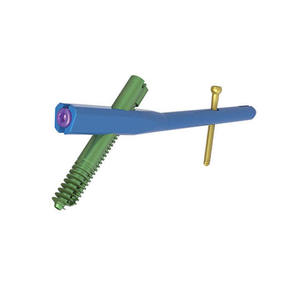
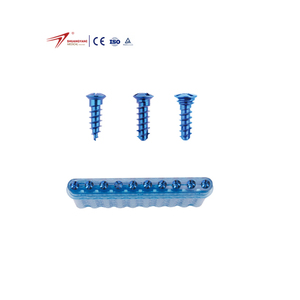
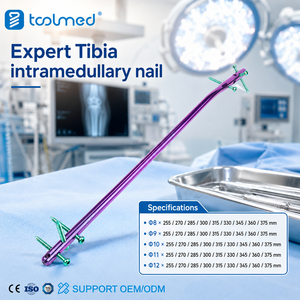
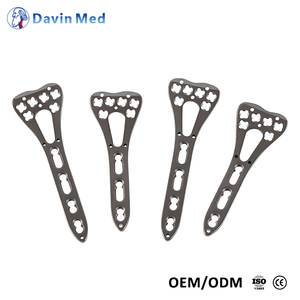
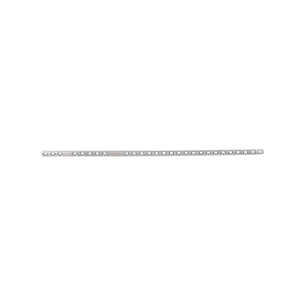
The global orthopedic implant market is undergoing a structural paradigm shift driven by stringent regulatory frameworks (MDR, ISO 13485:2016), escalating surgical volumes, and the necessity for sustainable hospital expenditure management. For global medical device distributors, orthopedic brand owners, and hospital purchasing groups, selecting a direct factory manufacturer in China requires an exhaustive evaluation of material science, micro-machining tolerances, and batch-level quality control.
Factory-direct manufacturing eliminates intermediary markups while offering direct access to advanced engineering capabilities. High-tier Chinese manufacturers operate state-of-the-art 5-axis DMG MORI multi-tasking CNC centers and Citizen Swiss-type automatic lathes capable of maintaining tight dimensional tolerances of ±0.005mm for complex titanium locking plates, spinal pedicle screws, and joint prostheses.
Medical-grade titanium alloys must conform strictly to ASTM F136 (Ti-6Al-4V ELI) and ASTM F67 (Unalloyed Titanium Grade 1–4). Authentic factory-direct suppliers provide raw material heat-lot traceability, 100% Coordinate Measuring Machine (CMM) verification, and static/fatigue test data satisfying ISO 14801 and ASTM F1717 guidelines.

High-information-gain analysis on product design, biomechanical load distribution, and surface engineering across trauma, spine, sports medicine, and maxillofacial interventions.
Modern trauma constructs utilize Anatomical Locking Compression Plates (LCP) featuring combi-holes that combine dynamic compression with locking stability. Titanium alloy (Ti-6Al-4V ELI) plates incorporate low-profile, rounded edges to minimize soft-tissue irritation.
Spinal pedicle screw instrumentation integrates dual-thread geometry (buttress & cortical threads) to maximize pull-out strength in both cortical pedicle walls and cancellous vertebral bodies.
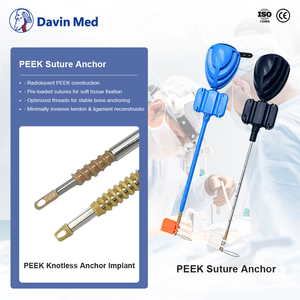
Soft tissue repair demands non-absorbable, bio-inert anchors capable of maintaining tension under high cyclic mechanical stresses (rotator cuff repair, labral reconstruction, ACL/PCL reconstruction).

As healthcare systems strive for enhanced clinical outcomes and reduced operating room turnaround times, orthopedic implant manufacturing is rapidly evolving. Direct factory partners are driving advancements in the following strategic areas:
Transitioning from non-sterile bulk implants to pre-packaged individual Co-60 gamma-irradiated containers (SAL 10-6). Eliminates hospital washing, re-sterilization costs, and infection risks.
3D direct metal laser sintering (DMLS) creates trabecular biomimetic surface structures with 60–70% porosity, fostering rapid osseointegration for joint revision cups and spinal interbody fusion devices.
Growth in ultra-minimally invasive spine surgery utilizing UBE tools, 4K endoscopic cameras, and specialized high-frequency RF plasma ablation probes for precise disc decompression.
Direct comparative metrics for procurement teams evaluating raw material compliance, mechanical strength, and tissue compatibility standards.
| Material Classification | International Standard | Tensile Strength (MPa) | Yield Strength (MPa) | Elastic Modulus (GPa) | Primary Clinical Application |
|---|---|---|---|---|---|
| Ti-6Al-4V ELI (TC4) | ASTM F136 / ISO 5832-3 | ≥ 860 | ≥ 795 | 110 | Trauma Plates, Pedicle Screws, Joint Stems |
| Unalloyed Titanium (TA2/TA3) | ASTM F67 / ISO 5832-2 | 450 – 550 | 380 – 480 | 105 | Maxillofacial Plates, Cranial Fixation Mesh |
| PEEK Optima | ASTM F2026 | 90 – 100 | ≥ 90 | 3.6 | Spinal Cages, Cervical Plates, Suture Anchors |
| Ultra-High Molecular Weight PE | ASTM F648 / ISO 5834-2 | ≥ 40 | ≥ 21 | 0.8 – 1.2 | Acetabular Liners, Tibial Knee Bearings |
| 316L Implant Stainless Steel | ASTM F138 / ISO 5832-1 | ≥ 860 | ≥ 690 | 200 | Veterinary Trauma Plates, Temporary Pins |
From CAD drawing engineering analysis to certified cleanroom sterile packaging, our direct factory infrastructure supports global private label brands.
Our biomedical engineers review technical drawings, tolerances, and material specifications for Design for Manufacturability (DFM).
Multi-axis Swiss turning lathe and micro-milling production utilizing premium titanium bars with automated oil washing systems.
Type II biocompatible hard anodizing (color coding for screw diameters) followed by UDI-compliant fiber laser marking.
ISO Class 7 cleanroom ultrasonic cleaning, double blister Tyvek heat sealing, and validated Co-60 gamma-ray sterilization.


Answers to common commercial, technical, and regulatory questions asked by hospital procurement managers and medical device importers.
Connect with our technical sales engineering team to receive full CAD catalogs, wholesale factory pricing schedules, and OEM sample kits for your region.
Get Catalog