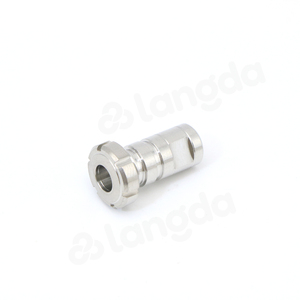
Product Portfolio
High-Precision Orthopedic Implants & Surgical Devices
Engineered to international regulatory specifications (CE, ISO 13485, ISO 9001) for trauma, spine, sports medicine, and minimally invasive procedures.
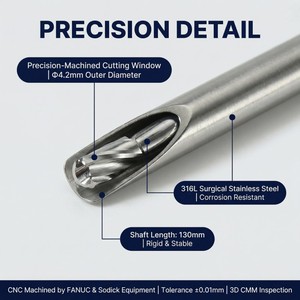
Smith&Nephew Compatible Arthroscopic Shaver Blades and Bur, Disposable Sterile Shaver Blade System
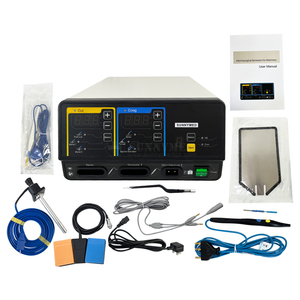
I100V Medical Equipment Cautery Diathermy Machine Electrocautery Machine Single And Bipolar Electrosurgical Unit
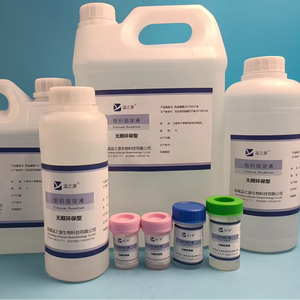
Secure 2.5L Tissue Fixative for Laboratories High-Efficient Environmentally-Friendly Plastic OEM Customizable Lab Supplies
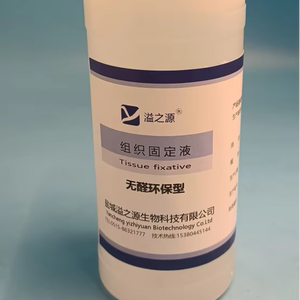
High Stability 25L Plastic Environmentally Friendly Medical Tissue Fixative for Laboratories Use OEM 2 Year Warranty
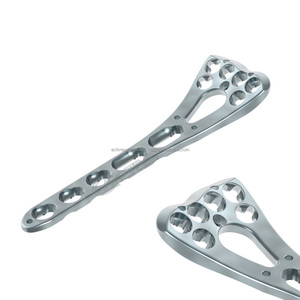
Superior Quality Variable Angle Two Column Volar Distal Radius Plate Locking 2.00 mm Titanium Surgical Orthopedic Instruments CE
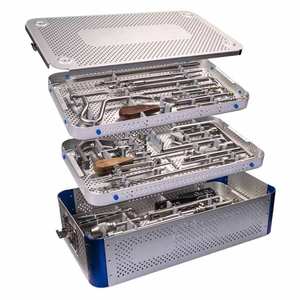
High Quality Manual PFNA Intramedullary Nail Orthopedic Surgical Instruments Veterinary Use Horse Dog Reusable Stainless Steel
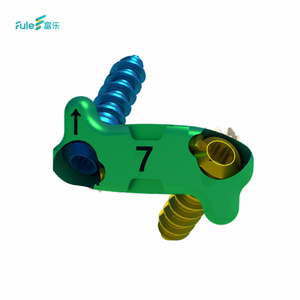
Competitive Price CE/ISO13485/ISO9001 Certified Fule Titanium/PEEK Anterior Interbody Fusion Cage Class III Spinal Fixation 5+
Industry Whitepaper
Navigating Global Sourcing for Chinese Orthopedic Implants & Surgical Instrumentation
The global orthopedic implant market is undergoing a structural realignment. Healthcare systems, medical device distributors, and procurement groups are systematically evaluating sourcing partners to balance uncompromising clinical safety, regulatory compliance, and total cost of ownership (TCO). As China consolidates its position as an advanced manufacturing powerhouse for Class II and Class III medical devices, understanding the technical evaluation criteria for selecting top-tier orthopedic implant dealers, OEM suppliers, and exporters is essential for supply chain resilience.
China's medical technology sector has evolved far beyond contract assembly. Driven by multi-axis Swiss CNC machining, automated surface anodization, and cleanroom packaging, top-tier Chinese manufacturers now engineer orthopedic devices matching or exceeding Western performance metrics. This whitepaper analyzes the metallurgical standards, manufacturing capabilities, quality validation frameworks, and emerging technology trends shaping China's orthopedic export ecosystem.
Metallurgical Integrity
Strict utilization of medical-grade implant materials including ASTM F136 / ASTM F1472 Ti-6Al-4V ELI titanium alloys, ASTM F67 unalloyed titanium (TA2/TA3), PEEK-OPTIMA polymers, and implantable 316L stainless steel with full lot-level mill test traceability.
ISO 13485 QMS Compliance
Comprehensive Quality Management System operations aligned with EU MDR 2017/745 technical dossier requirements, ISO 9001 governance, and CE marking validation, guaranteeing zero-defect export quality.
Turnkey OEM/ODM Capability
End-to-end engineering support from CAD/CAM design optimization, rapid prototype milling, custom laser color-anodization, to validated gamma-sterilized blister packaging (SAL 10-6).
Material Science Data
Metallurgical & Engineering Material Specifications
Comparative benchmark of bio-compatible materials utilized in premium orthopedic implant fabrication.
| Implant Material | Standard Specification | Tensile Strength (σb) | Yield Strength (σ0.2) | Primary Clinical Application |
|---|---|---|---|---|
| Ti-6Al-4V ELI (TC4) | ASTM F136 / ASTM F1472 | ≥ 930 MPa | ≥ 860 MPa | Pedicle Screws, Trauma Plates, Intramedullary Nails, Joint Stems |
| Unalloyed Titanium (TA2 / TA3) | ASTM F67 | 400 – 500 MPa | 275 – 380 MPa | Low-load Craniofacial Plates, Rib Fixation, Mesh Systems |
| PEEK Optima Polymer | ASTM F2026 | 95 – 100 MPa | ≥ 90 MPa | Interbody Fusion Cages (Cervical/Lumbar), Suture Anchors |
| Medical Grade Stainless Steel | ASTM F138 (316LVM) | ≥ 860 MPa | ≥ 690 MPa | Temporary Fixation Pins, K-Wires, Reusable Surgical Tooling |
| Cobalt-Chromium-Molybdenum | ASTM F75 / ASTM F1537 | ≥ 960 MPa | ≥ 650 MPa | Total Joint Arthroplasty Femoral Heads, Knee Articular Surfaces |
Strategic Horizons
Future Sourcing & Procurement Trends in Orthopedics (2025–2030)
Key technological and market forces reshaping global orthopedic device distribution.
1. Accelerated Shift to Single-Use & Ready-to-Operate Sterile Packaging
Hospitals are actively working to mitigate healthcare-associated infections (HAIs) and reduce operational overhead linked to autoclave sterilization of non-sterile bulk implants. Top Chinese exporters now integrate ISO Class 8 (Class 100,000) cleanroom secondary packaging lines, delivering implants irradiated via Cobalt-60 Gamma rays with a verified Sterility Assurance Level (SAL) of 10-6. This transition dramatically lowers hospital processing costs and optimizes inventory tracking via UDI (Unique Device Identification) barcodes.
2. Rise of Minimally Invasive Surgery (MIS) & UBE Ecosystems
Surgical techniques are rapidly moving away from large open exposures toward Unilateral Biportal Endoscopy (UBE), Percutaneous Transforaminal Endoscopic Discectomy (PTED), and sports medicine arthroscopy. Preferred suppliers must offer not only basic implants, but complete procedural ecosystems—including specialized radiofrequency plasma ablation probes, 4K endoscopic visual equipment, disposable shaver blades, and micro-motion drill guides.
3. Additive Manufacturing & Porous Trabecular Titanium
Traditional smooth implant coatings are being superseded by 3D-printed porous titanium constructs mimicking natural cancellous bone structure. Direct metal laser sintering (DMLS) creates biological fixation surfaces with modulus elasticity closer to cortical bone, significantly minimizing stress shielding while maximizing osteointegration in joint reconstruction and spinal fusion.
4. Supply Chain Rationalization & Regulatory Technical Files
Global medical device distributors are consolidating their supplier bases, moving from multi-vendor models to strategic OEM partners capable of supplying complete CE-marked portfolios. Distributors require suppliers to provide STED-compliant technical files, biocompatibility reports per ISO 10993, dynamic mechanical fatigue test data (ASTM F1717 / ASTM F382), and surgeon training support material.
Enterprise Core Competencies
Why Leading Global Healthcare Brands Partner With Us
Delivering end-to-end quality, supply security, and engineering excellence across global markets.
Full-Spectrum Product Coverage
Single-source access to complete trauma plating systems, intramedullary nails (PFNA), thoracolumbar pedicle screw systems, PEEK fusion devices, sports medicine suture anchors, arthroscopy shaver burrs, electrosurgical units, and interventional stents.
Precision Tooling & OEM Machining
Utilizing high-speed 5-axis Swiss CNC machining centers capable of micro-tolerances (+/- 0.005mm). Custom drawing machining, laser marking, anodized color coding, and bespoke surgical tray design for OEM private labels.
Academic & Clinical Support
We empower distributor sales channels by providing step-by-step surgical technique guides, Sawbones demonstration kits, cadaver workshop support, and academic conference sponsorship for clinical key opinion leaders (KOLs).
Buyer's Intelligence
Frequently Asked Questions for Orthopedic Implant Procurement
Detailed technical, regulatory, and commercial insights for international procurement managers.
What specific international quality certifications do your orthopedic implants carry?
Our quality management system operates in full compliance with ISO 13485:2016 and ISO 9001 standards. Product lines hold CE markings conforming to European regulatory directives, while raw materials strictly adhere to global implant standards including ASTM F1472 and ASTM F136 for Ti-6Al-4V titanium alloys, ASTM F67 for pure titanium, ASTM F2026 for implant-grade PEEK, and ASTM F138 for surgical stainless steel. Chemical analysis and mechanical strength test reports are provided with every shipment batch.
Can you supply orthopedic implants in sterile packaging ready for surgical use?
Yes. We offer fully validated sterile packaging solutions. Implants such as bone plates, cannulated compression screws, pedicle screws, and intramedullary nails can be cleanroom-sealed in double-blister Tyvek packaging and sterilized via Cobalt-60 Gamma Irradiation to achieve a verified Sterility Assurance Level (SAL) of 10-6 per ISO 11137 standards. Non-sterile bulk configuration is also available for distributors with local repackaging capabilities.
What OEM and private label custom manufacturing services do you provide?
We provide comprehensive OEM/ODM contract manufacturing for global medical device brands. Our engineering services include CAD/CAM 3D model optimization, custom Swiss 5-axis CNC machining, surface anodizing (color-coded sizing), fiber laser logo/UDI marking, custom ergonomic instrument tray fabrication, private-label packaging design, and compilation of regulatory technical dossiers (STED files) to support local market registration.
How do you ensure lot-to-lot consistency and mechanical safety?
Every production lot undergoes rigorous quality control protocols starting from raw material spectral analysis. Machined parts undergo 100% critical-dimension coordinate measuring machine (CMM) inspection, optical profile checks, and surface roughness evaluation. Mechanical fatigue dynamic testing is conducted per ASTM F1717 (spinal constructs) and ASTM F382 (bone plates) to verify fatigue limits exceed international clinical safety thresholds.
What product categories can distributors source under a single consolidated contract?
Distributors can streamline procurement by sourcing across six core categories:
(1) Trauma Fixation: Locking plates, cannulated screws, PFNA nails;
(2) Spine Systems: Pedicle screws, PEEK cervical/lumbar cages, kyphoplasty;
(3) Sports Medicine: PEEK suture anchors, arthroscopic shaver blades, burrs;
(4) Joint Arthroplasty: Hip stems, acetabular cups, knee systems;
(5) Minimally Invasive Systems: UBE instruments, 4K cameras, RF probes;
(6) Interventional Stents & Lab Fixatives: Coronary, ureteral stents, and bio-specimen fixatives.
What support do you provide for surgeon training and distributor sales enablement?
We provide complete clinical enablement packages, including multi-language Surgical Technique Guides (STGs), step-by-step video tutorials, clear plastic anatomical demonstration models, Sawbones trial sets, academic workshop sponsorships, and direct access to our clinical engineering team for complex case consultations.
What are your typical OEM sample lead times and mass production turnaround?
Standard product catalog orders ship within 2 to 3 weeks. For custom OEM designs or drawing-based prototypes, sample milling and CMM inspection reports are typically completed within 15 to 25 business days. Mass production lead times range from 30 to 45 days, depending on secondary processing requirements such as color anodization, cleanroom packing, and gamma irradiation cycles.
Partner with China's Premier Orthopedic Implants Supplier
Whether you are seeking custom OEM manufacturing, regulatory submission assistance, or exclusive country distribution rights, our engineering and commercial teams are ready to support your growth.