Featured Precision Implants & OEM Components
Engineered to international regulatory specifications including ISO 13485, ASTM F1472 (Ti-6Al-4V), ASTM F67, and CoCrMo standards for global distribution.
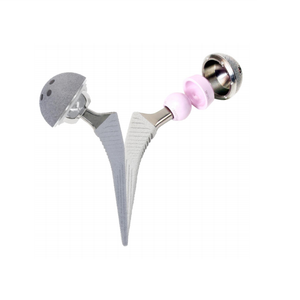
CE & ISO Approved ZATH Orthopedic Hip Implant Hip Joint Replacement Prosthesis
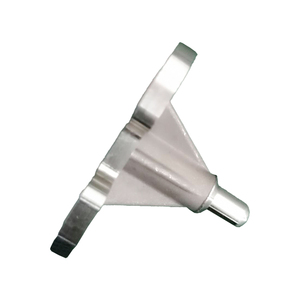
Customized Artificial Hip & Knee Hinge Joint Femoral Component CoCrMo Forged
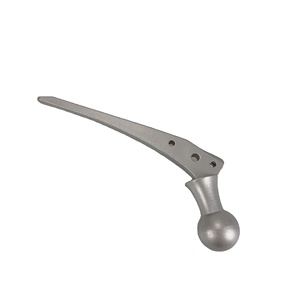
Customized Medical Grade Stainless Steel CNC Machined Hip Prosthesis OEM/ODM
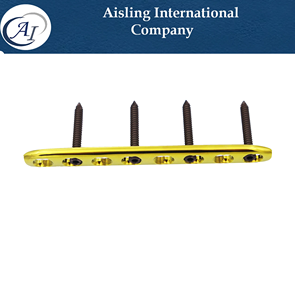
Orthopedic Locking Plates for Olecranon Hook Reconstruction Pure Titanium CE Certified
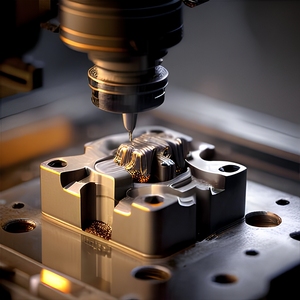
OEM High Precision Titanium Bone Plates 0.005mm Ultra Tight Tolerance 3/4/5 Axis
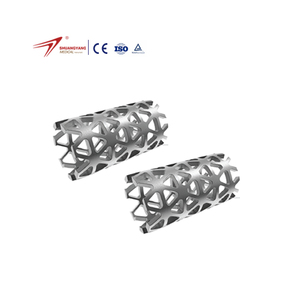
Customized High Quality Spinal Titanium Mesh Cage for Cervical & Thoracolumbar Spine
Customized Sterile Barrier Packaging & OEM Medical Accessory Packaging Solutions
1. Technical Executive Summary: The Evolution of Chinese Orthopedic Manufacturing
The global orthopedic implant landscape is undergoing a structural paradigm shift. Historically dominated by Western OEMs, the sector has seen a rapid convergence of quality standards driven by advanced metallurgy, high-precision multi-axis CNC Swiss machining, and stringent international regulatory harmonization. Today, elite Chinese orthopedic manufacturers operate at the nexus of medical-grade material science, cleanroom automation, and cost-efficient scalable supply chains.
As healthcare systems worldwide balance the dual pressures of clinical efficacy and value-based purchasing (VBP), procurement directors, medical device brand owners, and hospital networks require OEM/ODM partners capable of delivering uncompromised biomechanical performance. Manufacturing implants for trauma fracture fixation, spinal reconstruction, sports medicine joint repairs, and total hip/knee arthroplasty requires strict adherence to international material standards—such as ASTM F1472 (Ti-6Al-4V), ASTM F67 (Unalloyed Titanium), ASTM F75 / F1537 (CoCrMo alloys), and PEEK-OPTIMA polymers.
This comprehensive technical whitepaper analyzes the core pillars of orthopedic implant manufacturing, structural trends shaping global procurement strategies, metallurgical material selection criteria, and the operational advantages of partnering with a premier ISO 13485-certified Chinese exporter.
2. Biocompatible Metallurgy & Material Engineering Standards
The long-term clinical survival of an orthopedic implant is directly dictated by the intrinsic mechanical and electrochemical properties of its raw materials. In-vivo environments subject implants to cyclical mechanical stress, corrosive bodily fluids, and complex wear dynamics. Therefore, raw material selection is strictly governed by rigorous international standards.
Core Metallic & Polymeric Biomaterials
- Titanium Alloy (Ti-6Al-4V ELI / ASTM F136 & ASTM F1472): The gold standard for load-bearing trauma plates, pedicle screws, and intramedullary nails. Offers superior strength-to-weight ratio, excellent fatigue resistance, and an elastic modulus closer to human cortical bone than stainless steel, reducing stress shielding.
- Commercially Pure Titanium (CP Ti / ASTM F67 Grade 2 & Grade 4): Highly ductile material utilized predominantly for low-load cranial plates, bone tacks, and porous surface coatings where maximum biocompatibility and soft-tissue adherence are required.
- Cobalt-Chromium-Molybdenum (CoCrMo / ASTM F75 & ASTM F1537): Essential for articulating surfaces in Total Hip Arthroplasty (THA) femoral heads and Total Knee Arthroplasty (TKA) femoral components due to its ultra-high hardness, polishing capability, and extreme resistance to abrasive wear.
- Polyetheretherketone (PEEK-OPTIMA / ASTM F2026): Radiolucent thermoplastic engineered for spinal interbody fusion cages and suture anchors. Enables artifact-free postoperative MRI/CT imaging and closely matches the elastic modulus of cancellous bone.
| Biomaterial Standard | Nominal Composition | Tensile Strength (MPa) | Yield Strength (MPa) | Primary Clinical Application |
|---|---|---|---|---|
| ASTM F1472 / F136 | Ti-6Al-4V ELI | ≥ 860 – 930 | ≥ 790 – 860 | Trauma Plates, Pedicle Screws, Nails |
| ASTM F67 (Gr. 4) | Pure Titanium (TA3) | ≥ 550 | ≥ 480 | Olecranon Hook Plates, Cranial Fixation |
| ASTM F1537 | Co-28Cr-6Mo | ≥ 897 | ≥ 517 | Artificial Knee & Hip Joint Components |
| ASTM F2026 | PEEK Polymer | ≥ 90 – 100 | ≥ 110 | Cervical Cages, Suture Anchors |
3. Global Sourcing Analysis & Future Procurement Trends (2025–2035)
The global orthopedic market is projected to reach over $64 billion by 2030, driven by an aging demographic, expanding access to healthcare in emerging economies, and technological breakthroughs in surgical procedures. Procurement teams evaluating contract manufacturers in China must navigate four macro trends reshaping the industry:
Trend 1: Accelerated Shift Toward Gamma-Sterilized Single-Packaged Implants (SAL 10⁻⁶)
Traditionally, trauma plates and bone screws were shipped non-sterile in bulk trays, requiring hospitals to clean, set, and autoclave implants before surgery. Modern clinical workflows are rapidly adopting pre-sterilized, individually packaged implants. Sterilized using Cobalt-60 (Co-60) gamma irradiation to a Sterility Assurance Level of SAL 10⁻⁶, these pre-packaged systems eliminate hospital sterilization costs, guarantee traceabilty via unique UDI barcode tracking, and virtually eradicate cross-contamination risks.
Trend 2: Minimally Invasive Surgery (MIS) & Endoscopic Instrument Integration
Surgical techniques are swiftly moving away from open procedures toward minimally invasive solutions, such as Unilateral Biportal Endoscopy (UBE) for lumbar spine decompression and arthroscopic sports medicine repairs. Implants are now designed alongside specialized micro-instrumentation, such as cannulated compression screws, expandable mesh cages, and low-profile locking plates. Manufacturers capable of delivering complete procedural kits—combining implants, disposable shaver blades, and targeting guides—gain a formidable market advantage.
Trend 3: Additive Manufacturing (3D Porous Titanium Printing) vs. CNC Milling
Direct Metal Laser Sintering (DMLS) and Electron Beam Melting (EBM) have revolutionized spinal cage and acetabular cup manufacturing. By printing biomimetic 3D trabecular structures, additive manufacturing achieves interconnecting porosity (60–80% porosity) that accelerates osteoblast proliferation and bone ingrowth. Leading Chinese OEM factories combine 3D printing for complex porous structures with 5-axis CNC finishing for precision screw threads and mating surfaces.
Trend 4: Dual-Sourcing & OEM Private-Label Resilience
To hedge against global geopolitical friction, freight disruptions, and local inflationary pressures, global medical device brands are executing strategic dual-sourcing models. Establishing direct OEM private-label partnerships with high-tier Chinese manufacturers provides brand owners with agile manufacturing capacity, drastically lower production costs, and rapid scalability for international product launches.
4. Precision Machining Architecture & Quality Assurance Infrastructure
Manufacturing implants with tolerances as tight as ±0.005mm demands state-of-the-art machinery and rigorous quality control protocols. The typical manufacturing pipeline inside an elite Chinese facility follows a multi-stage validation framework:
| Manufacturing Stage | Equipment & Technology | Quality Control & Validation Protocol |
|---|---|---|
| 1. Raw Material Receiving | Optical Emission Spectrometry & Ultrasonic Testing | Validation of chemical composition against ASTM/ISO standards; bar stock crack detection. |
| 2. Multi-Axis CNC Machining | Citizen / Star 5-Axis Swiss Lathes & DMG MORI 5-Axis Mills | In-line automated probe measurement; 100% optical dimension checking on critical thread geometries. |
| 3. Surface Finishing & Anodizing | Micro-arc Oxidation, Electrolytic Polishing & HA Coating | Layer thickness measurement, surface roughness Ra validation, and color-coded size identification. |
| 4. Ultrasonic Cleaning & Packaging | Automated Multi-Stage Ultrasonic Passivation in ISO Class 7 Cleanroom | Particulate contamination checking, bioburden testing, and double Tyvek-pouch thermo-sealing. |
| 5. Terminal Sterilization & Release | Co-60 Gamma Irradiation Facility | Dosimetry verification, packaging seal integrity testing (ASTM F1929), and SAL 10⁻⁶ certificate issuance. |
Every single batch of implants undergoes mechanical fatigue testing in accordance with international protocols—such as ASTM F1717 for spinal construct assemblies and ASTM F1264 for intramedullary fixation devices—ensuring structural integrity under millions of dynamic loading cycles prior to market release.
5. Frequently Asked Questions (FAQ) for Global Procurement Buyers
To assist procurement managers, regulatory affairs directors, and medical device distributors in conducting vendor due diligence, we have synthesized the top technical inquiries regarding sourcing orthopedic devices from China.
What quality management certifications and regulatory files do Chinese factories provide?
Premier manufacturers operate under ISO 13485:2016 and ISO 9001 certified quality management systems. Product lines carry CE marking under European Medical Device Regulation (MDR 2017/745) or MDD directives. Full technical dossiers, including biocompatibility reports (ISO 10993 series), mechanical testing data, risk management files (ISO 14971), and surgical technique guides are provided to support customer registration with local health authorities (e.g., US FDA 510k, COFEPRIS, ANVISA, SFDA).
What is the typical Minimum Order Quantity (MOQ) and production lead time for OEM orders?
For standard catalog items (such as titanium bone plates or cannulated screws), MOQs can start as low as 10 to 50 pieces per specification. For custom OEM/ODM drawing-based machining, sample prototyping takes 2 to 4 weeks, while mass production lead times typically range between 30 and 60 days, depending on laser marking, color anodization, and sterile packaging requirements.
Can implants be supplied sterile, and how is sterilization validated?
Yes, implants can be supplied non-sterile or fully sterile packaged. Sterile implants are processed via Cobalt-60 gamma irradiation in compliance with ISO 11137 standards, achieving a Sterility Assurance Level (SAL) of 10⁻⁶. Double Tyvek blister packaging guarantees shelf-life sterility for 5 years, validated via accelerated aging and transit challenge testing (ASTM D4169).
How are intellectual property (IP) rights protected during custom OEM machining?
Reputable manufacturers enforce strict Non-Disclosure Agreements (NDAs) prior to receiving proprietary CAD files or technical drawings. Engineering teams isolate customer project files on secure, access-controlled servers, and dedicated tooling or custom fixture dies remain the exclusive property of the commissioning buyer.
What support is available for surgical instrument trays and surgeon training?
Comprehensive systems are accompanied by custom graphic instrument trays, color-coded trial reamers/broaches, and ergonomic handles. Suppliers provide step-by-step surgical technique manuals, animation videos, and can facilitate hands-on cadaveric workshops or sawbones training sessions for international clinical teams.
6. Why Partner with Orthi Medical: Our Enterprise Advantages
As an industry leader in China's medical device export sector, Orthi Medical Co., Ltd. combines advanced manufacturing technology with deep regulatory authority. Our key competitive moats include:
- End-to-End In-House Supply Chain: From certified titanium bar stock inspection to high-speed 5-axis CNC machining, automated passivation, laser branding, and ISO Class 7 cleanroom packaging—every process step is directly controlled within our facility.
- Uncompromising Material Traceability: Every bone screw, locking plate, spinal cage, and joint prosthesis is laser-etched with lot numbers that trace back directly to raw material mill certificates and specific heat treatment batches.
- Flexible OEM/ODM Engineering Support: Our dedicated R&D engineering staff utilizes SolidWorks and Mastercam to transform your initial sketches, reverse-engineered samples, or STEP files into production-ready implants with minimal prototyping cycles.
- Global Regulatory Assistance: We empower your expansion into competitive markets by providing full technical dossiers (STED format), clinical evaluation literature, and localized registration support.