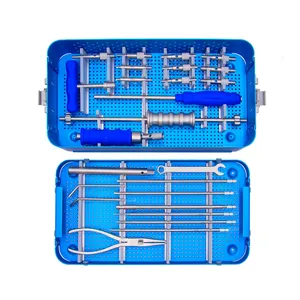
Featured Internal Fixation Systems & Extraction Kits
Explore our hospital-proven surgical implants, specialized craniomaxillofacial devices, and universal broken screw extractor sets designed for maximum operating room reliability.
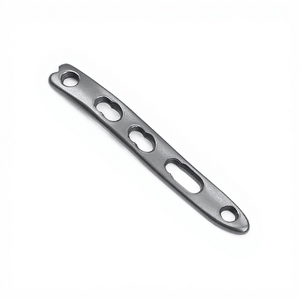
High Quality Hengchee Brand Internal Fixation Device Distal Posterior Radius Locking Plate II Orthopedic Implants Model 1208
Salaar Industry Internal Fixation Extractor Set Broken Screw Removal Kit Orthopedic Surgical Instrument Set with Blade Screws
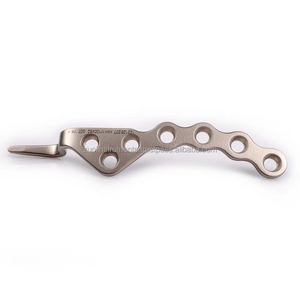
Medical Grade Orthopedic Clavicle Hook Plate - Surgical Internal Fixation System for Distal Clavicle Fractures
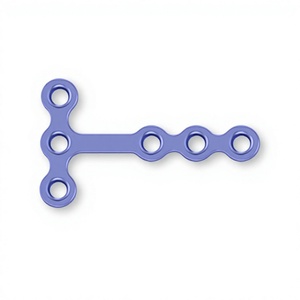
Maxillofacial Internal Fixation System Flat Hole Stainless Steel Cranial Mesh Neurosurgery Craniofacial Reconstruction Reusable
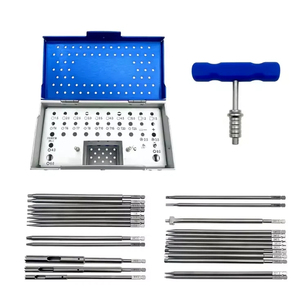
Internal Fixation AO Removal Instrument Kit Broken Nail Extractor Orthopedic Surgical Set for Implant and Screw Removal Procedur
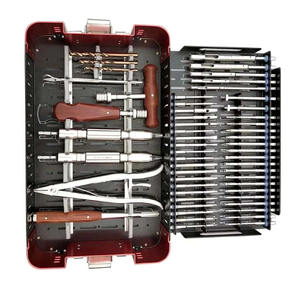
High Quality Stainless Steel Internal Fixation Extractor Set Surtechs Orthopedic Surgical Instruments Reusable by Dentavex
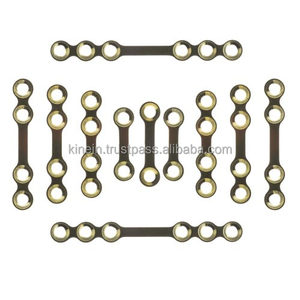
CMF CRANIOMAXILLOFACIAL INTERNAL FIXATION SYSTEM SKULL RECONSTRUCTION TITANIUM MAXILLOFACIAL PLATE MANDIBULA ORTHOPEDIC IMPLANT
ISO 13485
Certified Quality System
SAL 10-6
Co-60 Gamma Sterilization
≥ 930 MPa
Ti-6Al-4V Tensile Strength
230+
Implant & Instrument Lines
1. Executive Overview: China’s Role in Global Internal Fixation Manufacturing
In modern traumatology, orthopedics, and craniomaxillofacial (CMF) surgery, internal fixation systems represent the cornerstone of skeletal alignment, fracture reduction, and rigid anatomical stabilization. Over the past two decades, China has evolved from a primary manufacturing hub into a high-precision biomechanical engineering powerhouse. Today, premier Chinese internal fixation system manufacturers operate state-of-the-art 5-axis Swiss-type CNC turning centers, automated cleanroom packaging facilities, and rigorous quality assurance infrastructure certified to ISO 13485, ISO 9001, and European CE standards.
For global hospital procurement directors, orthopedic distributors, and OEM medical device brand managers, navigating the ecosystem of top China internal fixation system manufacturers requires a granular understanding of material science, metallurgical compliance (e.g., ASTM F1472 for Ti-6Al-4V ELI, ASTM F67 for Unalloyed Titanium, and ASTM F138 for 316LVM implantable stainless steel), and regulatory technical documentation. This industry whitepaper provides an exhaustive technical analysis, evaluating structural design modalities, technological development shifts, future sourcing procurement trends, and a complete procurement guidance framework.
Information Gain Insight: Modern internal fixation systems rely on dynamic strain-shielding reduction. China's top tier manufacturers now employ anatomical pre-contouring and Type II anodic oxidation surface treatments, significantly minimizing intraoperative plate bending while enhancing soft tissue compatibility and fatigue resistance.
2. Comprehensive Classification of Internal Fixation Systems
Surgical internal fixation encompasses a broad spectrum of specialized implants and complementary instrumentation engineered to handle distinct mechanical loads, micro-motion environments, and anatomical structures. Leading Chinese manufacturers categorize their traumatology and orthopedic hardware portfolios into five critical sub-disciplines:
Locking Compression Plates (LCP)
Utilizes combination holes enabling both angular stable locking screw fixation and traditional compression. Includes distal posterior radius plates, clavicle hook plates, and periarticular anatomical plates.
Intramedullary Nailing Systems
Load-sharing internal splints engineered for long-bone fractures (femoral, tibial, and humeral). Features multi-planar distal and proximal locking configurations for enhanced torsional and axial stability.
Craniomaxillofacial (CMF) Systems
Ultra-low profile micro-plating systems, titanium cranial mesh, and mandibular reconstruction plates designed for neurosurgery, pediatric craniofacial trauma, and orthognathic alignment.
Universal Hardware Removal & Broken Screw Extraction Sets
A critical, often overlooked sector of orthopedic internal fixation is implant retrieval. Hardware removal procedures—necessitated by infection, union completion, soft tissue irritation, or hardware failure—present severe intraoperative challenges. Top China suppliers manufacture specialized AO-compatible removal instrument sets, broken nail extractors, and reverse-threaded conical screw extractors. Equipped with high-torque blade screws, trephines, and universal socket drivers, these reusable stainless steel instrument sets are vital safety nets for operating rooms globally.
3. Metallurgy, Biocompatibility & Engineering Specifications
The clinical longevity and biomechanical safety of internal fixation implants are directly governed by raw material purity and manufacturing precision. Top Chinese suppliers strictly adhere to international medical-grade material specifications, ensuring zero toxicity, optimal modulus of elasticity, and high cycle fatigue endurance under physiological stresses.
| Material Classification | International Standard | Tensile Strength (MPa) | Yield Strength (MPa) | Primary Clinical Applications |
|---|---|---|---|---|
| Titanium Alloy (Ti-6Al-4V ELI) | ASTM F1472 / ISO 5832-3 | ≥ 930 | ≥ 860 | Locking plates, intramedullary nails, pedicle screws, CMF reconstruction |
| Unalloyed Pure Titanium (TA2 / TA3) | ASTM F67 / ISO 5832-2 | 400 – 550 | 275 – 480 | Cranial mesh, micro CMF plates, pliable anatomical contours |
| Implant-Grade Stainless Steel | ASTM F138 (316LVM) / ISO 5832-1 | ≥ 860 | ≥ 690 | High-load trauma plates, temporary fixation pins, extraction instruments |
| Polyetheretherketone (PEEK) | ASTM F2026 | 90 – 100 | 110 – 130 | Radiolucent spinal cages, suture anchors, specialty non-metallic plates |
Furthermore, advanced manufacturing workflows in China incorporate surface modification technologies such as micro-arc anodization, forming a dense titanium oxide passivation layer that accelerates osseointegration while preventing ion leaching. For stainless steel extraction instrument kits, vacuum heat treatment yields Rockwell hardness levels of HRC 48-52, guaranteeing that extraction driver tips maintain structural integrity even when unseating cold-welded or damaged screw heads.
4. Enterprise Advantage: Manufacturing & Regulatory Capabilities
When partnering with a premier Chinese medical device manufacturer such as Orthi Medical Co., Ltd., global buyers gain access to an end-to-end medical device production ecosystem built upon stringent international regulatory frameworks and advanced industrial engineering:
ISO 13485 QMS Certification
Full quality management system compliance guaranteeing complete raw material heat-lot traceability, batch history records (DHR), and systematic CAPA protocols.
5-Axis Swiss CNC Machining
Sub-micron tolerance machining for complex geometries, locking threads, cannulated cores, and ergonomic surgical instrument handles.
Co-60 Gamma Sterilization (SAL 10-6)
In-house validated cleanroom packaging (Class 10,000 / ISO Class 7) offering pre-sterilized, sterile-barrier blister packaging ready for immediate OR deployment.
Comprehensive OEM/ODM Capabilities
Custom drawing-based machining, laser branding, custom anodized color-coding, customized instrument tray layout, and technical file compilation (STED/MDR).
Our enterprise infrastructure seamlessly connects research and development with clinical practice. By engaging in academic collaborations, surgeon training workshops, and cadaveric validation trials, we ensure that every internal fixation system, locking plate, and extractor tool meets the rigorous operational demands of orthopedic surgeons worldwide.
5. Future Procurement Trends in Orthopedic Fixation Systems
The global orthopedic device supply chain is experiencing a structural realignment driven by hospital margin pressures, regulatory tightening (such as the EU MDR compliance mandate), and a demand for operational efficiency. B2B procurement leaders must account for four major trends when selecting Chinese manufacturing partners:
1. Pre-Sterilized Single-Pack Implants
Hospitals are rapidly shifting away from bulk non-sterile implant sets that require expensive, labor-intensive reprocessing in Central Sterile Supply Departments (CSSD). Individually sterile-packaged bone screws and plates reduce surgical site infection risks while streamlining hospital inventory tracking.
2. Consolidated Full-Portfolio OEM
Distributors are consolidating vendor relationships, preferring unified suppliers capable of producing trauma, spine, CMF, sports medicine, and extraction instruments under a single ISO 13485 umbrella to reduce administrative and audit overhead.
3. Modular Removal & Extractor Kits
With implant removal procedures accounting for up to 15% of trauma interventions, hospital buyers now mandate that distributors provide universal broken screw extractor sets capable of handling competitive implant geometries (AO, non-AO, hex, star, and strip-headed screws).
6. Product Development Trends: Next-Gen Orthopedic Innovations
Looking toward the 2025–2030 horizon, internal fixation technology is transitioning from pure mechanical stabilization to biological integration and smart device function. Leading R&D divisions in China are pioneering advancements across several high-growth vectors:
• 3D Printed Porous Titanium Structures: Utilizing Electron Beam Melting (EBM) and Direct Metal Laser Sintering (DMLS) to fabricate bone plates and interbody fusion devices featuring biomimetic trabecular architectures that accelerate vascularization and bone ingrowth.
• Biodegradable & Bioabsorbable Fixation: Development of ultra-high purity magnesium alloys and poly-L-lactic acid (PLLA) composites for pediatric trauma and craniofacial fixation, eliminating the need for secondary implant removal surgeries entirely.
• Patient-Specific Implants (PSI) & Virtual Surgical Planning: Converting patient CT scans into custom-molded titanium mesh, mandibular plates, and complex pelvic reconstruction hardware tailored precisely to individual bone defects.
• Ultra-Low Profile Micro-Fixation: Refining CMF plates and distal radius plates to under 1.2 mm profiles while maintaining yield strength, preventing soft tissue friction and tendon rupture in delicate anatomical zones.
7. Frequently Asked Sourcing & Procurement Questions (FAQ)
Below are detailed answers to the most critical technical, regulatory, and commercial questions asked by international healthcare buyers and medical device procurement officers.
What regulatory certifications do top Chinese internal fixation manufacturers hold?
Established medical device manufacturers operate under quality management systems certified to ISO 13485:2016 and ISO 9001. Product lines carry European CE marking (under EU MDR 2017/745), and technical documentation suites (STED) are available to support distributor product registrations with national authorities such as the US FDA, Brazil ANVISA, and Saudi SFDA.
How is raw material quality guaranteed for titanium plates and locking screws?
Every raw material shipment (titanium bars, stainless steel rods, PEEK blocks) is accompanied by Mill Test Certificates verifying chemical composition and physical properties per ASTM F1472, ASTM F67, or ASTM F138. Furthermore, manufacturers perform third-party SPECTRO chemical analysis, metallurgical grain size verification, and mechanical tensile testing prior to machining.
What options are available for OEM private labeling and custom instrument tray design?
Full OEM/ODM services include high-precision fiber laser marking for custom logos and part numbers, custom color anodization (electro-chemical anodizing for size and technique coding), customized silicone-grommet instrument trays, custom graphic box packaging, and complete private label documentation support.
Why are broken screw and nail extractor kits essential for hospital trauma packs?
Implant stripping, thread damage, and bolt fracture occur in 5-10% of hardware removal surgeries due to tissue ingress or cold welding. Universal extractor sets feature conical reverse-threaded extractors, damaged screw drivers, and hollow reamers that allow surgeons to safely remove stripped hardware without compromising patient bone stock.
Can internal fixation devices be supplied sterile, and what is the validated shelf life?
Yes. Implants can be individually packaged in medical-grade Tyvek blister packs and subjected to Cobalt-60 Gamma Ray Sterilization to achieve a Sterility Assurance Level (SAL) of 10-6. Accelerated aging testing validates a sterile shelf life of up to 5 years under standard storage conditions.
What are the standard production lead times for B2B orders?
For standard catalog items, orders are typically dispatched within 2 to 3 weeks. Custom OEM products requiring specialized tooling, new CNC programming, or custom tray fabrication generally require a lead time of 6 to 8 weeks, inclusive of prototype sample verification and QMS inspection.
How do manufacturers handle fatigue testing for newly designed locking plates?
Fixation plates undergo dynamic fatigue testing according to ASTM F382 / ISO 14602 standards (single-cycle compression bending and 1,000,000-cycle dynamic endurance testing) to ensure the implant can withstand cyclic weight-bearing forces during fracture healing without structural failure.
Partner with a Premier Chinese Internal Fixation Manufacturer
Request comprehensive product catalogs, OEM engineering specifications, or competitive B2B quotation packages for your hospital network or distribution territory.
Send an Inquiry