Precision Orthopedic Implants & Fixation Systems
Factory-direct medical devices engineered for total joint arthroplasty, trauma repair, and spinal stabilization.
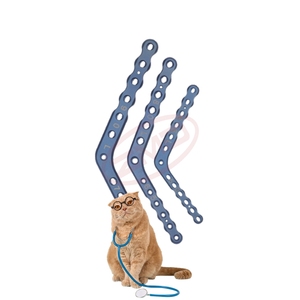
ZMD Medical Orthopedic Titanium Bone Screw Cancellous & Hex Head Cortex Locking Implant
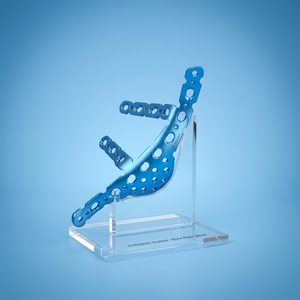
Factory Direct Sale Pelvis Reconstruction Locking Plate Ortopedicos Placas Pelvic Plate Implants
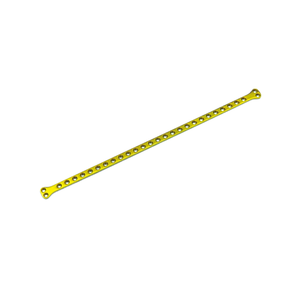
Convenient Use Veterinary Surgery Orthopedic Implants Titanium Implant 1.1/1.5/2.0/2.4mm Double T Cuttable Plate CE Certified
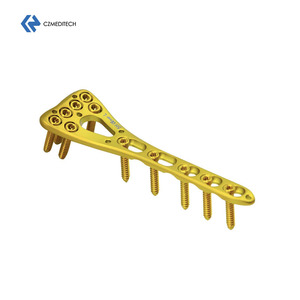
VA Distal Radius Locking Plate Variable Angle System for Fracture Fixation CE Titanium Trauma Implants
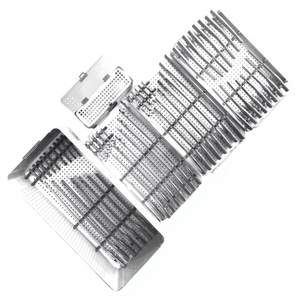
Femoral Fracture Surgery Instrument Kit Proximal Femoral Nail Anti-Rotation (PFNA) / Femoral Nailing System Manual Steel
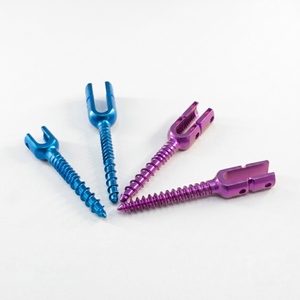
Anodized Titanium Monoaxial Pedicle Screw Orthopedic Implants Surgery Spine 6.0MM Reduction Screw For Hospital Use
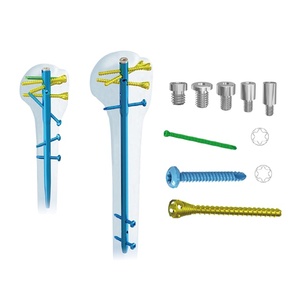
Trauma Orthopedic Implant Titanium Alloy Femoral Interlocking Nail Femoral Interlocking Nail for Long Bone Trauma Repair
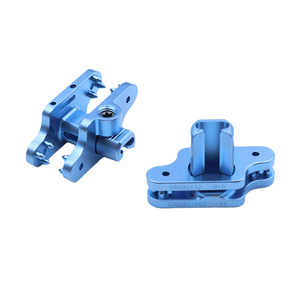
Geasure Orthopedic Implant Titanium Alloy Interspinous Process Fixation Device 8-16mm for Posterior Column Stabilization
Engineering Excellence in Complex Revision Hip Arthroplasty
Revision total hip arthroplasty (RTHA) represents one of the most demanding challenges in modern orthopedic reconstruction. Leading Chinese factories have evolved beyond basic manufacturing to establish robust R&D ecosystems capable of delivering high-rigidity, bio-integrative hip revision systems designed to resolve severe femoral and acetabular bone loss.
Paprosky Classification Compatibility
Engineered specifically to restore structural integrity across Paprosky Type I, II, III, and IV femoral and acetabular defects. Systems incorporate modular fluted tapered stems, acetabular augment wedges, and structural mesh.
Trabecular Porous Surface Coatings
Advanced vacuum plasma spraying (VPS) and 3D additive titanium manufacturing produce interconnected pore structures (pore size: 400–600 µm, porosity: 65–75%) that mimic natural cancellous bone architecture.
Anti-Fretting Junction Geometry
Precision Morse taper interlocks (12/14 and 10/12 configurations) featuring micro-grooved surface topography reduce fretting corrosion and wear debris generation under physiological dynamic fatigue loading.
Biomechanical Advantage of Modular Distal Fluted Stems
| Component Category | Material Standard | Key Mechanical / Surface Specifications | Clinical Intent |
|---|---|---|---|
| Modular Femoral Revision Stem | Ti-6Al-4V ELI (ASTM F136 / ISO 5832-3) | Tensile Strength ≥ 860 MPa; Distal Flutes (6 to 8 splines); 2° Taper | Bypasses proximal defects for diaphyseal anchoring in Paprosky Type III/IV cases. |
| Acetabular Revision Shell & Augment | Commercially Pure Ti (ASTM F67) / 3D Ti Powder | VPS Titanium / HA dual-layer coating; Porosity 65–75%; Interconnected pores | Restores joint center of rotation; establishes initial mechanical press-fit. |
| Bearing Surface (Modular Liner) | Highly Cross-linked Polyethylene (HXLPE + Vit E) | Electron-beam cross-linked; Remelted / Vitamin E stabilized; Wear rate < 2 mg/Mc | Eliminates oxidative degradation; dramatically reduces osteolysis-inducing wear debris. |
| Femoral Modular Heads | CoCrMo Alloy (ASTM F75) / BIOLOX delta Ceramic | Sub-micron sphericity (< 0.5 µm); Mirror polished Ra < 0.01 µm | Optimizes tribological articulation against HXLPE liners; minimizes friction coefficient. |
Future Procurement & Development Trends in Hip Revision Systems
As global healthcare systems seek to optimize surgical outcomes while controlling orthopedic procurement budgets, Chinese manufacturers are taking a dominant position in high-tier medical device export markets.
1. 3D-Printed Custom Patient-Specific Implants (PSI)
Procurement is shifting rapidly from off-the-shelf revision implants toward patient-matched 3D-printed titanium acetabular cages and pelvic reconstruction plates. Leading Chinese exporters utilize high-resolution CT segmentation software and Direct Metal Laser Sintering (DMLS) to build bespoke prostheses for severe pelvic discontinuity within 10 to 14 working days.
2. Fully Integrated Sterile Packaging Solutions
Hospital operating rooms are moving away from non-sterile implant trays due to high sterilization costs and infection risks. Top exporters provide point-of-use sterile packaged bone screws, locking plates, intramedullary nails, and revision heads subjected to Cobalt-60 Gamma Irradiation (SAL 10-6), sealed in medical-grade Tyvek double-blister packaging.
3. One-Stop OEM/ODM Customization Frameworks
International distributors are scaling their private label brands by partnering directly with Chinese factories equipped with 5-axis DMG MORI CNC milling machines, Citizen Swiss-type lathes, and color anodization facilities. This streamlined ecosystem drops prototyping lead times while guaranteeing regulatory-grade documentation.
Why Global Medical Buyers Partner with Leading Chinese Manufacturers
Operating under rigorous ISO 13485 and ISO 9001 quality management standards, our integrated manufacturing facilities bridge surgical innovation and large-scale industrial precision.
Raw Material Traceability & Compliance
Every batch of raw titanium (TA2, TA3 per ASTM F67; TC4 / Ti-6Al-4V per ASTM F1472 / F136) undergoes chemical composition analysis, tensile testing (tensile strength ≥ 930 MPa for TC4), and metallographic grain size verification prior to CNC machining. Mill test certificates are archived for 15+ years.
Sub-Micron Precision Quality Control
Equipped with Zeiss 3D Coordinate Measuring Machines (CMM), optical comparators, and automated surface roughness testers, our QC teams verify 100% of critical dimensions, Morse taper angles, and thread pitches to ensure zero intraoperative mismatch between components.
Regulatory Dossier Support (CE / STED)
We assist regional distributors and brand partners in accelerating local medical device registrations. We provide comprehensive Technical Files according to STED guidelines, including ISO 10993 biocompatibility test reports, mechanical fatigue test data (ISO 7206 series), and sterilization validation studies.
Frequently Asked Questions (FAQ)
Essential answers for hospital buyers, medical device importers, and OEM contract partners.
What certifications cover your hip revision and orthopedic implant lines?
Can implants and revision components be supplied pre-sterilized?
Do you support private label OEM/ODM manufacturing based on custom engineering drawings?
Which complete product categories can medical distributors source from your facility?
How do you ensure fretting and fatigue resistance in modular hip revision taper connections?
What clinical and surgical support services do you provide to global partners?
Partner with a Leading China Hip Revision System Manufacturer
Looking to expand your orthopedic product portfolio, upgrade implant quality, or streamline private label OEM manufacturing? Connect directly with our engineering and export team today.