Featured Orthopedic Hindfoot Fusion & Surgical Nails Portfolio
Engineered for rigid tibiotalocalcaneal (TTC) arthrodesis, complex severe hindfoot deformity correction, and post-traumatic ankle trauma reconstruction. Explore our ISO 13485 compliant catalog for hospital procurement teams and orthopedic distributors.
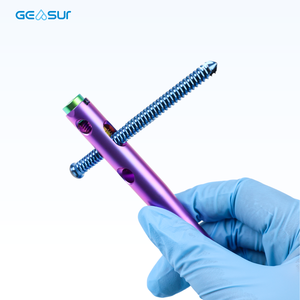
Class III Orthopedic Implants Surgical Nails and Screws Titanium Alloy Hindfoot Fusion and Ankle Nail
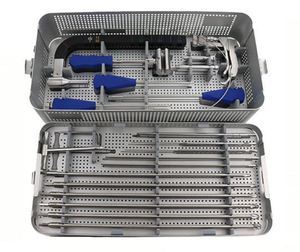
Best Quality Stainless Steel Manual Reusable High-quality Orthopedic Hindfoot Fusion Ankle Nail Intramedullary Surgical
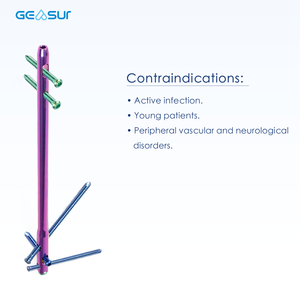
CE ISO Approved Titanium Hindfoot Ankle Intramedullary Nail for Foot Ankle Fracture Orthopedic Trauma Surgery
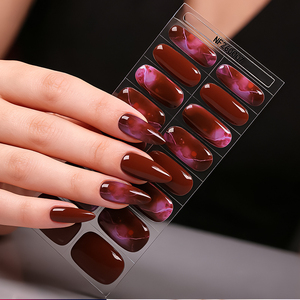
Wholesale Supplier High Quality Healthy Long Lasting 3D French Nail Art Semi Cured Gel Nail Wraps Set UV Lamp Gel Nail Stickers
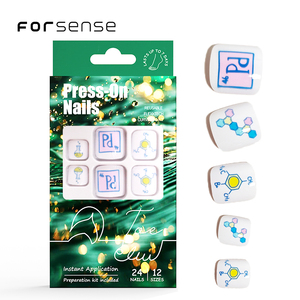
Premium False Nails with Design and Stickers. Custom Unique Patterns Toe Nails Supplies Press on White Color Glue on Nail Tips
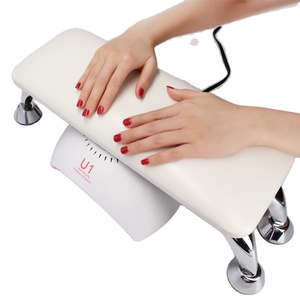
Professional Microfiber Leather Nail Hand/Foot Rest Stand Arm Rest Pillow for Acrylic Nails
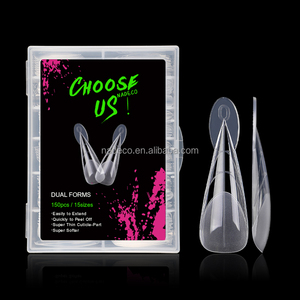
Inner Recessed French Dual Forms Nail Tips Artificial False Nails Gel Extension Easy to Peer off With Guide Lines
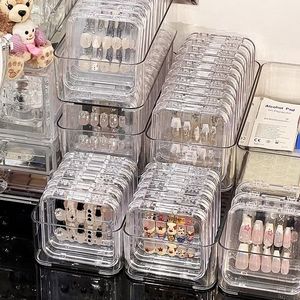
High Quality Wholesale Price Handmade Press on Nails with Glue OEM ODM Private Label False Nails Artificial Fingernails
Biomechanical Engineering & Clinical Design Architecture
Understanding the mechanical forces, joint stabilization requirements, and anatomical alignment dynamics inherent to tibiotalocalcaneal (TTC) arthrodesis.
Axial & Dynamic Compression
Retrograde hindfoot fusion nails rely on integrated axial compression screws to eliminate graft gap formation across the subtalar and tibiotalar joint lines. By applying controlled mechanical pre-load (ranging from 1.5 kN to 3.0 kN), micro-motion is suppressed, creating an optimal strain environment for periosteal calluses and bony union in revision procedures or neuroarthropathic Charcot feet.
Valgus & Anatomic Geometry
Modern Chinese trauma manufacturers shape retrograde intramedullary nails with a distal 5° valgus curvature and an anterior-posterior offset. This mirrors the physiological alignment of the calcaneus relative to the tibial intramedullary canal, preventing lateral cortical blowout during insertion and maintaining natural heel valgus to diminish adjacent-joint stress.
Multi-Planar Cross Locking
Torsional instability is a major root cause of TTC non-union. To neutralize rotational shear forces during early weight-bearing, nails feature proximal dynamic/static transfixing screw holes alongside distal calcaneal and talar polyaxial locking options. Threaded locking screws lock into the nail shaft to form a rigid construct.
Metallurgical Specification: Ti-6Al-4V ELI (ASTM F1472) vs Stainless Steel (ASTM F138)
Choosing the correct alloy dictates biomechanical performance, stress shielding factors, MRI artifact generation, and overall implant fatigue life under cyclical loading.
| Mechanical & Material Parameter | Titanium Alloy (Ti-6Al-4V ELI / Grade 5) | Stainless Steel (316L / ASTM F138) |
|---|---|---|
| Modulus of Elasticity (GPa) | 110 GPa (Closer to cortical bone ~18 GPa, reducing stress shielding) | 200 GPa (Significantly stiffer; higher risk of proximal stress concentration) |
| Ultimate Tensile Strength (MPa) | ≥ 860 MPa to 930 MPa | ≥ 690 MPa to 860 MPa |
| Cyclic Fatigue Resistance | Superior high-cycle fatigue threshold under multi-axial loads | Moderate fatigue threshold; susceptible to micro-pitting in saline environments |
| Radiological Compatibility | Minimal artifact creation under CT / 1.5T & 3.0T MRI scanning | High magnetic susceptibility causing significant MRI scattering artifacts |
| Surface Processing | Type II Anodization (Micro-arc oxidation for fatigue resistance) | Electro-passivated surface layer per ASTM F86 standards |
Next-Generation Technical Development Trends (2025–2030)
The global orthopedic trauma field is transitioning toward smart, biomimetic, and minimally invasive fusion systems. China’s leading medical device exporters are actively investing R&D into four key technological fronts.
1. Continuous Dynamic Compression via Superelastic Alloys
Traditional rigid internal compression screws lose up to 60% of their compressive load within 4 weeks post-surgery due to physiological bone resorption at the joint interfaces. Future TTC fusion nails incorporate internal Nitinol (NiTi) shape-memory spring elements or constant-force internal sleeves. These elements continuously store energy and automatically expand during bone resorption, maintaining constant axial compression throughout the 12-to-16 week fusion window.
2. 3D-Printed Porous Trabecular Titanium Coatings
To overcome high non-union rates in severe diabetic osteopathy or AVN (Avascular Necrosis) of the talus, manufacturers are integrating additive-manufactured porous titanium surfaces directly onto the calcaneal and talar zones of the nail. Featuring pore sizes of 400–600 μm and porosity levels of 70–80%, these biomimetic structures foster direct bone ingrowth (osseointegration) alongside traditional intramedullary mechanical stabilization.
3. Carbon-PEEK Radiolucent Nail Shaft Composites
Carbon-fiber-reinforced polyetheretherketone (Carbon-PEEK) provides an elasticity modulus almost identical to cortical bone, drastically minimizing stress shielding while allowing 100% radiolucency. Surgeons can assess fusion healing across the talocalcaneal and tibiotalar joint spaces via intraoperative X-ray fluoroscopy without metal image distortion.
4. Guided Targeted Minimally Invasive Instrumentation (MIS)
The evolution of surgical technique mandates smaller skin incisions to safeguard compromised soft-tissue envelopes in hindfoot trauma cases. Advanced targeting jigs now utilize carbon-fiber radiolucent aiming arms with sub-millimeter trajectory accuracy, allowing percutaneous locking screw deployment and soft-tissue protection sleeves that reduce operative time by over 30%.
Future Procurement Trends for Global Medical Device Buyers
An strategic perspective on changing sourcing paradigms, regulatory file integration, contract manufacturing models, and supply chain resilience when partnering with Chinese orthopedic original equipment manufacturers (OEMs).
Consolidated Sourcing Platforms
Global hospital networks and regional healthcare distributors are moving away from single-product vendors toward single-source OEMs capable of delivering complete orthopedic portfolios. Procurement departments favor factories that supply matched surgical instrument sets, trauma plates, cannulated compression screws, and intramedullary fusion nails under one unified quality management system.
STED-Ready Regulatory Dossiers
With tighter global regulatory oversight (CE MDR 2017/745 in Europe, US FDA 510(k), and ANVISA in Brazil), international buyers require Chinese exporters to provide comprehensive Technical Files formatted according to STED (Summary Technical Documentation). This includes fatigue test validation (ASTM F1264), biomechanical torsional data, biocompatibility reports (ISO 10993), and clinical evaluation reports (CER).
Sterile Packaging & Consignment Security
Hospital operating rooms increasingly demand gamma-sterilized, individually double-blister packed implants over non-sterile bulk shipments. Pre-sterilized implants (SAL 10-6) eliminate hospital autoclave costs, prevent cross-contamination, guarantee 5-year shelf-life stability, and enable streamlined consignment inventory tracking via unique device identification (UDI) barcoding.
Enterprise Advantage & Manufacturing Excellence
Why leading global orthopedic brands choose Orthi Medical Co., Ltd. as their qualified OEM/ODM contract manufacturing partner for Class III surgical implants.
State-of-the-Art Swiss CNC Machining & Cleanrooms
Our manufacturing complex is equipped with imported 5-axis Swiss longitudinal CNC lathe systems (Citizen / Tornos) capable of achieving tolerances within ±0.005 mm. Cleaning, primary blister packaging, and secondary sealing are conducted inside certified Class 100,000 (ISO Class 8) cleanroom environments to maintain bioburden levels well below international pharmacopeia mandates.
Complete Quality Management & Traceability
Operating under ISO 13485 and ISO 9001 quality systems, Orthi Medical guarantees 100% full-lot chemical, mechanical, and dimensional traceability. From raw metal bar stocks (accompanied by original mill test certificates per ASTM F1472 / ASTM F67) to laser-etched UDI codes on finished implants, every step undergo rigorous Coordinate Measuring Machine (CMM) and optical comparator audits.
Procurement & Technical FAQ
Addressing key engineering, regulatory, ordering, and technical questions commonly asked by international medical device buyers and procurement officers.
1. What raw material standards are utilized in your hindfoot fusion nails?
2. What mechanical fatigue testing standard applies to intramedullary fusion nails?
3. Can Orthi Medical provide custom OEM/ODM designs and tailored instrument sets?
4. Are implants provided pre-sterilized or non-sterile?
5. What regulatory approval documentation is included to support local product registration?
6. What is the standard minimum order quantity (MOQ) and production lead time?
7. How does the internal dynamic compression mechanism function during surgery?
8. What measures are taken to ensure surface finish stability and corrosion resistance?
9. How do you support surgeon technical training for new distributor partners?
10. What shipping logistics and packaging options are available for long-distance export?
Partner with China's Premier Orthopedic Implant Exporter
Whether you are seeking a reliable contract OEM manufacturer, expanding your orthopedic distribution catalog, or sourcing ISO 13485 certified TTC fusion systems, our engineering team is ready to assist your procurement team.