Product Catalog
Precision Orthopedic Implants & Instrument Systems
Explore our ISO 13485 & CE compliant orthopedic surgery portfolio manufactured from implant-grade titanium, PEEK, and stainless steel.
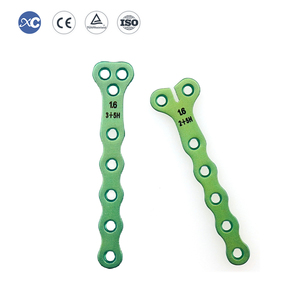
Medical Veterinary Orthopedic Trauma Implants Factory Direct 1.6mm T Type Locking Plate
Get a Quote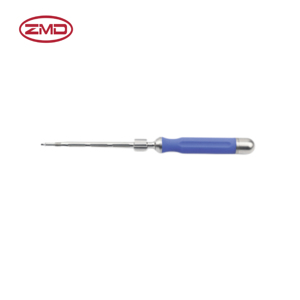
Universal Nail Driver For Pet Orthopedic Surgery Veterinary Instrument
Get a Quote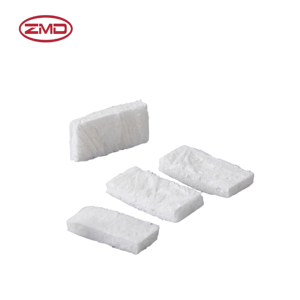
Biocompatible BTCP-based Apatite-like Bone Grafting Material For Rehabilitation Equipment
Get a Quote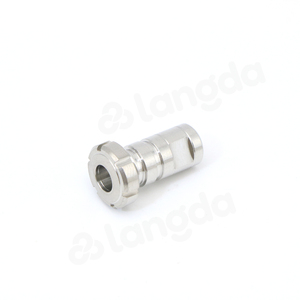
Precision ISO 13485 CNC Machining Stainless Steel Medical Parts Arthroscopic Shaver Blade Burr Tip
Get a Quote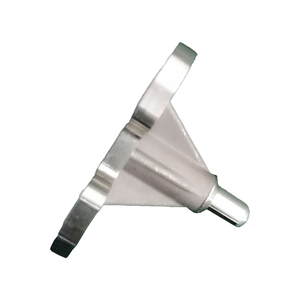
Orthopedic Instruments Artificial Hip Joint Knee Hinge Joint Femoral Component
Get a Quote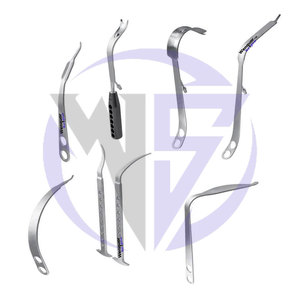
Anterior Total Hip Arthroplasty (THA) Surgical Instruments Set
Get a Quote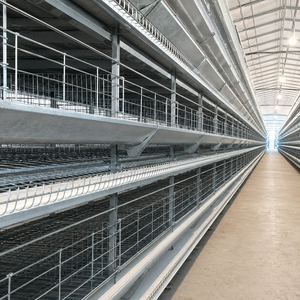
H Type Galvanized Steel Structural Equipment & Hardware Assemblies
Get a Quote
Industry Whitepaper
China's Role in Next-Generation Orthopedic External Fixation Manufacturing
An in-depth analysis of biomechanical engineering, material science, and regulatory compliance for global medical procurement leaders.
The Evolution of External Fixation in Modern Trauma & Orthopedic Surgery
External fixation systems remain indispensable in orthopedic trauma management, limb lengthening, deformity correction, and complex non-union reconstruction. Historically used primarily as temporary stabilization in Damage Control Orthopedics (DCO), advanced external fixator technology—such as hexapod spatial frames, radiolucent carbon fiber connecting rods, and hydroxyapatite-coated Schanz pins—has repositioned external fixators as definitive treatment modalities. As hospital networks and healthcare procurement agencies globally seek reliable, high-precision manufacturing partners, China has emerged as the premier manufacturing hub for ISO 13485-certified orthopedic solutions.
Information Gain Note: Modern external fixator systems must balance biomechanical axial micro-motion (which encourages dynamic bone callus formation) with rigid torsional and bending stability. Achieving this balance requires micro-precision CNC machining tolerances within ±0.005mm and strict material purity under ASTM F136 (Ti-6Al-4V ELI) and ASTM F67 specifications.
As a leading China external fixator manufacturer and global exporter, Orthi Medical (operating under established manufacturing legacy standards) integrates full-spectrum raw material sourcing, 5-axis Swiss-type precision machining, surface anodization, custom packaging, and sterile barrier validation. This comprehensive ecosystem enables international distributors to optimize supply chain resilience while maintaining full technical compliance with EU MDR (2017/745), US FDA 510(k), and regional registration mandates.
5-Axis CNC Precision Manufacturing
Equipped with state-of-the-art Japanese Tsugami and Star Swiss-type automatic lathes, our production facility achieves sub-micron tolerances for complex Schanz screw threads, ball joints, dynamic clamps, and telescopic struts.
ISO 13485 & Cleanroom Compliance
All operations comply with ISO 13485 and ISO 9001 quality management systems. Final cleaning and primary packaging are conducted in ISO Class 7 (Class 10,000) cleanrooms to guarantee minimal bioburden and pyrogen controls.
Gamma Sterilization (Co-60)
Implants and ready-to-use trauma kits can be supplied in pre-sterilized packages irradiated via Cobalt-60 gamma rays, validating a Sterility Assurance Level (SAL) of 10⁻⁶ in accordance with ISO 11137 standards.
Engineering Insights
Biocompatible Materials & Technical Specifications
Choosing the right metallurgy and structural composition for external fixators and trauma implants.
| Material Classification | Standard Specification | Tensile Strength (MPa) | Key Clinical Advantage | Primary Component Application |
|---|---|---|---|---|
| Titanium Alloy (Ti-6Al-4V ELI) | ASTM F136 / ISO 5832-3 | ≥ 860 - 930 MPa | High strength-to-weight ratio, superior fatigue resistance, bio-inert | Schanz pins, Ilizarov rings, structural clamps, bone screws |
| Pure Titanium (Grade 2 / Grade 3) | ASTM F67 / ISO 5832-2 | ≥ 400 - 500 MPa | Excellent ductility, contoured cold-forming adaptability | Low-profile trauma plates, cranial/cervical mesh, surgical staples |
| Carbon Fiber Composite | ISO 10993 Certified Matrix | Modulus matched to bone | 100% Radiolucent under C-arm fluoroscopy, lightweight structural rigidity | Connecting rods, radio-transparent Ilizarov arc rings |
| Implants Stainless Steel (316LVM) | ASTM F138 / ISO 5832-1 | ≥ 860 MPa | Cost-effective strength, high shear resistance | Temporary trauma fixators, K-wires, Steinman pins, driver bits |
| PEEK (Polyetheretherketone) | ASTM F2026 | Modulus matching human cortical bone | Radiolucent, zero artifact on CT/MRI, natural elastic modulus balance | Interbody spinal fusion cages, radiolucent fixation blocks |
Strategic Sourcing
Future Procurement Trends in Global External Fixation Sourcing
Key technological shifts reshaping how hospital networks and international B2B distributors acquire trauma solutions.
1. Software-Guided Hexapod & Digital Spatial Fixators
The global orthopedic market is rapidly transitioning from manual Ilizarov ring adjustment to web-based computer software-guided hexapod systems. Modern hexapod external fixators utilize six telescopic struts that can be adjusted based on post-operative X-ray multi-planar software analysis. China manufacturers are integrating digital trajectory algorithms directly with high-precision ball-joint struts, allowing surgeons to correct complex 3D deformities (translation, rotation, angulation, and length) with sub-millimeter accuracy.
2. Antimicrobial & Bioactive Surface Coatings
Pin-tract infection remains one of the most common complications in prolonged external fixation. Future procurement specifications increasingly demand bioactive surface enhancements on transfixion pins and Schanz screws. Innovations include Hydroxyapatite (HA) plasma spraying to enhance bone-pin interface shear strength, along with silver nanoparticle anodization or titanium nitride (TiN) physical vapor deposition (PVD) coatings to minimize bacterial colonization.
3. Transition to Single-Use Pre-Sterilized Modular Kits
Hospital re-sterilization logistics incur high labor costs and risk cross-contamination. B2B procurement trends favor single-use pre-sterilized trauma kits. Each kit contains pre-sterilized Schanz pins, carbon fiber rods, pin-to-rod clamps, and disposable torque wrenches packaged in double-peel pouch sterile barrier systems, eliminating hospital autoclave queue times.
4. Supply Chain Consolidation & Full-Portfolio OEM
Leading healthcare distributors are moving away from fragmented vendor models in favor of unified manufacturing partners capable of supplying trauma plates, intramedullary nails, spine cages, sports medicine shaver blades, and external fixators under one ISO 13485 umbrella. Consolidated purchasing significantly reduces regulatory audit overhead and streamlines customs clearing processes.
Market Dynamics
Orthopedic Industry Development Trends
Understanding global market demands, veterinary orthopedics growth, and custom contract manufacturing.
Veterinary Orthopedics Expansion
Pet humanization and advanced veterinary medicine have driven exponential demand for micro-external fixators, 1.6mm T-type locking plates, and small-animal universal nail drivers. Chinese manufacturers are adapting human-grade titanium precision machining to produce specialized veterinary trauma kits for companion animal clinics worldwide.
Minimally Invasive Surgery (MIS) & Endoscopy
The convergence of orthopedic fixation with Unilateral Biportal Endoscopy (UBE) and arthroscopy requires integrated instrumentation sets. Arthroscopic shaver blades, RF plasma probes, and radiolucent spinal cages work in tandem with temporary external fixators during complex joint reconstruction.
Private Label & OEM Customization
From custom anodized color-coding (gold, blue, green, magenta) for rapid surgical identification to laser-etched UDI (Unique Device Identification) barcoding and specialized instrument trays, custom contract manufacturing empowers brand owners to launch proprietary product lines efficiently.
Frequently Asked Questions
External Fixator Sourcing & Manufacturing FAQ
Direct answers to technical, regulatory, and commercial inquiries from global medical device buyers.
What quality certifications and regulatory files do you provide for international registration?
Our manufacturing facilities operate strictly under ISO 13485 and ISO 9001 certified quality management systems. Product lines carry CE marking compliance and comprehensive technical documentation (STED format), including raw material mill test certificates (ASTM F136 / ASTM F67), mechanical testing reports (ASTM F543 for bone screws, static & dynamic fatigue testing), ISO 10993 biocompatibility reports, and ISO 11137 gamma sterilization validation files to support your local health authority approvals.
Can you manufacture custom external fixator components based on 2D/3D engineering drawings?
Yes. We specialize in OEM/ODM contract manufacturing. Our engineering team utilizes advanced CAD/CAM software (SolidWorks, Mastercam) to evaluate customer drawings, optimize toolpaths for 5-axis CNC machining centers, select implant-grade materials, and deliver prototype samples alongside full CMM inspection reports prior to mass production.
What are the main mechanical advantages of carbon fiber rods over stainless steel connecting rods?
Carbon fiber connecting rods offer complete radiolucency under intraoperative C-arm fluoroscopy, allowing surgeons to visualize fracture reduction and bone alignment clearly without metal shadow obstruction. Furthermore, carbon fiber composites provide a high strength-to-weight ratio and an elastic modulus closer to cortical bone, reducing stress shielding at the fracture site while significantly decreasing overall construct weight for patient comfort.
How do you prevent pin-tract infections through pin design and material treatment?
Pin-tract health is prioritized through precision thread design (self-drilling, self-tapping geometry with optimized pitch) to minimize heat generation during insertion. Mechanically, Schanz pins undergo electrolytic polishing to achieve ultra-smooth surface finishes (Ra < 0.2 µm) that reduce bacterial adhesion. Additionally, optional Hydroxyapatite (HA) coatings enhance rapid bone-pin osseointegration, creating a tight seal at the cortical entry site.
What is your typical production lead time and minimum order quantity (MOQ) for OEM buyers?
Standard catalog items (standard trauma plates, Schanz pins, circular rings) maintain buffer stock for rapid dispatch within 15–20 days. For custom OEM designs or private label packaging projects, initial prototyping requires 3–4 weeks, with mass production batch orders fulfilled in 45–60 days depending on anodization, laser marking, and sterile packaging requirements. Flexible MOQs are tailored to support brand development for regional distributors.
Are products delivered sterile or non-sterile?
We offer both choices. Non-sterile products are packed in protective industrial bags suitable for hospital sterilization processing in reusable aluminum trays. Pre-sterilized implants (such as bone screws, plates, and Schanz pins) are packaged in medical-grade Tyvek blister pouches and sterilized via Cobalt-60 gamma radiation (SAL 10⁻⁶), offering a 5-year shelf-life ready for immediate operating room deployment.
Partner with China's Premier External Fixator Manufacturer
Equip your clinical catalog with ISO 13485 certified external fixators, trauma implants, and surgical instrumentation sets. Contact our engineering and export team today for technical catalogs, sample evaluation, and factory-direct OEM quotations.
Get a Quote