Featured Femoral Intramedullary Nail Systems
Engineered for superior load-sharing, anatomical contouring, and dynamic distal locking accuracy in supracondylar and retrograde femoral reconstruction.
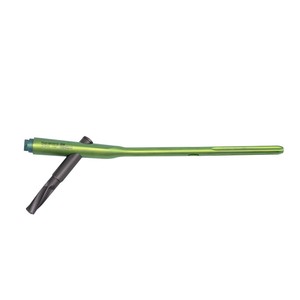
PFNA Anti-rotation Proximal & Distal Femoral Interlocking Nail (Titanium Alloy)
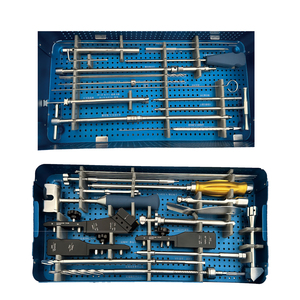
Standard Intramedullary Femoral Reconstruction Interlocking Nail Instrument Set
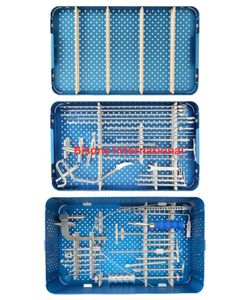
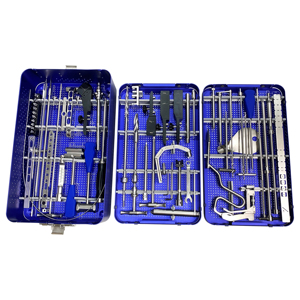
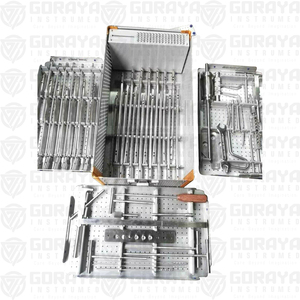
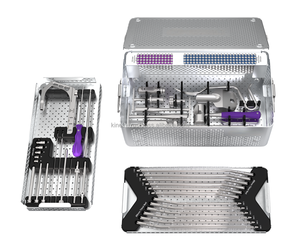
Aluminium Distal Jig Target Arm Set for Tibia & Femur Intramedullary Nailing
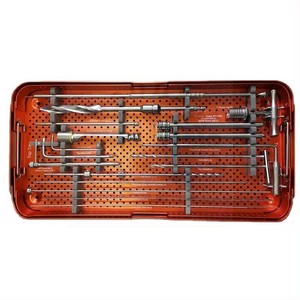
Reusable Professional Intramedullary Femoral Nailing Surgical Tray (OEM)
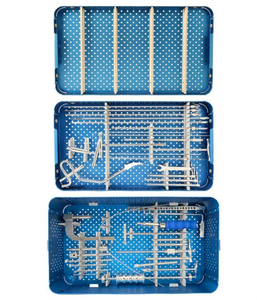
Class I Distal Femoral Retrograde Nail & Short PFN Surgical Alignment Toolset
Technical Whitepaper: Distal Femoral Intramedullary Fixation Mechanics
In modern orthopedic trauma surgery, extra-articular and intra-articular fractures of the distal femur—specifically AO/OTA classification 33-A, 33-B, and 33-C—present severe clinical challenges due to thin metaphyseal cortical bone, wide intramedullary canals, and osteoporotic bone structures. As a leading China distal femoral nail exporter, our engineering division has refined retrograde distal femoral nail (DFN) design to optimize load-sharing characteristics, prevent secondary varus collapse, and streamline operative workflows under fluoroscopic guidance.
Clinical Insight: Biomechanical comparative testing proves that retrograde distal femoral intramedullary nails exhibit significantly smaller bending moments and higher torsional fatigue limits compared to lateral locking periarticular plates, reducing rate of nonunion by up to 34% in osteoporotic distal femur fractures.
1. Anatomic Contouring & Metallurgical Integrity
Our distal femoral nails are manufactured using ultra-pure medical-grade Ti-6Al-4V ELI (ASTM F1472) and High-Strength Stainless Steel 316L (ISO 5832-1). The distal end features an anatomic 4.5° to 5° valgus bend (Herzog curve), allowing seamless retrograde insertion through the intercondylar notch without impinging upon the patellofemoral joint or altering the mechanical axis of the knee. Tensile yield strength exceeding 930 MPa guarantees exceptional resistance against cyclic fatigue during early weight-bearing protocols.
2. Multi-Planar Dynamic Distal Locking Configurations
Distal stability is maintained via four multi-planar condylar screw slots. The distal locking matrix incorporates distal-to-proximal and anterior-to-posterior locking options to effectively capture intra-articular split fragments (condylar fractures). Dynamic compression slots permit controlled axial micro-motion (up to 7mm), accelerating secondary callus formation while preventing implant stress-shielding.
Anatomic 5° Valgus Angle
Preserves native mechanical axis of the lower extremity through exact retrograde intercondylar notch insertion.
Dynamic Micro-Compression
Elongated dynamic distal slots provide 1mm to 7mm of controlled axial compression to induce natural bone healing.
Type II Anodized Surface
Enhances fatigue endurance limits, eliminates fretting corrosion, and reduces bacterial adhesion risks.
Carbon-Fiber Radiolucency
Targeting arms constructed from PEEK carbon-fiber ensure 100% radiolucent fluoroscopy without C-arm shadows.
Future Procurement & Manufacturing Trends in Distal Femoral Nailing (2025–2035)
As healthcare systems worldwide balance cost containment with stringent surgical clinical efficacy, global distributors sourcing from China must align with emerging technological shifts in trauma orthopedics. Key industry trends defining the next decade include:
1. Transition to Sterile Pre-Packaged Single-Use Implant Kits
Traditional reusable instrument trays require costly hospital CSSD (Central Sterile Supply Department) processing, raising infection risks and administrative overhead. High-volume export manufacturers in China are rapidly shifting toward gamma-irradiated (Co-60, SAL 10-6) single-use implant kits. Pre-sterilized, individually barcoded distal femoral nails dramatically lower operating room setup time and eliminate cross-contamination concerns.
2. Carbon-Fiber Reinforced PEEK Target Arms
Distal locking accuracy under intraoperative fluoroscopy remains a major bottleneck in retrograde intramedullary nailing. The adoption of carbon-fiber PEEK composite material for distal targeting jigs provides ultra-lightweight, zero-flexure alignment stability, while completely eliminating metallic artifacts under C-arm radiography, enabling first-pass screw insertion.
3. Additive Manufacturing & Patient-Specific Distal Geometry
3D-printed titanium implants featuring porous lattice structures (EBM/SLM technology) are expanding into revision trauma surgery. For severe distal femoral bone loss, custom-contoured distal femoral nails with integrated porous metaphyseal sleeves encourage rapid osteointegration and stable secondary fixation.
4. Regulatory Rigor: EU MDR 2017/745 & US FDA 510(k) Harmonization
Overseas buyers require complete regulatory STED (Summary Technical Documentation) dossiers. Leading Chinese exporters are investing heavily in automated 5-axis CNC machining, micro-CT dimensional verification, and dynamic fatigue testing (ISO 7206 / ASTM F1264 protocols) to ensure effortless product registration across Latin America, Southeast Asia, Europe, and the Middle East.
Enterprise Advantage & Manufacturing Excellence
Operating as a premiere OEM/ODM orthopedic device manufacturer, our enterprise facilities combine state-of-the-art Swiss CNC machining with strict international quality governance. We provide full-service white-label production, custom instrument tray development, and registration support for medical distributors globally.
| Manufacturing Parameter | Enterprise Specification | Distributor & Hospital Benefit |
|---|---|---|
| Quality System Certification | ISO 13485, ISO 9001, CE Mark Compliance | Guaranteed global compliance and simplified local health authority registration. |
| Raw Material Traceability | ASTM F1472 Ti-6Al-4V / ASTM F67 Pure Titanium | 100% mill certificate verification for yield strength, elongation, and chemical purity. |
| Machining Precision | 5-Axis Swiss Citizen & Haas CNC Machines (±0.005mm) | Flawless fit between distal nail, end cap, and locking screw threads. |
| Cleanroom Packaging | Class 100,000 Cleanroom with Co-60 Gamma Sterilization | Achieves SAL 10-6 sterility level, reducing hospital reprocessing requirements. |
| OEM & Private Label | Custom Laser Etching, Color Anodizing & Tray Layout | Empowers distributors to build strong local brand equity with turn-key products. |
Sourcing & Technical FAQ: Distal Femoral Nailing Systems
What biomechanical criteria determine the choice between retrograde distal femoral nailing and periarticular locking plates? ▼
How does titanium alloy (Ti-6Al-4V) compare with Stainless Steel 316L for distal femoral implants? ▼
What is the Sterility Assurance Level (SAL) of your sterile-packaged intramedullary nails? ▼
What regulatory documentation is provided to support medical device registration for overseas importers? ▼
What are the Minimum Order Quantities (MOQ) and lead times for OEM/private label manufacturing? ▼
How does your carbon-fiber distal targeting jig maintain long-term alignment precision? ▼
Partner with China's Leading Distal Femoral Nail Exporter
Request detailed product catalogs, technical STED registration dossiers, or factory-direct price quotations for our complete trauma and intramedullary nailing product lines.