Featured Surgical Implants & Instrument Systems
Direct from ISO 13485 Certified Medical Device Manufacturing Facilities in China
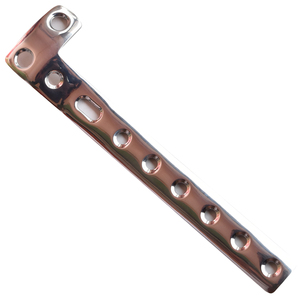
DETAIN IMPEX Orthopedic Surgical Non-Locking Plate Large Fragment Manual Instrument Set Lower Limb Bone Fixation Model
Send an Inquiry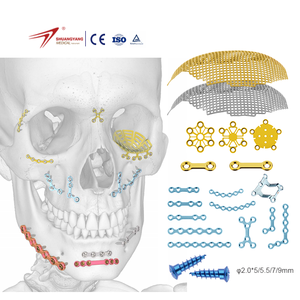
Shuangyang Medical Neurosurgery Maxillofacial System Cranial Implant Titanium Mesh Cranioplasty Skull Fixation Plating System
Send an Inquiry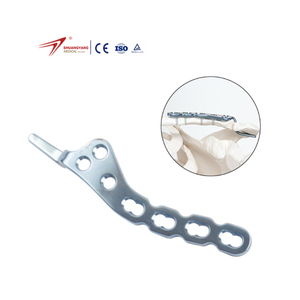
Orthopedic Surgery Trauma Implant Clavicle Claw Plate Instrument Set Clavicle Hook Plate and Claw Plate
Send an Inquiry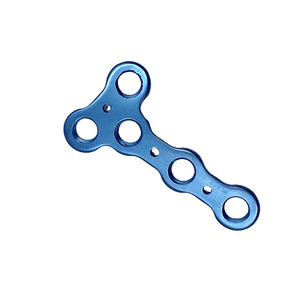
Orthopedic Surgical Trauma Non-Locking Plate the Basis of Surgical Instruments Large Fragment Instrument Set for Lower Limb Bone
Send an Inquiry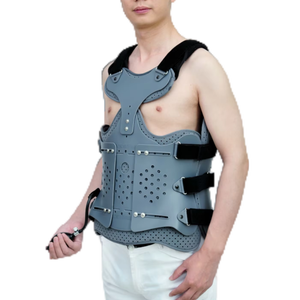
Ortho Care Class II Large Fragment Fracture Fixation Trauma Plate Implant SM-GKYZ02 3-Year Warranty for Orthotics Physical
Send an Inquiry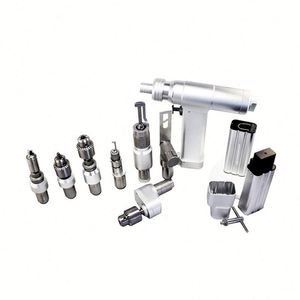
Veterinary Instrument Ortho Drill Medical Equipment Bone Drill Orthopedic Drill for Surgery a Multifunctional Toolkit
Send an Inquiry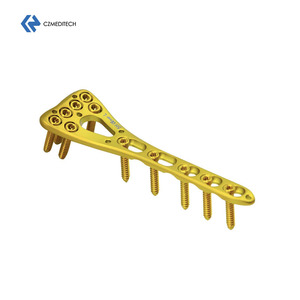
VA Distal Radius Locking Plate Variable Angle System for Fracture Fixation CE Titanium Trauma Implants
Send an Inquiry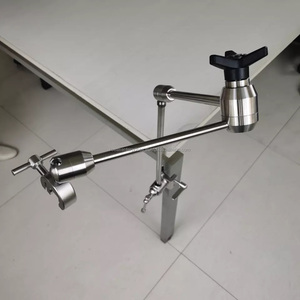
Endoscopic Discectomy System Manual Free Arm Scope Holder Stainless Steel Retractor CE Certified Silver Class II Reeax
Send an InquiryIndustry Analysis: China Balloon Kyphoplasty Export Landscape
A Deep-Dive White Paper on Engineering Compliance, Efficacy, and Global OEM Integration
Clinical Necessity & Market Dynamics
Vertebral Compression Fractures (VCFs) resulting from osteoporosis, trauma, or osteolytic lesions represent a primary burden in orthopedic spine management. Balloon Kyphoplasty (BKP) has established itself as the gold-standard minimally invasive surgical (MIS) procedure over traditional vertebroplasty due to its controlled mechanical height restoration and creation of a void for polymethylmethacrylate (PMMA) bone cement deposition.
Leading Chinese exporters have scaled precision manufacturing to produce high-grade Inflatable Bone Tamps (IBTs) that meet rigorous European (CE) and US FDA technical equivalency standards, offering global buyers competitive unit economics without sacrificing mechanical safety margins.
Material Engineering & Biocompatibility
Surgical safety in balloon kyphoplasty hinges on catheter material integrity, balloon inflation geometry, and radiopaque marker placement. Top-tier exporters utilize high-tensile, non-compliant thermoplastic polyurethane (TPU) or polyether block amide (PEBAX) balloon bladders capable of sustaining working pressures up to 300–400 PSI (20–27 atm).
- Dual Radiopaque Markers: Platinum-Iridium or Gold marker bands positioned at the proximal and distal shoulders ensure real-time fluoroscopic visualization.
- Biocompatible Extrusions: ISO 10993 compliant multi-lumen shaft design allowing rapid inflation/deflation dynamics.
- Customizable Volume Capacity: Available in 10mm, 15mm, and 20mm balloon lengths with maximum fill volumes ranging from 4cc to 6cc.
Procurement & OEM Supply Chain Synergy
International medical device distributors and brand owners seeking custom OEM/ODM partnerships benefit from China's vertically integrated supply chain. From micro-machining bone access needles (11G/13G) to cleanroom gamma sterilization packaging (Co-60, SAL 10-6), turnkey manufacturing mitigates supply chain vulnerability.
Distributors can procure complete procedure kits containing: Inflatable Bone Tamp, High-Pressure Inflation Syringe, Bone Access Cannula & Trocar, Drill, Biopsy Punch, and PMMA Bone Cement Filling Cannulas in a unified sterile tray.
Comparative Technical Specifications
Engineering Benchmark: Balloon Kyphoplasty (BKP) vs Standard Vertebroplasty Systems
| Performance Parameter | China Premium Balloon Kyphoplasty (BKP) | Standard Percutaneous Vertebroplasty (PVP) | Clinical / B2B Procurement Significance |
|---|---|---|---|
| Height Restoration Efficacy | High Mechanical Correction | Passive / Minimal Height Gain | Restores sagittal balance and reduces kyphotic angle deformity. |
| Cement Extravasation Risk | Low (Controlled Cavity) | Elevated (High Pressure Leakage) | Creation of a cavity allows low-pressure injection of high-viscosity PMMA. |
| Maximum Working Pressure | 300 – 400 PSI (20.4 – 27.2 atm) | N/A (Open Needle Delivery) | Prevents balloon rupture during inflation within dense cancellous bone. |
| Fluoroscopic Visibility | Dual Pt-Ir / Gold Radiopaque Bands | Needle Tip Visualization Only | Ensures pinpoint placement under AP and Lateral C-arm imaging. |
| Sterilization Assurance | Co-60 Gamma (SAL 10-6), Tyvek Pouch | EO Sterilization / Gamma | Complies with global hospital infection control regulations. |
| Regulatory Compliance | ISO 13485, CE Mark, FSC, NMPA Class III | ISO 13485, CE Mark | Accelerates country-specific medical device registration for importers. |
Future Procurement Trends in Spine Augmentation
Market Shifts Shaping Global Orthopedic Sourcing Strategies
1. Transition to Sterile Single-Use Kit Bundling
Global hospital networks and Ambulatory Surgical Centers (ASCs) are rapidly abandoning non-sterile, re-sterilizable instrument sets due to soaring reprocessing costs and cross-contamination risks. Modern exporters deliver all-in-one sterile procedural trays containing the balloon catheter, guide wires, bone access tools, and cement delivery nozzles in double-layer Tyvek pouches, reducing OR setup time by up to 40%.
2. Rise of Directional & Curved Balloon Augmentation
Next-generation R&D among top Chinese exporters focuses on targeted cavitational geometry. Unilateral access systems using steerable or curved bone tamp catheters allow complete bipedicular height restoration through a single pedicle puncture. This technical advancement cuts surgical radiation exposure, minimizes patient trauma, and slashes instrument component counts for OEM buyers.
3. Tightened Quality Governance (EU MDR Compliance)
With the transition from EU MDD to MDR (2017/745), medical device importers require exhaustive clinical evaluation reports (CER), post-market clinical follow-up (PMCF) data, and strict risk management documentation per ISO 14971. Premier Chinese manufacturers maintain robust technical files and raw material traceability (ASTM F67 / ASTM F1472 Titanium, implant-grade polymers), facilitating seamless regulatory approval across LATAM, Southeast Asia, the Middle East, and Europe.
Enterprise Strengths: Why Partner with Chinese BKP Exporters
End-to-End Quality Management, Advanced Metallurgy, and OEM Flexibility
Precision CNC Machining & Micro-Tubing
Manufacturing spine implants and access systems requires extreme dimensional accuracy. Utilizing multi-axis Swiss-type CNC automatic lathes and high-precision laser welding equipment, component tolerances are maintained within ±0.005mm. Bone filler devices, cannibalized drills, and cannulas undergo stringent electropolishing to guarantee smooth cement extrusion.
Send an InquiryClass 10,000 Cleanroom & QA Infrastructure
Final assembly and primary packaging take place inside certified ISO Class 7 (Class 10,000) cleanrooms. Automated leak-testing systems verify 100% of balloon catheters for burst margin and inflation integrity. Particle counters, bioburden testing labs, and coordinate measuring machines (CMM) ensure every lot complies with international medical device specifications.
Send an InquiryCustom OEM Branding & Private Labeling
For established medical brands and regional distributors, suppliers offer complete ODM/OEM customizing services. This includes customized laser marking of graduation scales on cannulas, branded outer carton design, multi-lingual instruction for use (IFU) printing, and custom tray configurations designed to meet specific surgical preference cards.
Send an InquiryFrequently Asked Questions (FAQ) for Global Buyers
Essential Regulatory, Operational, and Technical Answers for Sourcing Managers
What certifications are required to import Balloon Kyphoplasty systems from China?
Importers should verify that the manufacturer operates under a certified ISO 13485 Quality Management System for medical devices. For European markets, CE marking under MDD/MDR is necessary. Additionally, suppliers should provide Free Sale Certificates (FSC), ISO 10993 biocompatibility test reports, and raw material certificates (e.g., ASTM F1472 for titanium components, medical-grade TPU/PEBAX for balloons).
How do you guarantee balloon inflation pressure integrity and rupture prevention?
Every batch of inflatable bone tamps undergoes 100% pressure decay testing and destructive burst pressure testing during quality control. Balloons are engineered with a high safety margin (rated up to 400 PSI / 27 bar), far exceeding standard clinical working pressures of 150–250 PSI. Non-compliant membrane material prevents over-expansion beyond specified dimensional parameters.
Can we request customized procedure kits tailored to our local surgeons' habits?
Yes. OEM/ODM flexibility is a major advantage. You can configure kit contents to include single-side or dual-side access instruments, select specific needle gauges (11G vs 13G), choose specific balloon sizes (10mm, 15mm, 20mm), and add optional accessories such as biopsy needles or high-viscosity cement mixers.
What is the shelf life and sterilization method for sterile BKP kits?
Standard kits undergo Co-60 Gamma Irradiation or Ethylene Oxide (EO) sterilization, achieving a Sterility Assurance Level (SAL) of 10-6. Sealed in medical-grade double Tyvek pouches, products maintain a validated shelf life of 3 to 5 years under standard medical storage conditions.
What are the typical OEM order minimums (MOQ) and delivery lead times?
Standard catalog products usually carry an MOQ of 50 to 100 units. For custom private-label OEM branding and unique pouch packaging, MOQs typically range between 300 to 500 kits. Standard manufacturing lead time is 3 to 4 weeks post-artwork approval and sample verification.
How is radiopaque visibility achieved during C-arm fluoroscopy?
Balloon catheters incorporate precision-crimped Platinum-Iridium (Pt-Ir) or 24K Gold radiopaque marker bands embedded at the balloon boundaries. The high contrast density allows orthopedic surgeons to precisely monitor balloon expansion and position within the vertebral body during AP and lateral imaging.
Do Chinese exporters assist with product registration in target countries?
Reputable medical device exporters maintain dedicated Regulatory Affairs (RA) teams. They supply comprehensive Technical Dossiers (STED format), summary technical documentation, clinical literature reviews, sterilization validation reports, and stability testing data to support your local Ministry of Health registration.
Request OEM Quotations & Technical Dossiers
Partner with a premier Chinese balloon kyphoplasty manufacturer. Get direct factory pricing, technical specifications, and regulatory registration support.