Featured Orthopedic Implants & Surgical Instruments
Precision-engineered titanium implants, spinal trauma plates, and specialized arthroscopic instrumentation manufactured under strict ISO 13485 quality standards.
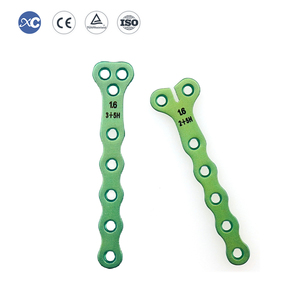
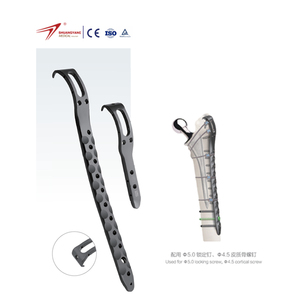
Titanium Cable Plate Artificial Hip Joint Prosthesis And Revision Femur Locking Plate Implant Surgery Renovation Implant Surgery
Get Catalog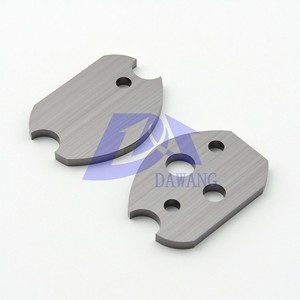
Bone Plates CNC Machined/Wire EDM From Stainless Steel for Trauma Fixation and Orthopedic Surgical Instruments Medical Parts
Get Catalog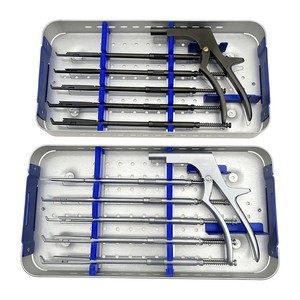
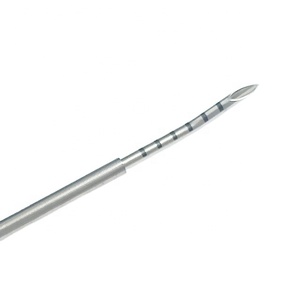
Sinowares Orthopedic Meniscus Repair System CNC Machined Fast Fix Inside Out Needles for Meniscal Repair
Get Catalog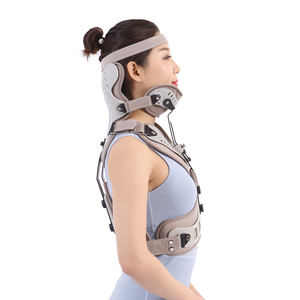
High Quality Adjustable Head Neck Thoracic Support Medical Cervical Vertebra Tractor Rehabilitation Therapy Prime Equipment
Get Catalog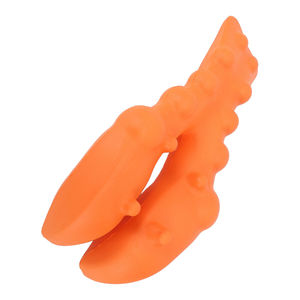
Cervical Traction Trapezius Trigger Point Massager Occipital Release Tool Tension Headache Device EVA Neck Massage
Get Catalog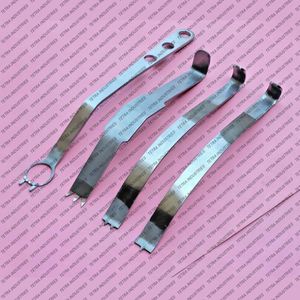
Stainless Steel Glenoid Access & Kolbel Shoulder Anterior Neck Retractor Arthroplasty Orthopedic Instruments Instrument Set
Get CatalogComprehensive Whitepaper: Biomechanics & Engineering Standards of ALIF Cages
Anterior Lumbar Interbody Fusion (ALIF) has established itself as a cornerstone surgical intervention for severe lumbar degenerative disc disease, spondylolisthesis, and revision spinal deformity correction. As a premier China ALIF cage manufacturer & factory, our engineering paradigm is centered around solving the dual clinical challenges of spinal interbody reconstruction: achieving immediate mechanical stability while maximizing long-term osseointegration.
The anterior surgical pathway provides direct visualization of the intervertebral space, enabling complete discectomy and insertion of large-footprint implants that span the strong peripheral apophyseal ring. Consequently, ALIF cages require specialized geometric, metallurgical, and surface properties to maintain sagittal balance, restore intervertebral height, and prevent subsidence.
Anatomical Footprint & Lordosis
Engineered with physiological lordotic angles ranging from 8° to 20°, ensuring restoration of natural lumbar curvature (L4-L5, L5-S1) while delivering maximal surface area contact to mitigate endplate damage.
Integrated Anti-Backout Locking
Featuring standalone zero-profile fixations with dynamic internal locking mechanism screws. Prevents screw backout without requiring bulky anterior plating, minimizing vascular revision risk.
Trabecular Osteoconductivity
Direct Metal Laser Sintering (DMLS) constructs open porous channels (400–600 μm pore size) facilitating rapid vascularization, osteoblast migration, and direct bone ingrowth throughout the cage center.
ALIF Interbody Material & Structural Comparison
Objective engineering metrics comparing state-of-the-art ALIF cage configurations for OEM procurement and hospital formulary evaluation.
| Parameter / Feature | 3D Printed Porous Titanium ALIF | PEEK-OPTIMA® Classic ALIF | Integrated Standalone Zero-Profile | Expandable Titanium ALIF |
|---|---|---|---|---|
| Primary Material | Ti-6Al-4V ELI (ASTM F136) | Polyetheretherketone (ASTM F2026) | Ti-6Al-4V + PEEK Hybrid | Ti-6Al-4V CNC Machined |
| Modulus of Elasticity | 2.5 - 3.0 GPa (Lattice) | 3.6 GPa (Solid) | 3.6 - 110 GPa | 110 GPa (Solid structural body) |
| Radiolucency / Imaging | Diagnostic CT/MRI compatible | Radiolucent (Tantalum markers) | Marker-guided alignment | Radiopaque frame |
| Osseointegration Mechanism | Direct mechanical interlock & pore ingrowth | Fibrous encapsulation / Hydrophobic surface | Surface micro-roughness | Bone graft central chamber |
| Subsidence Resistance | Superior (Distributed endplate loading) | Moderate (Point loading risk) | High (Integrated screw anchoring) | High (Controlled expansion in-situ) |
| Static Compression (ASTM F2077) | > 25 kN | > 18 kN | > 22 kN | > 30 kN |
Advanced Manufacturing Superiority & Metallurgical Control
The performance of an ALIF cage is fundamentally dependent on raw material purity and sub-micron manufacturing tolerances. At our China manufacturing headquarters, every medical-grade implant undergoes rigorous quality verification protocols:
- Swiss 5-Axis CNC Machining: Precision turning and milling of intricate locking channels, anti-migration teeth, and thread geometry with positional accuracy within ±0.005mm.
- Additive Metal Fabrication (SLM/EBM): Industrial-grade 3D printers utilizing spherical Titanium Ti-6Al-4V ELI powder, creating randomized biomimetic trabecular architectures under argon inert gas shielding.
- Automated Surface Passivation (ASTM F86): Multi-stage ultrasonic cleaning and chemical passivation to eliminate free iron particles and maximize the natural biocompatible titanium oxide layer.
- 100% CMM & Optical Inspection: Coordinate Measuring Machine verification of non-standard lordotic profiles, graft window dimensions, and screw locking interfaces.
- Cleanroom Packaging & Sterilization: Managed within ISO Class 7 cleanrooms, implants are double-pouched in Tyvek/PET film and sterilized via Cobalt-60 Gamma Radiation achieving a Sterility Assurance Level (SAL) of 10⁻⁶.
2025–2030 Global Procurement & Market Trends in Lumbar Fusion
As healthcare purchasing managers, orthopedic distributors, and hospital procurement officers navigate evolving medtech supply chains, several pivotal trends are shaping the future acquisition of ALIF cage technologies:
1. Accelerated Shift to Additive Porous Metals
Traditional smooth PEEK cages are increasingly being replaced or augmented by porous titanium surfaces. Clinical literature demonstrates superior early fusion rates (6 to 12 months) with porous titanium due to rapid osteoblast proliferation. Global buyers are transitioning formulary requests toward 3D printed cages that combine high open porosity with optimal compressive fatigue strength per ASTM F2077 standards.
2. Rise of Standalone Zero-Profile Systems
Minimally invasive spine surgery (MISS) favors low-profile interbody implants that negate the need for secondary anterior plate fixation. Integrated ALIF systems featuring variable-angle locking screws or anchor clips reduce operative duration, lower tissue retraction morbidity, and cut overall implant inventory costs by eliminating supplementary instrumentation.
3. Strategic Consolidation with Tier-1 Chinese Manufacturers
Global medical device brands are rapidly expanding OEM/ODM partnerships with top-tier Chinese manufacturers to maintain competitive gross margins amidst global healthcare cost-containment pressures. Modern Chinese orthopedic facilities offer complete regulatory dossier support (FDA 510k, CE MDR Technical Files), state-of-the-art European machining equipment, and shortened prototyping-to-production lead times.
Frequently Asked Questions (Procurement & Technical Guide)
Expert technical answers addressing regulatory compliance, custom engineering capabilities, and supply chain logistics for medical buyers.
What certifications and technical documentation accompany your ALIF cages?
Our manufacturing facilities operate under strict ISO 13485 and ISO 9001 certified Quality Management Systems. Products comply with CE marking requirements, and complete technical dossiers—including ASTM F2077 (static/dynamic compression and shear), ASTM F2267 (subsidence evaluation), biocompatibility testing (ISO 10993), and raw material certificates (ASTM F136 / ASTM F2026)—are provided for international registration.
Can your factory provide custom OEM/ODM designs for proprietary ALIF systems?
Yes. We specialize in contract manufacturing from customer-supplied CAD models or concept drawings. Our engineering team provides Design for Manufacturability (DFM) analysis, rapid 3D metal prototyping, custom instrument tray development, private label laser marking, and customized sterile packaging tailored to your brand identity.
What titanium alloy specifications are used for your 3D printed interbody cages?
We strictly utilize medical-grade Grade 23 Titanium Alloy (Ti-6Al-4V ELI / Extra Low Interstitial) conforming to ASTM F136. This material offers superior ductility, crack resistance, and biocompatibility compared to standard titanium grades, ideal for high load-bearing spinal applications.
What is the typical production lead time for bulk ALIF implant orders?
Standard product catalog items are maintained in inventory for rapid dispatch within 7–14 days. For custom OEM manufacturing or private label bulk runs, initial tooling and sample approval take 3–4 weeks, with full-scale production batches completed within 30 to 45 business days.
Are implants supplied in sterile packaging or non-sterile bulk?
We offer both flexible options. Cages can be supplied non-sterile in cleanroom-ready protective trays or pre-sterilized in double Tyvek blister packs via Gamma Irradiation (SAL 10⁻⁶) with a validated 5-year packaging shelf life.
How do you ensure anti-migration and stability of the ALIF cage post-implantation?
Our ALIF cages feature anatomically contoured directional teeth (pyramidal serrations) on superior and inferior contact surfaces to maximize initial friction fit. Additionally, our integrated zero-profile systems utilize converging multi-angle bone screws with locking cover plates to guarantee secondary rigid stability.