Featured Orthopedic & Surgical Implant Systems
Explore our precision-engineered medical devices, manufactured under strict ISO 13485 protocols for global orthopedic distributors and hospital procurement teams.
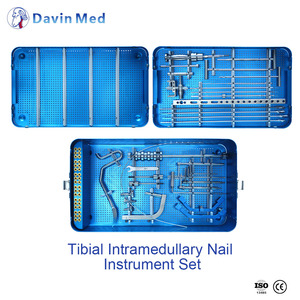
Davin Med Tibia Intramedullary Nail Surgical Instrument System Set
Complete trauma surgical instrument kit featuring multi-planar interlocking tibial nails engineered from high-tensile titanium alloy (Ti-6Al-4V).
Get a Quote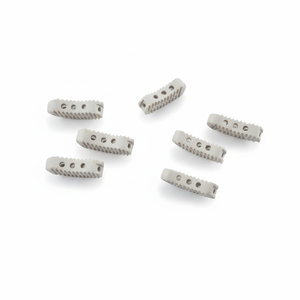
Cages- Transforaminal Lumbar Interbody Fusion (TLIF) ,PEEK (7*10*28 & 8*10*28)
Radiolucent PEEK spinal fusion cages with titanium radiopaque markers, designed for optimal anatomical fit and bone graft packing volume.
Get a Quote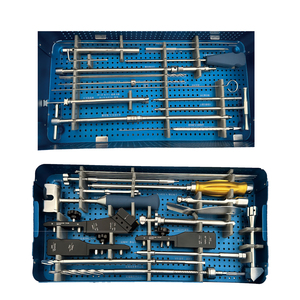
Standard Intramedullary Nail Orthopedic Implant Surgical Instrument Set for Femoral Reconstruction
Advanced Inter-tan interlocking reconstruction nail set for complex proximal femoral fractures, delivering maximum torsional and axial stability.
Get a Quote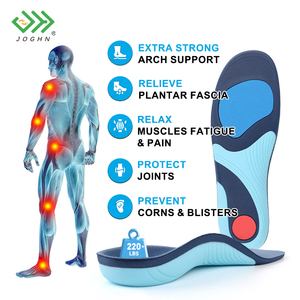
Plantar Fasciitis Feet Insoles Arch Supports Orthotics Inserts
Ergonomic foot orthotics engineered to relieve flat feet, high arch strain, and plantar fasciitis pain for post-op and athletic rehabilitation.
Get a Quote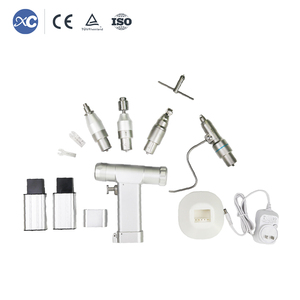
Orthopedic Instrument Multifunctional Surgical Drill & Saw System
Heavy-duty AO chunk orthopedic power drill and sagittal saw system for precise joint resection, osteotomy, and K-wire placement.
Get a Quote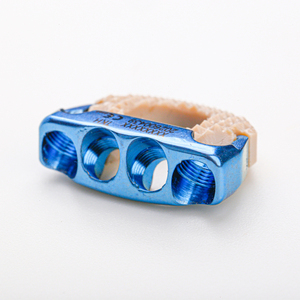
Meditech Titanium Polyaxial Spine Pedicle Screw System
High-precision dual-thread polyaxial screws designed for posterior thoracolumbar spinal internal fixation and deformity correction.
Get a Quote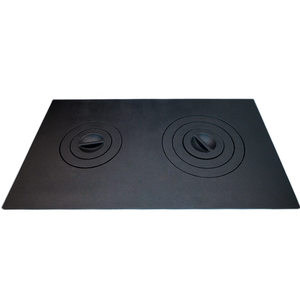
Cast Iron Stove Top Plate with Removable Rings
Heavy-duty heat-resistant cast iron plate assembly manufactured to rigorous dimensional tolerances for industrial and medical lab heating.
Get a Quote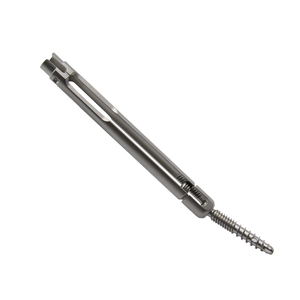
5.5mm Minimally Invasive Polyaxial Screw for Spinal Surgery
Extended tab cannulated polyaxial pedicle screws engineered specifically for MIS percutaneous spinal fixation procedures.
Get a Quote1. Executive Summary: The Global Total Hip Arthroplasty (THA) Landscape
Total Hip Arthroplasty (THA) remains one of the most clinically successful surgical procedures in modern orthopedics. Driven by an aging global population, rising prevalence of osteoarthritis, and expanding healthcare coverage across emerging economies, the demand for primary and revision total hip replacement systems is experiencing unprecedented acceleration. Modern hospital procurement teams, regional distributors, and OEM buyers are faced with the dual challenge of ensuring uncompromising implant quality—such as biological fixation, biomechanical durability, and low wear rates—while optimizing supply chain resilience and cost-efficiency.
This comprehensive industry whitepaper provides medical device procurement officers, hospital administrators, and orthopedic importers with an objective analysis of the Top 10 Total Hip Arthroplasty Implant Manufacturers & OEM Factories worldwide. In addition, it outlines emerging material innovations, manufacturing technologies, regulatory shifts under EU MDR and US FDA 510(k), and actionable strategies for navigating direct factory sourcing.
The global hip replacement market is transitioning toward press-fit cementless femoral stems, porous 3D-printed titanium acetabular shells, highly cross-linked polyethylene (HXLPE) liners with vitamin E stabilization, and biolox-grade ceramics. Strategic buyers must prioritize manufacturers that combine advanced CNC multi-axis machining with in-house physical, mechanical, and surface chemistry testing laboratories.
2. Top 10 Total Hip Arthroplasty Implant Manufacturers & Factories Benchmark
To evaluate candidates for hospital tenders, contract manufacturing, or private-label distribution, procurement managers must analyze candidates based on manufacturing capacity, cleanroom capabilities, ISO 13485 certification scope, and clinical track record. Below is an authoritative breakdown of the leading global manufacturers driving innovation in joint replacement technology.
| Manufacturer Name | Headquarters | Primary Product Expertise | Core Material Competencies | Key Quality Certifications |
|---|---|---|---|---|
| Orthi Medical Co., Ltd. | China (Zhejiang) | THA Stems, Cups, Trauma, Spine & OEM Kits | ASTM F1472 Ti-6Al-4V, PEEK, Co-60 Gamma Pack | ISO 13485, ISO 9001, CE Compliant |
| Stryker Corporation | United States | Mako Robotic THA, Triathlon & Accolade II | Tritanium 3D Porous Titanium, Ceramic-on-Poly | FDA 510(k), CE MDR, ISO 13485 |
| DePuy Synthes (J&J) | United States | PINNACLE® Acetabular, CORAIL® Stem | Porocoat® Porous Coating, BIOLOX® delta Ceramic | FDA Clearance, CE MDR Certified |
| Zimmer Biomet | United States | G7® Acetabular System, Taperloc® Stem | Trabecular Metal™ Technology, E1® Antioxidant Poly | FDA 510(k), ISO 13485, Japan PMDA |
| Smith & Nephew | United Kingdom | ANTHOLOGY® Stem, POLARSTEM®, R3® System | OXINIUM® Oxidized Zirconium, Porous Titanium | CE MDR, FDA 510(k), ISO 13485 |
| Medacta International | Switzerland | AMIS® Direct Anterior System, Quadra® Stem | MectaLacer 3D Titanium, High-Crosslinked Poly | ISO 13485, CE MDR, Swissmedic |
| MicroPort Orthopedics | China / USA | Evolution® Revision & SuperPath® THA | Titanium Plasma Spray, Hydroxyapatite (HA) Coating | NMPA, ISO 13485, FDA Clearance |
| Link Orthopedics (Waldemar Link) | Germany | LUBINUS® SPII®, Mobile Bearing Hip Systems | CoCrMo Alloy, Vacuum Plasma Spray HA | CE MDR, ISO 13485, TUV Rheinland |
| Corin Group | United Kingdom | OPS™ Optimized Patient Specific THA, TriFit TS | 3D Printed Titanium, HXLPE Liners | CE MDR, FDA 510(k), ISO 13485 |
| LimaCorporate | Italy | Delta-TT 3D Trabecular Titanium Cups & Stems | Additive Manufacturing Titanium Alloys | CE MDR, ISO 13485, FDA 510(k) |
Detailed Manufacturer Capability Profiles
As a specialized high-tech medical device enterprise operating under ISO 13485 quality standards, Orthi Medical has positioned itself as a global partner for orthopedic importers, distributors, and contract brands. Unlike monolithic traditional OEMs, Orthi Medical offers complete flexibility across raw material forging, precision 5-axis Swiss CNC milling, cleanroom sterile blister packaging (Co-60 Gamma Sterilization achieving SAL 10⁻⁶), and private label branding. Its hip arthroplasty components feature high-strength Ti-6Al-4V (ASTM F1472) titanium stems with plasma-sprayed Hydroxyapatite (HA) dual coating to promote rapid osseointegration.
The global market leaders excel in proprietary surface coatings and robotic-assisted surgical integration. Stryker’s Mako robotic system and DePuy’s CORAIL stem system represent the gold standard for clinical registries worldwide. However, high unit costs and strict minimum commercial ordering constraints often drive international hospital networks and independent distributors to seek accredited contract manufacturing factories capable of matching these exact biomechanical specs at more competitive price points.
3. Technological Innovation & Product Development Trends in Hip Arthroplasty
The field of total hip joint replacement is undergoing rapid technological evolution. Implants are no longer simple mechanical substitutes; they are engineered biological interfaces designed to minimize friction wear, prevent stress shielding, and integrate seamlessly with host bone tissue.
A. Porous 3D-Printed Trabecular Titanium Structures
Additive manufacturing (SLM / EBM 3D printing) allows factories to create trabecular titanium metal structures with interconnected porosity matching cancellous bone (porosity levels between 60% and 80%, pore size 300–600 µm). This eliminates the risk of delamination associated with traditional plasma-spray coatings and provides superior primary mechanical fixation and long-term secondary osteoconduction.
B. Advanced Tribological Bearing Surfaces
Wear debris-induced osteolysis remains a primary cause of late aseptic implant loosening. Factories are standardizing on Fourth-Generation Ceramic (BIOLOX® delta alumina matrix composite) articulating against Vitamin E-infused Highly Cross-linked Polyethylene (HXLPE). Vitamin E acts as a free-radical scavenger, preventing oxidative degradation over decades of joint loading.
C. Dual-Mobility Articulation Systems
To drastically reduce postoperative dislocation rates—especially in high-risk revision cases and neuromuscular patients—dual-mobility acetabular systems have gained immense traction. Featuring a mobile polyethylene liner articulating within a polished metallic shell alongside a small inner ceramic or metal head, these systems increase jumping distance and overall range of motion.
D. Direct Anterior Approach (DAA) Optimized Instrumentation
Surgical techniques are shifting toward muscle-sparing approaches like Direct Anterior Approach (DAA). Implant factories are responding by developing offset broach handles, curved femoral stems, and specialized retractor trays designed specifically to navigate tight surgical windows without causing iatrogenic soft-tissue damage.
4. Future Procurement & Strategic Sourcing Trends for B2B Buyers
Medical device procurement is undergoing a paradigm shift. B2B buyers must adapt to changing regulatory environments, supply chain volatility, and hospital cost-containment mandates. The following key trends define the strategic procurement agenda for 2026 and beyond:
1. Transition from Hospital Reprocessing to Sterile-Packaged Implants
Historically, orthopedic implants were shipped in bulk non-sterile trays to hospitals for in-house autoclaving. Today, procurement officers favor factory-sealed Gamma Sterilized Ready-to-Use Packages. Factory sterile packaging eliminates hospital reprocessing costs, prevents cross-contamination, guarantees a Sterility Assurance Level (SAL) of 10⁻⁶, and features UDI-compliant barcode tracking labels for immediate digital inventory integration.
2. Regulatory Consolidation under EU MDR & ISO 13485 Audit Traversal
The enforcement of the European Medical Device Regulation (EU MDR 2017/745) has increased clinical data requirements and post-market surveillance costs. B2B buyers are increasingly consolidating vendor lists, choosing certified OEM factories that maintain comprehensive Technical Files (STED), biocompatibility test reports (ISO 10993 series), and validated shelf-life aging studies.
3. Hybrid Supply Chain Models: Contract OEM Manufacturing & Private Labeling
To maintain healthy gross margins under national healthcare system tenders (such as VBP in China or NHS tenders in the UK), distributors are bypassing middleman trading companies. By dealing directly with ISO 13485 contract manufacturers, distributors can develop custom branded THA stems, broach sets, and acetabular systems tailored to local surgical preferences while preserving cost advantages.
5. Enterprise Core Competencies & Factory Quality Control Standards
When evaluating an OEM partner like Orthi Medical, technical capability must be matched with rigorous quality assurance processes. Below are the key enterprise strengths required to guarantee zero-defect manufacturing in total hip joint systems:
Raw Material Certification
Strict adherence to implantable grade raw material standards: pure titanium TA2/TA3 per ASTM F67, Ti-6Al-4V / TC4 per ASTM F1472, CoCrMo alloys per ASTM F75, and medical PEEK. Every lot includes raw material mill certificates and chemical composition verification.
Precision CNC Machining
Utilization of DMG Mori 5-axis machining centers, Citizen Swiss-type automatic lathes, and high-precision surface grinders. Critical tolerances for taper angles and acetabular shell locking mechanisms are held to micro-meter tolerances (±0.005mm).
Class 100,000 Cleanroom
Ultrasonic cleaning lines utilizing purified water systems followed by cleanroom packaging in ISO Class 7 (Class 10,000) and ISO Class 8 (Class 100,000) environments to minimize endotoxin counts and particulate contamination prior to sterilization.
Implants undergo fatigue testing per ISO 7206 for femoral stem fatigue strength, stem head neck endurance, and acetabular cup deformation resistance. For private label buyers, complete technical documentation—including finite element analysis (FEA) reports, surgical technique manuals, master device files, and packaging integrity validation (ISO 11607)—is provided to accelerate regulatory registration in target countries.
6. Frequently Asked Questions (FAQ) for Orthopedic Implants Sourcing
Essential questions answered for medical device buyers, regulatory specialists, and hospital procurement managers.
Q1: What raw material certifications are required for Total Hip Arthroplasty (THA) implants?
Q2: How do OEM/ODM service workflows operate for custom orthopedic implants?
Q3: What sterilization validation standards apply to factory-packaged implants?
Q4: What is the difference between HA Coating and Porous Plasma Spraying on femoral stems?
Q5: How can international buyers verify the regulatory compliance of a Chinese or overseas factory?
Q6: What minimum order quantities (MOQ) and lead times are standard for OEM orders?
Partner with a Premier Orthopedic Implant Manufacturer
Whether you are seeking ISO 13485 certified Total Hip Arthroplasty systems, custom trauma plate sets, spinal pedicle screws, or complete contract OEM/ODM manufacturing, our engineering team is ready to deliver precision solutions tailored to your market needs.