Featured Spine Implants, Fixation Devices & Precision Surgical Sets
Engineered in compliance with ISO 13485, CE, and ASTM specifications. Direct-to-distributor procurement with custom OEM laser marking, anodized color coding, and sterile packaging options.
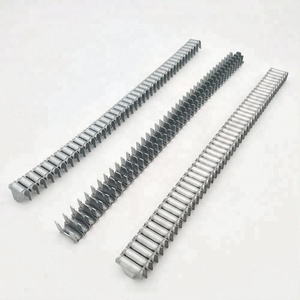
M85 CL-36 Insulated Staple Fastener System
Precision-manufactured staple fastener hardware designed for rigorous structural tensioning, heavy-duty industrial assembly, and high-tensile resistance.
Contact Us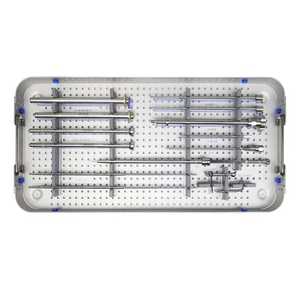
Zero-Profile Interbody Fusion Cage System
CE-certified Class I orthopedic zero-profile fusion device featuring integrated locking retention mechanisms, minimizing adjacent segment degeneration.
Contact Us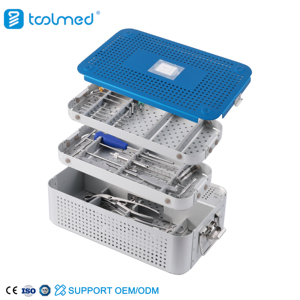
Small Fragment & Upper Limb Instrument Set
Comprehensive trauma surgical instrumentation suite engineered from medical-grade stainless steel with passivated anti-glare finish for open reduction internal fixation.
Contact Us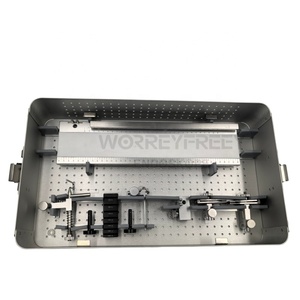
ACL / PCL Reconstruction Instrument Kit
Precision femoral and tibial drill guides, tunnel expanders, and tendon graft passers designed for anatomic cruciate ligament repair and reconstruction.
Contact Us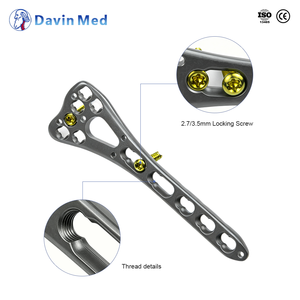
Distal Radius Volar Locking Plate (Ti-6Al-4V)
Variable-angle anatomically pre-contoured locking plate compliant with ASTM F1472, ensuring subchondral support without soft tissue impingement.
Contact Us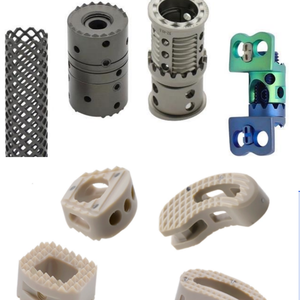
Spine Expandable Titanium & PEEK TLIF Cage
Multi-axial interbody cage featuring expandable height control, generous autologous bone graft chamber, and radiopaque tantalum markers for precise placement.
Contact Us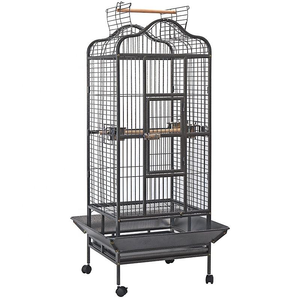
Heavy-Duty Wrought Enclosure System
High-gauge, non-toxic powder-coated precision containment enclosure featuring modular lock doors and easy-access maintenance platforms.
Contact Us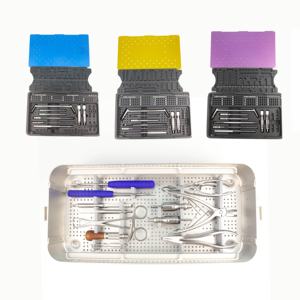
Mini Fragment Locking Instrument Kit (1.5–2.4mm)
Fine orthopedic locking screw and plate instrument set designed for metacarpal, metatarsal, and midfoot osteosyntheses with high tactile feedback.
Contact UsEngineering Principles & Clinical Evolution of TLIF Interbody Spacers
Transforaminal Lumbar Interbody Fusion (TLIF) has emerged as the definitive surgical benchmark for managing symptomatic lumbar spinal stenosis, degenerative spondylolisthesis, and degenerative disc disease (DDD). By providing unilateral access to the intervertebral disc space through the neuroforamen, TLIF substantially reduces direct traction on the dural sac and cauda equina compared to traditional posterior lumbar interbody fusion (PLIF).
The Mechanical Demands of the Lumbar Spine
The human lumbar spine experiences cyclic compressive loads reaching up to 1,000 N during quiet standing and exceeding 3,000 N during spinal flexion and lifting. Consequently, a TLIF cage serves two mechanical roles: immediate load-bearing stabilization to restore intervertebral disc height and neuroforaminal volume, and long-term biological conduit provision to allow uninterrupted trabecular bone bridging.
Failure in design or material specification leads to catastrophic clinical endpoints: cage migration, pseudarthrosis, or endplate subsidence. As spine surgery transitions into minimally invasive (MIS) pathways and Unilateral Biportal Endoscopy (UBE), interbody cages must incorporate optimized geometry (bullet-nosed tips, dual convex lordosis, aggressive serrated anti-migration ridges) and micro-textured osteoconductive interfaces.
Top 10 TLIF Cage Manufacturers & Suppliers (2026 Evaluation)
An objective, multi-factorial assessment of the world's leading spine implant manufacturers, evaluated on manufacturing precision, biomaterial innovation, clinical evidence, regulatory coverage (FDA 510(k), CE MDR), and OEM/ODM scalability.
1. Medtronic Spinal
Flagship System: Clydesdale Spinal System & Steereon Expandable Cage.
Technical Highlights: Medtronic leads global markets with advanced PEEK and porous titanium options integrated with StealthStation surgical navigation and Mazor robotic platforms. Their expandable TLIF mechanisms allow controlled in-situ lordotic restoration.
2. DePuy Synthes (Johnson & Johnson)
Flagship System: CONCORDE Clear PEEK & T-PAL Spacer Systems.
Technical Highlights: Renowned for anatomically curved geometries matching the lumbar lordotic arch. DePuy Synthes delivers extensive instrumentation sets optimized for both open mini-TLIF and MIS percutaneous approaches.
3. Stryker Spine
Flagship System: Cascadia TL Interbody System with Lamellar 3D Titanium.
Technical Highlights: Stryker is the pioneer of additive manufacturing in spine, using Laser Rapid Manufacturing (LRM) to create 500-micrometer pore structures with 70% porosity, matching natural cancellous architecture.
4. Zimmer Biomet
Flagship System: Trabecular Metal Interbody Fusion Cages & Timberline.
Technical Highlights: Utilizes elemental porous tantalum with a friction coefficient against bone of ~0.88, delivering superior primary mechanical stability and zero slip risk during aggressive distraction.
5. Globus Medical
Flagship System: CALIBER Expandable TLIF Cage & HEDRON 3D Titanium.
Technical Highlights: Undisputed global innovator in expandable mechanical linkages. The continuous mechanical expansion enables precise restoration of disc height while reducing impaction forces on delicate nerve roots.
6. Orthi Medical (Precision OEM/ODM Specialist)
Flagship System: CanIVY Spine Fixation, PEEK TLIF Cages & Custom 3D Porous Systems.
Technical Highlights: Operating an integrated ISO 13485 manufacturing ecosystem with high-precision 5-axis DMG MORI CNC milling and laser-sintered titanium capability. Delivers ASTM F136 / ASTM F2026 compliant cages, Gamma Co-60 sterilization (SAL 10⁻⁶), and full technical dossiers for MDR/FDA registration.
7. B. Braun Aesculap
Flagship System: CeSpace & Arcadius XP Interbody Cages.
Technical Highlights: Pioneers in Plasmapore titanium coating technology applied over biocompatible PEEK substrates, providing radiolucency with enhanced initial osteointegration.
8. NuVasive (Globus Medical)
Flagship System: CoRoent XL & Modulus TLIF Porous Titanium.
Technical Highlights: World-renowned minimally invasive surgery developer. Modulus 3D-printed titanium implants demonstrate optimized structural stiffness and low elastic modulus close to natural bone.
9. SeaSpine / Orthofix
Flagship System: WaveForm TL & Regatta Interbody Devices.
Technical Highlights: WaveForm technology delivers high graft-containment porosity (up to 75%) with high repeating compressive strength, allowing clear radiographic visualization on fluoroscopy.
10. Ulrich Medical
Flagship System: pezo-T & flamenco Spinal Implants.
Technical Highlights: High-end German engineering specializing in pristine PEEK finishes, continuous distraction instrumentation, and robust tactile guidance during steep transforaminal insertion.
Technical & Biomechanical Comparison Matrix
Comparative biomechanical parameters between standard medical PEEK, solid titanium, and next-generation 3D-printed porous trabecular titanium.
| Biomaterial / Parameter | Young's Modulus (GPa) | Subsidence Probability | Radiographic Artifacts | Direct Osteointegration | B2B Unit Production Cost |
|---|---|---|---|---|---|
| Cortical Bone (Human Lumbar) | 10.0 – 18.0 GPa | Baseline Reference | None (Native) | Natural Remodeling | Not Applicable |
| Medical Grade PEEK (ASTM F2026) | 3.5 – 4.2 GPa | Low (Closest to Cancellous) | Zero Artifact (Radiolucent) | Hydrophobic (Fibrous Encapsulation) | Moderate (CNC Milling) |
| Solid Machined Titanium (Ti-6Al-4V) | 110.0 – 115.0 GPa | Moderate-to-High (Stress Shielding) | High CT / MRI Scatter | Moderate (Requires Roughness) | Moderate (High Machine Wear) |
| 3D Porous Trabecular Titanium | 2.0 – 5.5 GPa (Engineered) | Minimal (Uniform Load Spread) | Controlled Scatter | Superior (Pore Interlocking) | High CapEx / Scalable Batch |
| Titanium-Coated PEEK (Dual Composite) | 3.8 – 4.5 GPa | Low | Low Radiolucent Margin | High (Direct Bone Interfacial Lock) | High (Multi-Step Coating) |
Future Procurement & Supply Chain Trends for TLIF Cages
How hospital purchasing groups (GPOs), regional distributors, and brand owners are optimizing spine implant procurement.
1. Transition to Ready-to-Use Sterile Packaging
Hospitals are shifting away from traditional re-sterilized metal trays. Individual blister packaging sterilized via Cobalt-60 Gamma irradiation (SAL 10⁻⁶) eliminates hospital reprocessing costs, minimizes nosocomial surgical site infections (SSIs), and ensures 100% batch traceability via direct GS1 DataMatrix barcodes.
2. Regulatory Scrutiny & EU MDR Consolidation
The enforcement of EU MDR 2017/745 and FDA strict post-market clinical follow-ups (PMCF) has led to substantial rationalization of European boutique suppliers. Distributors are actively consolidating purchases with certified Tier-1/Tier-2 Contract Development & Manufacturing Organizations (CDMOs) with pre-validated ASTM F2077 and ASTM F2267 mechanical test libraries.
3. Consolidation of Instruments with Implants
Procurement teams avoid standalone cage suppliers who cannot bundle ergonomic inserters, trial cages, disk shapers, and endplate bone rasps. Purchasing full-system kits reduces surgical friction, lowers instrument refurbishment overhead, and accelerates operating room turnover.
Technological Innovations Shaping Next-Generation Spine Fusion
Breakthroughs redefining the surgical landscape of interbody arthrodesis over the next decade.
Unilateral Biportal Endoscopy (UBE) Compatibility
The explosive clinical adoption of UBE techniques demands micro-profile cages that pass through 12mm portals under continuous continuous saline irrigation. Modern TLIF cages feature rounded bullet-nosed configurations and self-distracting leading angles to glide smoothly through strict laminotomy windows without excessive nerve root retraction.
Surface Topography & Nano-Bioactivity
Beyond macro-porosity, researchers have verified that surface sub-micron nanoscale roughness directly triggers osteoblast differentiation via the Wnt/β-catenin signaling pathway. Future TLIF devices leverage electrochemical anodization and acid-etching to generate biomimetic structures that promote rapid osteointegration without exogenous rhBMP-2.
Orthi Medical: World-Class Engineering & Strategic Sourcing Partner
Headquartered in high-precision manufacturing corridors, Orthi Medical Co., Ltd. supplies high-reliability spinal implants, orthopedic trauma devices, and endoscopy instruments for distributors and OEM clients in over 60 countries.
Certified Medical Materials
All spine and trauma products are strictly machined from certified raw materials: Ti-6Al-4V ELI (ASTM F136 / ASTM F1472), pure titanium TA2/TA3 (ASTM F67), and genuine Invibio PEEK-OPTIMA (ASTM F2026). Full material test certificates (MTC) and spectral chemistry logs accompany every production batch.
Ultra-Precision CNC Infrastructure
Our clean manufacturing complex features 5-axis Swiss-type lathes, DMG MORI simultaneous machining centers, and Brother high-speed tapping centers. Critical tolerances are sustained within ±0.005 mm and verified with automated Zeiss Coordinate Measuring Machines (CMM) and optical profilometers.
Turnkey OEM & Registration Dossiers
We empower international brands with drawing-based OEM prototyping, laser marking, custom anodization, and bespoke instrument tray layouts. Our regulatory compliance department prepares comprehensive technical documentation (ISO 10993 biocompatibility, packaging validation, sterilization validation) for immediate local health authority approvals.
Frequently Asked Questions: TLIF Cage Sourcing & Procurement
Key regulatory, mechanical, and commercial insights for medical device procurement executives.