1. Global Market Overview & Biomechanical Demands of Spinal Deformity Correction
Spinal deformity correction encompasses complex surgical interventions targeting severe anatomical deviations of the vertebral column, including Adolescent Idiopathic Scoliosis (AIS), Adult Spinal Deformity (ASD), Kyphosis, Spondylolisthesis, and Post-Traumatic Deformities. The primary surgical objective is to achieve three-dimensional realignment, restore global sagittal balance, prevent curve progression, and establish solid osseous fusion while minimizing neurological complications.
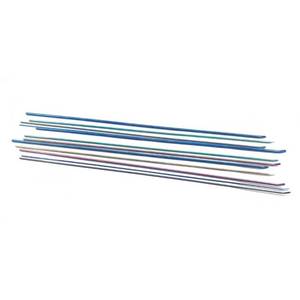
From a biomechanical standpoint, the human spine functions as a load-bearing dynamic column. When structural deformities manifest, asymmetrical mechanical stress distributions lead to progressive vertebral wedging, disc degeneration, and loss of physiological lordosis or kyphosis. Modern deformity correction systems rely on rigid internal fixation constructs utilizing multi-axial, mono-axial, and sagittal-adjusting pedicle screws combined with pre-contoured spinal rods (Titanium Alloy Ti-6Al-4V ELI or Cobalt-Chromium-Molybdenum CoCrMo).
Biomechanical Insight: The pullout strength of a pedicle screw in osteoporotic spinal tissue is directly correlated with thread pitch geometry, major-to-minor diameter taper ratios, and bicortical vs. unicortical anchor placement depth.
Procurement teams at hospitals and distribution networks must navigate rigorous regulatory requirements and technical specifications when sourcing deformity systems. Selecting qualified manufacturing partners requires analyzing raw material provenance, fatigue strength testing under ASTM F1717 / ISO 12189 benchmarks, and verified clinical track records.
2. Comprehensive Evaluation Criteria for Top 10 Spinal Deformity System Suppliers
Identifying tier-one original equipment manufacturers (OEM) and reliable B2B factory suppliers in the spinal implant domain involves stringent evaluation across five technical pillars:
1. Metallurgy & Material Quality
Rigid adherence to ASTM F136 (Ti-6Al-4V ELI), ASTM F67 (Unalloyed Titanium), PEEK-OPTIMA, and CoCrMo specifications with full raw material heat-lot traceability.
2. Precision Swiss CNC Machining
Deployment of multi-axis Citizen & Star Swiss CNC lathes capable of executing complex pedicle screw thread profiles within micro-level tolerances (±0.005mm).
3. Mechanical & Dynamic Testing
Rigorous verification of static compression, dynamic fatigue limit (5 million cycles), and torsional resistance under ASTM F1717 spinal construct protocols.
Material Specification Comparison Matrix
Material Classification
Applicable Standard
Tensile Strength (MPa)
Modulus of Elasticity (GPa)
Clinical Advantage
Titanium Ti-6Al-4V ELI
ASTM F136 / ISO 5832-3
≥ 860 MPa
110 GPa
High biocompatibility, superior fatigue life, minimal MRI artifact.
CoCrMo Alloy
ASTM F1537 / ISO 5832-12
≥ 960 MPa
210 GPa
Maximum bending stiffness for severe coronal scoliosis derotation constructs.
PEEK Optima (Polyetheretherketone)
ASTM F2026
≥ 95 MPa
3.6 GPa
Elastic modulus close to cancellous bone; radiolucent for radiographic fusion assessment.
Unalloyed Titanium (Grade 2/3)
ASTM F67
400 – 550 MPa
105 GPa
Excellent ductility for posterior cervical locking plates and malleable mesh constructs.
3. Technical Deep-Dive: System Architecture of Deformity Instrumentation
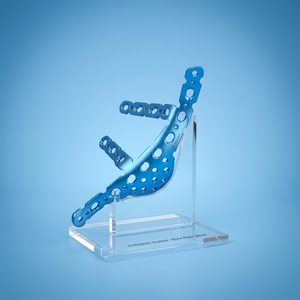
Modern spinal deformity correction instrumentation comprises an interconnected matrix of implants and specialized surgical instruments engineered to execute complex maneuvers such as direct vertebral derotation (DVD), translation, sagittal contouring, and compression/distraction.
Pedicle Screw Design Engineering
Pedicle screws serve as the primary biomechanical anchor points in posterior thoracolumbar reconstruction. Advanced deformity correction factories engineer screws with optimized feature sets:
Dual-Core Thread Geometry: Transitioning from a cylindrical root diameter to a tapered proximal thread increases bone compaction in the pedicle thinnest region, elevating pullout resistance by up to 28%.
Friction-Head & Polyaxial Articulation: Polyaxial pedicle screw heads offering 45° to 60° cone angles facilitate effortless rod engagement without inducing soft tissue strain or pre-loading the bone-screw interface.
Cannulated & Fenestrated Options: Designed for cement augmentation (PMMA injection) in severely osteoporotic patients to mitigate construct loosenings in revision spine surgery.
Interbody Fusion & Sagittal Balance Alignment
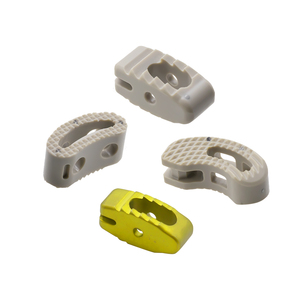
Achieving anterior column support is essential to prevent posterior hardware failure and pseudarthrosis. Expandable and static interbody cages (TLIF, PLIF, ALIF, LLIF) loaded with autograft or bone morphogenetic proteins (BMP) restore disc height and lordotic angulation.
As a global leader in orthopedic implant manufacturing, Orthi Medical Co., Ltd. operates state-of-the-art production facilities certified under ISO 13485 and ISO 9001 quality management systems. Our vertically integrated production ecosystem provides international distributors, hospital procurement teams, and brand owners with end-to-end supply chain reliability.
Class 100,000 Cleanroom Packaging
Implants can be supplied in ready-to-use individual sterile blisters subjected to Cobalt-60 Gamma Irradiation achieving a Sterility Assurance Level (SAL) of 10⁻⁶.
Custom OEM Private Labeling
Comprehensive OEM services including custom laser marking, color anodizing (Type II & Type III hard coating), graphic tray design, and regulatory documentation dossiers.
CE Marking & Technical Files
Complete CE MDR technical documentation suites, clinical evaluation reports (CER), and biocompatibility testing data prepared to accelerate market entry in target regions.
5. Future Industry Trends in Spinal Deformity Correction (2025–2035)
The global spinal surgery market is undergoing a structural transition driven by technological convergence. Medical device purchasing leads must align their sourcing strategies with five overarching industry trends:
3D-Printed Porous Titanium Implants (Additive Manufacturing): Electron Beam Melting (EBM) and Direct Metal Laser Sintering (DMLS) enable the creation of interbody cages with biomimetic trabecular architectures (pore sizes 300–600 µm), drastically accelerating bone ingrowth and osseointegration.
Patient-Specific Deformity Correction Constructs: 3D pre-operative CT modeling software allows factories to pre-bend Cobalt-Chromium rods precisely matching patient-specific sagittal spinal alignment trajectories prior to entering the sterile field.
Robotic-Assisted Pedicle Navigation Integration: Machine-readable pedicle screws equipped with high-visibility optical or electromagnetic fiducial markers are becoming standard to facilitate micro-sub-millimeter placement accuracy during robotic-guided surgeries.
Minimally Invasive Deformity (MIS-DEF) Solutions: Percutaneous pedicle screw insertion systems paired with expandable interbody cages reduce surgical trauma, blood loss, and length of hospital stay in adult spinal deformity corrections.
Sustainable & Consolidated Sourcing: Hospital networks are shifting away from fragmented multi-vendor procurement toward single-source strategic OEM partners capable of supplying trauma, spine, sports medicine, and joint replacement implants under unified quality systems.
Below are authoritative answers to key operational, technical, and compliance questions faced by medical procurement officers and hospital purchasing committees.
What certified material grades are utilized in your spinal constructs?
All load-bearing pedicle screws and rods are crafted from certified Titanium Ti-6Al-4V ELI (ASTM F136) or Cobalt-Chromium alloy (ASTM F1537). Interbody cages utilize medical-grade PEEK-OPTIMA (ASTM F2026). Batch-specific material test certificates (MTC) with chemical composition and mechanical stress test results accompany every order shipment.
How is sterility assurance verified for pre-packaged implants?
Sterile packages undergo validated Cobalt-60 Gamma Irradiation processes adhering to ISO 11137 standards. We maintain a verified Sterility Assurance Level of SAL 10⁻⁶ with Tyvek double-blister packaging ensuring 5-year shelf-life integrity under normal storage conditions.
Can Orthi Medical supply custom surgical instrument trays for local hospital specifications?
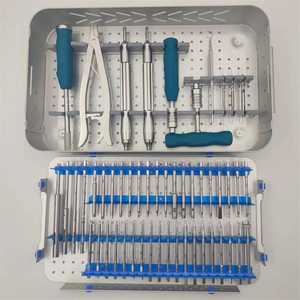
Yes. Our in-house engineering team designs and manufactures tailored ergonomic stainless steel and aluminum surgical instrument trays equipped with high-temperature PPSU insert holders, customized laser-etched iconography, and customized branding for private label partners.
What is the average lead time for custom OEM manufacturing orders?
Standard prototype production takes 2 to 3 weeks upon drawing approval. Mass production lead times range between 30 and 45 days depending on secondary surface treatment processes (e.g., plasma spray, color anodizing, gamma sterilization).
Partner with a Certified Spinal Implant Manufacturer
Connect with our technical engineering sales team to request full product catalogs, CAD drawings, compliance dossiers, or factory OEM price quotes.