Featured Orthopedic Systems & Surgical Tool Kits
Explore our flagship OEM/ODM medical devices manufactured strictly under ASTM F136/F1472 Titanium and ASTM F67 Pure Titanium standards, paired with high-precision surgical instrumentation trays.
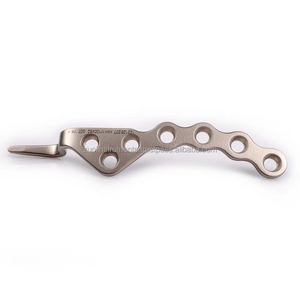
Clavicle Hook Locking Compression Plate System
Engineered for distal clavicle fractures and acromioclavicular dislocation. Pre-contoured anatomical curvature with multi-planar locking screw holes.
Get a Quote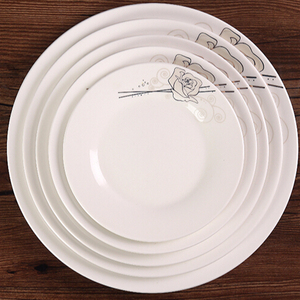
High-Purity Alumina/Zirconia Bioceramic Component
Medical-grade inert ceramic substrate utilized in specialized laboratory sterilization trays, diagnostic testing arrays, and joint bearing surfaces.
Get a Quote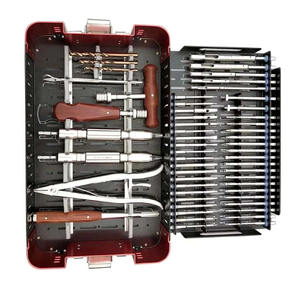
Universal Hardware Removal & Screw Extractor Kit
German stainless steel construction with reverse-thread extraction drivers for damaged, stripped, or broken orthopedic bone screws and pins.
Get a Quote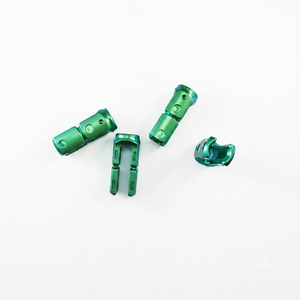
Titanium Posterior Spinal Rod Connector & Hook
Color-anodized Ti6Al4V open-sleeve U-hook component designed for thoracolumbar pedicle screw construct reinforcement and deformity correction.
Get a Quote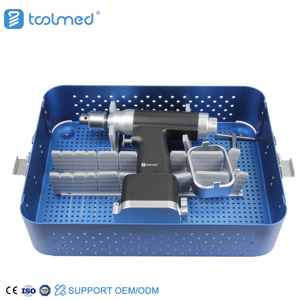
Modular Orthopedic Surgical Bone Power Drill System
Autoclavable high-torque brushless power tool with cannulated reaming capabilities, keyless chuck, and multi-speed speed control for trauma operations.
Get a Quote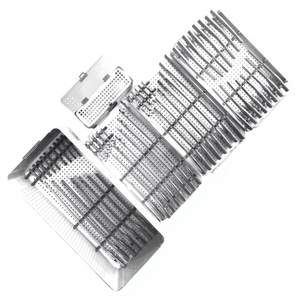
PFNA Proximal Femoral Nailing System Instrument Set
Advanced anti-rotational helical blade system designed for osteoporotic pertrochanteric and subtrochanteric femoral fractures with targeting guide.
Get a Quote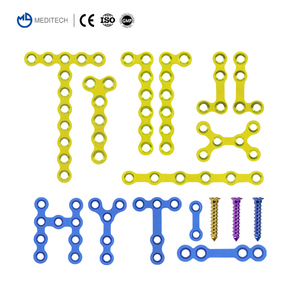
2.4 Titanium Maxillofacial Arc Mesh Reconstruction Plate
Ultra-low profile micro-locking matrix mesh plate for craniomaxillofacial reconstructive surgery, orthognathic alignment, and facial trauma restoration.
Get a Quote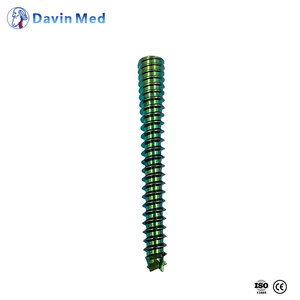
Headless Cannulated Compression Screw System
Variable-pitch self-tapping titanium screw system offering interfragmentary compression for scaphoid, osteochondral, and small bone intra-articular fractures.
Get a QuoteTop 10 Orthopedic Implants Catalog Architecture: Sourcing & Engineering Benchmarks
Selecting a global factory and exporter for medical devices requires a deep audit of manufacturing infrastructure, quality control systems, and material compliance. The global market for orthopedic implants is undergoing a rapid transition toward high-precision biomechanical compatibility, standardized international registrations, and complete supply chain transparency.
Information Gain Key Insight: Procurement teams must evaluate orthopedic implant factories not merely on finished unit costs, but on material grain-refinement standards (ASTM F136 vs. ASTM F67), fatigue-strength testing validation (ISO 14801 / ASTM F382), and localized technical regulatory dossier (STED/MDR) support capability.
Modern orthopedic surgery relies on ten core structural implant classifications. A comprehensive factory catalog must deliver complete mechanical compatibility between internal fixation hardware and surgical instrumentation:
1. Trauma Locking Plate Systems
Anatomically contoured titanium plates with variable-angle locking holes for upper/lower limbs, clavicle, ribs, and pelvic reconstruction.
2. Intramedullary Nailing Systems
PFNA, Tibial, and Humeral intramedullary systems with multi-planar distal/proximal locking mechanisms and reaming instrumentation.
3. Thoracolumbar Pedicle Screw Systems
Dual-core, dual-thread pedicle screws with fenestrated bone-cement augmentation options and low-profile spinal rods.
4. Cervical Fusion & Fixation Devices
Zero-profile PEEK interbody fusion cages integrated with titanium retaining plates and radiopaque Tantalum markers.
5. Sports Medicine & Arthroscopy
High-strength PEEK suture anchors, UHMWPE suture tapes, ACL/PCL reconstruction aimers, and disposable shaver blades.
6. Total Hip Arthroplasty (THA)
Cementless hydroxyapatite (HA) plasma-sprayed femoral stems, modular ceramic/metallic heads, and porous acetabular cups.
7. Total Knee Arthroplasty (TKA)
CoCrMo femoral components, highly cross-linked polyethylene (HXLPE) inserts, and tibial baseplates with anatomical sizing.
8. Craniomaxillofacial (CMF) Implants
Ultra-low profile micro-screws (Ø1.5–2.0mm) and malleable titanium mesh systems for midface and cranial defect reconstruction.
9. Endoscopic & UBE Imaging Systems
Unilateral Biportal Endoscopy (UBE) specialized instrument suites, 4K Ultra-HD camera heads, and RF plasma ablation probes.
10. Pre-Sterilized Single-Use Implant Kits
Individually sealed, Co-60 gamma irradiated bone screws and compression plates maintaining SAL 10⁻⁶ sterility assurance.
Medical Grade Material Science & Mechanical Integrity
The biomechanical reliability of internal fixation hardware depends directly upon raw material specification compliance. ISO 13485 certified implant production requires strict material traceability back to the origin titanium ingot, supported by 100% mechanical mill test certificates.
| Material Designation | International Standard | Tensile Strength (Rm) | Yield Strength (Rp0.2) | Clinical Applications |
|---|---|---|---|---|
| Ti-6Al-4V ELI (TC4) | ASTM F1472 / ISO 5832-3 | ≥ 930 MPa | ≥ 860 MPa | Pedicle screws, intramedullary nails, trauma locking plates |
| Pure Titanium Grade 2 / 3 | ASTM F67 / ISO 5832-2 | ≥ 400 - 500 MPa | ≥ 275 - 380 MPa | Maxillofacial mesh plates, cranial reconstruction, low-load clips |
| PEEK-OPTIMA® Polymer | ASTM F2026 | ≥ 95 - 105 MPa | Flexural Modulus ~3.8 GPa | Cervical & lumbar fusion cages, sports medicine suture anchors |
| Cobalt-Chromium-Molybdenum | ASTM F75 / ISO 5832-4 | ≥ 660 MPa | ≥ 450 MPa | Total knee joint femoral components, joint bearing surfaces |
| UHMWPE / HXLPE | ASTM F648 / ISO 5834-2 | ≥ 40 MPa | Highly Cross-linked | Acetabular cup liners, tibial knee inserts, meniscus implants |
By standardizing CNC 5-axis longitudinal lathe turning, Swiss-type high-speed milling, and automated color anodization, leading orthopedic factories maintain dimension tolerances within ±0.005mm, ensuring frictionless intraoperative assembly with surgical instrumentation.
Future Procurement Trends in Global Medical Device Sourcing
As healthcare systems worldwide adopt Value-Based Healthcare (VBHC) models, B2B purchasing managers, hospital procurement directors, and regional distributors are modifying their supply chain strategy. The following four macro procurement trends are redefining how orthopedic catalogs are evaluated:
1. Transition to Gamma Pre-Sterilized Packaging
Hospitals are rapidly shifting away from non-sterile bulk implant trays toward individually packaged, Co-60 gamma-sterilized implants (SAL 10⁻⁶). This mitigates hospital operating room reprocessing costs, eliminates cross-contamination risks, and accelerates inventory turnover.
2. Regulatory Dossier Readiness & CE MDR Compliance
With the implementation of the European Union Medical Device Regulation (EU MDR 2017/745) and stringent FDA 510(k) auditing, exporters must provide robust Summary of Technical Documentation (STED), clinical evaluation reports, and ISO 10993 biocompatibility testing data.
3. Demand for White-Label OEM & Custom Instrument Trays
Distributors increasingly demand private-label custom laser marking, Unique Device Identification (UDI) laser etching, tailored color anodization coding, and ergonomic composite sterilizing trays customized to local surgical preferences.
4. Consolidation of Multi-Specialty Sourcing
Procurement teams are actively consolidating vendor lists, moving away from niche suppliers toward comprehensive factories capable of supplying Trauma, Spine, Sports Medicine, Joint Arthroplasty, and Power Tools under one unified QMS.
Industry Development Trends: Next-Generation Orthopedic Innovation
The orthopedic manufacturing landscape is undergoing a technological renaissance driven by additive manufacturing, minimally invasive endoscopic techniques, and smart surface chemistry. Exporters leading the global market are incorporating the following technical innovations into their master catalogs:
A. 3D-Printed Porous Titanium Structures: Electron Beam Melting (EBM) and Direct Metal Laser Sintering (DMLS) now allow the fabrication of trabecular-like porous titanium implants. With interconnected porosity ranging between 60% and 80% and pore sizes of 300–500 µm, these implants closely mimic natural cancellous bone, significantly enhancing biological fixation and long-term osteointegration without structural delamination risks.
B. Unilateral Biportal Endoscopy (UBE) Expansion: Minimally invasive spine surgery is transitioning rapidly from traditional open discectomy to UBE biportal techniques. This shift demands dedicated micro-instruments, high-frequency bipolar radiofrequency plasma probes, and ultra-compact spinal fusion cages capable of insertion through 1-cm working portals.
C. Advanced Surface Modification & Bioactive Coatings: Plasma-sprayed Hydroxyapatite (HA) coatings, micro-arc oxidation (MAO), and atomic layer deposition (ALD) antimicrobial silver ion coatings are being integrated into standard trauma plates and joint stems to accelerate early bone apposition while minimizing surgical site infection risks.
Partner with a Certified Orthopedic Implant Manufacturer
Request our complete 2026 Orthopedic Implants Master Catalog, technical regulatory compliance files, and B2B wholesale pricing schedule. Our engineering team responds to custom OEM inquiries within 24 hours.
Get a QuoteEnterprise Manufacturing Advantages & Global Quality Verification
As a leading orthopedic implant factory and global exporter, our operational framework is built around total quality control, vertical integration, and comprehensive customer support. Every implant and instrument set undergoes rigorous multi-stage validation prior to export release.
Precision CNC Machining Fleet
Equipped with imported 5-axis DMG MORI CNC milling centers, Citizen Swiss-type multi-axis automatic turning lathes, and EDM wire-cutting machinery achieving sub-micron precision.
Cleanroom & Sterilization Facility
State-of-the-art ISO Class 7 (Class 10,000) cleanroom packaging environments paired with validated Co-60 Gamma sterilization infrastructure guaranteeing SAL 10⁻⁶ compliance.
Rigorous Mechanical Testing Lab
In-house biomechanical testing lab conducting dynamic fatigue testing, axial compression, static shear, and torsional loading evaluations according to ASTM F543 and ISO 14801 standards.
Global Registration Technical Support
Dedicated regulatory affairs team supplying complete technical documentation dossiers (STED), CE MDR technical files, ISO 13485 certificates, and FDA 510(k) submission support.
Orthopedic Implant Procurement FAQs
Answers to common technical, quality control, regulatory, and logistics questions from international distributors and hospital procurement teams.