Featured Medical-Grade Orthopedic Implants & Systems
Precision-engineered spinal fixation systems, veterinary plates, and traumatology solutions designed for maximum bio-compatibility and surgeon success.
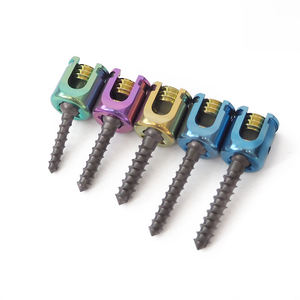
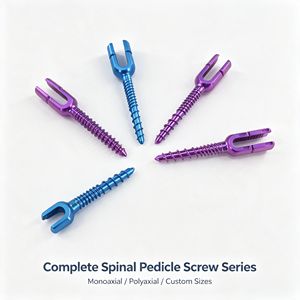
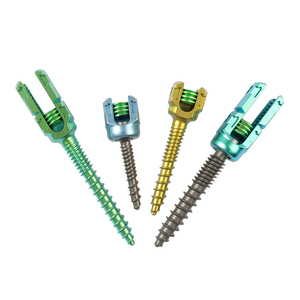
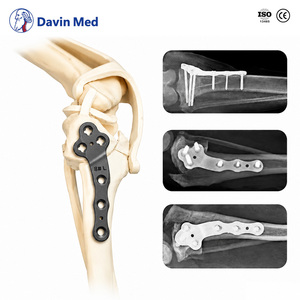
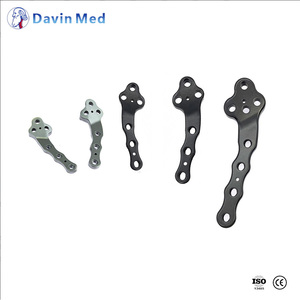
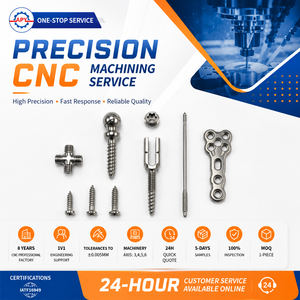

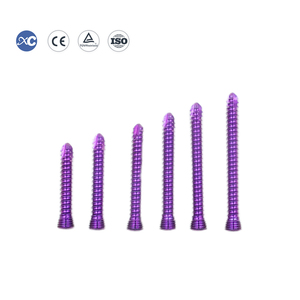
The Global Orthopedic Implant Ecosystem: Executive Overview for Buyers
Navigating the shifts in spinal fixation, trauma reconstruction, sports medicine, and veterinary orthopedics.
The global orthopedic medical device market is undergoing a profound structural shift driven by aging demographics, expanding access to healthcare in emerging economies, and rapid technological advancements in minimally invasive surgical (MIS) techniques. For global distributors, medical procurement agencies, and institutional hospital buyers, identifying top-tier, reliable manufacturing partners is no longer merely a pricing calculation—it is a critical strategic imperative centered on supply chain integrity, regulatory compliance, raw material traceability, and continuous clinical support.
Modern orthopedic surgeries demand hardware that meets precise biomechanical requirements. Whether evaluating pedicle screw systems for complex thoracolumbar spinal reconstructions, titanium TPLO (Tibial Plateau Leveling Osteotomy) locking plates for advanced veterinary surgeries, or anatomic trauma plates for fracture management, procurement managers must analyze manufacturers against rigorous Quality Management Systems (ISO 13485 and CE compliance).
As search engines evolve toward semantic search understanding and intent-based indexing, evaluating a supplier requires looking beyond superficial catalog listings to examine verifiable manufacturing capabilities, raw material specifications (such as ISO-compliant Ti-6Al-4V TC4 and Pure Titanium TA2/TA3), precision multi-axis CNC tooling capabilities, and post-market clinical documentation.
Orthi Medical: Integrated Manufacturing & OEM Sourcing Excellence
Operating under stringent ISO 13485 and ISO 9001 quality systems, Orthi Medical Co., Ltd. delivers full-portfolio orthopedic implants, surgical instrumentation, and custom private-label solutions. Every product step—from raw titanium bar stock to sterile-packed final implant—is strictly controlled in-house.
Full Portfolio Consolidation
Single-source procurement across 8 specialty lines: Trauma, Spine, Sports Medicine, Hip & Knee Arthroplasty, UBE Imaging, Stents, OEM Solutions, and Sterile Package Kits.
Medical-Grade Materials
Strict utilization of certified Ti-6Al-4V (ASTM F1472 / TC4), Pure Titanium (ASTM F67 / TA2/TA3), CoCrMo, PEEK, and medical-grade UHMWPE with full lot traceability.
Registration-Ready Files
Comprehensive technical dossiers, surgical technique guides, bench test reports, and regulatory documentation to accelerate local product registration.
Advanced CNC Tooling
Precision 5-axis and 6-axis Swiss CNC turning and milling machinery ensuring complex anatomical geometry, low tolerances, and polished micro-surfaces.
Biomedical Material Selection Matrix: Orthopedic Hardware
A comparative structural analysis of raw materials used in trauma, spinal, and veterinary implants.
| Material Type | International Standard | Tensile Strength (MPa) | Modulus of Elasticity (GPa) | Primary Clinical Application |
|---|---|---|---|---|
| Ti-6Al-4V Alloy (TC4) | ASTM F1472 / ISO 5832-3 | ≥ 930 MPa | ~ 110 GPa | Pedicle screws, spinal rods, fracture locking plates, intramedullary nails |
| Pure Titanium (TA2 / TA3) | ASTM F67 / ISO 5832-2 | ≥ 400 – 500 MPa | ~ 105 GPa | Low-load anatomical plates, veterinary TPLO/T-plates, maxillofacial screws |
| PEEK Polymer | ASTM F2026 | 170 – 220 MPa | ~ 3.5 – 4.0 GPa | Interbody fusion cages, cervical spacers, suture anchors |
| CoCrMo Alloy | ASTM F75 / ISO 5832-4 | ≥ 660 MPa | ~ 220 GPa | Joint replacement femoral heads, knee joint components, high-wear surfaces |
Future Procurement & Technological Trends in Orthopedic Manufacturing
Key market vectors shaping how hospital networks and distributors purchase surgical hardware over the next decade.
Pre-Sterilized Procedure-Ready Packaging
Hospitals are shifting away from bulk non-sterile implant trays toward individually packaged, gamma-irradiated (SAL 10-6) sterile kits. This transition drastically reduces operating room turnover time, lowers hospital autoclaving costs, eliminates cross-contamination risks, and simplifies stock control for distributors.
3D Porous Titanium Lattice Implants
Direct Metal Laser Sintering (DMLS) and additive manufacturing are revolutionizing interbody spine cages and acetabular cups. By creating biomimetic porous matrix structures that mimic natural trabecular bone, 3D-printed titanium promotes accelerated osseointegration and long-term mechanical stability.
Biportal Endoscopy & MIS Toolsets
Unilateral Biportal Endoscopy (UBE) and transforaminal endoscopic spine surgery are quickly replacing traditional open spinal surgeries. Distributors must offer matched sets of high-definition 4K endoscopic cameras, specialized radiofrequency (RF) plasma probes, and micro-rongeurs alongside standard implants.
Veterinary Orthopedic Expansion
The global veterinary surgical market is experiencing exponential growth, particularly in specialized procedures such as TPLO (Tibial Plateau Leveling Osteotomy) locking compression plates and micro-cannulated screw systems for canine ligament and bone repair. Cross-industry manufacturing leverages human-grade titanium for companion animals.
OEM/ODM Customized Instrument Trays
Distributors are increasingly requesting branded, custom ergonomic instrument containers color-coded for intuitive OR setup. Providing precise 5-axis CNC-machined inserters, reamers, and drill guides branded with private distributor logos is a key growth vector.
Strict Biocompatibility & Anodization Standards
Surface treatments such as Type II electrochemical anodization, micro-arc oxidation, and passive oxide film stabilization are mandatory to eliminate heavy-metal ion leaching, optimize fatigue strength, and facilitate distinct color-coded sizing during surgery.
Distributor's Evaluation Framework: Auditing Orthopedic Suppliers
A systematic 4-step supplier qualification checklist to ensure product quality, regulatory compliance, and margin sustainability.
When selecting an OEM/ODM orthopedic manufacturer, global procurement teams must establish rigorous auditing standards. Evaluating factories strictly on unit price often leads to hidden costs—such as registration delays, high return rates due to thread galling, inconsistent anodization colors, or inadequate surgical tray ergonomics. A resilient supplier evaluation strategy focuses on four structural pillars:
1. Material Traceability
Every single batch of raw titanium bar (ASTM F1472 or ASTM F67) or PEEK resin must be accompanied by original Mill Test Certificates (MTC). Chemical composition analysis and tensile strength testing must be verified prior to CNC machining.
2. Precision CNC Tooling
Spinal pedicle screws with complex dual-thread pitches and self-tapping flutes require high-precision 5-axis and 6-axis Swiss CNC turning machines. Automated coordinate measuring machines (CMM) must inspect critical thread dimensions, drive recesses, and polyaxial head articulation.
3. Cleanroom & Sterilization
Final washing, ultrasonic degreasing, assembly, and packaging must take place inside ISO Class 7 or Class 8 cleanrooms. For sterile packaging offerings, validation of Co-60 gamma irradiation according to ISO 11137 standards is non-negotiable.
Frequently Asked Questions: Sourcing Orthopedic Implants
Expert answers to essential questions asked by medical device distributors, sourcing managers, and regulatory officers.
Ready to Partner with a Leading Orthopedic Implant Supplier?
Connect with our technical engineers and global sourcing directors today to request product catalogs, sample evaluation kits, or OEM manufacturing quotations.
Contact Us