Verified Orthopedic Implants & Surgical Equipment Showcase
Every implant system listed below is manufactured under ISO 13485 quality standard and accompanied by full Certificate of Analysis (CoA) documentation.
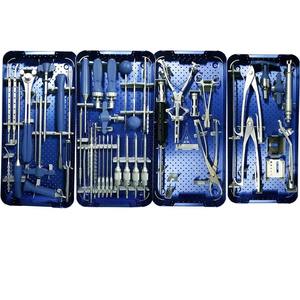
Cervical Intervertebral Fusion Cage System Stainless Steel Orthopedic Instruments
Inquire Now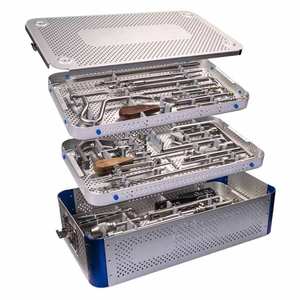
High Quality Manual PFNA Intramedullary Nail Orthopedic Surgical Instruments
Inquire Now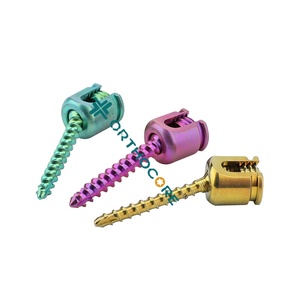
Orthopedic Implants for Large Animals Veterinary Spinal Screw Systems
Inquire Now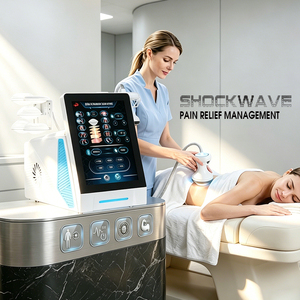
Medical Grade Focused ESWT Shockwave Machine 20Hz Chronic Pain Relief Device
Inquire Now
Adjustable 3-Fold Cervical Traction Device Orthosis Traction Massage Mattress
Inquire Now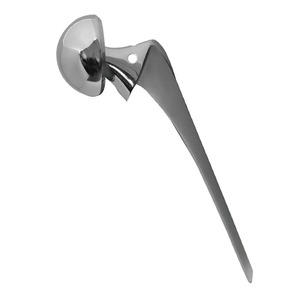
Orthopedic Implant Bipolar Hip Joint Prosthesis & Arthroplasty System
Inquire Now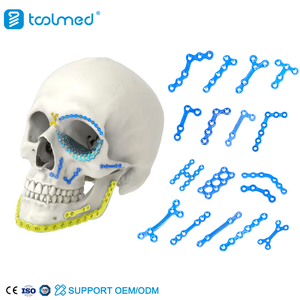
Maxillofacial Surgery Orthopedic Titanium Alloy 2.0mm Locking Implant
Inquire Now
Precision Surgical Micro Motor Drill & Aluminum Frame Polishing Tool
Inquire Now1. Technical Anatomy of an Orthopedic Implant Certificate of Analysis (CoA)
In modern orthopedic surgery, an Orthopedic Implant Certificate of Analysis (CoA) is not merely a piece of shipping documentation; it is a legally binding quality assurance record that validates biocompatibility, structural integrity, metallurgical purity, and mechanical safety. For hospital procurement committees, medical device distributors, and regulatory bodies (such as US FDA, EU MDR 2017/745, and NMPA), a CoA provides verifiable proof that an implant conforms to strict ASTM and ISO standards.
When sourcing medical-grade implants—including trauma plates, pedicle screw systems, intramedullary nails, or total hip prostheses—distributors must verify that the exporter provides a Certificate of Analysis detailing the following six critical metallurgical and biomechanical indicators:
| Parameter Category | Reference ASTM / ISO Standard | Critical Acceptance Thresholds | Clinical Significance |
|---|---|---|---|
| Titanium Alloy Purity | ASTM F1472 (Ti-6Al-4V) / ASTM F136 | Fe ≤ 0.25%, O ≤ 0.13%, N ≤ 0.05%, H ≤ 0.012% | Prevents interstitial embrittlement and ensures dynamic fatigue resistance under cyclic biomechanical load. |
| Commercially Pure Titanium | ASTM F67 (Grades 2 & 3) | Tensile Strength: ≥ 400 MPa (TA2), ≥ 500 MPa (TA3) | Provides ideal ductility for contourable trauma plates and maxillo-facial mesh implants. |
| Mechanical Tensile & Yield | ISO 6892-1 / ASTM E8 | Yield Strength ≥ 860 MPa; Ultimate Tensile ≥ 930 MPa (TC4) | Guarantees that spinal rods and femoral nails resist permanent deformation during physiological weight-bearing. |
| Polymer Biocompatibility | ASTM F2026 (PEEK Optima) | Heavy metal contaminants < 10 ppm; Heavy ion leachables: 0 | Ensures radiolucent spinal cages do not trigger localized inflammatory responses or cytotoxicity. |
| Sterilization Assurance Level | ISO 11137-1 (Co-60 Gamma) | SAL 10⁻⁶; Pyrogen level < 0.25 EU/mL | Eliminates bacterial endotoxins, drastically reducing post-operative surgical site infection (SSI) risks. |
| Surface Roughness & Coating | ISO 4287 / ASTM F1854 | Plasma Hydroxyapatite (HA) Thickness: 50–150 μm | Accelerates early osseointegration and long-term secondary mechanical fixation for cementless hip stems. |
Every shipment exported by elite manufacturers must link the specific batch serial number stamped on the surgical implant directly to the chemical heat lot number indicated on the raw material Certificate of Analysis. This end-to-end traceability guarantees safety from raw titanium bar ingot to final patient implantation.
2. Benchmark Criteria for Selecting Top 10 Orthopedic Implant Suppliers & Exporters
Selecting a global exporter for orthopedic trauma implants and spinal instrumentation requires evaluating suppliers through a rigorous multi-variable framework. International buyers must look beyond competitive unit pricing to evaluate raw material supply chain security, laboratory testing infrastructure, and regulatory audit compliance.
1. ISO 13485 & CE Compliance
The supplier must maintain an active ISO 13485 Quality Management System certification audited by accredited notified bodies (e.g., TÜV SÜD, SGS, BSI). CE mark registration and FDA 510(k) clearances confirm design history file (DHF) compliance.
2. In-House Testing Laboratory
Top-tier exporters operate cleanrooms (ISO Class 7 and Class 8) alongside dedicated physical laboratory testing equipment including optical emission spectrometers, fatigue test frames (ASTM F2077), micro-hardness testers, and coordinate measuring machines (CMM).
3. Raw Material Pedigree
Leading exporters source raw titanium (Ti-6Al-4V TC4, TA2, TA3), PEEK polymer, and cobalt-chromium bars exclusively from certified medical-grade suppliers. Every mill certificate must accompany the finished lot Certificate of Analysis.
4. OEM & Private Label Agility
A benchmark supplier offers custom drawing-based CNC machining, laser marking for Unique Device Identification (UDI), color anodizing for rapid instrument sizing identification, and customized sterile blister trays.
5. Gamma Sterilization Validation
Verified exporters offer pre-sterilized, single-use packaged bone plates, cannulated compression screws, and intramedullary nails irradiated via Cobalt-60 (Co-60) with documented dosage certificates (25 kGy minimum dose).
6. Surgical Support & Academic Training
Beyond hardware delivery, world-class exporters support international hospital teams with comprehensive surgical technique guides (STG), animated surgical procedure videos, cadaveric workshops, and sawbones training sets.
3. Modern Procurement Trends in the Orthopedic Implant Market
The global orthopedic devices market is undergoing a structural transformation driven by value-based healthcare, stringent regulatory hurdles under EU MDR, and an increased emphasis on infection control. Medical device purchasing managers must adapt their sourcing strategies to align with these prevailing macroeconomic trends:
A. Shift Toward Ready-to-Use Pre-Sterilized Unit Packaging
Historically, orthopedic implants were shipped non-sterile in bulk trays, requiring hospital operating rooms to clean, package, and autoclave screws and plates prior to surgery. Today, hospital procurement strongly favors gamma-sterilized, individually blister-packed implants. Pre-sterilized implants guarantee a Sterility Assurance Level (SAL) of 10⁻⁶, eliminate hospital reprocessing costs, prevent cross-contamination, and provide immediate packaging-level UDI barcode scanning for electronic medical records (EMR).
B. Supply Chain Consolidation with Turnkey Manufacturers
Healthcare systems are moving away from fragmented vendor networks. Instead of managing separate suppliers for trauma implants, spinal hardware, sports medicine anchors, and arthroscopic imaging systems, procurement officers are consolidating purchasing with unified manufacturers capable of fulfilling multi-specialty orders under one roof. Purchasing from a centralized vendor reduces freight overhead, streamlines customs clearance, and simplifies regulatory dossier submissions.
C. Demand for Full Technical File Registration Support
Emerging markets in Latin America, Southeast Asia, the Middle East, and Eastern Europe require fast-track product registration with local health authorities. Leading orthopedic exporters now provide ready-made registration packages, including Clinical Evaluation Reports (CER), Risk Management Files (ISO 14971), Biocompatibility Reports (ISO 10993 series), and validated Certificates of Analysis.
4. Future Development Trends in Orthopedic Implant Manufacturing (2025–2030)
The medical device landscape is advancing rapidly. Next-generation orthopedic solutions combine advanced material science with digital manufacturing technologies to improve clinical outcomes and decrease revision surgery rates.
3D-Printed Trabecular Titanium Structures
Additive manufacturing (SLM/EBM 3D printing) enables the creation of biomimetic porous titanium surfaces with porosity levels mimicking human cancellous bone (60–80% open pore structure). This micro-topography accelerates early osteoblast cell attachment and physiological bone ingrowth.
Carbon-Fiber Reinforced PEEK & Bio-Composites
In spinal fusion and oncology reconstruction, Carbon-Fiber Reinforced (CFR) PEEK materials provide an elastic modulus closely matching natural cortical bone while maintaining artifact-free imaging under MRI and CT scans, enabling precise post-operative tumor monitoring.
Bioactive & Antibacterial Nano-Coatings
To combat biofilm formation and device-associated infections, next-generation implants feature silver nanocluster coatings, bioactive glass, and localized antibiotic-releasing polymer matrixes that release bactericidal agents directly at the surgical site during the critical first 72 hours post-surgery.
5. Enterprise Excellence: Why Orthi Medical Lead Global Supply
Orthi Medical Co., Ltd. (also operating within the Canwell Medical manufacturing ecosystem) stands as a premier manufacturer and exporter of ISO 13485-certified orthopedic implants and precision surgical instrumentation. Founded with a commitment to technical rigor, our state-of-the-art facilities integrate automated multi-axis CNC machining, high-precision Swiss-type turning centers, and cleanroom packaging assemblies.
Our expansive product portfolio spans multiple core orthopedic sub-specialties:
- Trauma Fixation Systems: Locking bone plates, cannulated compression screws, intramedullary tibial and proximal femoral nails (PFNA), and titanium rib fixation plates.
- Spinal Surgery Systems: Thoracolumbar pedicle screw systems, anterior cervical plates, zero-profile PEEK interbody fusion cages, and balloon kyphoplasty kits.
- Sports Medicine & Arthroscopy: High-strength PEEK suture anchors, UHMWPE repair tapes, arthroscopy shaver blades, and PCL/ACL reconstruction drill guides.
- Joint Arthroplasty: Primary and revision total hip replacement systems, cementless HA-coated femoral stems, acetabular cups, and total knee prostheses.
- Minimally Invasive Systems: Unilateral Biportal Endoscopy (UBE) instrument sets, 4K endoscopic imaging towers, and radiofrequency plasma ablation probes.
- OEM & Contract Manufacturing: Drawing-to-implant custom precision machining, color anodizing, custom laser etching, and private label sterile packaging.
6. Frequently Asked Questions (FAQ) for Orthopedic Procurement Managers
Technical clarity on Certificate of Analysis validation, batch traceability, and international regulatory procedures.
Q1: What specific material standards are documented on Orthi Medical's Certificate of Analysis?
Our Certificates of Analysis strictly document raw material chemical composition and mechanical properties adhering to ASTM F1472 (Ti-6Al-4V TC4 titanium alloy), ASTM F67 (pure titanium TA2/TA3), ASTM F2026 (PEEK Optima polymer for spinal cages), and ASTM F138 (316L medical stainless steel). Mill test certificates from accredited steel and alloy foundries accompany all CoA releases.
Q2: How does Orthi Medical ensure the sterility assurance of pre-packaged sterile implants?
Sterile implants are packaged inside cleanroom facilities meeting ISO Class 7 standards using medical-grade Tyvek blister packs. They undergo Cobalt-60 gamma-ray irradiation according to ISO 11137 standards, achieving a Sterility Assurance Level (SAL) of 10⁻⁶. Sterilization validation dossiers and dose mapping reports are provided for regulatory verification.
Q3: Can distributor partners request OEM customization or private label manufacturing with custom CoAs?
Yes. We provide complete OEM/ODM contract manufacturing services. Based on customer CAD files or sample prototypes, we perform precision CNC machining, custom laser marking (logo, batch number, UDI barcode), custom surface anodization, and private label packaging accompanied by co-branded or private-label Certificates of Analysis.
Q4: What mechanical fatigue testing documentation is included for spinal and trauma systems?
Spinal pedicle screw systems and interbody cages undergo dynamic fatigue testing per ASTM F1717 and ASTM F2077 protocols. The testing documentation details static axial compression, static shear loading, and dynamic fatigue runout data up to 5,000,000 cycles without mechanical failure.
Q5: How does Orthi Medical assist international distributors with regulatory registration in their home markets?
We supply a complete regulatory technical file dossier, including CE certificates, ISO 13485 certificates, ISO 10993 biocompatibility testing reports, clinical evaluation summaries, surgical technique guides, IFUs (Instructions for Use), and batch-specific Certificates of Analysis required by local ministries of health.
Q6: What is the typical lead time for standard product orders versus custom OEM batches?
Standard catalog implants (trauma plates, screws, nails) maintained in stock can be dispatched within 7–14 business days. Custom OEM production runs generally require 30 to 45 days, depending on tooling requirements, surface treatment processes, and sterilization validation schedules.
Partner with a Certified Orthopedic Implant Exporter Today
Request comprehensive product catalogs, validated sample Certificates of Analysis (CoA), or request a tailored manufacturing quote for your surgical product line.
Inquire Now