Featured Cervical & Thoracic Stabilization Portfolio
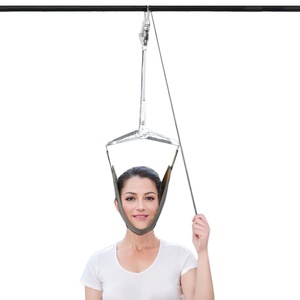
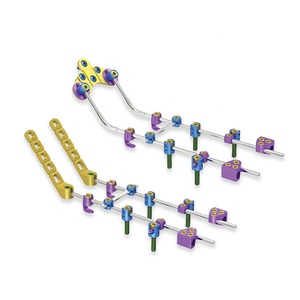
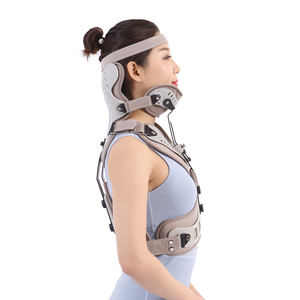
Explore high-precision spinal implants, occipito-cervical traction devices, and specialized surgical instrument sets certified to ISO 13485 and CE standards.

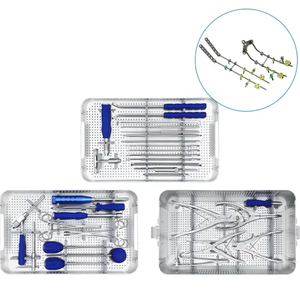

1. Executive Summary & Clinical Intent: Biomechanical Demands of Craniocervical Fusion
Surgical intervention at the occipito-cervical-thoracic (OCT) junction represents one of the most complex challenges in spine surgery. The craniocervical junction (CCJ)—encompassing the occipital bone (C0), atlas (C1), and axis (C2)—possesses extreme anatomical variability, complex rotational kinetics, and close proximity to critical neural and vascular structures including the brainstem and vertebral arteries. Stabilization across this region, often extending down to the upper thoracic spine (T1–T3) to mitigate junctional breakdown, requires specialized implants engineered with extraordinary mechanical strength, modularity, and fatigue resistance.
An Occipito Cervical Thoracic System must provide immediate rigid biomechanical fixation to facilitate osseous fusion in cases of occipitocervical instability, basilar invagination, traumatic fractures (e.g., Jefferson or Hangman’s fractures), rheumatoid arthritis deformities, tumor resections, and failed anterior reconstructions. For global hospital procurement heads, medical device distributors, and OEM purchasing directors, identifying a top-tier manufacturer requires evaluating strict criteria beyond basic price points: precise micromachining tolerances, raw material certification, fatigue dynamic endurance under ASTM F2706, surface biocompatibility, and regulatory compliance (FDA 510k, CE MDR, ISO 13485).
2. Technical Benchmark Matrix: Evaluating Top Global Manufacturers & OEM Factories
When shortlisting the Top 10 Occipito Cervical Thoracic System Manufacturers & Factories, surgical teams and OEM sourcing experts evaluate manufacturing infrastructure, micro-machining capabilities, design adaptability, and quality assurance. The matrix below illustrates the engineering and manufacturing capabilities required from leading medical device production facilities worldwide.
| Evaluation Parameter | Tier 1 Global OEM Standard | Standard Commercial Factory | Impact on Clinical & Sourcing Risk |
|---|---|---|---|
| Raw Material Compliance | ASTM F1472 (Ti-6Al-4V) & ASTM F67 (Pure Ti TA2/TA3) with batch heat-treatment certificates | Generic Grade 5 Titanium without chemical heat tracing | High risk of fatigue failure or micro-fretting under long-term torsional load. |
| Screw Thread Geometry | Dual-lead, self-tapping dual-thread with friction-fit polyaxial tulip head (50° angle angle deflection) | Single-lead standard thread with rigid tulip orientation | Dual-lead reduces surgical insertion time by 50%; high polyaxial angle reduces intraoperative rod contouring stresses. |
| Occipital Plate Design | Low-profile anatomical contour, multi-hole central bone screw placement with integrated rod connectors | Flat, rigid plate requiring extensive manual bending | Anatomical profiling reduces occipital soft-tissue irritation and operative room time. |
| Sterilization Packaging | Cleanroom Class 10,000 (ISO Class 7), Co-60 Gamma Radiation (SAL 10⁻⁶) packaging | Non-sterile bulk trays requiring hospital autoclaving | Sterile-packed implants reduce hospital reprocessing overhead and nosocomial infection risks. |
| Biomechanical Validation | ASTM F2706 static compression, dynamic fatigue (>5M cycles), and axial torsion testing | Basic static pull-out testing only | Ensures zero mechanical fatigue breakage during the critical 12-to-18-month fusion window. |
3. Detailed Technical Ranking: Top 10 Occipito Cervical Thoracic System Manufacturers
The following analysis breaks down the technological strengths, manufacturing capabilities, and key clinical advantages offered by the top 10 global manufacturers and OEM factories specializing in posterior spinal fixation systems:
1. Orthi Medical Co., Ltd.
Strengths: Complete ISO 13485 OEM/ODM capability, state-of-the-art 5-axis Swiss CNC precision machining, ASTM F1472 compliant titanium alloys, and pre-packaged Co-60 Gamma sterile solutions (SAL 10⁻⁶). Offers comprehensive transition rods, low-profile occipital plates, and custom tray design for global distributors.
2. Medtronic Spine
Strengths: Industry-pioneering vertex constructs with expansive modularity. Integrates seamlessly with O-arm surgical imaging and StealthStation navigation platforms for high-accuracy screw placement.
3. DePuy Synthes (Johnson & Johnson)
Strengths: Renowned for the Synapse and Mountainside systems. Highly robust occipital clamps, specialized transarticular screw options, and extensive clinical trial documentation worldwide.
4. Stryker Spine
Strengths: Advanced polyaxial locking mechanisms and low-profile cross-connectors. Exceptional biomechanical stability under dynamic lateral bending and torsional stress.
5. Zimmer Biomet
Strengths: Comprehensive cervical-thoracic transition portfolio with proprietary surface treatments (EBM 3D printing) promoting optimal osseointegration at occipital fixation points.
6. Globus Medical
Strengths: Innovative zero-step locking screw technology and expandable constructs designed specifically for complex revision and deformity cases in craniocervical junction surgeries.
7. NuVasive (Globus)
Strengths: Specialized intraoperative neuromonitoring integration and specialized minimally invasive (MIS) posterior cervical access instrumentation sets.
8. B. Braun Aesculap
Strengths: Superior German micro-engineering tolerances, specialized titanium anodization color-coding, and ergonomically balanced surgical instrument sets favored by European spine specialists.
9. Orthofix Medical
Strengths: Modular occipital plates with multi-axial adjustment pathways. Strong focus on surgeon education, cadaveric workshop support, and clinical research data.
10. Meditech Spine
Strengths: Cost-effective OEM manufacturing solutions with robust CE and ISO compliance. Provides flexible private-label contracts and fast lead-time production for emerging market distributors.
4. Key Product Development & Technological Trends
The evolution of posterior cervical and thoracic stabilization is driven by advancements in material science, additive manufacturing, and intraoperative robotics. Understanding these technological vectors is essential for procurement managers looking to maintain a competitive product catalog over the next decade.
A. 3D-Printed Porous Titanium Occipital Plates: Traditional occipital fixation relies on mechanical screw thread engagement in the midline suboccipital keel. Next-generation systems incorporate 3D-printed porous titanium matrix surfaces (300–500 µm pore size) on the underside of occipital plates. This structure encourages direct bone ingrowth (osseointegration), significantly reducing the rate of long-term screw loosening and plate pull-out.
B. Transition Rod Metallurgy & Dual-Diameter Engineering: Crossing the cervicothoracic junction (C7–T1) requires bridging the lordotic cervical spine with the kyphotic thoracic spine. Modern OCT systems feature pre-bent or stepped dual-diameter transition rods (typically transitioning from a Ø3.5mm titanium or CoCr rod to a Ø5.5mm thoracic rod). Utilizing Cobalt-Chromium-Molybdenum (CoCrMo) alloy for the cervical section provides 30% higher bending stiffness than pure titanium, preventing post-operative rod flattening and loss of sagittal alignment.
C. Navigation-Guided & Robotic-Ready Instrumentation: With the rise of image-guided surgery (IGS) and robotic pedicle screw placement, occipito-cervical-thoracic instrument sets are now factory-calibrated with optical and electromagnetic tracking arrays. Screwdrivers, taps, and drills feature ultra-precise tolerance matching to ensure real-time trajectory visualization, protecting the vertebral artery and spinal cord during C1 lateral mass or C2 pedicle screw insertion.
5. Future Sourcing & Procurement Trends for Medical Device Buyers
Global medical supply chains are undergoing structural shifts due to evolving regulatory frameworks (EU MDR transition, US FDA Quality System Regulation harmonization) and hospital cost-containment pressure. B2B medical procurement teams must navigate the following trends:
1. Shift Toward Gamma Sterilized, Ready-to-Use Packages: Hospitals are increasingly demanding sterile-packaged implants (individual blister packages irradiated via Cobalt-60 at SAL 10⁻⁶). This eliminates central sterile supply department (CSSD) reprocessing costs, reduces the risk of surgical site infections (SSIs), and guarantees 100% material traceability from factory to operating room.
2. Consolidation of OEM/ODM Vendor Networks: Sourcing managers are consolidating purchasing from vendors capable of providing full-spectrum spine, trauma, arthroplasty, and sports medicine portfolios. Partnering with a manufacturer capable of drawing-based custom machining, laser marking, color anodization, and regulatory file support (technical documentation for FDA/CE registration) drastically lowers regulatory overhead and speeds up market entry.
3. Rigorous Raw Material Traceability & Testing: European and American regulatory bodies now require complete metallurgical origin tracing. Leading factories provide full spectral analysis, tensile testing records, and heat-number matching for every batch of ASTM F67 (TA2/TA3) pure titanium and ASTM F1472 (Ti-6Al-4V) alloy bar stock used in production.
6. Comprehensive Enterprise Advantages: Manufacturing Precision & Quality Systems
As a specialized manufacturer of orthopedic implants and surgical instruments, Orthi Medical Co., Ltd. delivers exceptional engineering quality, comprehensive product depth, and complete OEM/ODM customized solutions to global medical distributors and healthcare providers.
Core Infrastructure & Technical Capabilities:
- ISO 13485 & ISO 9001 Certified Cleanroom Facilities: Production operates under strict cleanroom conditions (ISO Class 7 / Class 10,000 cleanrooms), ensuring zero particulate contamination prior to final packaging and gamma sterilization.
- 5-Axis Swiss Lathe Precision Machining: Utilizing state-of-the-art CNC multi-axis turning-milling machines to execute complex polyaxial screw threads, friction-fit locking mechanisms, and anatomical occipital plate contours with micro-meter tolerances.
- Medical-Grade Raw Materials: All spinal implants are forged from certified Ti-6Al-4V (TC4 / ASTM F1472) titanium alloy, pure titanium (TA2/TA3 / ASTM F67), PEEK-OPTIMA, and Cobalt-Chromium alloys, backed by full heat-treatment and chemical analysis documentation.
- End-to-End OEM Solution & Private Labeling: From customer CAD drawing review and prototype engineering to laser etching, anodized color coding, custom instrument tray design, and regulatory dossier compilation, Orthi Medical supports distributors through every step of brand development.
- Complete Orthopedic Sourcing Portfolio: In addition to posterior spinal fixation, Orthi Medical manufactures trauma locking plates, intramedullary nails, cannulated screws, sports medicine suture anchors, UBE endoscopic imaging devices, and total hip/knee joint replacement systems.
Sourcing FAQs: Technical & Commercial Insights
Expert answers to the most common engineering, regulatory, and purchasing questions asked by orthopedic procurement managers.
What metallurgical standards are mandatory for Occipito Cervical Thoracic implants?
Implants must comply with ASTM F1472 (Standard Specification for Wrought Titanium-6Aluminum-4Vanadium Alloy for Surgical Implant Applications) or ASTM F136 (ELI Grade). Pure titanium components used in occipital plates follow ASTM F67 (TA2/TA3). Materials must exhibit yield strength exceeding 860 MPa and ultimate tensile strength exceeding 930 MPa to resist static loading and fatigue fracture under daily spinal motion.
How are OCT systems mechanically tested to ensure intraoperative safety?
OCT systems undergo dynamic fatigue testing under ASTM F2706 (Standard Test Methods for Rigid Disseminated Spinal Implant Constructs in a Vertebrectomy Model). Testing involves axial compression, flexural bending, and torsional fatigue testing up to 5,000,000 continuous stress cycles without structural fracture, permanent deformation, or set-screw backing out.
Do you offer OEM private labeling and custom instrument tray design?
Yes. OEM services include drawing-based precision CNC machining, custom laser marking of serial/LOT numbers, anodized color-coding by screw diameter, custom ergonomic instrument tray design, and complete packaging layout tailored to your regional market branding.
Can spinal implants be supplied in sterile-ready packaging?
Yes. Implants can be supplied in cleanroom-packaged double blister trays and sterilized via Co-60 Gamma irradiation achieving a Sterility Assurance Level (SAL) of 10⁻⁶ in compliance with ISO 11137 standards. This allows direct hospital operating room entry without CSSD autoclaving.
What documentation is provided to support regional medical device registration?
We provide full technical files including ISO 13485 quality system certificates, CE declaration of conformity, raw material mill analysis certificates, mechanical fatigue test reports (ASTM F2706), biocompatibility test results (ISO 10993), sterilization validation protocols, and surgical technique guides.
Partner with a Certified Orthopedic Implant Manufacturer
Whether you require standard CE/ISO certified posterior cervical-thoracic systems, complete instrument sets, or custom OEM manufacturing, our engineering team is ready to assist your procurement needs.
Get a Quote