High-Precision Orthopedic & Surgical Fixation Systems
Explore certified medical-grade trauma plates, cranial micro-fixation, joint prostheses, and arthroscopic surgical instruments engineered under ISO 13485 quality standards.
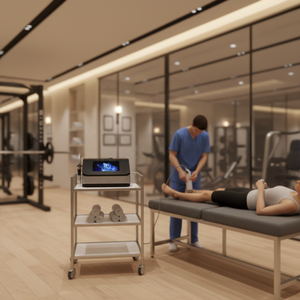
Focused Shockwave Machine ESWT Therapy System
Non-invasive extracorporeal shockwave therapy (ESWT) system for orthopedic musculoskeletal rehabilitation, bone healing stimulation, and deep tissue therapy.
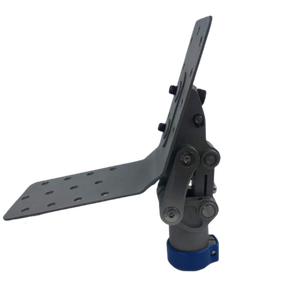
Four Axis Hip Joint Prosthesis Steel Artificial Limb
Precision-engineered four-axis prosthetic hip system designed for smooth biomechanical gait articulation, high load durability, and anatomical restoration.
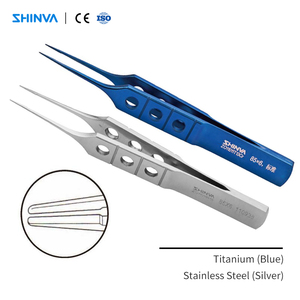
Titanium Ophthalmic & CMF Micro Fixation Forceps
Ultra-lightweight titanium alloy forceps engineered for delicate conjunctival tissue handling, micro-plate positioning, and reconstructive flap manipulation.
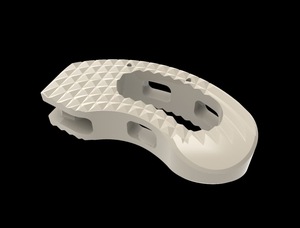
Cervical PEEK Interbody Fusion Cage System
Biocompatible PEEK polymer cervical cage with radiopaque tantalum markers, providing elastic modulus matching human cortical bone for optimal fusion.
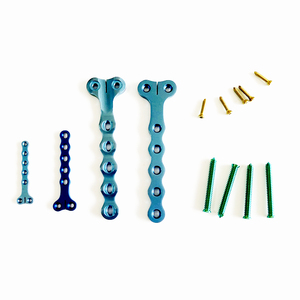
T-Shape 1.6 / 2.0 / 2.4 mm Titanium Locking Plates
Low-profile T-shaped locking bone plates designed for delicate osteotomy stabilization, small-bone trauma, and micro-fragment surgical alignment.
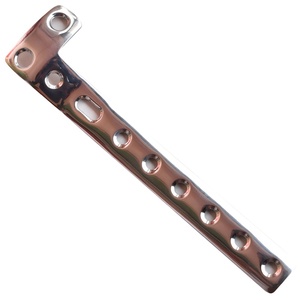
Trauma Non-Locking Plate & Instrument Set
Comprehensive surgical trauma set with medical-grade stainless steel plates, depth gauges, drill guides, and benders for complex fracture repair.
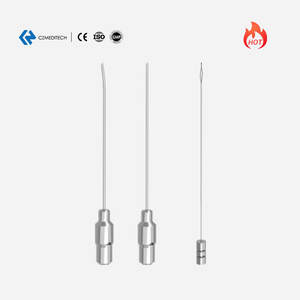
Arthroscopic Meniscal Suture Repair Instrument System
Dual straight and curved passers optimized for minimally invasive soft-tissue suture repair, offering anatomical flexibility and surgical tactile feedback.
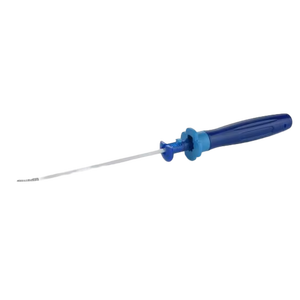
Meniscal Repair System With Fast-Fix Needle Implants
All-inside meniscal repair system pre-loaded with ultra-high molecular weight polyethylene (UHMWPE) sutures and non-resorbable fixation anchors.
1. Executive Industry Overview: The Evolution of Craniomaxillofacial Fixation
Craniomaxillofacial (CMF) fixation systems represent one of the most technologically demanding segments within orthopedic trauma and reconstructive surgery. Designed to stabilize fractures, facilitate orthognathic alignment, reconstruct bony defects, and fixate cranial bone flaps following neurosurgical procedures, CMF hardware must balance uncompromising mechanical rigidity with micro-scale biocompatibility.
The human facial skeleton presents a complex biomechanical landscape. Unlike long-bone fracture repair where axial load-bearing dominates, maxilla and mandibular fixation must withstand complex multi-directional occlusal masticatory forces while maintaining absolute anatomical contouring. Meanwhile, cranial and orbital rim repairs demand low-profile implants (often sub-millimeter in profile height) to prevent soft-tissue irritation, palpability, and aesthetic distortion.
As healthcare systems worldwide expand surgical access, hospital procurement managers, OEM brand owners, and surgical device distributors face critical choices when evaluating CMF manufacturing partners. Key purchasing criteria have shifted beyond simple unit price; buyers now evaluate raw material purity (such as Grade 5 Ti-6Al-4V ELI per ASTM F136 / ASTM F1472 and Pure Titanium TA2/TA3 per ASTM F67), machining micro-tolerances (±0.005 mm), surface anodization quality, regulatory dossier availability (CE, FDA 510k, ISO 13485), and patient-specific implant (PSI) manufacturing readiness.
2. Benchmark Evaluation: Top 10 Craniomaxillofacial Fixation Manufacturers & Exporters
The global CMF market is driven by established multinational medical device giants alongside specialized high-precision manufacturers providing robust OEM/ODM production and high-value competitive alternatives. The following technical benchmark evaluates the world's leading CMF fixation system producers based on material engineering, portfolio breadth, regulatory compliance, and OEM export capabilities.
| Manufacturer Name | Primary HQ | Core Material Competency | Key CMF System Focus | Certifications | OEM / Private Label |
|---|---|---|---|---|---|
| DePuy Synthes (Johnson & Johnson) | United States / Switzerland | Ti-6Al-4V, PEEK, Resorbable Polymers | MatrixCMF, MatrixNEURO, MatrixMANDIBLE | FDA, CE, ISO 13485 | Limited (Direct Brand) |
| Stryker CMF | United States | Titanium Grade 5, Custom PSI Printing | Universal CMF, High-Fit Cranial Mesh, Medpor | FDA, CE, ISO 13485 | Limited (Direct Brand) |
| KLS Martin Group | Germany | Pure Titanium, Resorb-X, Additive Ti | Individual Patient Solutions (IPS), Level One | FDA, CE, ISO 13485 | Direct / Select Partnerships |
| Orthi Medical Co., Ltd. | China | ASTM F67 TA2/TA3, ASTM F1472 TC4, PEEK | Micro 1.0/1.2, Mini 1.5/2.0, Mandibular 2.4/2.7 | CE, ISO 13485, ISO 9001 | Full OEM / ODM / Private Label |
| Zimmer Biomet CMF | United States | Titanium Mesh, Rigid Fixation Alloys | Walters CMF, Trauma-V, Subperiosteal Implants | FDA, CE, ISO 13485 | Direct Brand Distribution |
| B. Braun Aesculap | Germany | Medical Grade Titanium, Stainless Steel | Cranial Flap Fixation, CranioFix 2 System | FDA, CE, ISO 13485 | Selective Institutional Supply |
| Medtronic Cranial & Spinal | United States | Titanium Alloys, PEEK-OPTIMA | Cranial Reconstruction, Navigation-Guided Fixation | FDA, CE, ISO 13485 | Direct Enterprise Distribution |
| OsteoMed (Acumed) | United States | Ti-6Al-4V ELI, Auto-Drive Screws | OmniSpan, Extracranial Fixation, M3 Systems | FDA, CE, ISO 13485 | Private Label Program |
| Jeil Medical Corporation | South Korea | Pure Titanium, Titanium Alloys | LeFort Orthognathic System, Dual-Top CMF | FDA, CE, ISO 13485 | Regional OEM / Direct |
| MatrixCMF Solutions | Global OEM Alliance | Anodized Titanium, Modular Trays | Modular Trauma Plates, Emergency Fixation Sets | CE, ISO 13485 | Full Contract Manufacturing |
3. Anatomical System Classification & Biomechanical Selection Guidelines
Clinical success in craniomaxillofacial reconstruction relies heavily on selecting the correct plate-and-screw system dimensional profile matching the anatomical site's load demand. Modern CMF product lines are categorized into four standardized dimensional modules:
Micro Systems (1.0 mm – 1.3 mm)
Primary Indications: Pediatric cranial vault reconstruction, delicate neurosurgical bone flap fixation, anterior orbital rim, and non-load-bearing naso-ethmoid-orbital (NEO) fractures.
Key Feature: Ultra-low profile plate thickness (0.5 mm - 0.7 mm) prevents skin tenting and palpable hardware in pediatric patients and thin facial soft-tissue coverage.
Mini / Midface Systems (1.5 mm – 2.0 mm)
Primary Indications: Midface trauma repair, Le Fort I, II, and III osteotomies, zygomaticomaxillary complex (ZMC) fractures, and orthognathic surgical positioning.
Key Feature: Provides torsional stability under moderate occlusal strain while enabling manual three-dimensional intraoperative plate bending without compromising screw-hole integrity.
Mandibular Systems (2.4 mm – 2.7 mm)
Primary Indications: Heavy load-bearing mandibular symphysis, parasymphysis, angle fractures, defect bridging post-tumor resection, and complex comminuted trauma reconstruction.
Key Feature: Locking screw technology creates a rigid angle-stable construct, functioning as an external fixator internally to withstand masticatory load vectors exceeding 350 N.
4. Future Sourcing & Technological Trends in CMF Fixation (2026–2032)
The global CMF procurement landscape is experiencing a paradigm shift driven by digital surgical workflows, advanced material science, and hospital demand for pre-sterilized supply chains. B2B importers, hospital procurement agents, and regional distributors must align their sourcing strategies with these four accelerating trends:
4.1 Patient-Specific Implants (PSI) & Additive Manufacturing
While standard off-the-shelf titanium plates remain the workhorse of trauma care, reconstructive surgery is rapidly transitioning toward patient-specific implants produced via Direct Metal Laser Sintering (DMLS) or Electron Beam Melting (EBM) of Ti-6Al-4V powder. Based on preoperative high-resolution CT DICOM data, 3D-printed titanium mesh and custom mandibular reconstruction plates eliminate manual intraoperative contouring, reducing operating room (OR) time by up to 35% and improving anatomical outcomes in complex oncology resections.
4.2 Bioresorbable & Poly-L-Lactic Acid (PLLA) Fixation
In pediatric craniomaxillofacial surgery, permanent metallic implants present long-term challenges, including implant migration, growth restriction, and the necessity for secondary hardware removal procedures. Next-generation bioabsorbable fixation systems composed of PLLA/PGA copolymers provide adequate initial tensile strength (maintaining stability for 8–12 weeks) before gradually hydrolyzing into non-toxic lactic acid metabolites over 18 to 24 months, fully replaced by native host bone.
4.3 Smart Surface Modifications & Antibacterial Nanocoatings
Surgical site infections (SSI) in open reduction and internal fixation (ORIF) procedures present severe clinical complications. Leading manufacturers are investing in advanced surface engineering technologies, such as Type II anodic oxidation, micro-arc oxidation (MAO), and silver-ion nanocoatings. These surfaces impede bio-film formation (particularly Staphylococcus aureus) while enhancing osteoblast adhesion and osseo-integration along the bone-implant interface.
4.4 Transition to Gamma-Sterilized SAL 10-6 Pre-Packaged Implants
Traditional non-sterile implant trays require hospitals to clean, inspect, wrap, and autoclave bone plates and screws prior to every surgical case—introducing human error risks and operational overhead. Global procurement teams are aggressively prioritizing pre-sterilized, single-unit blister packaging. Utilizing Cobalt-60 gamma irradiation to achieve a certified Sterility Assurance Level (SAL) of 10-6, sterile packaged implants guarantee full lot traceability, lower hospital operating costs, and immediate surgical readiness.
Need OEM / ODM Manufacturing for CMF & Trauma Implants?
Orthi Medical Co., Ltd. provides ISO 13485-certified drawing-based CNC machining, custom titanium color anodizing, modular sterilizing tray development, and regulatory technical documentation (DHF/DMR) for global medical brands and hospital suppliers.
Get a Quote5. Enterprise Competitive Advantages: Why Partner with Orthi Medical
As an ISO 13485 and ISO 9001 certified manufacturer of trauma, spine, joint, and micro-fixation systems, Orthi Medical Co., Ltd. serves as an end-to-end manufacturing partner for international medical brands, regional importers, and healthcare networks.
- Strict Raw Material Integrity: Implants are precision-machined exclusively from certified pure titanium bar stock (TA2/TA3 matching ASTM F67 specifications) and high-strength titanium alloy (Ti-6Al-4V / TC4 matching ASTM F1472 / ASTM F136). Material chemical analysis and mechanical tension test reports accompany every production lot.
- Sub-Micron Machining Precision: Utilizing multi-axis Swiss CNC automatic lathes and 5-axis high-speed milling centers, our implants achieve micro-screw thread pitch tolerances within ±0.005 mm, ensuring smooth insertion torque and resistance to stripping.
- Complete Quality Traceability: Every bone plate and self-tapping micro-screw undergoes 100% optical dimension verification, automated laser marking (lot number, GTIN, barcode), surface passivation, and cleanroom cleaning prior to final QA release.
- Sterile Packaging Solutions: Implants can be supplied in certified Co-60 gamma-sterilized double-blister packaging (SAL 10-6) featuring 5-year shelf-life stability validation.
- Full OEM/ODM Flexibility: From customized plate geometry contouring to bespoke instrument tray layout engineering, our R&D team supports drawing review, rapid prototype turnarounds, and complete CE registration dossier technical files.
6. Frequently Asked Questions (FAQ) for CMF Procurement & Sourcing
What international quality certifications do your CMF fixation systems hold?
What is the difference between non-locking and locking CMF bone plates?
Can Orthi Medical produce custom private-label CMF instrument sets?
Are titanium CMF implants MRI-safe and radio-transparent?
What is the typical lead time for bulk implant manufacturing and OEM orders?
Do you provide surgical technique guides and distributor training support?
Initiate Your CMF & Orthopedic Implants Sourcing Request
Connect directly with our engineering and export team to request OEM quotes, technical data sheets, material mill test certificates, or evaluation samples.