Featured Orthopedic & Spine Implant Manufacturing Solutions
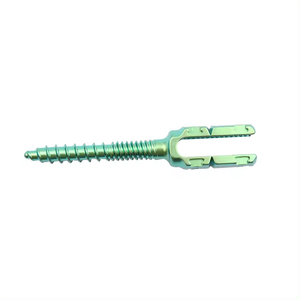
Geasure Spine Titanium Double Thread Polyaxial Pedicle Screw
Inquire Now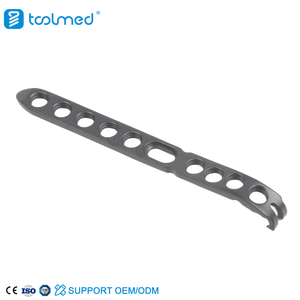
Olecranon Locking Plate II 3 to 8 Holes Titanium TA3 Orthopedic Trauma Implant
Inquire Now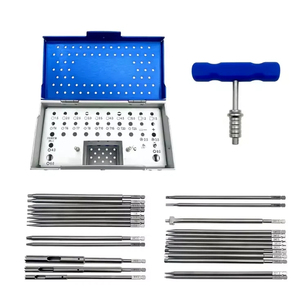
Internal Fixation AO Removal Instrument Kit & Broken Nail Extractor
Inquire Now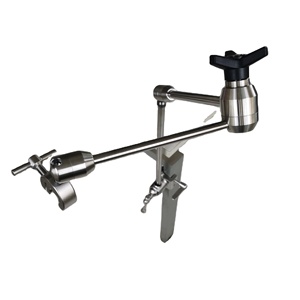
Endoscopic Discectomy System Free Arm Scope Holder & Martin Arm Retractor
Inquire Now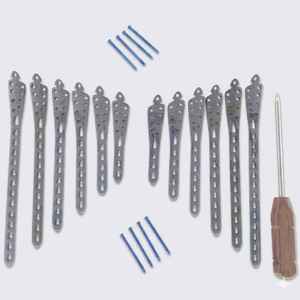
Stainless Steel Locking Medial Distal Tibia 3.5mm Plates & Cortex Screws Set
Inquire Now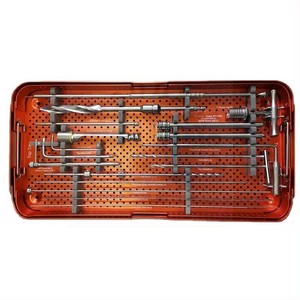
Reusable Femoral Intramedullary Nailing Surgical Instrument Kit OEM
Inquire Now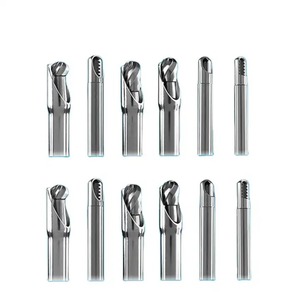
Precision Orthopedic Surgical Arthroscopic Shaver Blade & Burr Solutions
Inquire Now
Custom Precision Surgical Tray & Cleanroom OEM Sterile Packaging Systems
Inquire NowExecutive Briefing: The Evolution of Cervical Total Disc Replacement (CTDR) Manufacturing
Cervical Total Disc Replacement (CTDR), or artificial cervical disc arthroplasty, represents one of the most technologically demanding sub-sectors of orthopedic spinal implant manufacturing. Unlike static anterior cervical discectomy and fusion (ACDF) devices—which rely on rigid osseous bridging—a cervical disc prosthesis must simultaneously achieve immediate mechanical fixation, maintain physiological segment mobility across flexion-extension, lateral bending, and axial rotation, and withstand tens of millions of cyclic loading profiles without structural degradation or cytotoxic wear debris dissemination.
Evaluating the Top 10 Cervical Disc Prosthesis Manufacturing Hubs & Factories
Global contract manufacturing for cervical disc endoprostheses is heavily concentrated in specialized medical device innovation corridors across Western Europe, North America, and East Asia (predominantly China's high-precision medical technology zones in Zhejiang and Jiangsu). Below is an analytical audit of the structural design archetypes and manufacturing methodologies deployed by leading factories worldwide.
1. Metal-on-Polymer (Ti6Al4V / UHMWPE)
Features titanium alloy endplates anchored to a ultra-high-molecular-weight polyethylene core. Manufacturing requires high-speed 5-axis milling and ultra-clean polymer machining to prevent particulate contamination.
2. Metal-on-Metal (Cobalt-Chrome-Molybdenum)
Utilizes high-strength CoCrMo alloys (ASTM F75/F1537) engineered for low volumetric wear. Requires specialized robotic mirror-polishing techniques achieving surface finishes below Ra 0.02 µm.
3. Titanium-PEEK-Titanium Composites
Integrates biocompatible PEEK cores with plasma-sprayed porous titanium endplates. Demands high-precision multi-material press-fitting and strict thermal bonding verification protocols.
4. Additive Trabecular Titanium (3D-Printed)
Direct Metal Laser Sintering (DMLS) of osteoconductive trabecular porous endplates. Factories require selective laser melting (SLM) machinery paired with ultrasonic depowdering systems.
5. Elastic Core / Viscoelastic Elastomers
Designed to replicate natural disc shock absorption using elastomeric cores (e.g., polyurethane). Manufacturing relies on cleanroom liquid injection molding and non-destructive vulcanization testing.
6. Constrained & Unconstrained Ball-and-Socket
Fixed vs. mobile center-of-rotation articulation profiles. Requires sub-micron CMM coordinate measuring machines to verify true-radius sphericity across high-volume production batches.
Biomechanical Engineering & Technological Trends in Artificial Cervical Discs
The global cervical disc prosthesis market is undergoing a seismic shift driven by advanced materials science and surgeon-centric kinematic design. Factories that dominate the next decade of contract manufacturing are investing heavily in four critical technological domains:
1. Dynamic Center of Rotation (DCR) Mechanics
First-generation cervical artificial discs often relied on fixed ball-and-socket joints, forcing the cervical spine to articulate around an artificial, static axis. Modern Tier-1 factories are now co-developing dual-articulating or unconstrained cores that dynamically translate during flexion, extension, and lateral shear. This reduces stress concentrations at the bone-implant interface and significantly lowers the incidence of postoperative heterotopic ossification (HO).
2. Advanced Surface Modification (Porous Titanium & Titanium Plasma Spray)
To eliminate the need for aggressive keels or invasive screw fixation, factories utilize vacuum plasma spraying (VPS) or 3D-printed porous trabecular titanium surfaces. A pore size distribution of 300–600 µm with 60–70% porosity provides the optimal scaffold for rapid osteointegration, ensuring robust long-term bio-fixation while maintaining a low profile that preserves anterior soft tissue structure.
3. Wear-Debris Mitigation & Tribological Optimization
A major failure mode in cervical arthroplasty is aseptic loosening induced by wear debris-mediated osteolysis. ISO 18192-1 standard mandates continuous wear testing up to 10 million cycles under multi-axial simulator kinematics (flexion/extension ±7.5°, lateral bending ±6.0°, axial rotation ±4.0° at 1.0–2.0 Hz in calf serum diluent). Top factories demonstrate volumetric wear rates well under 1.0 mg per million cycles through Diamond-Like Carbon (DLC) coating application and cross-linked PEEK formulations.
Factory Audit Benchmark Matrix: Auditing Tier-1 OEM Suppliers
When selecting a contract manufacturer for cervical disc prosthesis production or private-label distribution, procurement teams should evaluate potential partners against the technical benchmark criteria outlined below:
| Audit Criteria | Standard Specification Requirement | Tier-1 Factory Capability (Industry Leader) | Procurement Risk Severity |
|---|---|---|---|
| Quality Management System | ISO 13485:2016 / FDA QSR 21 CFR 820 | Fully integrated QMS with automated batch traceability | High (Regulatory Rejection) |
| Raw Material Compliance | ASTM F136 (Ti6Al4V ELI) / ASTM F2026 (PEEK) | 100% Mill Test Certificate (MTC) verification per heat lot | Critical (Implant Failure) |
| Machining Precision | Micron-level geometric tolerances (±0.005mm) | 5-Axis Swiss CNC & High-Speed Milling (±0.003mm) | High (Kinematic Binding) |
| Cleanroom Environment | ISO Class 7 / Class 8 Cleanroom Packaging | ISO Class 7 continuous particle-monitored cleanrooms | Critical (Pyrogenicity) |
| Sterilization Assurance | ISO 11137 Co-60 Gamma Sterilization (SAL 10-6) | Validated dose mapping & sterile blister sealing | Critical (Infection Control) |
Future Procurement & Strategic Sourcing Trends (2025–2030)
The global orthopedic implant procurement landscape is rapidly evolving under regulatory tightening (such as the EU MDR 2017/745 transition) and supply chain reshoring pressures. Key trends shaping procurement strategy for cervical disc prosthesis buyers include:
- Turnkey OEM/ODM Integration: Medical device brands are migrating away from fragmented supply chains. Leading factories now offer end-to-end solutions: from finite element analysis (FEA) biomechanical simulation and rapid CNC prototyping to sterile blister packaging and regulatory technical file compilation (STED).
- Sterile Pack Dominance: Hospital procurement departments increasingly favor pre-sterilized, gamma-irradiated implants in double-peel blisters over non-sterile bulk shipments. Pre-sterilized implants eliminate hospital autoclaving costs, mitigate surgical site infection risks, and ensure pristine barcode traceability right to the operating table.
- Patient-Matched & Anatomical Scaling: Advanced factories are establishing modular tooling platforms capable of supplying expansive anatomical size matrices (e.g., footprint sizes from 12x14mm to 16x18mm with heights from 4.5mm to 8mm in 0.5mm increments) to accommodate diverse global patient ethnicities.
Why Partner with Orthi Medical Co., Ltd. for Spine & Orthopedic OEM Sourcing
Orthi Medical Co., Ltd. stands at the forefront of orthopedic implant design, precision manufacturing, and international regulatory compliance. Operating under robust ISO 13485 and ISO 9001 quality management systems, Orthi Medical delivers world-class manufacturing solutions across trauma, spine, sports medicine, joint arthroplasty, and endoscopic systems.
Rigorous Regulatory Compliance
Products engineered to conform strictly to CE, ISO 13485, and ISO 9001 standard frameworks. Complete technical registration dossiers and surgical technique guides provided.
State-of-the-Art Machining
Equipped with high-precision 5-axis DMG MORI CNC milling centers, Citizen Swiss-type lathes, and automated optical measurement systems ensuring zero-defect manufacturing.
Full Portfolio Consolidation
Consolidate your supply chain by sourcing pedicle screws, cervical plates, trauma locking plates, intramedullary nails, arthroscopy shavers, and stents from a single trusted factory.
Frequently Asked Procurement Questions (FAQ)
What raw material standards are utilized for cervical disc prostheses and spine implants?
Can your factory support OEM customized drawing-based production?
What sterilization level is provided for ready-to-use implants?
How do you ensure kinematic quality control across large manufacturing batches?
What support is offered for distributor regulatory registration?
Request Technical Specifications & Factory Quotations
Connect with our senior engineering team to discuss OEM manufacturing, custom drawing reviews, or global distribution partnership opportunities.